

Jacobean Style Oak Chest
A jacobean style oak chest brings heavy timber construction and dark panelled presence into a room, offering robust storage with centuries of historic form.
Jacobean Style Oak Chest
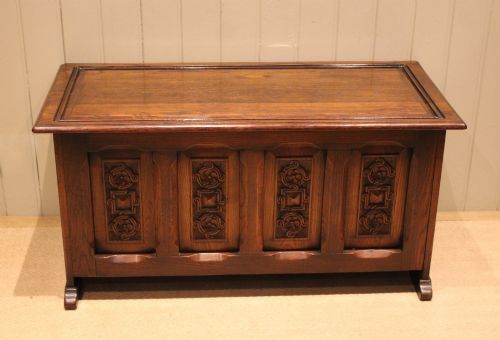
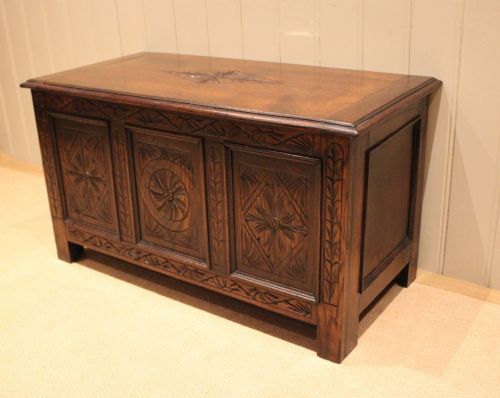
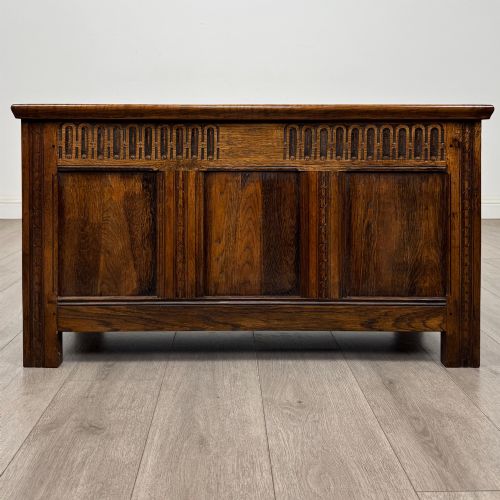
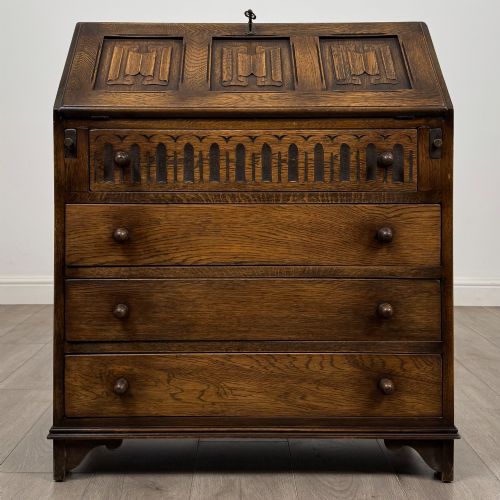
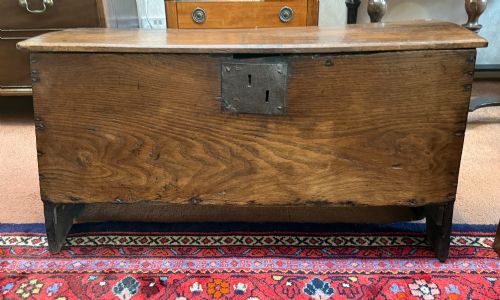
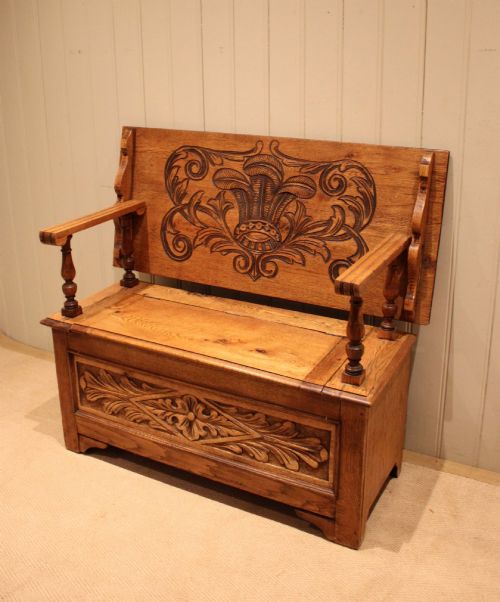
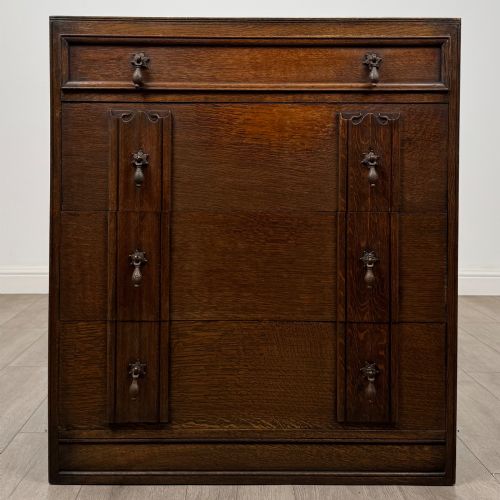
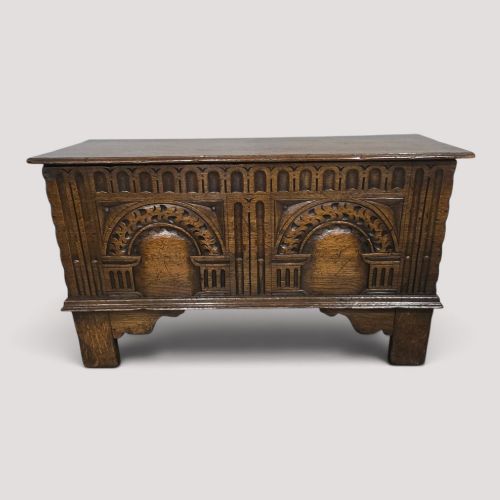
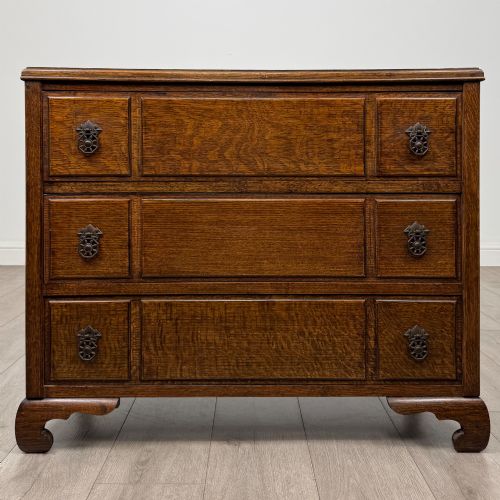
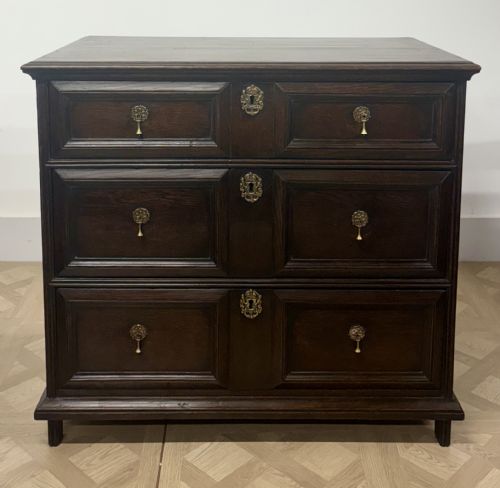
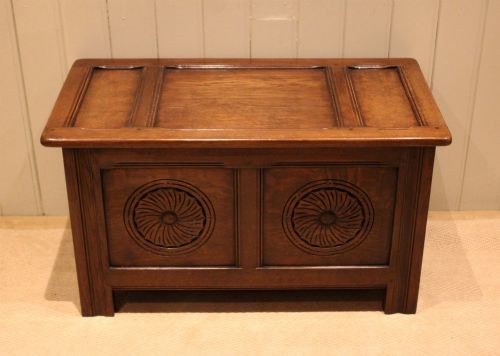
A jacobean style oak chest encompasses both authentic seventeenth century survivals and later revival pieces produced across the Edwardian era and the 1920s and 1930s. Buyers frequently encounter solid oak coffers, blanket boxes, and drawer chests originating from the 17th century through to the early 20th century.
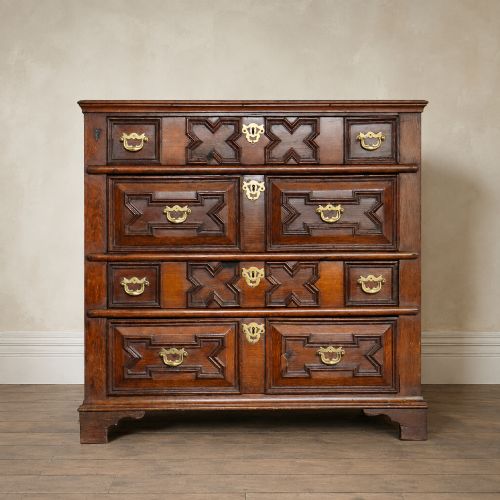
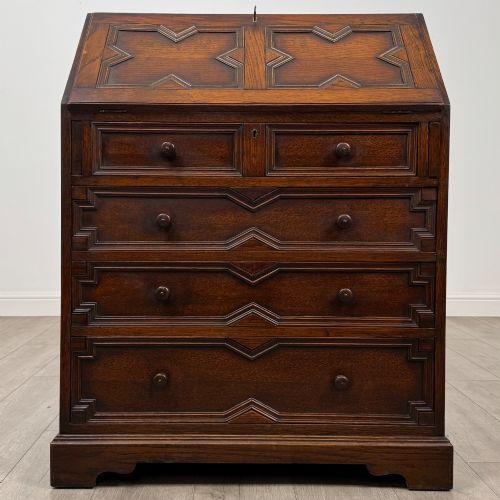
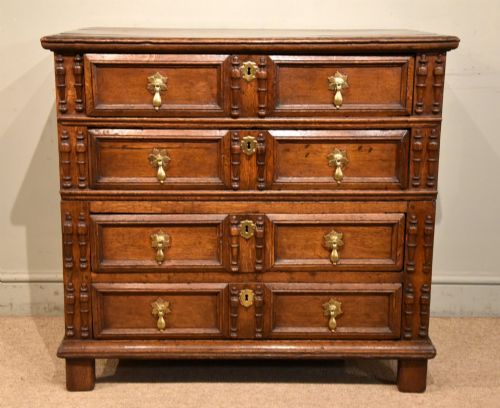
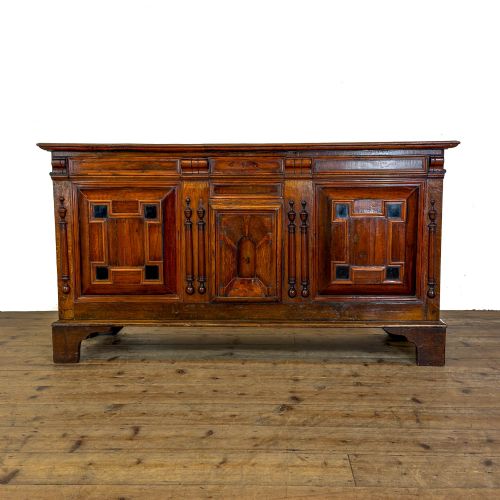
The selection ranges from geometric moulded drawer fronts and two-part chests to carved coffers and mule chests. Pieces span multiple periods including Charles II, Georgian, and various 20th century revival dates.
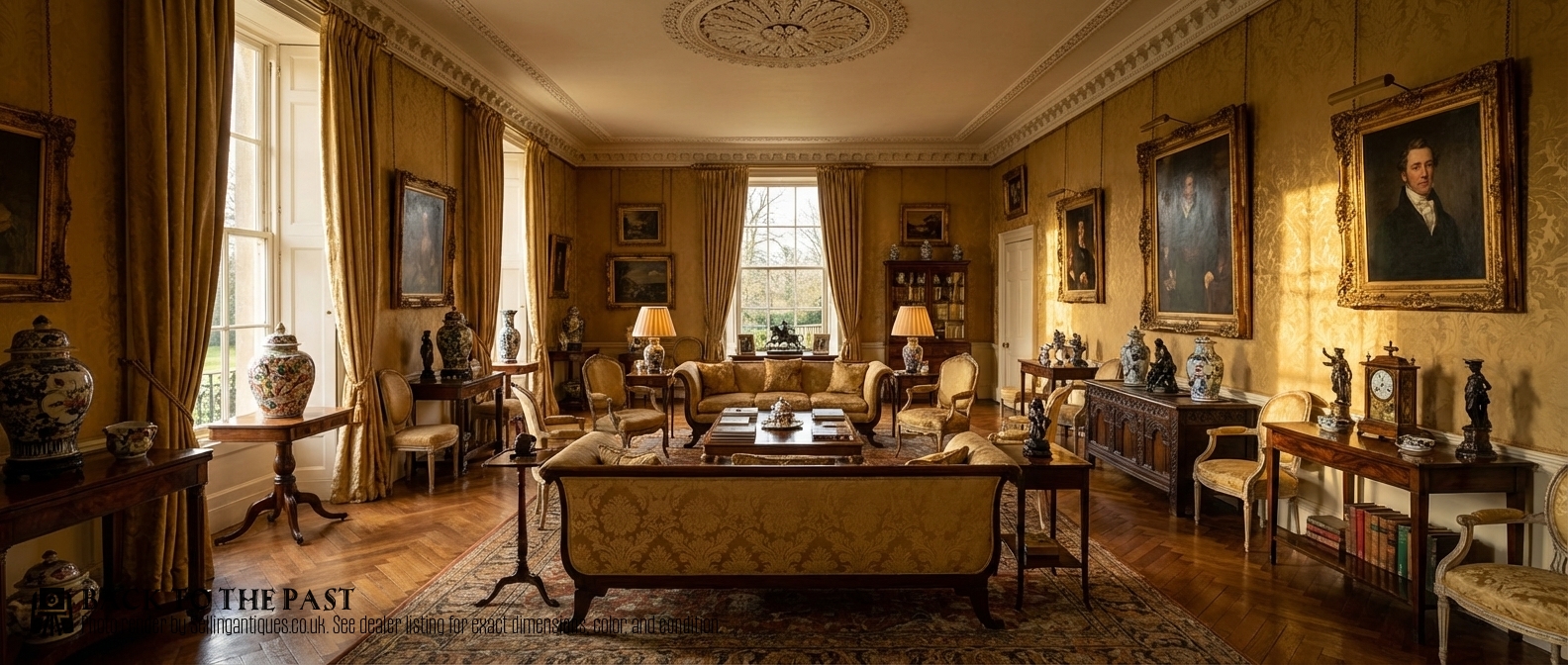
Materials and Technique
Carpenters constructed these items primarily from solid oak, sometimes combined with secondary woods such as walnut, fruitwood, and ebonised wood. Hardware incorporates functional elements cast in brass and iron.
Surface decoration relies on deep hand-carving, linenfold panels, and geometric mouldings applied to drawer fronts and framing. Construction methods include panelled framing and pegged joints designed to support heavy timber structures.
Jacobean Style Oak Chest Retail Price Guide 2026
Typical asking prices for jacobean style oak chest among the pieces listed under this phrase on Sellingantiques today, from the lower quarter to the upper quarter. They describe what is for sale here now, not the wider market.
A green man carved oak mule chest hides secret storage beneath traditional foliage.
Craftsmanship and Proportion
Depth of carving and precision in geometric mouldings separate simpler utility boxes from finer decorative pieces. Crisp detailing on panels and drawer fronts indicates superior joinery work.
Proportion and timber selection drive distinction, with smaller scaled chests and well-figured solid oak holding particular appeal. The integrity of original construction timbers and surface patination further define the tier of the piece.
The Jacobean Style Oak Chest Glossary
- Coffer
- A large wooden chest traditionally used for storing valuables or household goods. These heavy storage pieces often feature hinged lids and panelled construction.
- Geometric Moulding
- A decorative technique using raised geometric shapes applied to drawer fronts or panels. This ornament is typical of seventeenth century joinery.
- Mule Chest
- A storage chest fitted with one or more drawers at the base beneath the main compartment. This form evolved from the standard coffer to offer more accessible storage.
- Linenfold
- A style of wood carving that imitates folded linen cloth in low relief. It appears frequently on panels of chests and cupboards.
- Court Cupboard
- A traditional sideboard or storage cabinet featuring enclosed tiers. These sturdy furnishings match the height and timber of contemporary chests.
Jacobean Style Oak Chest: Frequently Asked Questions
How do I use a coffer today?
These sturdy wooden boxes work well at the foot of a bed for spare blankets or in a hallway for heavy winter garments.
The flat hinged lid also allows the piece to function as a low bench or surface for decorative objects.
Are Edwardian revival chests authentic?
Revival pieces date from the early twentieth century and replicate seventeenth century forms and decorative techniques. They are genuine antiques of their own period rather than direct seventeenth century makes.
Makers of the 1920s and 1930s deliberately reproduced Jacobean styles using solid oak and traditional carving methods.
What is a two-part chest?
A two-part chest consists of an upper and lower section built to stack together securely. This construction made heavy oak furniture easier to transport within historic homes.
Separating the modules reveals the independent framing of each cabinet section.
How do I identify geometric mouldings?
Geometric mouldings involve applied wooden pieces arranged in octagonal, diamond, or rectangular patterns across flat drawer fronts. This detail creates strong relief shadows across the facade.
Carpenters used this technique extensively during the seventeenth century to ornament otherwise plain timber surfaces.