

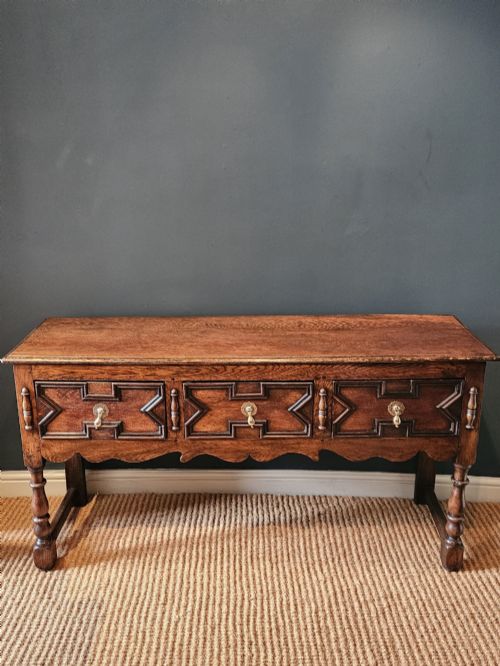
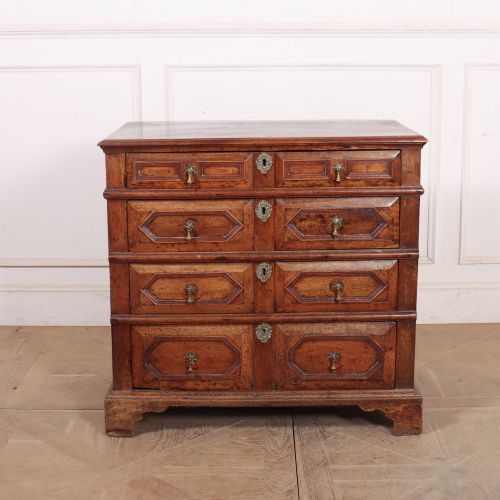

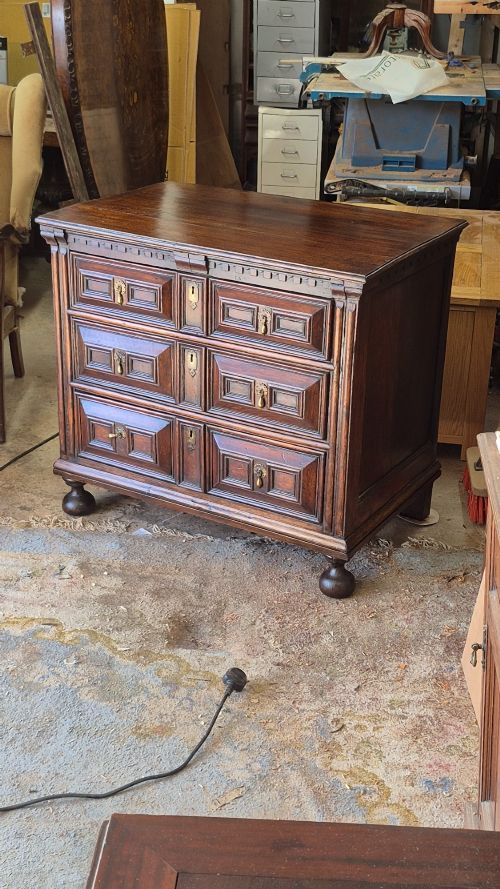
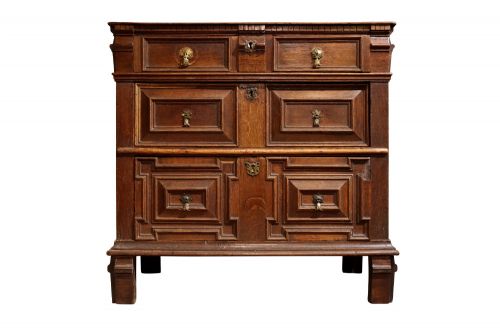
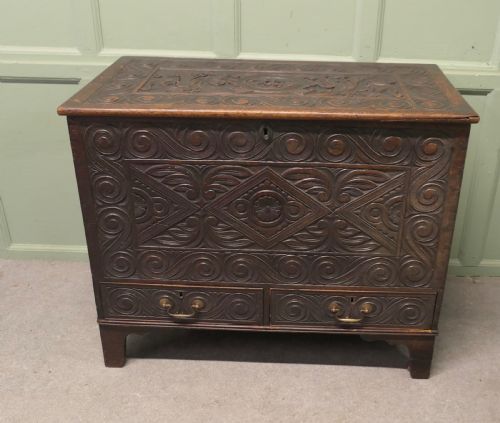

Jacobean Style Chest Drawers
These jacobean style chest drawers combine heavy timber frames with deep geometric mouldings, offering substantial storage and strong seventeenth-century character.
Jacobean Style Chest Drawers
A search for jacobean style chest drawers brings up heavy timber storage furniture spanning from seventeenth-century originals through to twentieth-century revivals. Buyers encounter multiple iterations, including period pieces, eighteenth-century examples, and Edwardian or later revival items modelled on earlier forms.
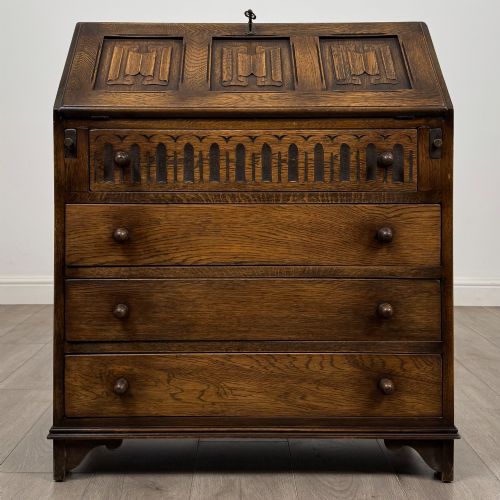
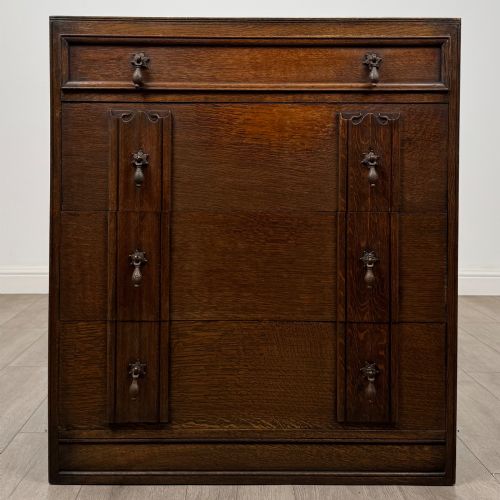
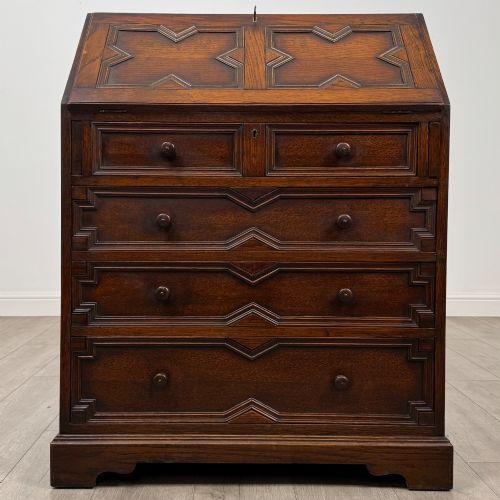
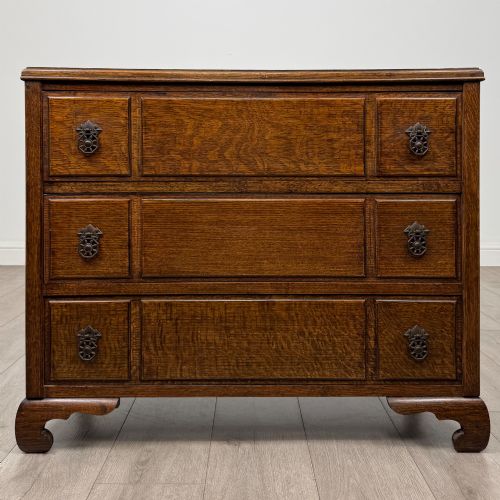
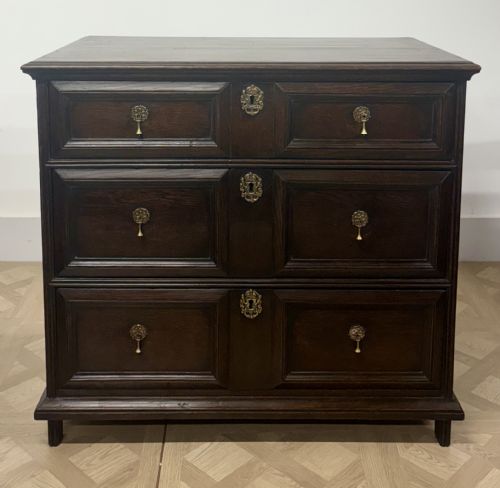
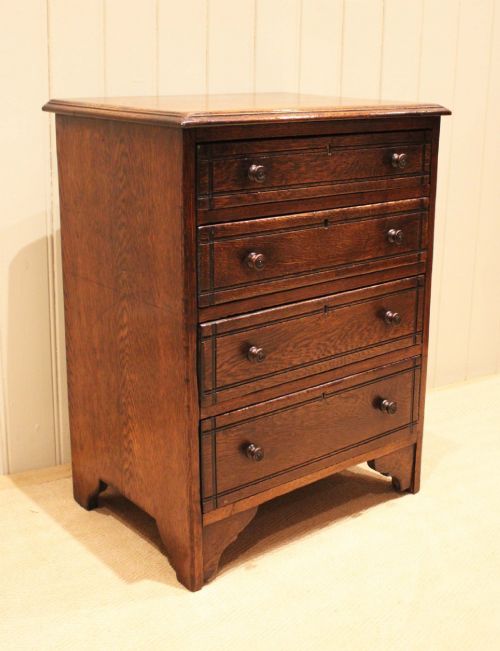
The prevailing form on this page is the sturdy oak chest of drawers, often featuring multiple graduated drawers and panelled construction. Alongside standard chests, the selection encompasses related case pieces such as bureaux, mule chests, cabinets on stand, and linen presses.
Origins stretch from genuine seventeenth-century examples down to twentieth-century interpretations built during the Edwardian era and the 1920s. These later revival pieces replicate the dark finishes and geometric facade treatments of the Stuart period using contemporary workshop methods.
Materials and construction
Oak dominates the evidence, appearing as solid timber and framing boards across the majority of pieces. Craftspeople utilised secondary timbers such as fruitwood and walnut for contrasting details, supplemented by brass drop handles and iron fittings.
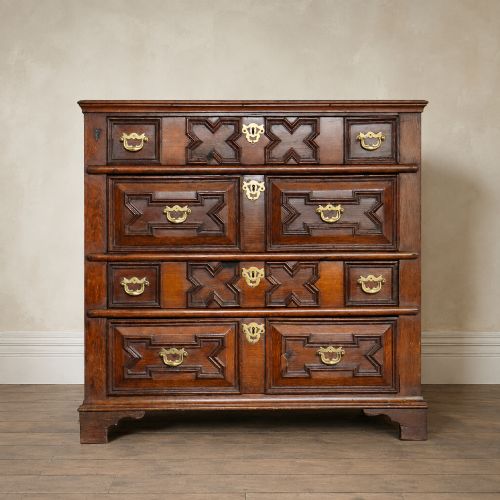
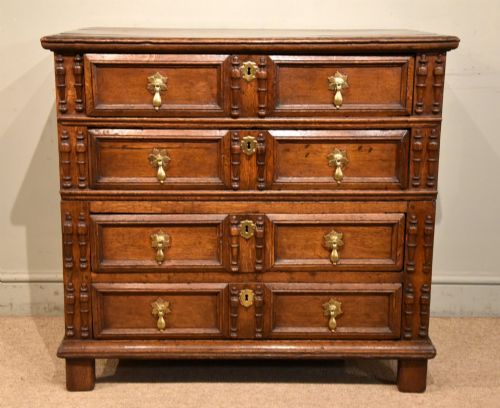
Construction relies on traditional joinery methods including panel-and-frame assembly and hand-cut dovetails for drawer boxes. Facades frequently display applied geometric mouldings, block fronts, and carved ornamentation executed directly into the timber.
Jacobean Style Chest Drawers Retail Price Guide 2026
Typical asking prices for jacobean style chest drawers among the pieces listed under this phrase on Sellingantiques today, from the lower quarter to the upper quarter. They describe what is for sale here now, not the wider market.
Green Man carvings peer from select mule chests, bringing watchful woodland faces into domestic storage.
Assessing quality in early case pieces
Quality separates genuine seventeenth-century and eighteenth-century survivors from twentieth-century revival pieces through the crispness of hand-carved elements and the natural ageing of the timber. Early examples demonstrate distinct tool marks and structural consolidation appropriate to their age.
The handling of secondary timbers and hardware dictates the integrity of the piece. Superior examples retain original brass drop handles, well-fitted drawer runners, and balanced proportions across the moulded drawer fronts.
The Jacobean Style Chest Drawers Glossary
- Geometric moulded
- Applied wooden strips arranged in repeating rectangular or octagonal patterns across drawer fronts. This technique creates strong surface relief typical of seventeenth-century case furniture.
- Block front
- A drawer facade divided into three vertical sections, with the outer sections projecting forward and the central section recessed. It adds architectural depth to heavy timber chests.
- Mule chest
- A storage chest fitted with one or more drawers in the base beneath the main compartment. This form bridges the traditional blanket chest and the modern drawer unit.
- Linen press
- A tall cupboard enclosing sliding trays or shelves originally intended for storing textiles. Many examples incorporate drawer bases beneath upper cabinet doors.
- Barley twist
- A turned column resembling a twisted rope, commonly found on the legs and supports of Edwardian revival furniture. This decorative turning reflects seventeenth-century joinery styles.
Jacobean Style Chest Drawers: Frequently Asked Questions
How do I date a jacobean style chest drawers?
Dating relies on examining the timber species, construction joints, and secondary woods used inside the drawer boxes. Hand-cut dovetails and pegged frame joints generally indicate earlier periods, whereas machine-sawn elements point to twentieth-century revival pieces.
Surface patination and the wear patterns around handles provide further clues. Genuine seventeenth-century pieces show deep oxidation and hand-planed surfaces, while revival items from the 1920s display more uniform finishes.
Where should I place a heavy oak chest?
These dense timber chests require stable flooring capable of supporting substantial weight, particularly seventeenth-century and eighteenth-century originals. Placing them away from direct heat sources prevents the solid oak from drying out and splitting.
Because many examples feature deep proportions and projecting mouldings, adequate clearance is necessary for opening drawers fully. Hallways, bedrooms, and living spaces suit their commanding scale.
What is the difference between original and revival pieces?
Original pieces from the seventeenth and eighteenth centuries carry the structural wear and timber shrinkage accumulated over hundreds of years. Their construction details reflect the specific hand tools and joinery practices of their era.
Revival pieces, largely built during the Edwardian period and the 1920s, emulate seventeenth-century aesthetics using contemporary workshop standards. They offer the visual weight of earlier furniture with updated internal mechanics.
How do I care for antique oak furniture?
Maintaining antique oak involves keeping the timber nourished with traditional beeswax rather than modern silicon polishes. Regular dusting with a dry, soft cloth prevents particulate buildup in carved crevices and geometric mouldings.
Room humidity should remain relatively stable to protect panelled construction from expanding or contracting excessively. Minimising direct sunlight preserves the rich dark tone characteristic of these pieces.