
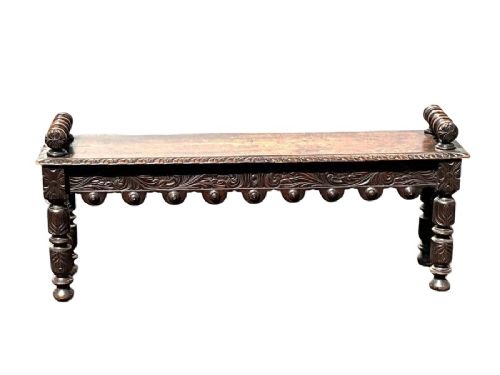
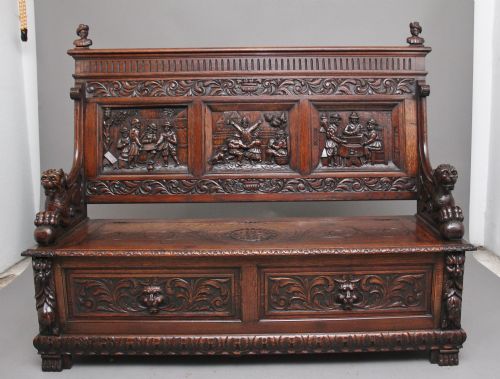
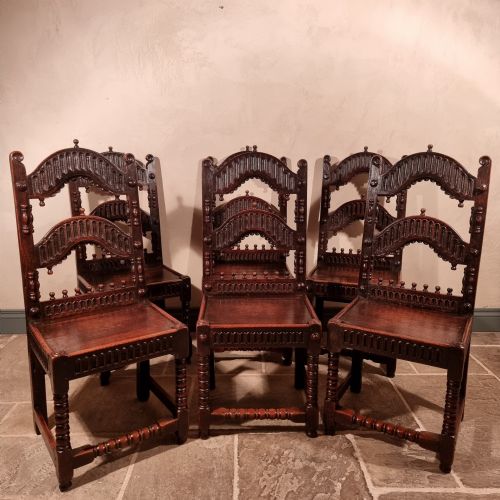


Jacobean Revival Hall Seat
A jacobean revival hall seat brings solid oak presence and historic carving straight into an entranceway, offering dependable seating with concealed storage.
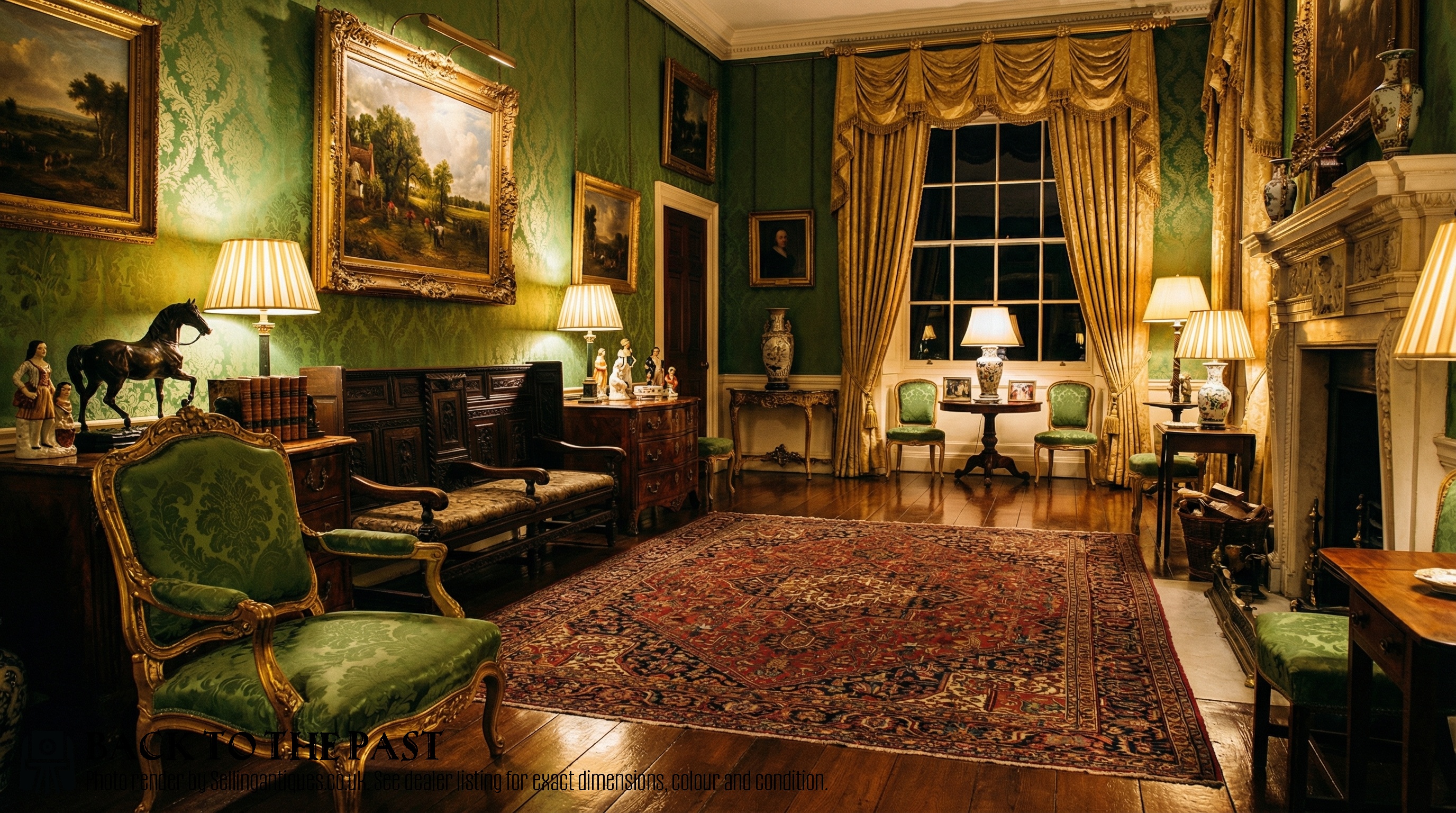
Jacobean Revival Hall Seat
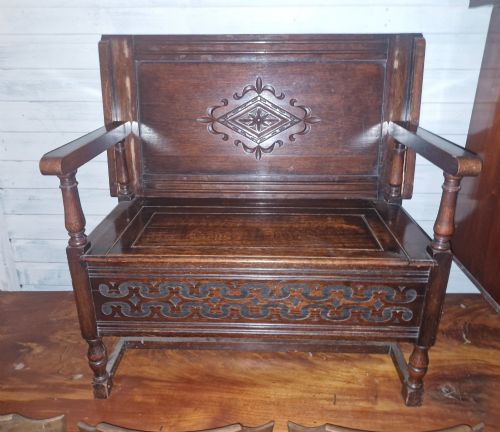
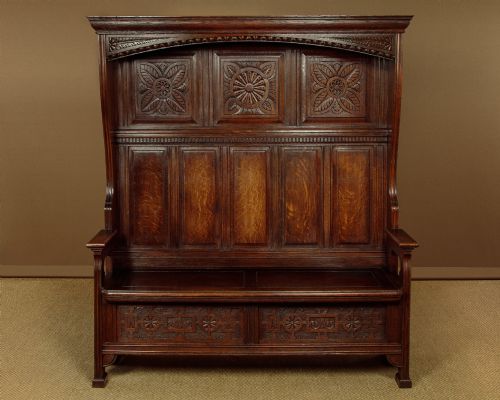
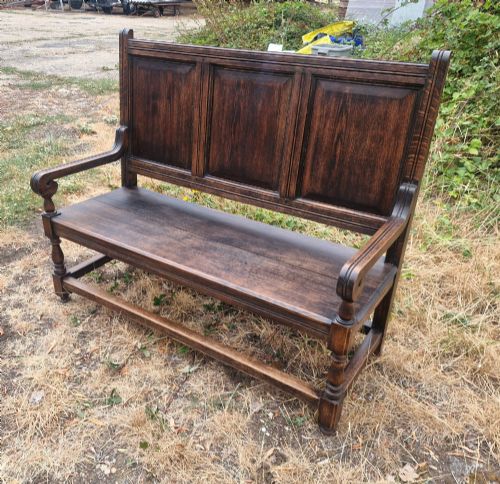
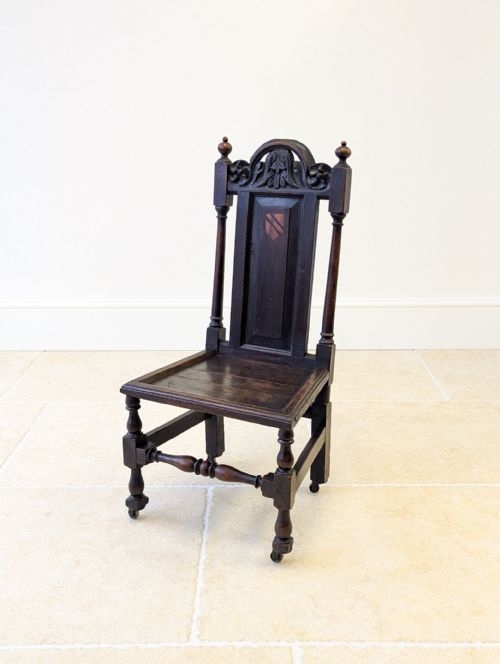
A jacobean revival hall seat encompasses robust oak furniture designed for hallways and reception spaces, drawing directly from seventeenth-century aesthetics during the nineteenth and early twentieth centuries. Pieces range from straightforward panelled benches and side chairs to complex throne chairs, monks benches and high-backed settles.
The versions most commonly met on this page date from the Victorian and Edwardian eras through to the nineteen-twenties. Makers of these periods relied heavily on stylistic crossover, blending Jacobean Revival elements with Gothic Revival, Carolean, and Renaissance Revival influences.
Practical forms frequently feature lift-up lids, fold-over tops, or canopy configurations that served multiple functions in period hallways. Smaller oak hall seats and box settles sit alongside large pairs and matched sets, reflecting the diverse scale of historic entrance halls.
Assessing Standard
The distinction between ordinary production and finer examples rests on the crispness and depth of the timber carving. Superior pieces display hand-chiselled detail with sharp undercut foliage, whereas lesser items rely on shallow, machine-routed patterns.
Structural integrity and timber selection separate the better workshops from mass output. Dense, well-figured oak with tight joints and well-integrated mechanisms for lift-up seats indicates a higher grade of cabinet making.
Listings span from eighteen-fifty through nineteen-thirty, demonstrating sustained Victorian and Edwardian enthusiasm for seventeenth-century furniture forms.
The Jacobean Revival Hall Seat Glossary
- Settle
- A wooden bench with a high back, solid arms, and enclosed base often used to block drafts in hallways. These pieces frequently double as storage chests.
- Monks bench
- A convertible form of seating that transforms from a chair or bench into a small table by folding the back over. It is a clever space-saving device popular in revival periods.
- Green man
- A sculptural architectural ornament depicting a human face disgorged from foliage. It symbolises rebirth and appears frequently in revival carving.
- Barley twist
- A type of turning shaped to resemble a twisted rope or column. This decorative technique became prominent in seventeenth-century furniture and returned strongly in later revivals.
- Wainscot chair
- A heavy wooden armchair constructed with panelled backboards and solid timber seats. They date back to an era when panelled walls preceded standard domestic seating.
Jacobean Revival Hall Seat: Frequently Asked Questions
How do I use a hall seat today?
These pieces serve as functional seating in entranceways while offering practical storage within their bench compartments or lift-up lids. They provide an immediate visual anchor for coats, boots, and everyday items.
Placing one in a hallway creates a deliberate period statement without sacrificing modern utility. The flat wooden or upholstered seats remain suitable for putting on shoes.
Are these seats genuinely seventeenth century?
Most examples found here date from the nineteenth and early twentieth centuries during revival periods. Makers deliberately adopted seventeenth-century styles, construction methods, and motifs.
Distinguishing a revival piece from an original relies on examining timber ageing, tool marks, and hardware fixings. Revival furniture displays nineteenth- or twentieth-century manufacturing signatures despite older styling.
What is a monks bench used for?
A monks bench functions primarily as an enclosed seat with a high back and storage underneath. By flipping the backrest forward horizontally, the piece converts into a table surface.
This dual purpose made them versatile items in historic hallways and smaller reception rooms. The folding mechanism requires careful handling to preserve original joints.
How do I tell Victorian revival from Edwardian?
Victorian examples tend towards heavy proportions, dark finishes, and elaborate figural carvings like green man masks or deep baronial styling. They prioritise imposing presence in grand entrance halls.
Edwardian pieces often appear slightly lighter in scale and execution, reflecting changing domestic fashions. Oak finishes can vary, but construction details generally align with early twentieth-century workshop standards.