




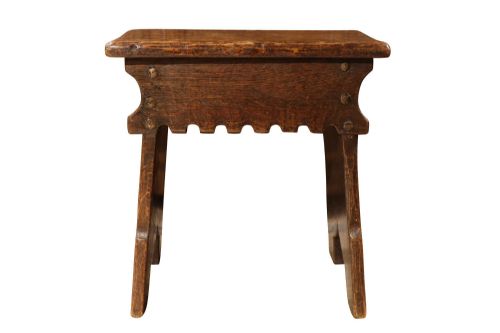


Carved Oak Bench Table
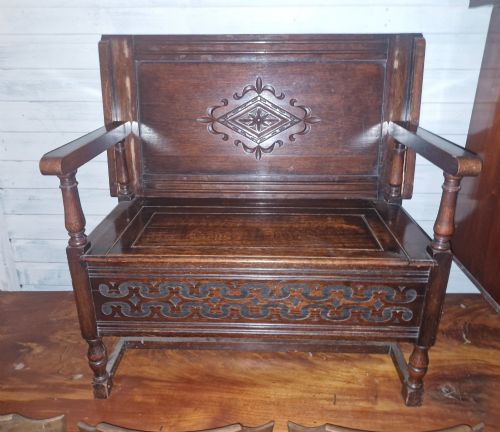
A carved oak bench table brings dual-purpose ingenuity and rich timber grain to an interior, often taking the form of a convertible monk's bench.
Carved Oak Bench Table
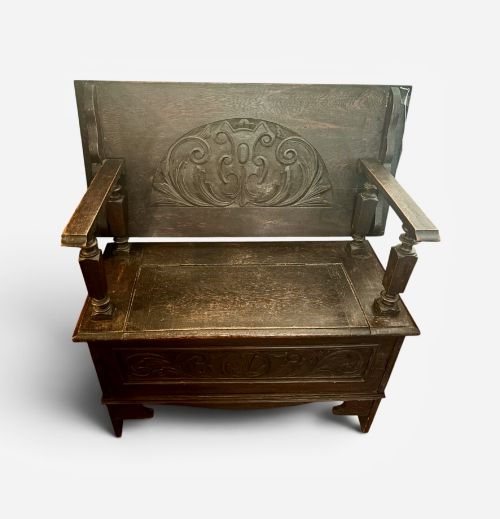
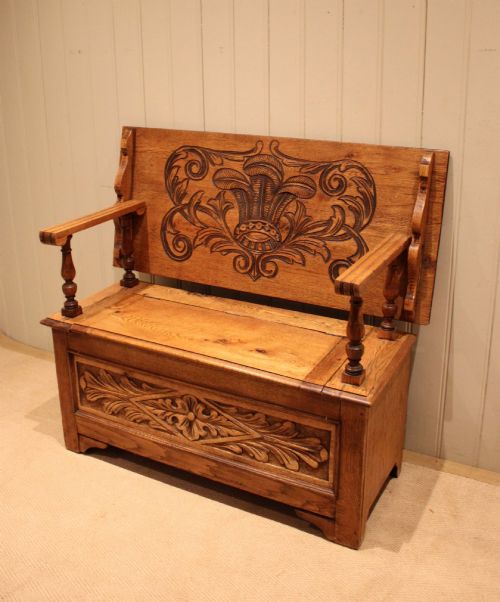
A carved oak bench table combines seating and a surface, frequently appearing as a monk's bench where the back folds down to form a table top. Buyers seeking this phrase encounter versatile hall furniture designed to maximise space in historic and period homes.
The selections span centuries of woodworking, from genuine 17th century pieces to later revivals from the Victorian, Edwardian, and 1930s eras. Monks benches, hall seats, and settles dominate the listings, alongside related forms like joint stools and prie-dieu desks.
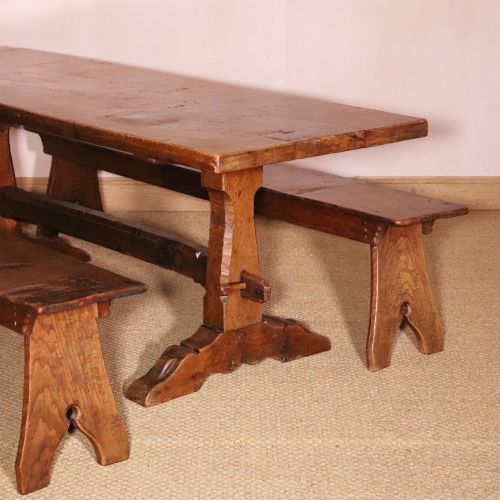
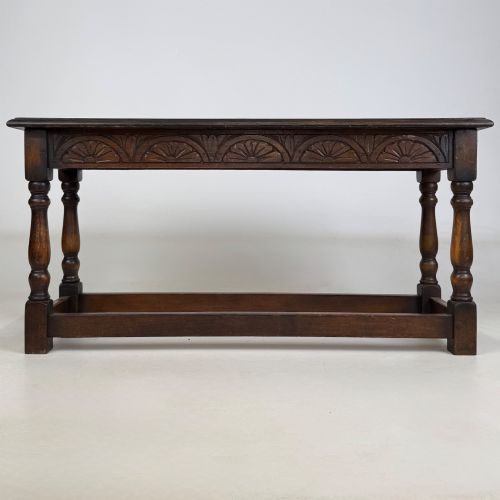
Makers drew on historic styles such as Jacobean Revival and Gothic Revival, applying deep relief carving, linenfold panels, and shaped trestle ends. English oak remains the primary material, occasionally supplemented by solid oak boards and iron fixings.
Markers of distinction and craftsmanship
Quality rests primarily in the crispness of the hand carving and the integrity of the timber selection, where deeply articulated motifs outshine mechanical or shallow imitations. The cleverness of the pivoting mechanism on a convertible top dictates whether the transition between seat and table operates smoothly.
Proportion and the retention of original elements elevate certain examples, particularly when peg joints remain tight and the oak displays a deep, undisturbed period patina. Pieces that integrate functional storage, such as under-seat boxes with original boarded bottoms, command stronger interest.
Trussant And Cie
The Carved Oak Bench Table Glossary
- Monk's bench
- A convertible piece of furniture featuring a hinged back that folds flat over the armrests to create a table top. This clever design provided dining or working space in smaller rooms before being tilted back to function as a hall seat.
- Joint stool
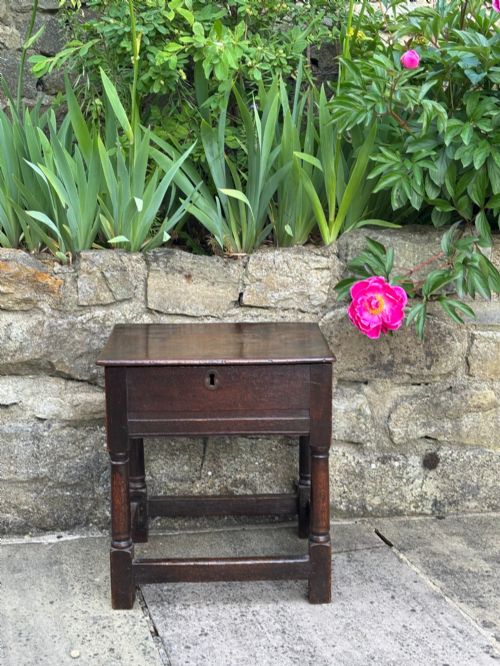
- A sturdy wooden stool built with pegged mortise and tenon joints rather than turned legs inserted into a seat. These early domestic items often matched the height of larger dining tables.
- Prie-dieu
- A devotional desk designed for prayer, featuring a sloping top for books and a lower padded shelf to kneel upon. Victorian examples frequently utilise carved oak and Gothic revival motifs.
- Jacobean Revival
- A 19th and early 20th century stylistic movement copying the heavy, geometric, and carved oak characteristics of early 17th century English furniture. Cabinetmakers utilised these archaic forms to satisfy Victorian and Edwardian demands for historic authenticity.
- Pegged construction
- A traditional joinery method utilising wooden dowels to secure mortise and tenon joints without metal nails. This technique accommodates the natural expansion and contraction of solid oak over centuries.
Carved Oak Bench Table: Frequently Asked Questions
How did a monk's bench work?
The hinged back of the bench pivots forward on wooden pins or iron pivots, resting flat across the arms to form a table top. When lifted back into the vertical position, it transforms the piece into an enclosed seat with storage beneath.
This clever dual-purpose design allowed households to save precious floor space in medieval and later halls, serving as a dining surface by day and a fireside seat by night.
Are these pieces actually from the seventeenth century?
While genuine 17th century examples exist in the records, a significant portion of carved oak furniture dates from later revival periods such as the Victorian era, Edwardian period, and the 1930s. Makers during these later centuries enthusiastically copied earlier Jacobean and Gothic styles.
Examining the construction methods, tool marks, timber shrinkage, and underlying patination helps differentiate an original 17th century survivor from a later revivalist interpretation.
Where should I place a hall bench?
A hall bench or settle naturally suits entranceways, corridors, or spacious landings where its high panelled back and decorative carving can be appreciated. The lift-up seat provides practical concealed storage for shoes, blankets, or household items.
Because many examples double as tables, positioning one where the top can safely fold down without striking walls or other furniture ensures the mechanism remains fully functional.
How do I care for antique oak?
Solid oak benefits from occasional applications of beeswax to nourish the timber and maintain a soft, protective sheen. Avoiding direct sunlight and sudden temperature shifts prevents the dry air from splitting ancient pegged joints.
Gentle dusting with a dry or slightly damp cloth preserves the historic patination accumulated across centuries of handling without stripping the surface finish.