
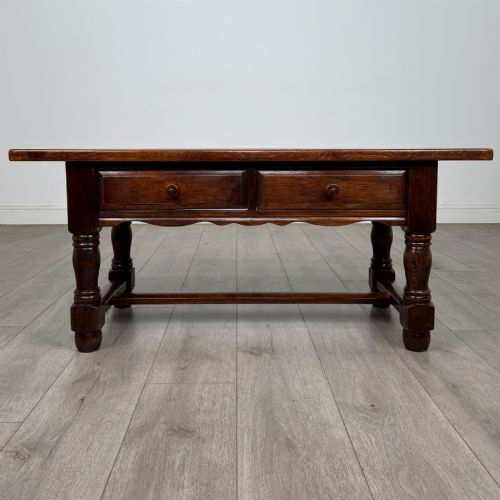
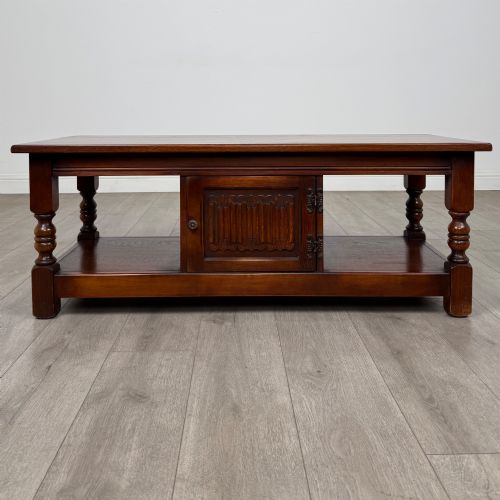



Jacobean Oak Coffee Table
A jacobean oak coffee table brings sturdy timber and centuries of revival craftsmanship straight into a modern sitting room.
Jacobean Oak Coffee Table
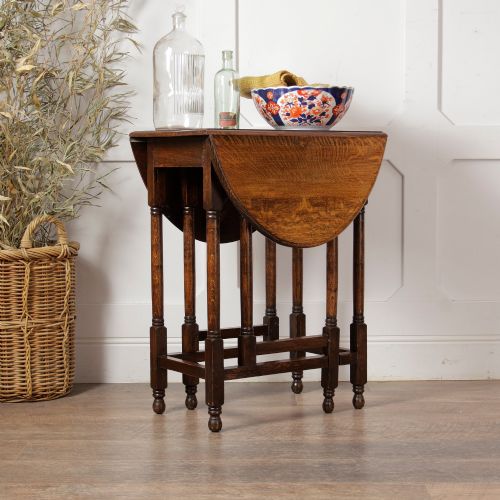
A jacobean oak coffee table spans various forms from the seventeenth century onwards, though most examples on this page date from the Edwardian era through to the 1930s in a revival style. Buyers seek these pieces for their rich dark wood and dependable low proportions suited to modern living.
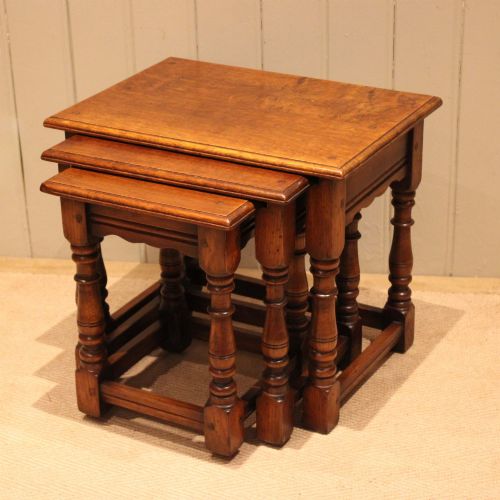
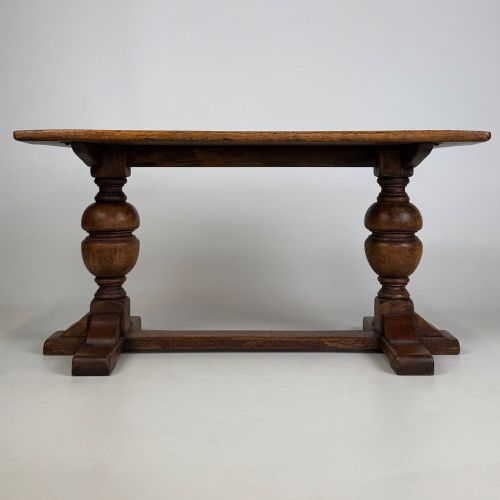
The selection ranges from traditional gateleg and refectory designs to nests of tables, occasional tables, and six-sided tops. Surviving pieces draw heavily on seventeenth-century motifs while functioning as practical coffee and low side tables.
Origins stretch across English country and revival traditions, uniting compact occasional pieces with larger refectory and centre tables. Oak dominates every piece, often finished in honey or golden tones that highlight the grain.
How they were made
Solid oak provides the structural foundation for these pieces, shaped through traditional joinery and sturdy framing. Metal hardware occasionally appears on hinges and drop leaves.
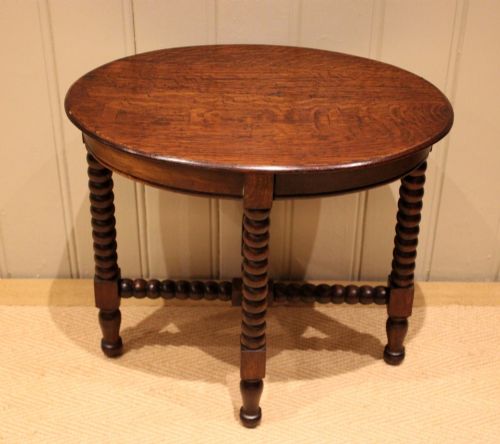
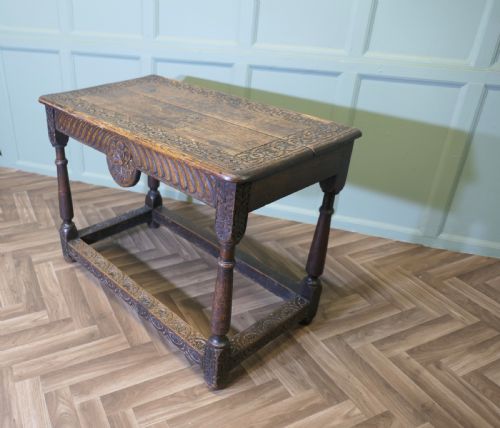
Carving and turning define the decorative technique, visible in barley twist legs, carved tabletops, and celtic motifs. Makers utilised gateleg mechanisms, drop leaves, and extending refectory frames to create adaptable furniture.
Six-sided tabletops give sociable tea drinkers an equal angle of conversation.
What varies in quality
The distinction between standard and superior pieces rests on the depth of hand-carving and the crispness of turned legs such as barley twists. Dense, well-figured oak timber elevates a piece far above simpler, plain-grained alternatives.
Structural integrity and the clever execution of folding mechanisms, such as gateleg joints or extending refectory leaves, separate finer antique examples from more basic production.
The Jacobean Oak Coffee Table Glossary
- Jacobean Revival
- A nineteenth and twentieth century design movement that reinterprets seventeenth-century English styles, featuring heavy carving and dark oak. This style accounts for many of the tables found on this page.
- Gateleg table
- A table with hinged drop leaves supported by swing-out legs. This clever space-saving construction appears frequently in various sizes.
- Barley twist
- A spiralling turned wood detail resembling a twisted rope, popular on table legs during the Edwardian period and earlier revivals. It adds vertical visual movement to solid timber frames.
- Refectory table
- A long, narrow dining or centre table adapted into lower proportions for modern use. These sturdy pieces often feature extending mechanisms.
- Occasional table
- A small, versatile piece designed to be moved around a room as needed. These include six-sided tops and nest configurations.
Jacobean Oak Coffee Table: Frequently Asked Questions
How do I use a gateleg coffee table?
A gateleg coffee table functions with hinged leaves that fold down to save space or lift up to provide a wider surface area. The supporting legs swing out like a gate to hold the leaves firmly in place.
This adaptability makes them useful in smaller sitting rooms where surface area needs to change according to the occasion.
How do I date an oak table?
Dating an oak table involves examining the construction methods, timber patination, and decorative vocabulary such as carving styles and turned leg profiles. Pieces from the seventeenth century display distinct hand-tool marks and structural wear.
Revival pieces from the Edwardian period or the 1920s and 1930s imitate these older forms while showing twentieth-century manufacturing techniques and hardware.
Are these tables solid oak?
The listings record solid oak as the primary material across these tables, ensuring robust construction and heavy durability. This substantial timber forms both the tabletops and the structural framework.
Makers relied on the natural strength of oak to support intricate turned legs, drop leaves, and carved occasional surfaces.