
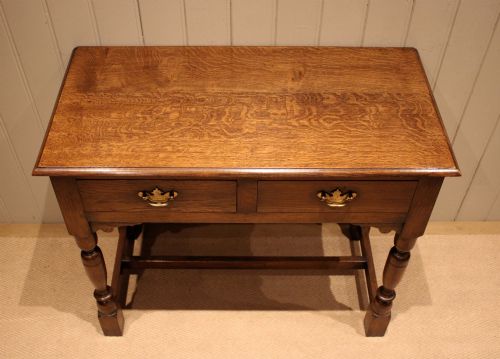

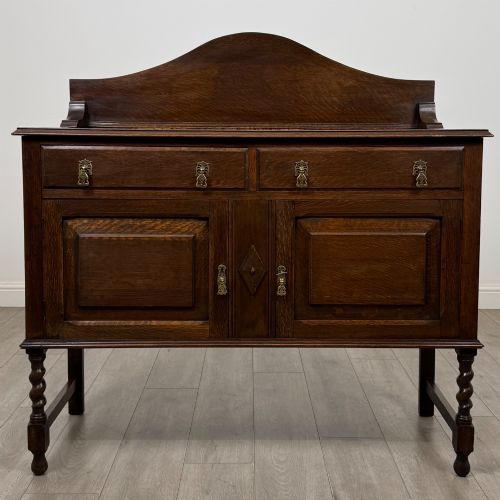
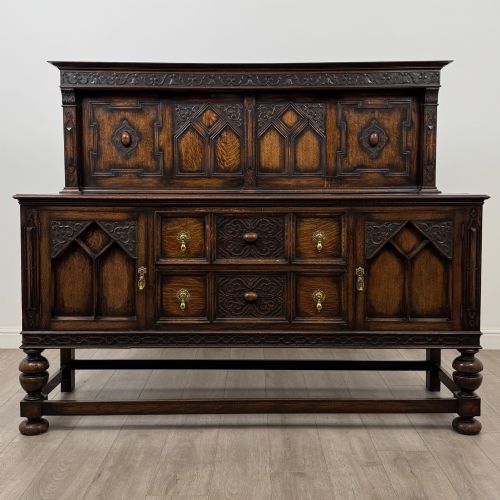
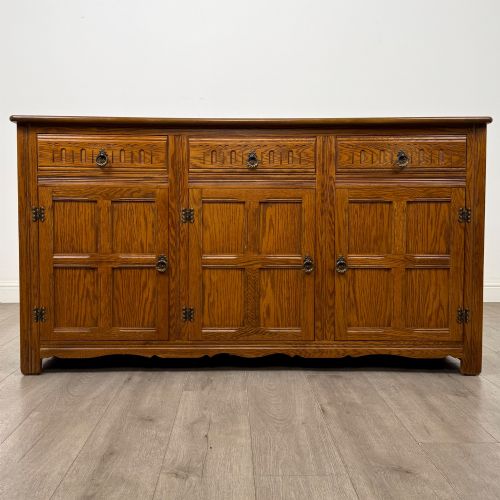
Jacobean Oak Server
These jacobean oak server pieces combine robust utility with deep period character, offering practical storage anchored in seventeenth-century style.
Jacobean Oak Server
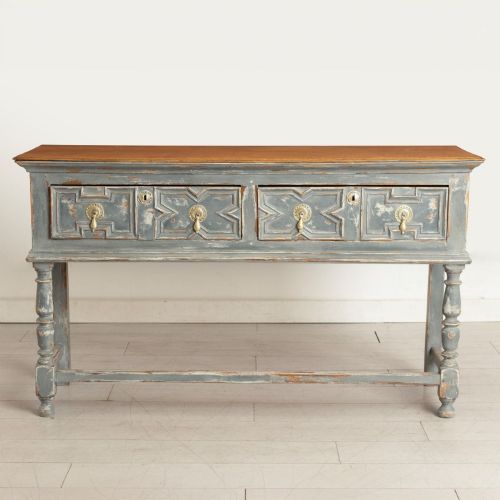
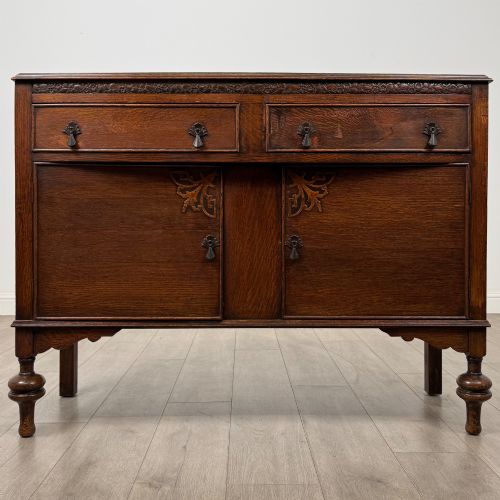
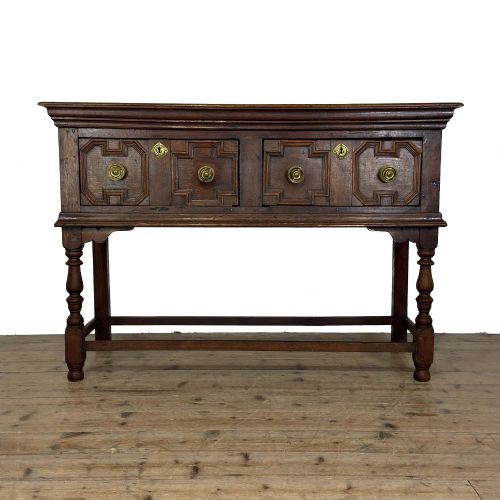
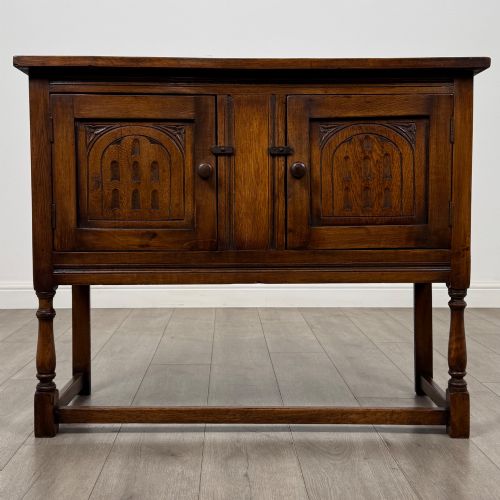
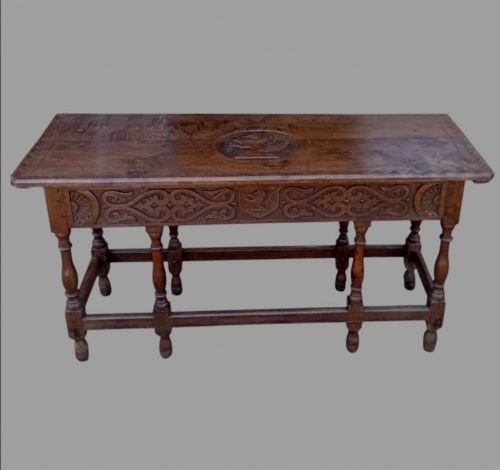
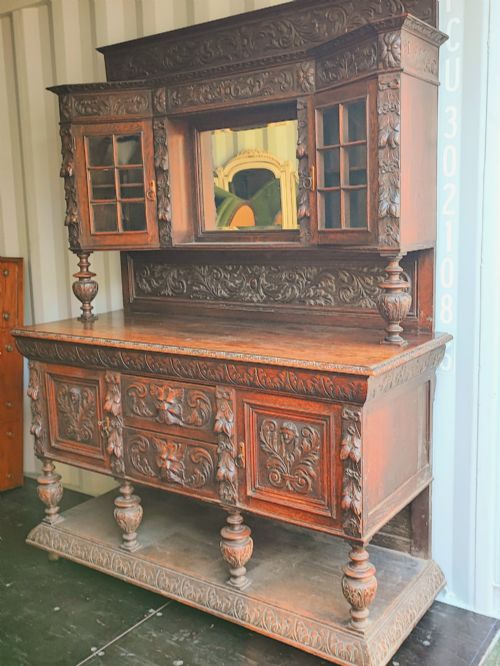
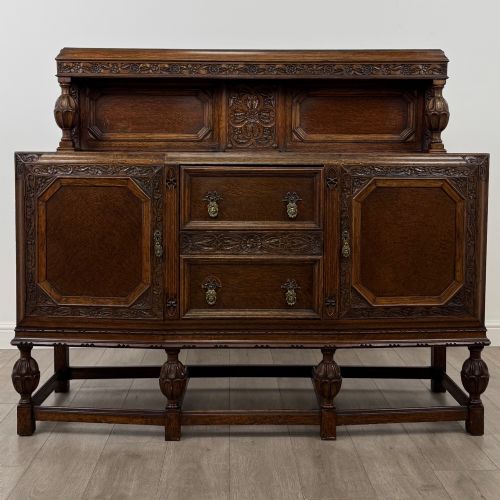
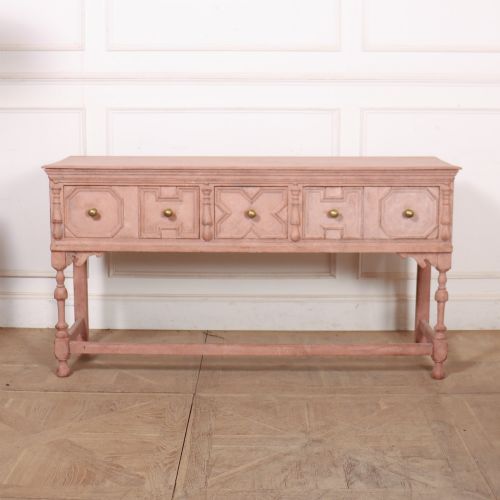
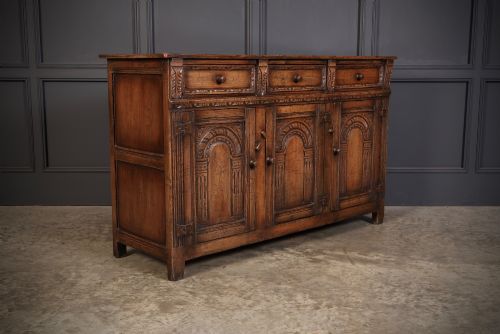
A jacobean oak server most frequently appears on this page as an antique sideboard, dresser base, or side table fashioned in solid oak. The selection spans authentic seventeenth-century examples alongside later revivals from the Victorian, Edwardian, and 1920 periods.
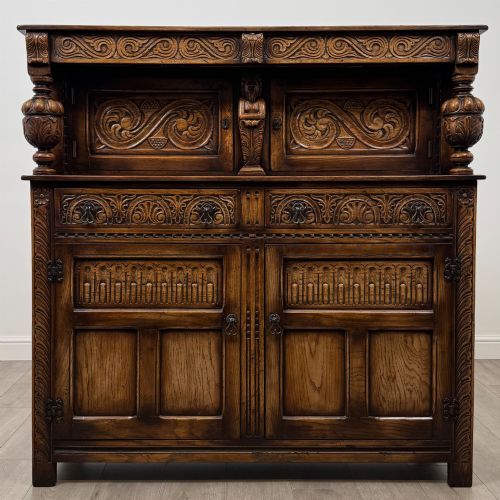
Buyers encounter formats ranging from lowboys and serving tables to larger court cupboards and potboard dressers. These sturdy items provide surface display and cabinet or drawer storage rooted in English country traditions.
Materials and construction
Makers relied primarily on solid oak, shaping panels and framing with traditional joinery methods. Secondary elements incorporate brass or iron hardware, glass, mirrors, and occasional painted finishes.
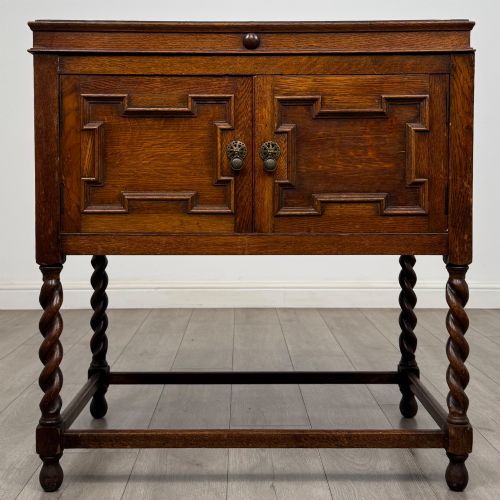
Surfaces frequently display carved decoration, geometric moulding, and turned supports such as barley-twist legs. Some pieces feature inlaid details or bleached treatments depending on their period of origin.
Jacobean Oak Server Retail Price Guide 2026
Typical asking prices for jacobean oak server among the pieces listed under this phrase on Sellingantiques today, from the lower quarter to the upper quarter. They describe what is for sale here now, not the wider market.
Materials documented across the inventory include solid oak paired with iron, brass, mirror glass, and painted surfaces.
Assessing the execution
Quality rests upon the crispness of the hand-carved details and the structural integrity of the timber framing. Early pieces with block fronts or period mouldings command attention for their tactile depth.
The proportion of the furniture and the integrity of the original oak surfaces dictate the overall calibre. Finer examples maintain balanced proportions and honest timber patination acquired through age.
The Jacobean Oak Server Glossary
- Dresser base
- A low sideboard fitted with drawers and frequently a lower potboard shelf. This form served domestic food preparation and storage.
- Lowboy
- A small table with drawers, standing on legs, used as a side table or serving piece. These compact items suit entrance halls and smaller reception rooms.
- Barley-twist
- A decorative turning resembling a twisted rope, common on legs and supports during revival periods. This detail adds vertical movement to solid oak framing.
- Court cupboard
- An enclosed upper cabinet set back upon a lower base or supported by pillars. These heavy storage items display rich carving.
- Potboard
- An open slatted lower shelf incorporated into dresser bases for storing pots and kitchen utensils. This practical feature defines many country pieces.
Jacobean Oak Server: Frequently Asked Questions
What is a jacobean oak server?
A jacobean oak server is a sturdy wooden storage piece designed for serving food and holding dining items. These items include sideboards, dresser bases, and serving tables.
They reflect seventeenth-century design traits, whether made during that era or interpreted through later Victorian and Edwardian revivals.
How do I date a piece?
Dating relies on examining the construction methods, joinery, timber patination, and decorative motifs like geometric moulding or carved panels. Seventeenth-century examples show hand-tooled marks and period ironwork.
Later revival items from the Edwardian period or the 1920s adapt these historical styles using contemporary workshop practices of their time.
Where should I place one?
These servers fit well in dining rooms, living spaces, and entrance halls as side tables or storage consoles. Their drawers and cupboards hold tableware, linens, and everyday objects.
The substantial oak construction anchors a room while providing a flat surface for lamps or display items.
Are these servers made of solid wood?
The pieces listed utilise solid oak as the primary structural material for frames, tops, and drawer construction. Iron and brass hardware complement the wooden framework.
Secondary materials occasionally include paint or mirror glass depending on the specific revival style and period.