

Jacobean Oak Panel
Jacobean oak panel pieces bring 17th-century craftsmanship and solid timber presence into modern interiors.
Jacobean Oak Panel
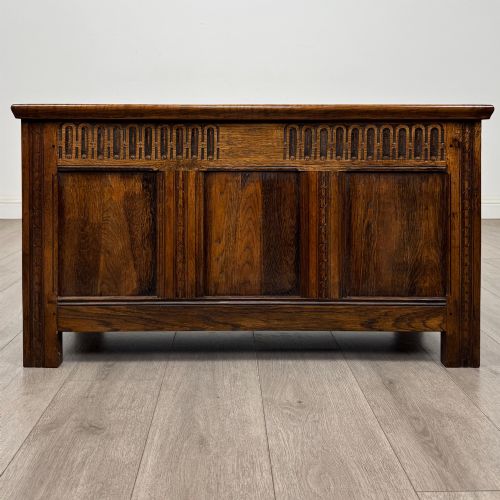
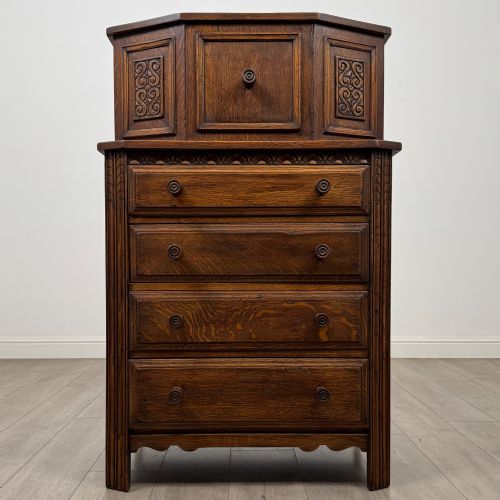
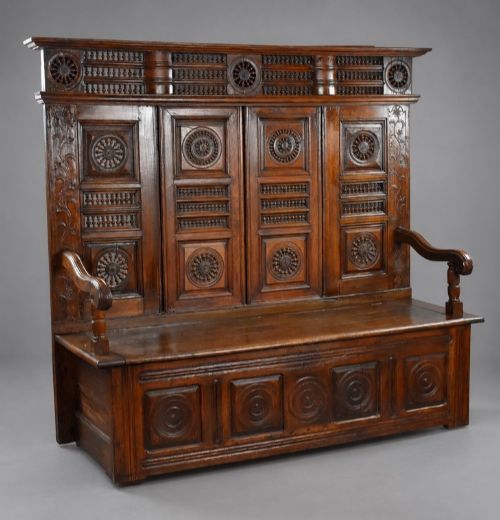
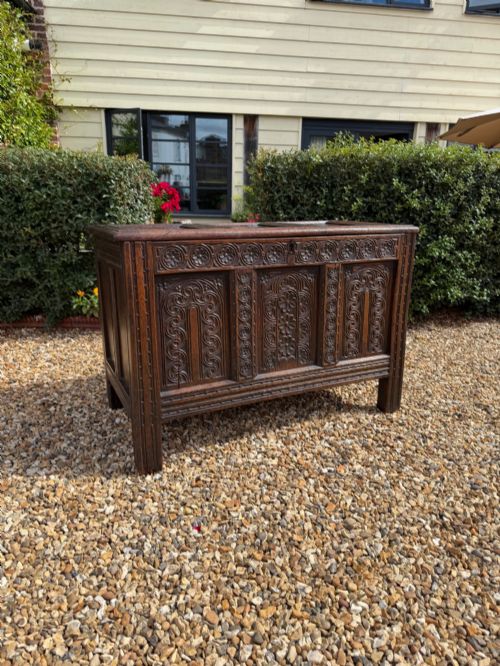
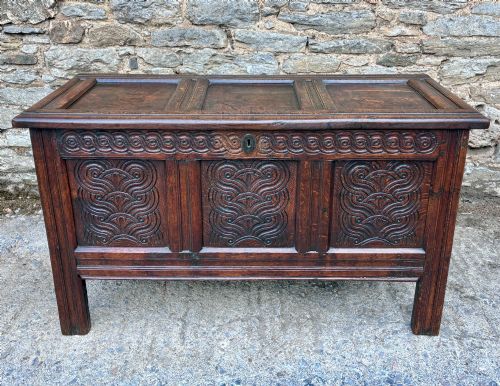
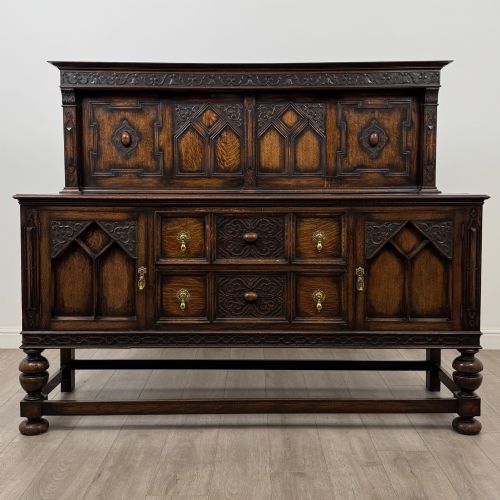
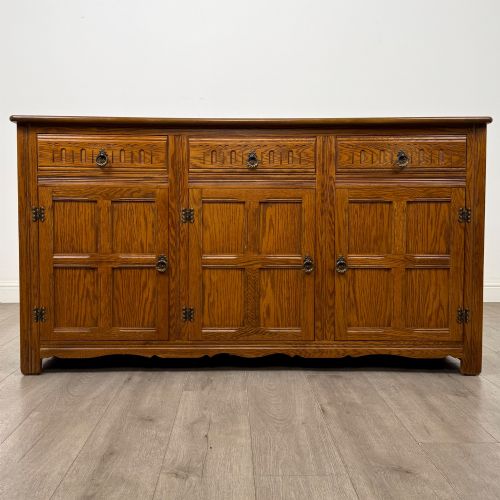
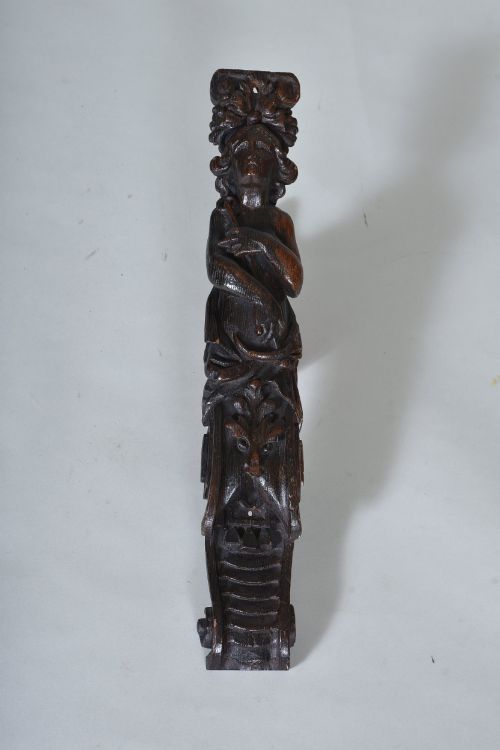
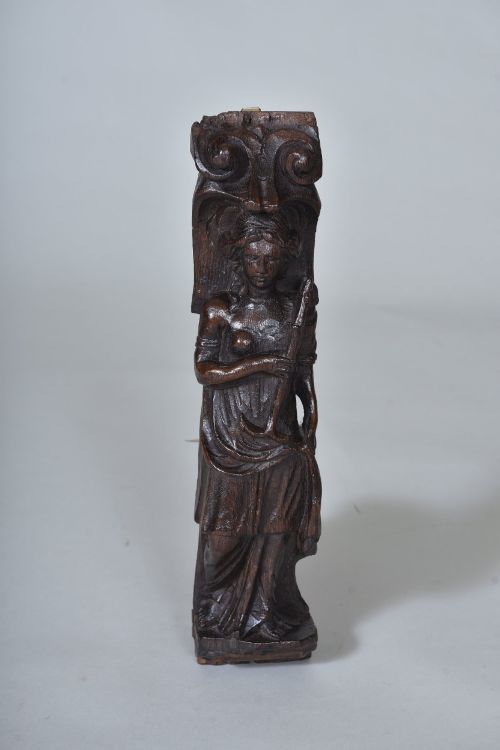
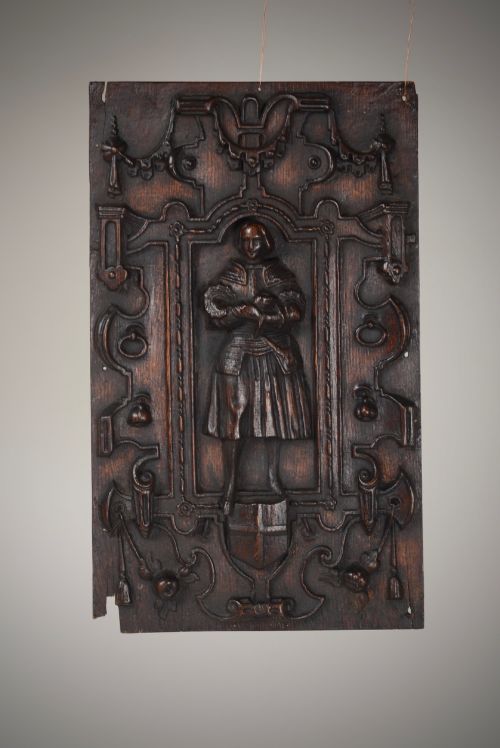
When buyers search for jacobean oak panel items, they encounter architectural fragments, carved panels, and larger timber furniture pieces originating from the 17th century alongside later revival works. The selection spans authentic seventeenth-century carvings, mule chests, wainscot armchairs, and coffers alongside Edwardian and 1930s interpretations.
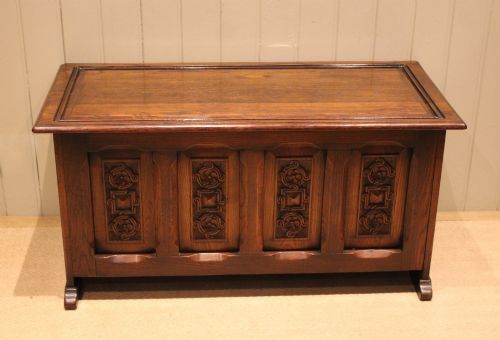
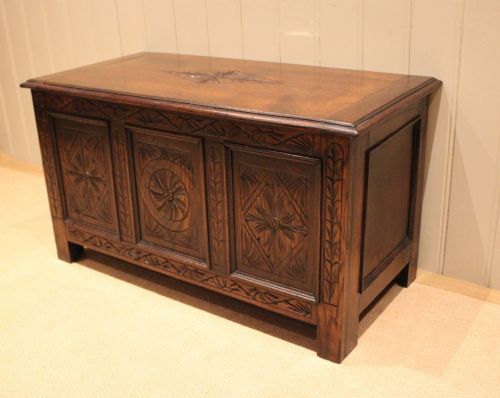
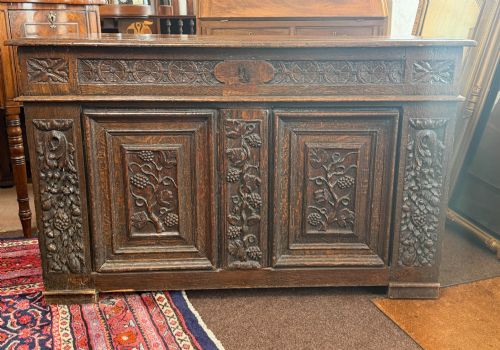
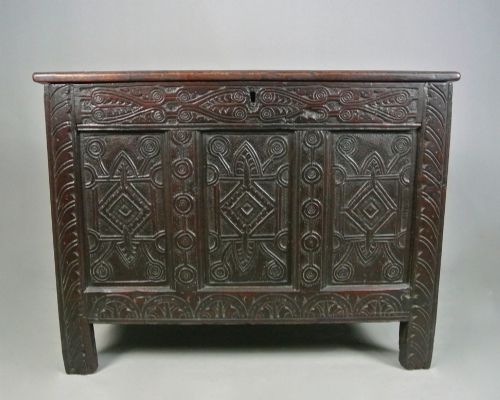
The most common forms on this page are sturdy oak coffers, storage chests, and panelled cupboards. These domestic storage items and architectural carvings display the characteristic geometric mouldings and pegged construction of the period.
Materials and Construction
Carpenters built these pieces using solid oak, often reinforced with brass, iron, and wrought iron hardware such as hinges and locks. Timber was cleft or sawn and joined using traditional mortise and tenon frames held by wooden pegs.
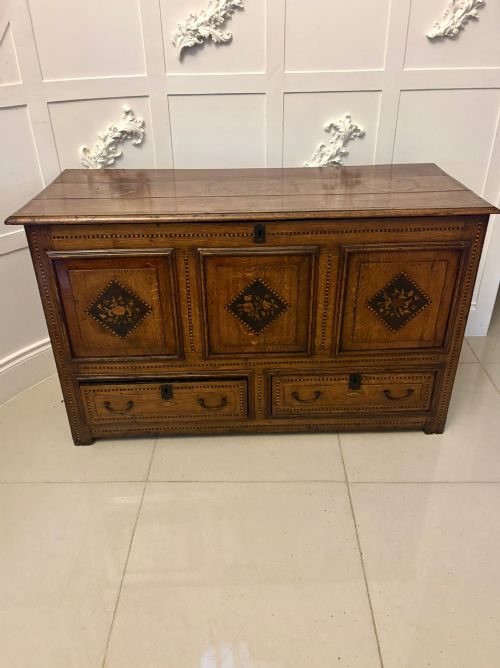
Surface decoration relied on high-relief carving, marquetry inlay, and linenfold motifs. Later revival pieces from the Edwardian era and the 1930s replicated these traditional joinery methods and heavy dark oak finishes.
Among the historical carvings hides a panel depicting Joan of axe-wielding determination, proving early woodworkers enjoyed a dramatic story.
Factors of Quality
Quality rests in the depth and sharpness of the hand-carving and the integrity of the timber framing. Crisp relief work on panels and intact original joinery distinguish superior examples from plain or heavily restored pieces.
The proportion and balance of the timber define the piece, with smaller proportions and detailed marquetry inlay marking out the finer items in the range. Surface patination and the depth of the dark oak finish also indicate age and handling over centuries.
The Jacobean Oak Panel Glossary
- Coffer
- A heavy wooden chest used for storage, typically constructed with panelled sides and a hinged lid. These items form a large portion of early oak furniture.
- Wainscot chair
- A sturdy wooden armchair constructed with panelled backs and solid wooden seats, popular in the 17th century. They utilise heavy oak framing and pegged joinery.
- Linenfold
- A style of wood carving that resembles folded parchment or linen, frequently seen on 16th and 17th-century panels. This technique gives flat wooden surfaces a textured, textile-like appearance.
- Marquetry
- The art of applying pieces of veneer to a structure to form decorative patterns and pictures. It appears on finer chests and coffers alongside geometric mouldings.
Jacobean Oak Panel: Frequently Asked Questions
What is a jacobean oak panel?
A jacobean oak panel is a piece of carved or moulded timber dating from the 17th century, or a later revival copy. These panels formed parts of furniture, walls, and storage chests.
They display the geometric designs and dark oak finishes characteristic of the period, offering structural durability and historical character.
How were early oak coffers used?
Early oak coffers served primarily as secure storage for household valuables, textiles, and documents. Their heavy wooden construction and iron locks kept contents safe.
Over time, they also functioned as benches or tables within the English country house interior, combining storage with everyday utility.
How do I care for antique oak?
Antique oak benefits from stable indoor humidity and protection from direct sunlight to prevent the timber from drying and splitting. Regular dusting keeps the surface clean.
Applying traditional wax polish occasionally helps nourish the dark oak finish and maintains the natural patination built up over centuries.