
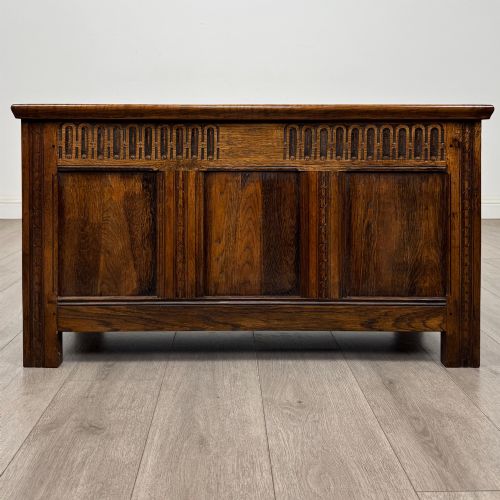

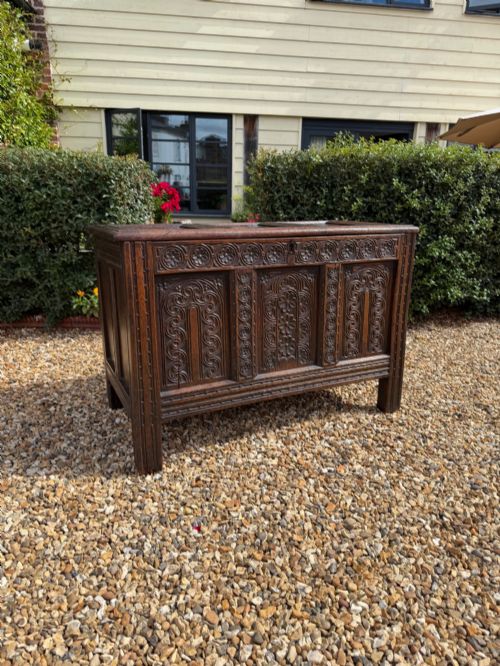
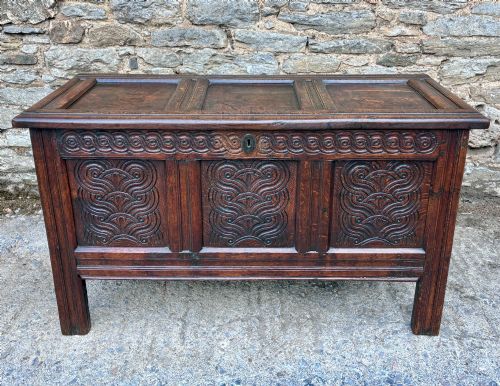
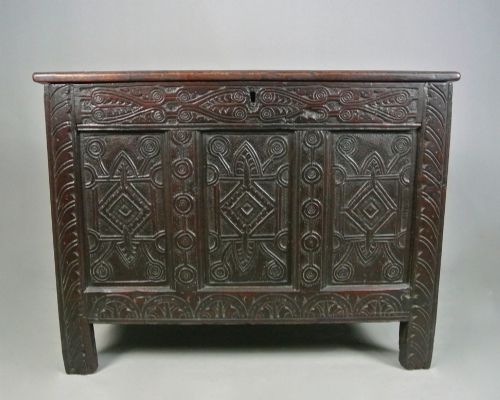
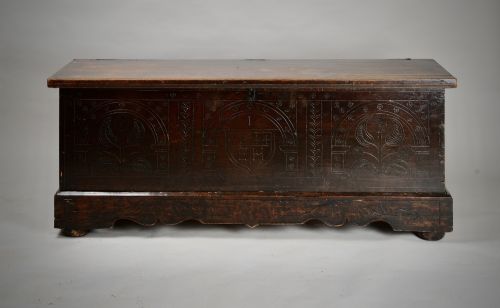
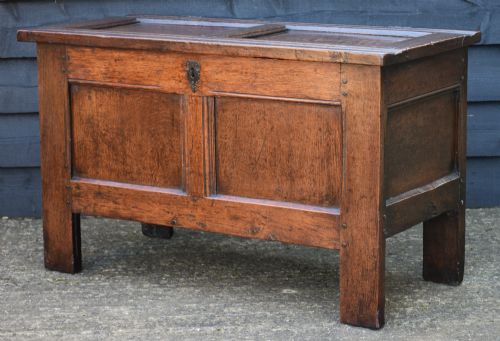
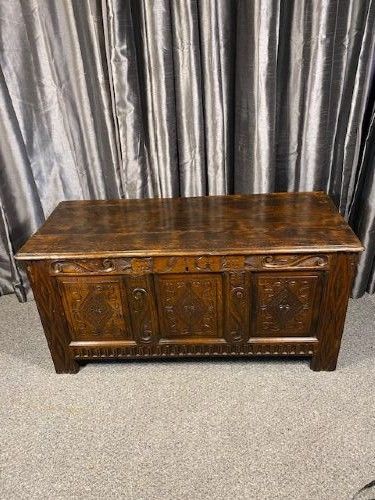
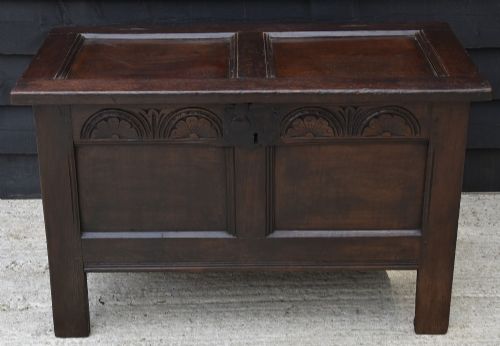
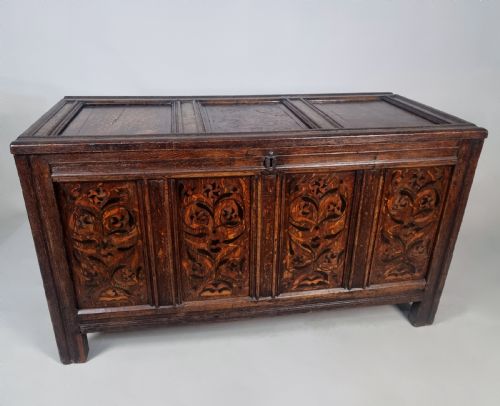
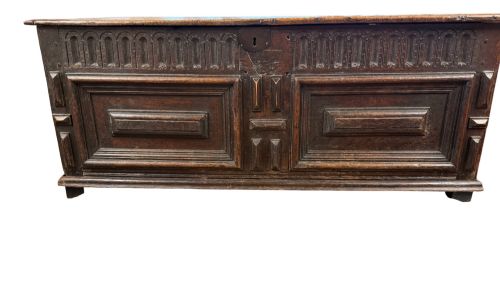
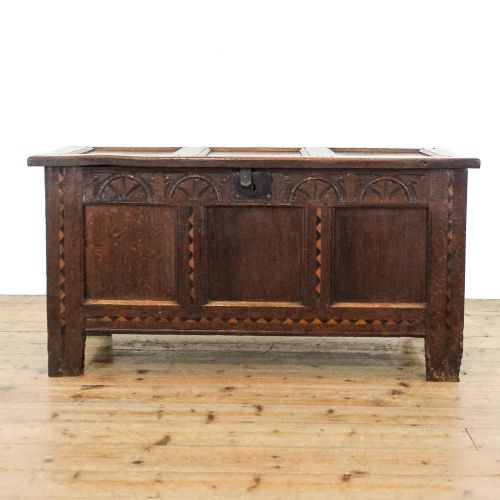
Jacobean Carved Oak Trunk
A jacobean carved oak trunk is a sturdy timber chest built for storage, bringing centuries of English craftsmanship and rich texture into a room.
Jacobean Carved Oak Trunk
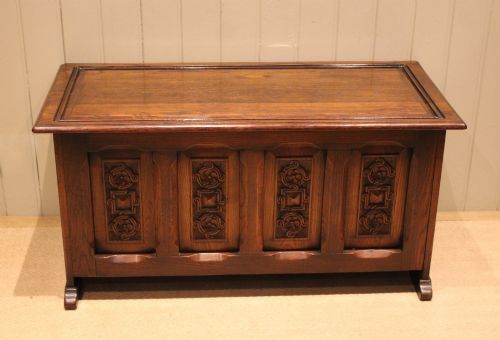
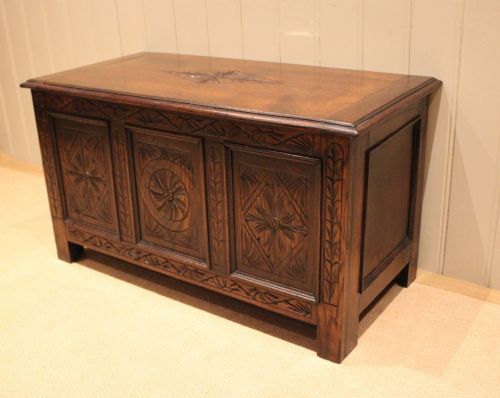
A jacobean carved oak trunk is primarily represented on this page by 17th century pieces alongside later revival examples from periods such as the Edwardian era and 1930.
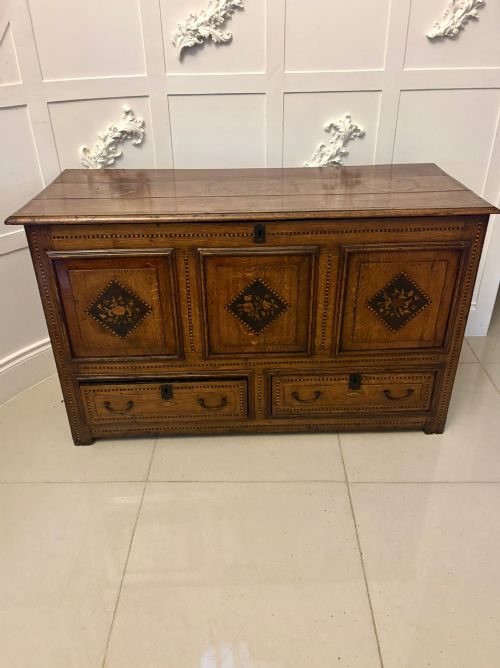
The dominant forms are coffers, mule chests, and blanket boxes that utilise solid timber construction designed to hold household goods.
Buyers encounter both genuine period items dating from the sixteen-tens to the late sixteen-eighties and later interpretations carrying similar panelled characteristics.
Materials and Construction
Makers built these pieces using solid oak, often incorporating iron and brass fittings such as hinges and locks.
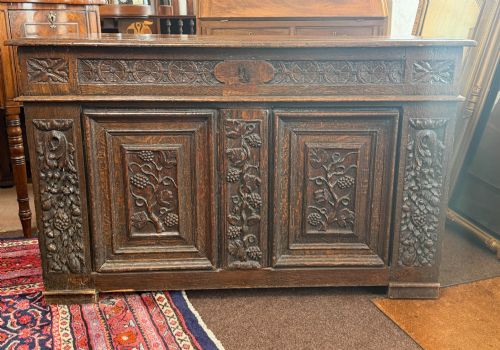
Surface decoration frequently involves hand carving directly into the timber, supplemented in some examples by marquetry inlay, wood inlay, or ebonised wood details.
Jacobean Carved Oak Trunk Retail Price Guide 2026
Typical asking prices for jacobean carved oak trunk among the pieces listed under this phrase on Sellingantiques today, from the lower quarter to the upper quarter. They describe what is for sale here now, not the wider market.
Listings include solid oak examples alongside pieces featuring mixed inlay woods and ebonised wood details from the seventeenth century onward.
Assessing Quality
The standard of carving determines much of the visual merit, distinguishing deeply modelled geometric or figural work from simpler surface scoring.
Originality of the joined timber structure and the presence of period hardware separate authentic seventeenth-century survivors from later revival interpretations.
The Jacobean Carved Oak Trunk Glossary
- Coffer
- A traditional large chest used for storing valuables or household goods. These items typically feature a hinged lid and robust timber framing.
- Mule chest
- A traditional chest fitted with one or more drawers beneath the main storage compartment. This form developed during the seventeenth century to improve accessibility.
- Marquetry inlay
- Decorative patterns formed by fitting contrasting pieces of wood veneer into the primary timber surface. It appears on select refined examples from the period.
- Linenfold
- A style of wood carving that mimics folded fabric, commonly seen on panels of early chests. This motif is a hallmark of traditional period joinery.
Jacobean Carved Oak Trunk: Frequently Asked Questions
What is a jacobean carved oak trunk used for?
These chests were originally built to store household textiles, valuables, and documents securely off damp floors.
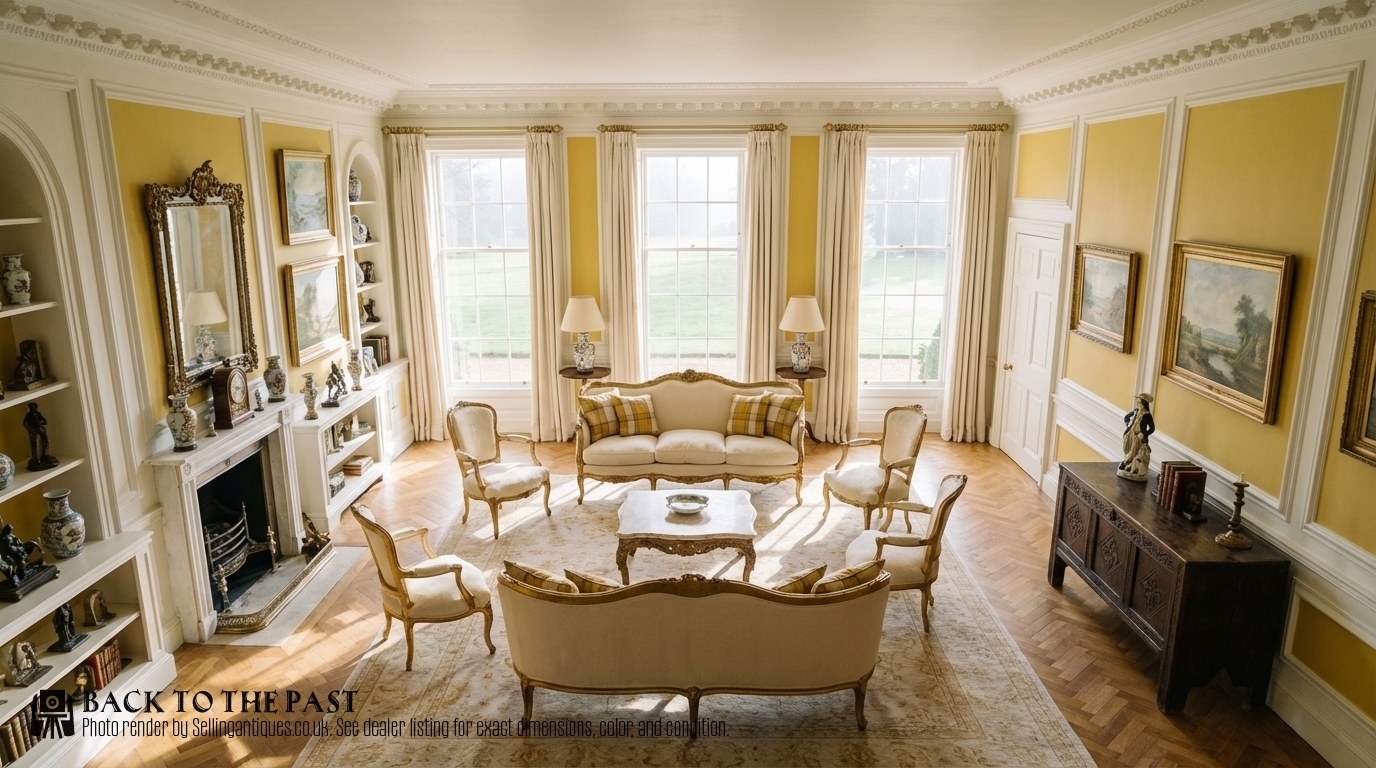
Today, modern owners utilise them as functional coffee tables, blanket boxes, or hallway storage units.
How can I tell a seventeenth century trunk from a revival piece?
Authentic period pieces show traditional joined construction methods, hand-cut peg fixings, and natural timber ageing appropriate to the sixteen-hundreds.
Revival examples from later dates often display machine milling marks or stylistic proportions typical of twentieth-century manufacturing.
What is the difference between a coffer and a mule chest?
A standard coffer provides top-loading storage accessed solely by lifting the main lid of the box.
A mule chest incorporates one or more drawers beneath the main compartment for easier access to stored items.
How should I care for an antique oak trunk?
Keep timber furniture away from direct heat sources and sudden temperature fluctuations to prevent the wood from splitting.
Apply traditional beeswax occasionally to nourish the surface and maintain the natural lustre of the oak.