

Jacobean Carved Oak Coffer
These jacobean carved oak coffer pieces offer sturdy storage and deep historical character for any traditional interior.

Jacobean Carved Oak Coffer
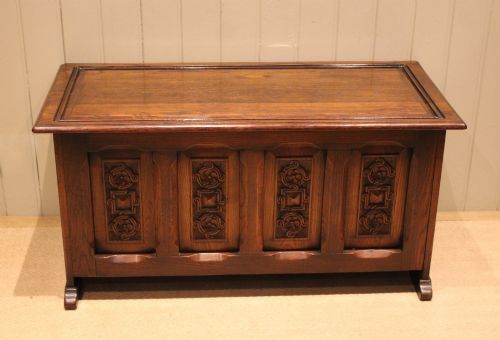
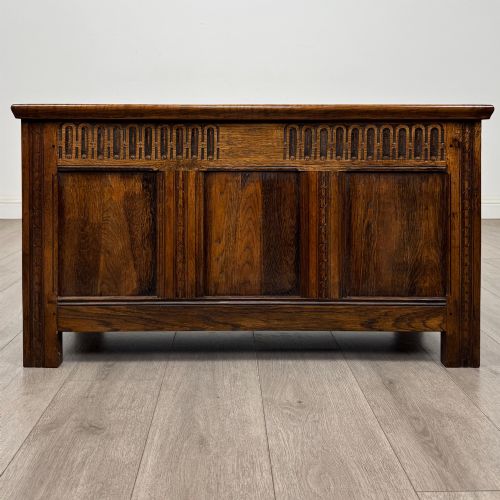
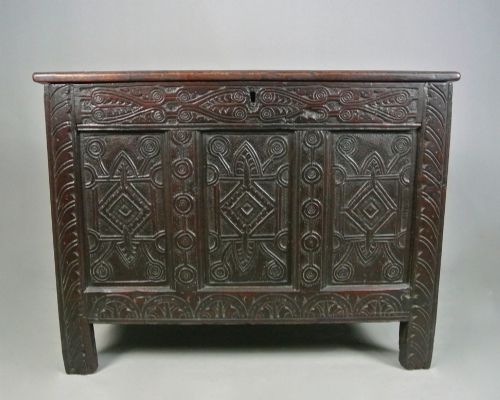
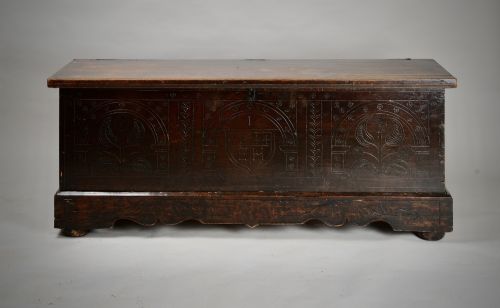
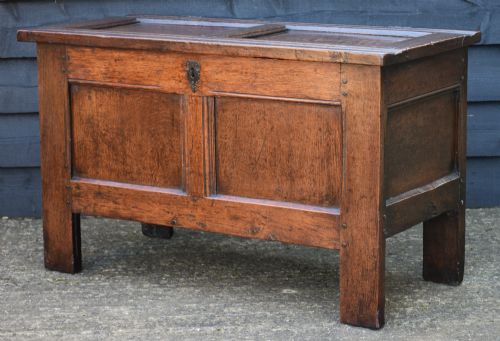
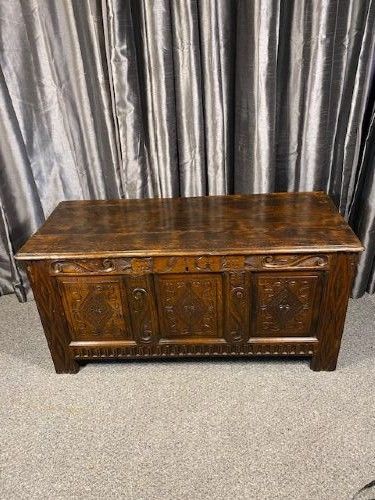
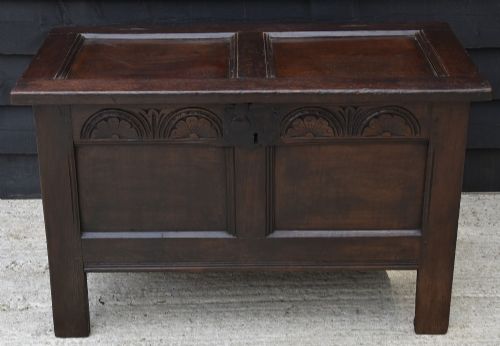
A jacobean carved oak coffer is a heavy storage chest built to hold household valuables, linens, and documents in early English homes. The forms seen here range from plain boarded boxes to joined panel construction with hinged lids.
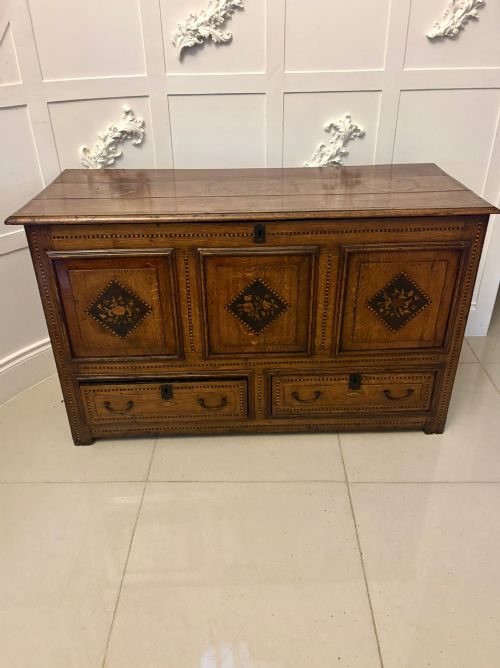
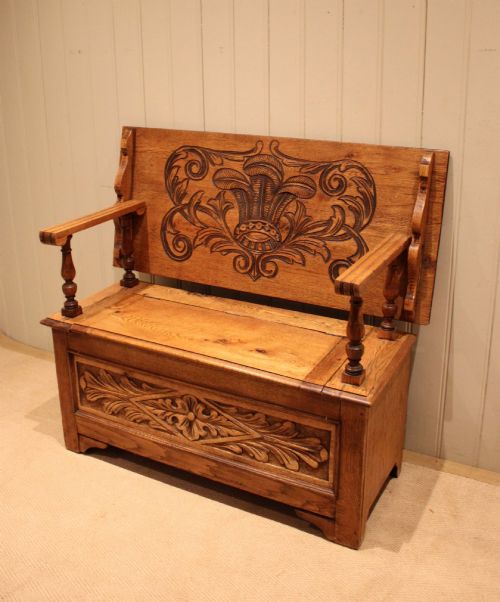
Most examples date to the seventeenth century or appear as later revival pieces made during the twentieth century. Buyers encounter standard blanket boxes alongside mule chests fitted with lower drawers and occasional boarded trunks.
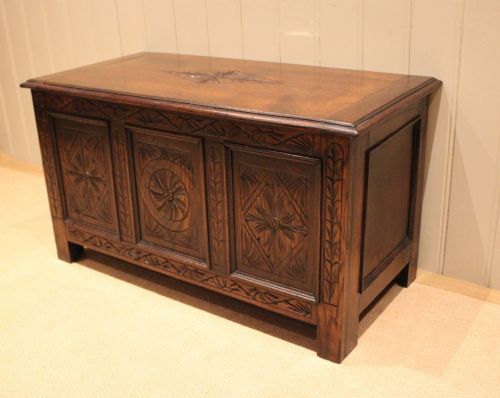
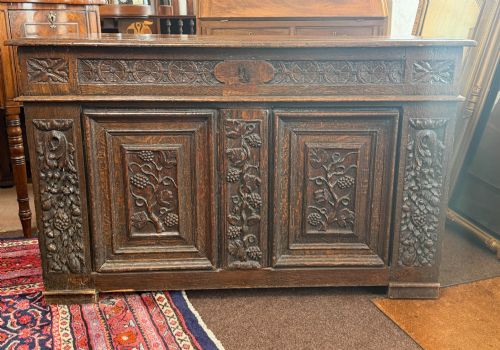
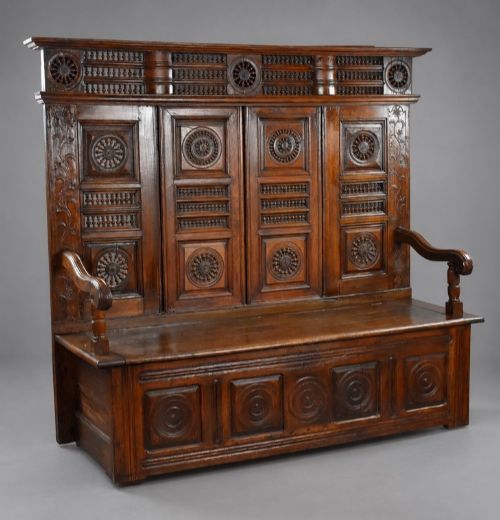
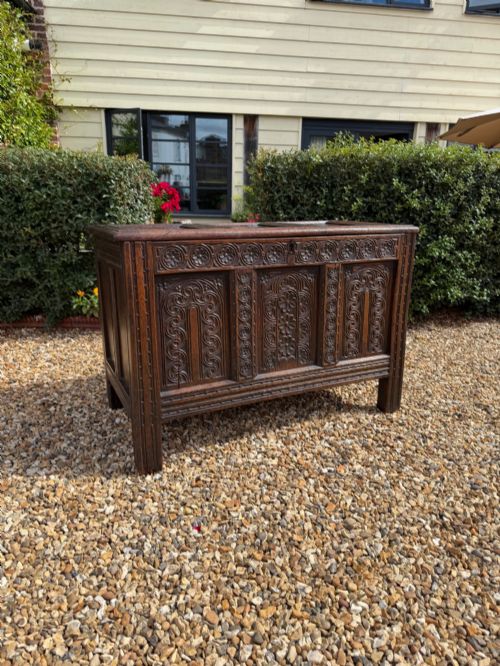
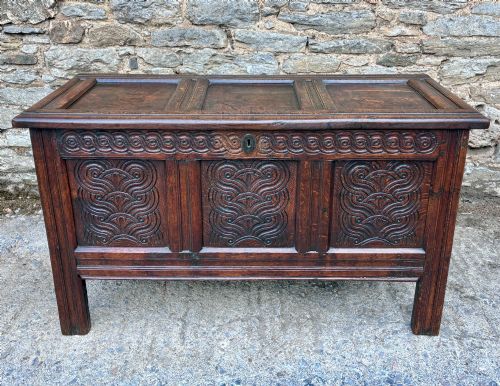
The primary timber is oak, often enriched with carved geometric patterns, stylised foliage, and intersecting arcading. Pieces originate mainly from English domestic workshops spanning the seventeenth, eighteenth, and early twentieth centuries.
How They Were Made
Joiners built these chests using sturdy frame and panel construction designed to accommodate the natural movement of solid oak. Iron hinges and brasses secure the lids, while wooden peg joints hold the structural uprights together without modern fixings.
Surface ornament relied on chip carving, gouge work, and relief panels executed with hand chisels. Certain examples incorporate marquetry inlay using mixed woods to form contrasting geometric bands across the front rails.
What Varies in Quality
The distinction between standard storage boxes and superior survivals lies in the crispness of the hand carving and the integrity of the original timber. Heavy relief work and well-proportioned stile framing elevate an example above plain utility pieces.
Original ironwork, untouched surface patination, and minimal replacement timber distinguish authentic period pieces from later revival items. The depth of the colour in the oak and the tightness of the joinery define the overall standard of survival.
The Jacobean Carved Oak Coffer Glossary
- Coffer
- A heavy wooden chest used for storing valuables, plate, or documents. These lidded boxes form the primary storage furniture of the medieval and seventeenth-century household.
- Joined oak
- Furniture constructed using mortise and tenon joints secured by wooden pegs rather than simple nailed boards. This technique provides structural stability for heavy timber items.
- Stile
- The vertical upright member of a panelled frame. In these chests, the stiles often extend downwards to form the feet supporting the body.
- Mule chest
- A storage chest fitted with one or more drawers beneath the main internal compartment. This form bridges the evolution between the traditional coffer and the modern chest of drawers.
- Marquetry
- The art of applying decorative veneer pieces in contrasting woods to form geometric or floral patterns. Examples here use mixed inlay woods on the front panels.
Jacobean Carved Oak Coffer: Frequently Asked Questions
What were coffers used for originally?
These chests served primarily to store valuable household textiles, church plate, documents, and personal clothing securely. Because domestic architecture lacked fitted cupboards, heavy coffers acted as portable wardrobes and strongboxes.
Travellers also loaded them onto carts to move belongings between country estates. Over time, their flat tops allowed them to function as tables or extra seating within the great hall.
How do I date a seventeenth-century coffer?
Dating relies on examining the construction methods, tool marks, and specific carved motifs found on the framework. Seventeenth-century examples typically display hand-riven oak boards, pegged joints, and characteristic strapwork or guilloche carving.
Revival pieces made in the Victorian or Edwardian eras often use machine-sawn timber, modern screws, and standardised proportions that differ from older workshops. Comparing the patination and wear patterns around the handles helps confirm the age of the chest.
How do I care for antique oak furniture?
Keep wooden coffers away from direct heat sources, radiator vents, and strong sunlight to prevent the solid oak panels from splitting. Maintaining a stable indoor humidity protects the timber and historic joints.
Apply a traditional beeswax polish sparingly to nourish the dry grain and preserve the surface sheen. Avoid modern silicone sprays or heavy liquid cleaners that damage the historic finish.
What is the difference between a coffer and a mule chest?
A standard coffer consists of a single lidded compartment accessed entirely from the top. Items must be lifted out of the well, which can bury smaller objects at the bottom.
A mule chest incorporates one or more drawers built into the base beneath the main storage well. This design allows users to retrieve stored items without opening the heavy lid.