
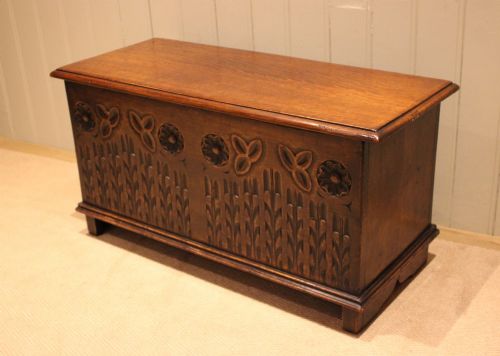


Carved Oak Hope Chest
These carved oak hope chests are solid timber storage pieces built to last centuries, prized for their traditional joinery and period character.
Carved Oak Hope Chest
A carved oak hope chest serves as a traditional storage trunk built from robust timber, frequently referred to in listings as a coffer or blanket box. When searching for a carved oak hope chest, buyers encounter pieces originating from the seventeenth century through to the nineteenth and twentieth centuries, including revival interpretations.
The selection ranges from early seventeenth century British examples to later Victorian and Arts and Crafts iterations, such as Cotswold school limed oak pieces. These forms primarily function as storage furniture, displaying regional characteristics like those attributed to Yorkshire or broader British traditions.
How they were made
Construction relies heavily on solid oak timber, frequently accented with iron or brass hardware for hinges and locks. Makers utilised traditional joinery techniques to frame and panel the heavy wood.
Surface decoration often involves hand carving directly into the oak panels. Later twentieth century pieces introduce alternative finishes like limed oak alongside traditional surfaces.
The listings show solid oak and hardwood constructions spanning from the seventeenth century through to the twentieth century.
What varies in quality
Quality differences stem from the depth and execution of the period carving, distinguishing finely rendered seventeenth century examples from later revival pieces. The integrity of the solid oak construction and the proportion of original timber further separate standard items from superior specimens.
The balance between utilitarian storage and decorative elaboration dictates the character of each piece. Finer examples display sophisticated regional traits and well-preserved original hardware.
The Carved Oak Hope Chest Glossary
- Coffer
- A traditional large chest used for storing valuables, textiles, or documents. These heavy wooden boxes often feature hinged lids and sturdy panelled construction.
- Jacobean
- A decorative style spanning the early seventeenth century, characterised by geometric moulding and linear carved ornamentation. Pieces from this era display dark patinated oak and robust joinery.
- Limed oak
- A wood finish created by rubbing white pigment into the grain of oak to lighten its appearance. This technique gained popularity during the early twentieth century within Arts and Crafts designs.
- Blanket box
- A domestic chest specifically utilised for holding bedding and linens. These practical containers evolved through various centuries in tandem with changing interior storage needs.
Carved Oak Hope Chest: Frequently Asked Questions
What is a carved oak hope chest used for?
These pieces function primarily as domestic storage containers for household textiles, blankets, and precious items. Historically, families utilised them to accumulate linens and possessions in anticipation of marriage.
Today, they serve equally well as living room furniture providing concealed storage while functioning as a coffee table or bench.
How do I date a carved oak coffer?
Dating relies on examining the construction methods, tool marks, and style of carving present on the timber. Early seventeenth century pieces display hand-riven boards and pegged joints distinct from later machinery-assisted production.
Revival pieces from the nineteenth and twentieth centuries often mimic these older styles but betray their true age through standardised hardware and secondary woods.
Are all carved oak chests from the seventeenth century?
Many examples date from the seventeenth century, but the inventory also includes pieces made during the eighteenth, nineteenth, and twentieth centuries. Craftsmen continuously reproduced earlier styles, such as Jacobean revival models built during the Victorian era or 1930s Arts and Crafts interpretations.
Examining the specific period attribution in the listing clarifies whether a chest is period authentic or a later stylistic revival.
How do I care for a antique oak chest?
Maintain the timber by keeping the chest away from direct heat sources and sudden temperature fluctuations that cause wood to split. Regular dusting with a dry cloth preserves the natural patina without requiring heavy polishes.
Applying occasional specialist wax helps nourish the solid oak and protects the historic surface finish from drying out.