


Ivory Porcelain Figurines
These ivory porcelain figurines bring nineteenth and twentieth-century elegance to a room through delicate modelling and subtle glaze work.
Ivory Porcelain Figurines
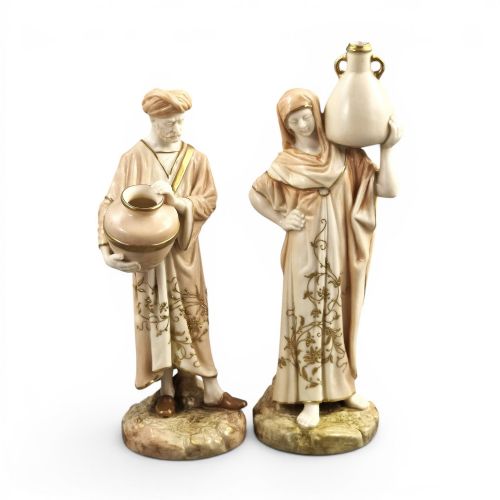
Ivory porcelain figurines encompass sculptural figures, candelabra, jardinieres and candlesticks spanning the Victorian, Edwardian, Art Nouveau and Art Deco periods. The selection here leans heavily towards British factory production, particularly works associated with Royal Worcester and model designers such as James Hadley.
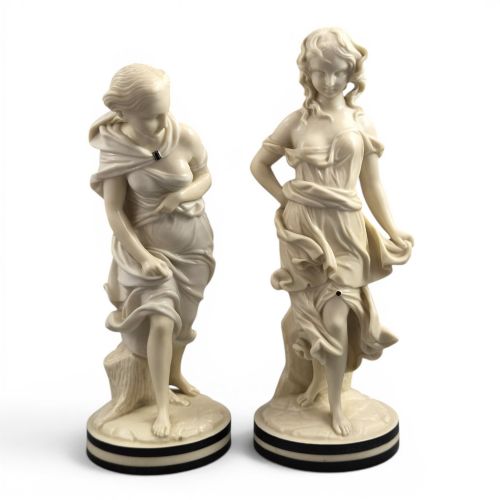
The subjects range from classical maidens and dancers to figures drawing on Orientalism, such as water carriers, musicians and craftsmen. Forms also include decorative statuettes of children, flapper girls and allegorical subjects paired with rustic bases or amphoras.
Makers utilised specialised bodies and glazes to achieve the characteristic warm tone associated with the search phrase. Pieces appear across various decades from the mid-nineteenth century through the nineteen-thirties.
How they were made
Manufacturers shaped these objects using porcelain and parian ware bodies, applying blush ivory glaze to create a soft, matte surface texture. Artisans frequently highlighted the moulded details with gold leaf, gilt, gilding and enamel.
Many items underwent careful hand-finishing by modellers and painters who added colour washes and metallic accents before firing. Certain figures combined intricate sculptural modelling with functional elements like candelabra arms or centrepiece bowls.
Listings feature porcelain, parian ware, blush ivory glaze, enamel, and gold leaf across Victorian, Edwardian, Art Nouveau, and Art Deco styles.
What varies in quality
Quality rests in the crispness of the modelling and the subtlety of the blush ivory glaze work. Early Victorian and Hadley-period examples often display superior definition in facial expressions and drapery folds compared to later editions.
The application of gilding and enamel accents distinguishes standard production pieces from elaborate exhibition-scale works. Artisans who executed complex multi-figure groups or detailed regional dress achieved a greater depth of character.
Royal Worcester·James Hadley·Royal Dux·Kerr and Binns
The Ivory Porcelain Figurines Glossary
- Blush ivory glaze
- A soft, creamy porcelain glaze developed to imitate the warm tone of elephant ivory. It provides a matte surface that accepts delicate enamel and gilt highlights.
- Parian ware
- A fine-grained, unglazed porcelain resembling white marble, named after Paros marble. It gained popularity in the nineteenth century for classical and figural sculpture.
- Shot enamel
- An enamelling technique that produces shimmering, iridescent colour effects across the glazed surface as the viewing angle changes.
- Candelabra
- Branched lighting fixtures designed to hold multiple candles, often produced as matched pairs alongside figural centrepieces.
Ivory Porcelain Figurines: Frequently Asked Questions
What are ivory porcelain figurines?
These pieces are glazed ceramic sculptures, candelabra, and decorative figures produced primarily during the Victorian and Edwardian eras. They depict human subjects ranging from classical maidens to musicians and dancers.
Factories employed specialised blush ivory glazes and fine porcelain bodies to capture realistic skin tones and soft fabric folds. Each item combines sculptural form with delicate painted highlights.
How should I display them?
Place these figures on mantelpieces, side tables, or within cabinet displays where adequate lighting highlights their subtle glazes. Keep them away from direct sunlight and high-traffic edges to protect fragile extremities and gilding.
Pairing candlesticks or candelabra with matching figural centrepieces creates a balanced arrangement on a dining table or sideboard.
How do I date an ivory porcelain figure?
Dating relies on factory factory marks stamped underneath, stylistic cues like Art Nouveau curves or Victorian classical revival drapery, and recorded designer periods. Signature styles often align with specific decades of production.
Examination of the glaze type and enamel palette also assists in placing a piece within the nineteenth or twentieth-century timeline.
Were these figures used functionally?
Many items served as pure decorative statuettes, while others incorporated practical elements into their design. Candelabra and candlesticks provided domestic illumination alongside their sculptural appeal.
Jardinieres and figures holding amphoras or vessels functioned as small planters or decorative receptacles for the Victorian home.