


Ivory Ceramic Vase
An ivory ceramic vase brings soft, warm tones and intricate floral painting to a room, offering a distinct piece of late Victorian and Edwardian craftsmanship.

Ivory Ceramic Vase
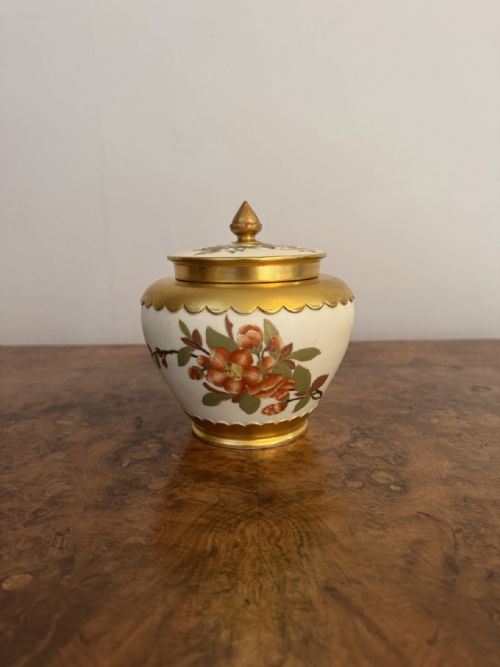
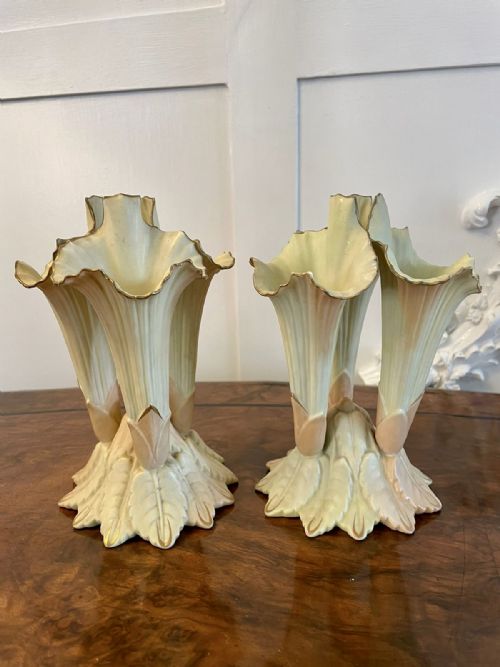
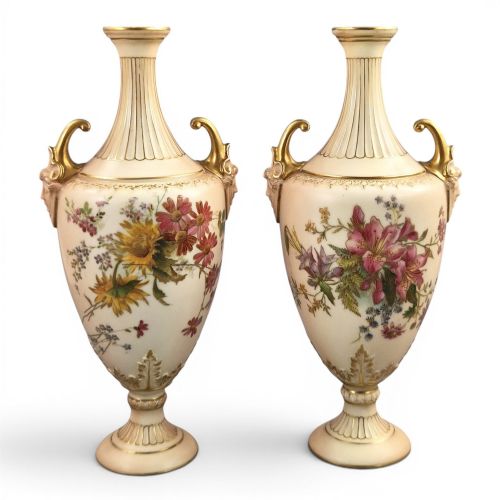
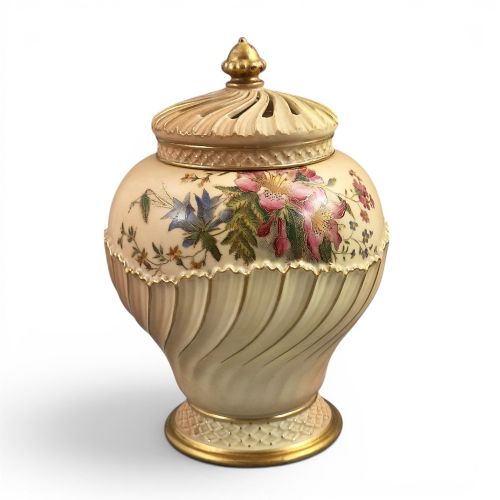
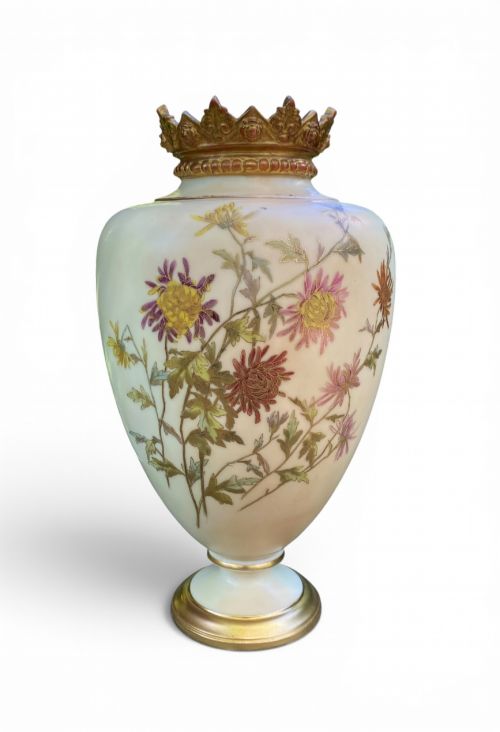
An ivory ceramic vase is typically represented here by late nineteenth-century and Edwardian porcelain pieces finished in a delicate blush ivory ground. These items range from ovoid jars and ewers to spill vases, potpourri pots with crown covers, and decorative urns.
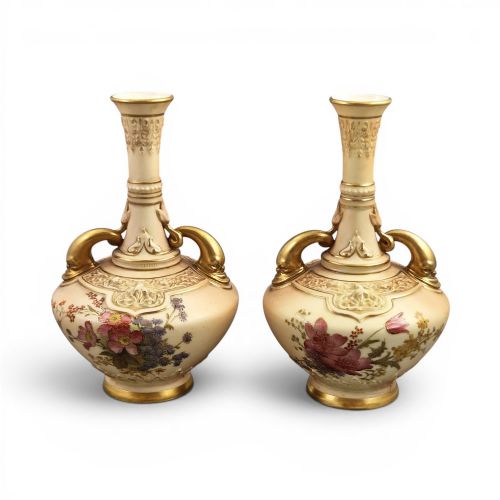
Buyers will most frequently encounter Royal Worcester productions from the late Victorian and Edwardian periods, alongside matching pairs by makers such as Locke and Co. The forms often incorporate gilt handles, pierced detailing, and hand-painted floral motifs including roses and chrysanthemums.
The aesthetic bridges late Victorian design, the Victorian Aesthetic Movement, and early twentieth-century decorative arts. The objects function equally as standalone ornamental works and as functional vessels for dried botanicals or potpourri.
How they were made
The pieces are constructed from porcelain and ceramic bodies finished with a specialised glaze that yields the characteristic matte or satin blush ivory ground. Potters shaped these bodies into complex forms such as ewers, pedestal vases, and lidded jars.
Surface decoration relies on hand-painted enamel colours combined with gilding, gold leaf, and intricate enamel work. Artisans often applied pierced details to handles and rims while integrating painted floral scenes into the ceramic body before a final firing.
Stork motifs and dolphin handles occasionally swim onto the porcelain.
What varies in quality
Quality separates through the finesse of the hand-painting, particularly in complex floral subjects like chrysanthemums or roses, and the intricacy of the modelling on handles, ewers, and pierced covers. Signed works by notable floral and animal painters command particular attention for their artistic execution.
The crispness of the gilding and the delicacy of the blush ivory glaze finish also distinguish finer examples from standard production pieces. Well-matched pairs and complete items retaining original crown covers represent the upper echelon of surviving specimens.
Royal Worcester·Locke And Co
The Ivory Ceramic Vase Glossary
- Blush ivory
- A soft, matte cream or ivory ceramic glaze developed to simulate the warmth of natural tones, frequently used as a background for floral painting.
- Potpourri jar
- A lidded vessel designed to hold dried scented plant materials, often featuring pierced covers or crown lids to release fragrance.
- Ewer
- A large jug with a flared spout and curved handle, produced primarily for decorative display during the Victorian and Edwardian eras.
- Gilding
- The application of gold leaf or gold paint to ceramic surfaces, highlighting handles, rims, and decorative borders.
- Spill vase
- A narrow tubular holder traditionally used to contain wooden spills for lighting fires before the invention of safety matches.
Ivory Ceramic Vase: Frequently Asked Questions
What is blush ivory porcelain?
Blush ivory porcelain is a specialised ceramic finish featuring a soft, matte cream glaze designed to mimic natural tones. It served as a smooth background for hand-painted floral decoration.
Potters utilised this glaze extensively during the late nineteenth and early twentieth centuries on decorative vessels like ewers, jars, and urns.
How were potpourri jars used?
Potpourri jars held dried petals mixed with spices to fragrance Victorian and Edwardian living spaces. The pierced covers allowed the scent to diffuse gently into the room.
Many examples include an inner lid beneath the main crown cover to help preserve the potency of the mixture over time.
How do I date these pieces?
Dating relies on manufacturer date ciphers stamped onto the base of the porcelain, alongside stylistic clues such as Victorian aesthetic forms or Edwardian shapes. Painted signatures by specific artists also help narrow down the period of production.
Most surviving examples date from the late nineteenth century up through the nineteen-twenties.
Are these vases functional?
While originally created as ornamental objects or dry potpourri containers, many can hold dried stems or spill lights. Their delicate painted enamel and gilding mean they are generally suited for display rather than heavy everyday utility.
Care should be taken to clean them gently without harsh abrasives to preserve the original surface decoration.