


Iron Red Kutani Vase
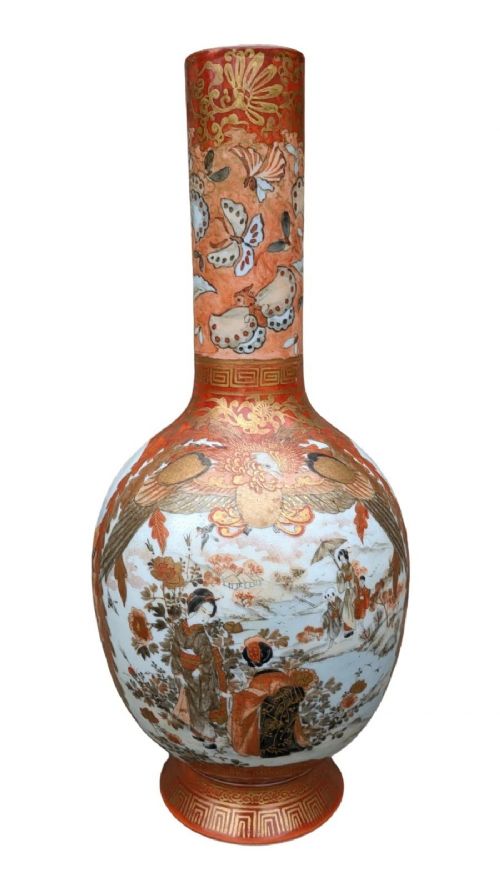
An iron red kutani vase brings rich Meiji period palettes and hand-painted artistry straight into a room.
Iron Red Kutani Vase
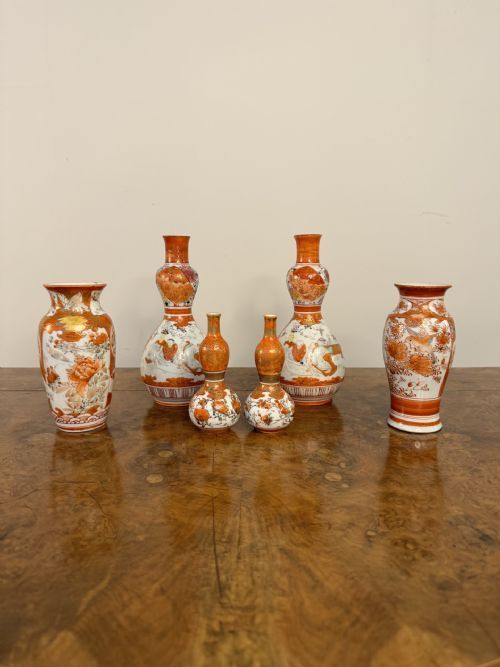
An iron red kutani vase is a striking piece of Japanese porcelain typically created during the Meiji period. These vessels range from small hand-painted examples to large floor vases and paired sets designed for symmetrical display.
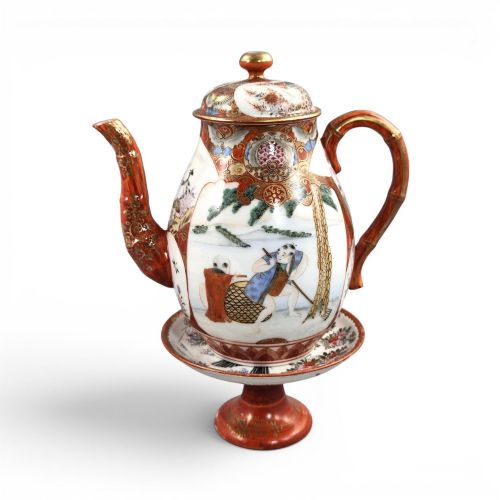
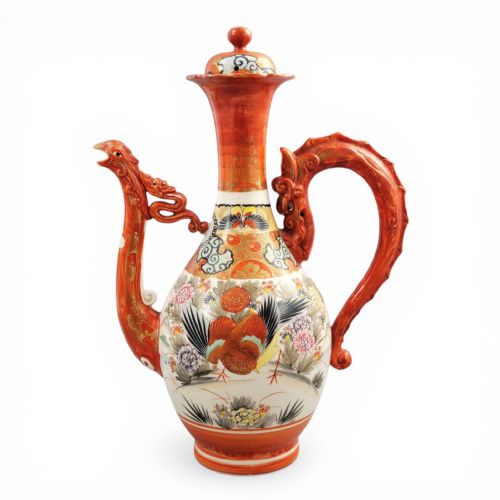
Buyers encountering this search phrase will find nineteenth-century items spanning decades such as 1870, 1890, and 1900. Alongside standard vases, the selection occasionally includes related forms like teapots, ewers, and table lamps.
How they were made
These pieces rely on a base of white porcelain shaped into various vessel forms. Artisans then applied detailed designs utilising overglaze enamel and iron red pigments.
Many examples incorporate additional embellishments such as gold leaf, gilt, and gilding to accentuate the painted motifs. Certain items also integrated brass mountings or silk components during subsequent adaptations.
The listings here draw entirely from the nineteenth century, spanning decades from 1870 through 1900 during the Meiji period.
What varies in quality
The sophistication of the hand-painted decoration determines the standing of an individual piece. Finer examples display meticulous brushwork across complex motifs like dragons and phoenixes rather than simpler repeating patterns.
Scale and proportion also influence desirability, particularly among large pairs and flared neck vases. The integration of gilding and gold leaf distinguishes standard production from more ambitious decorative works.
The Iron Red Kutani Vase Glossary
- Meiji Period
- The era in Japanese history spanning from 1868 to 1912, known for a surge in export ceramics. Pieces from this time often feature elaborate hand-painted decoration.
- Overglaze Enamel
- A technique where coloured glass decoration is applied over a previously fired and glazed ceramic surface. It is then refired at a lower temperature to fuse the colours.
- Gilding
- The application of a thin layer of gold or gold leaf to the surface of the porcelain. This method highlights specific design elements and adds visual warmth.
- Ewer
- A large jug or pitcher with a wide spout, historically used for pouring water. In Japanese export ceramics, these often incorporated mythological creatures like dragons and phoenixes.
- Porcelain
- A hard, translucent ceramic material made from clay containing kaolin. It forms the durable white body underneath the iron red and enamel decorations.
Iron Red Kutani Vase: Frequently Asked Questions
What is an iron red kutani vase?
An iron red kutani vase is a nineteenth-century Japanese porcelain vessel decorated with characteristic reddish iron pigments and enamel paints. These objects originate predominantly from the Meiji period and showcase traditional hand-painted motifs.
Collectors prize them for their vibrant palettes and varied forms, which include large pairs and shaped vessels. They reflect the peak of Japanese ceramic export artistry during the late nineteenth century.
How do I date a kutani vase?
Dating relies on examining the painting style, potting techniques, and overall aesthetic characteristics associated with the Meiji period. Nineteenth-century examples often display specific brushwork patterns and overglaze enamel combinations.
Contextual clues such as associated export markers or mounting styles can also narrow down the decade of production between 1870 and 1900.
Were these vases made for export?
A substantial portion of nineteenth-century kutani ceramics was produced specifically for international markets following the opening of Japan. Western demand influenced the creation of large pairs and decorative forms suited to European and American interiors.
These export pieces combined traditional Japanese craftsmanship with formats that appealed to overseas collectors.
How should I display a large kutani vase?
Large pairs look striking when placed symmetrically on pedestals, sideboards, or console tables where their height and colour can be fully appreciated. Adequate lighting helps accentuate the fine details of the overglaze enamel and gold leaf.
Positioning them away from direct foot traffic ensures these nineteenth-century porcelain objects remain secure while serving as a focal point in a room.