






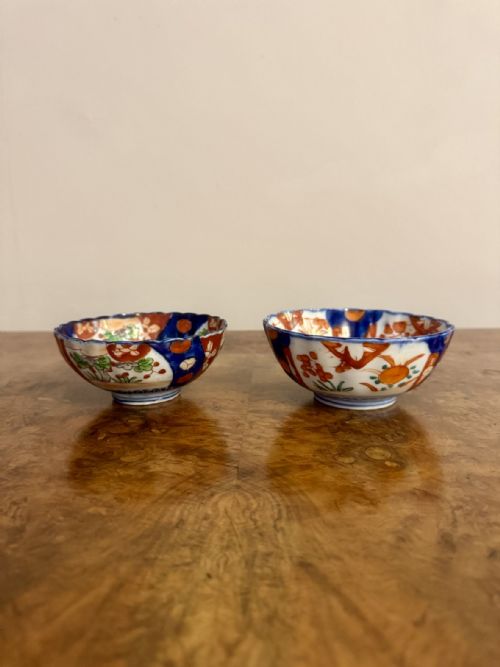
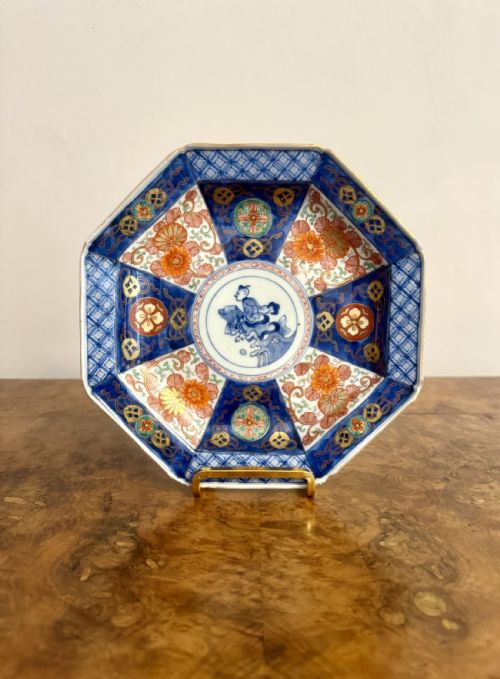
Iron Red Japanese Dish
An iron red japanese dish brings rich palette and hand painted bird or floral motifs into a room, offering strong ceramic presence for the collector.
Iron Red Japanese Dish
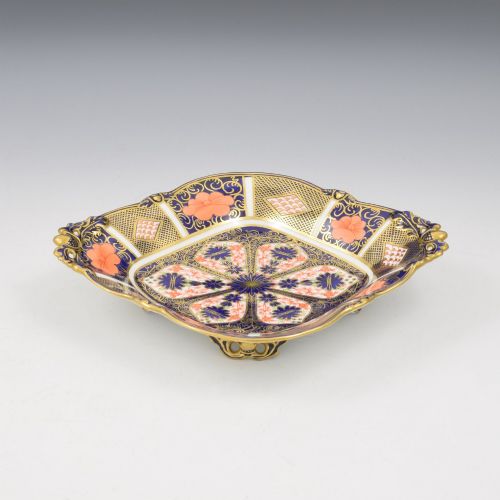
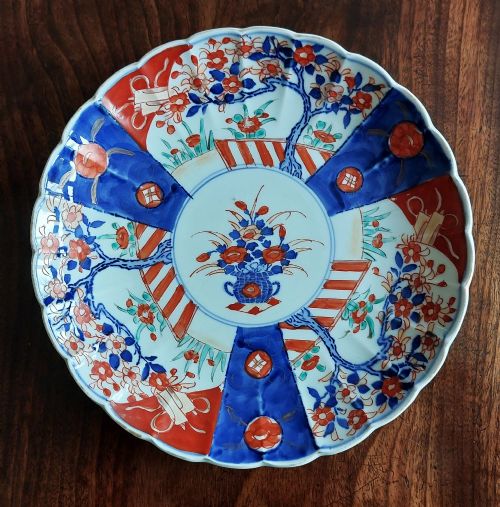
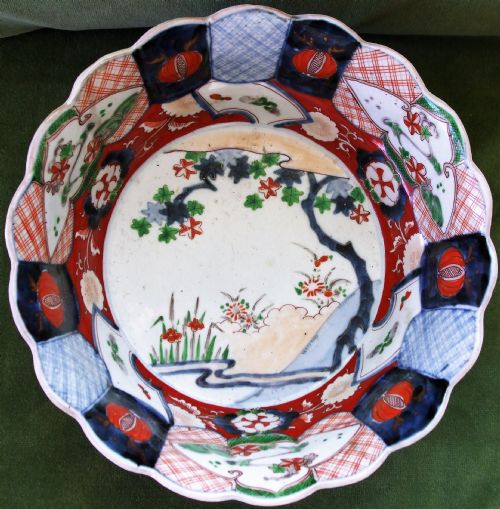
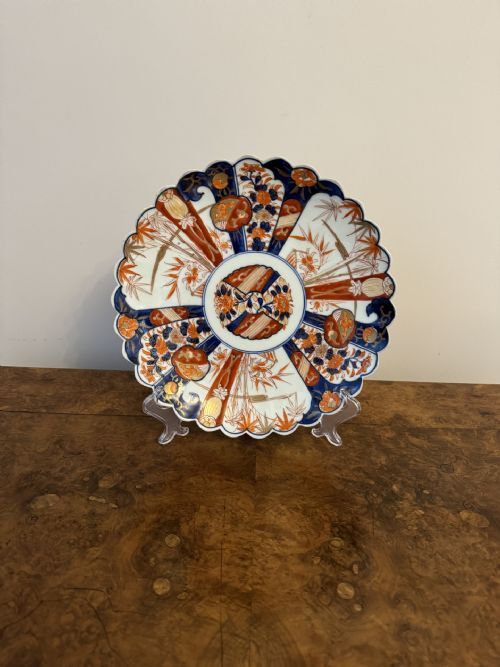
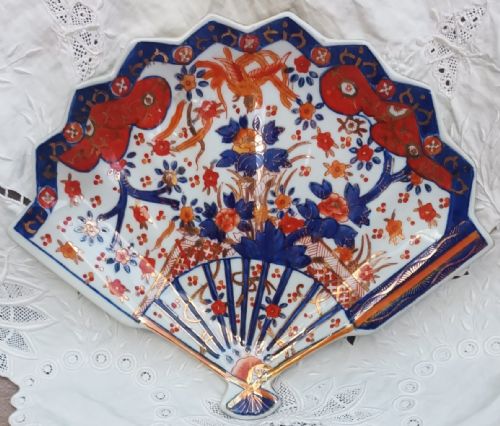
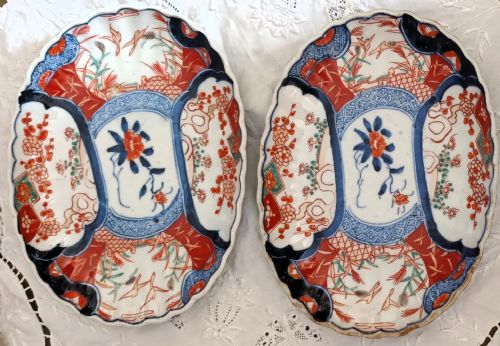
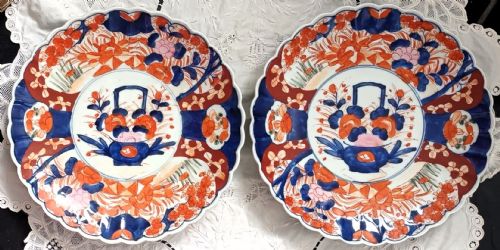
An iron red japanese dish encompasses decorative plates, bowls, chargers, and trays produced primarily during the nineteenth century and the Meiji period. These ceramics frequently display traditional patterns featuring exotic birds, floral designs, and the Seven Lucky Gods painted across scalloped, hexagonal, or square forms.
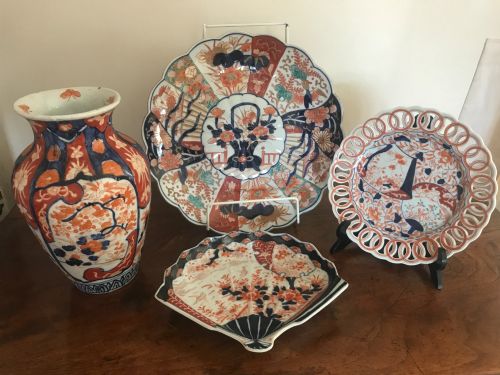
Buyers will encounter various formats on this page ranging from large display chargers to smaller serving dishes and miniature bowls. The items reflect classic Japanese aesthetic traditions spanning the Meiji era and nineteenth century production periods.
How they were made
Potters shaped porcelain and ceramic bodies before applying underglaze cobalt, enamel, and distinctive iron red pigments by hand. Artisans often incorporated gold leaf, gilt, and gilding highlights to accent the detailed pictorial scenes.
The firing process fused the glaze and enamel layers onto the ceramic base, producing durable decorative surfaces intended for display or domestic service.
The listings on this page span the nineteenth century, the Meiji period, and the Victorian era, utilising porcelain and ceramic with gold leaf.
What varies in quality
Quality depends on the precision of the hand painted brushwork and the clarity of the cobalt underglaze combined with enamel and gilt details. Pieces showing deliberate composition, such as complex depictions of the Seven Lucky Gods or exotic birds, stand apart from simpler patterns.
The crispness of moulded edges, particularly on scalloped, hexagonal, and ribbon plates, indicates the standard of the original ceramic production and subsequent preservation.
Royal Crown Derby
The Iron Red Japanese Dish Glossary
- Imari
- A style of Japanese porcelain decorated in underglaze blue, iron red, and gilt. This aesthetic originated in Arita and became widely exported to Europe.
- Meiji Period
- The era in Japanese history lasting from 1868 to 1912. Many decorative plates and chargers on the market date from this time of prolific ceramic output.
- Charger
- A large decorative plate intended for display rather than table service. These pieces frequently measure over twelve inches across and command central visual attention on walls or tables.
- Cobalt Underglaze
- A blue pigment applied to the ceramic body before glazing and firing. It provides the deep contrasting outlines beneath the enamel layers.
Iron Red Japanese Dish: Frequently Asked Questions
How were iron red japanese dishes used?
These pieces served as decorative display chargers, serving dishes, and tableware in period interiors. Large chargers were typically hung on walls or set on sideboard stands.
Smaller dishes and bowls functioned practically for food service or as decorative trays for domestic items.
How do I identify a Meiji period piece?
Meiji period ceramics often display distinct combinations of iron red enamel, cobalt underglaze, and gilt detailing depicting birds, florals, or deities. The porcelain bodies typically exhibit nineteenth century manufacturing traits.
Scalloped edges and hexagonal plate forms are also characteristic markers of this active decorative era.
Can I use these dishes for food?
Most antique decorative plates and chargers are best preserved through display rather than daily culinary use. The delicate enamel and gilt decoration can wear with repeated washing.
Gentle handling ensures the hand painted iron red pigments remain vibrant over time.
What is the difference between Imari and Kutani ware?
Imari ceramics rely on a tripartite palette of iron red, cobalt blue, and gold highlights on porcelain. Kutani pieces often utilise distinct monochromatic or varied enamel schemes.
Both Japanese traditions produced fine decorative bowls and plates during the nineteenth century.