
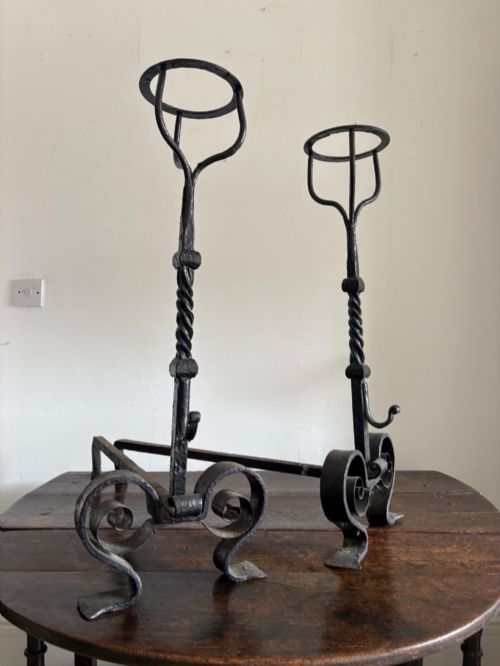
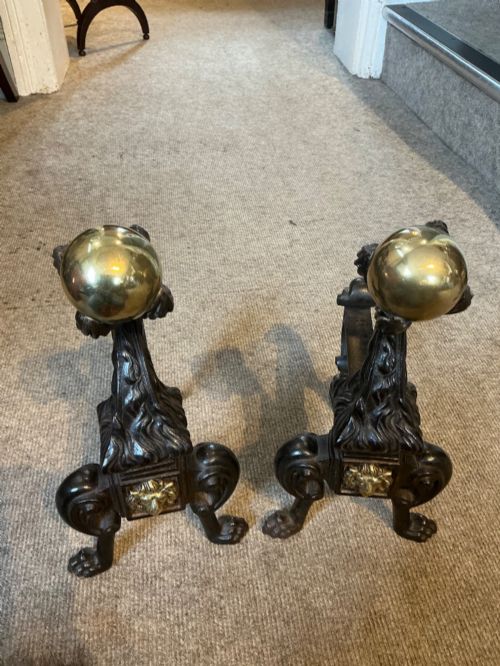

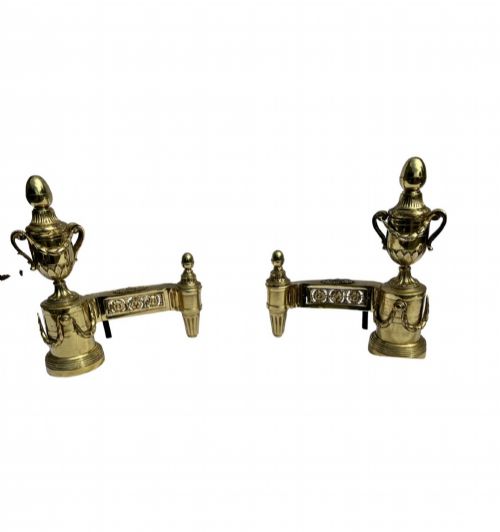
Iron Fireplace Andirons
Iron fireplace andirons provide structural support for logs within an open hearth while adding period character to the chimney breast.
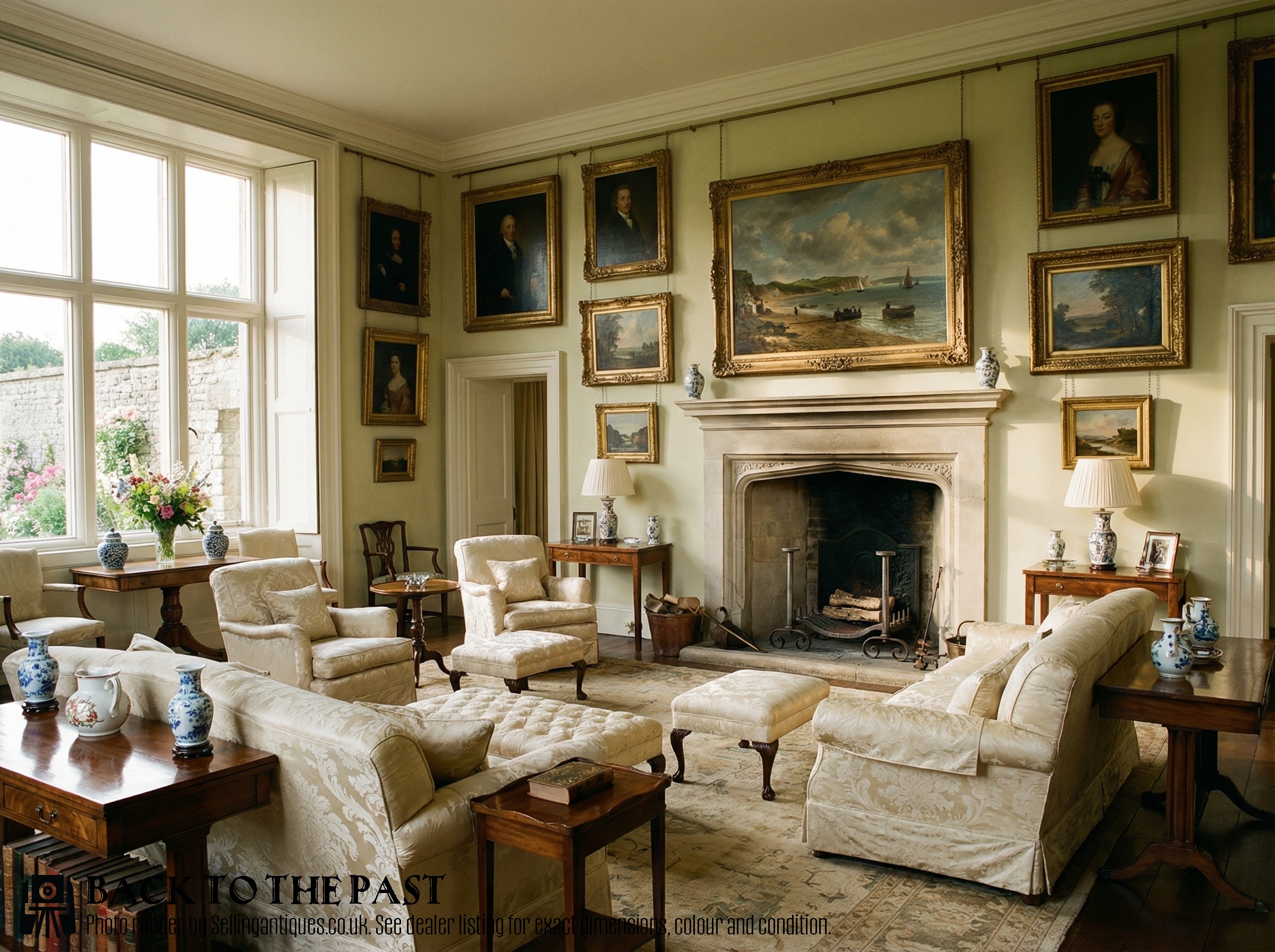
Iron Fireplace Andirons
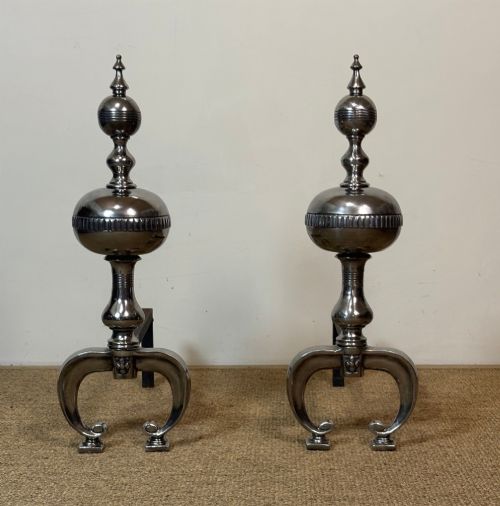
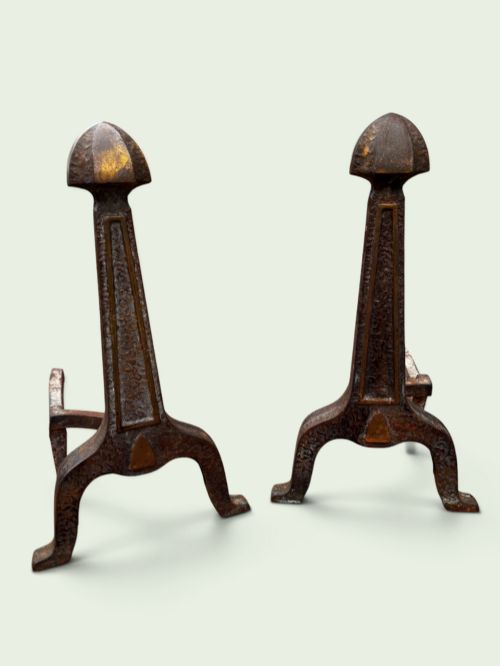
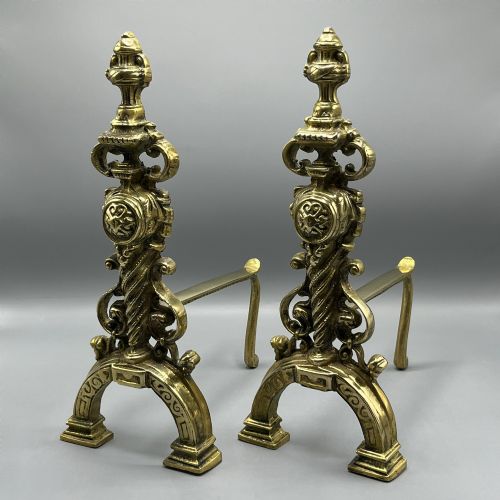
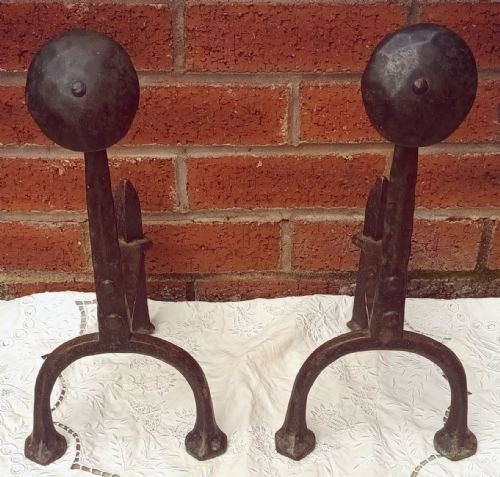
Iron fireplace andirons serve as essential hearth furniture designed to hold wood logs above the hearth floor for improved airflow. The pieces available span heavy Victorian floor stands, slender Arts and Crafts designs, and ornate French country pairs.
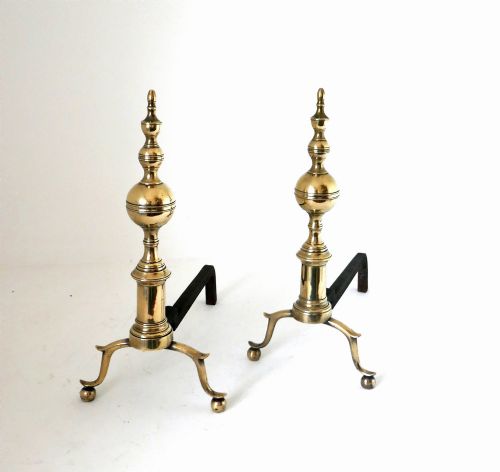
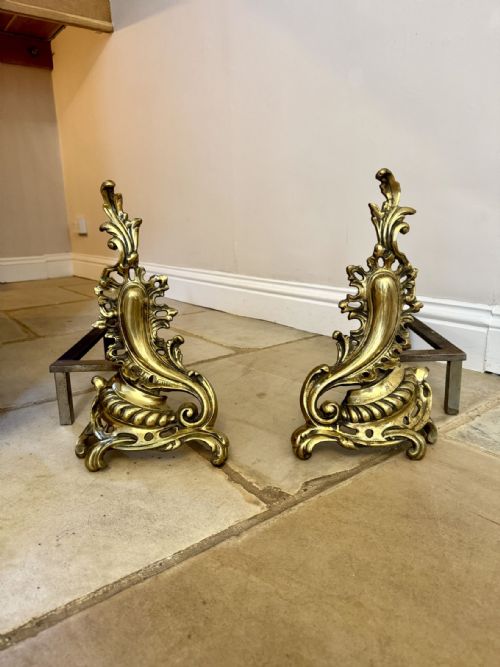
Buyers encounter numerous regional variations including English Georgian brass-mounted versions and French rococo examples utilising cast or wrought iron. Many pairs incorporate matching fire baskets or grates to complete the hearth arrangement.
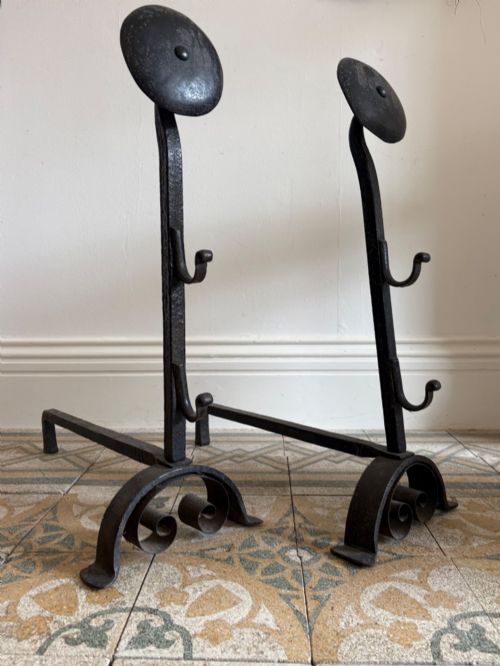
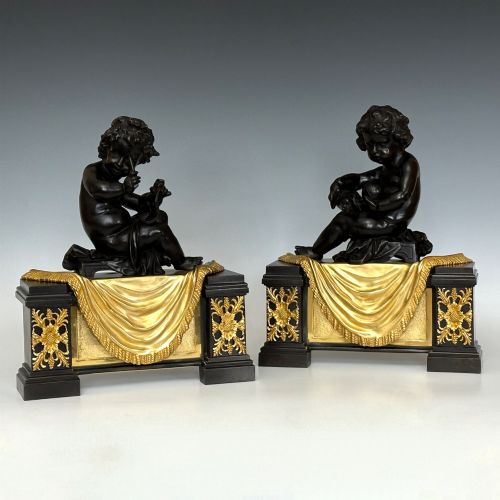
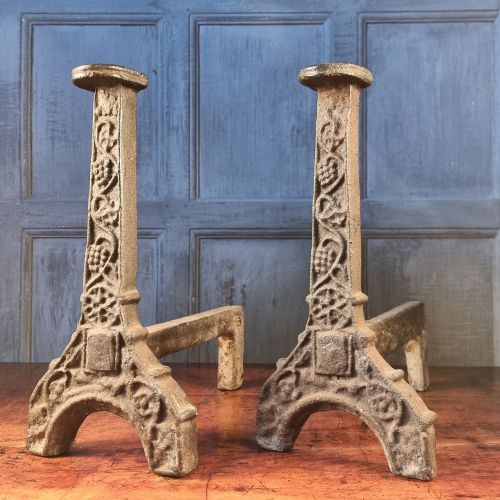
The form ranges from utilitarian wrought iron supports dating to the nineteenth century to decorative cast variants featuring dragon motifs or parcel gilt cherubs. These functional accessories anchor the visual weight of period chimney pieces.
Materials and construction
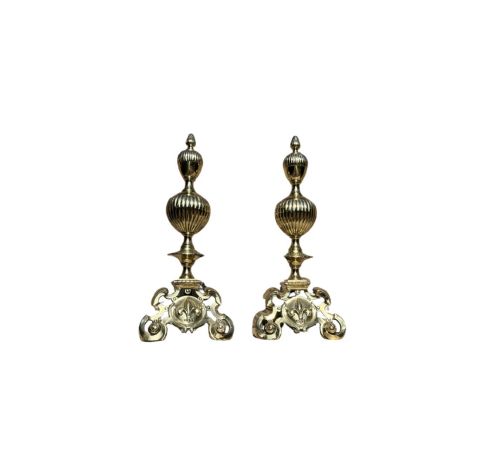
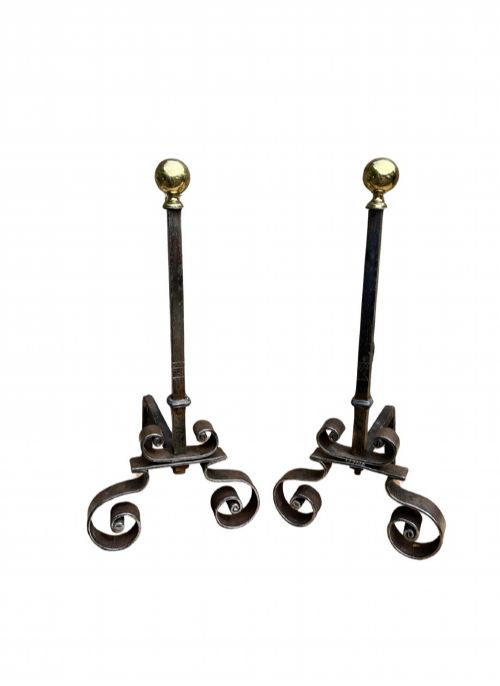
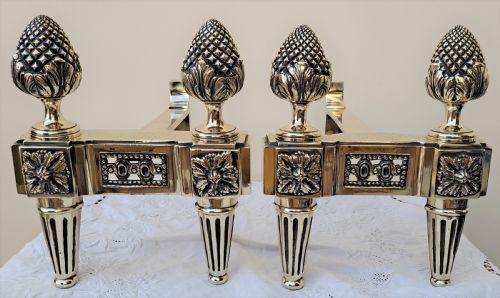
Makers utilised cast iron and hand-forged wrought iron for the primary uprights and horizontal billets, ensuring durability under intense heat. Many pairs combine iron bodies with brass finials, bronze mountings, or ormolu details for decorative contrast.
The manufacturing process involved traditional blacksmithing techniques for wrought iron components alongside foundry casting for intricate Victorian and Edwardian scrollwork. Surface finishes varied from polished brass highlights to blackened protective coatings on raw iron.
Some nineteenth-century hearth sets hid subtle dragon motifs among the iron scrollwork to peer out from the ashes.
Evaluating craftsmanship
Quality rests in the substantial weight of the metal and the precision of the hand-forging or casting, where finer examples display crisp detailing on motifs like French rococo scrolls. Heavy gauge iron and solid brass components indicate superior structural integrity compared to lighter decorative copies.
The refinement of the joinery and the balance of the billet bar reveal the maker's competence in producing functional hearth furniture that resists warping under heat. Superior pairs maintain stability and alignment across both matched standards.
The Iron Fireplace Andirons Glossary
- Andiron
- A horizontal metal support raised on legs, used in pairs to hold logs in an open fireplace. They are also known historically as fire dogs.
- Fire Basket
- A metal grate holding fuel within a fireplace, frequently utilised alongside andirons to contain burning wood or coal.
- Chenet
- The French term for an andiron, commonly associated with decorative bronze, ormolu, and rococo styling.
- Billet Bar
- The horizontal iron bar extending backward from the upright standard to support the weight of the logs.
- Gothic Revival
- A nineteenth-century design style drawing on medieval architectural motifs, frequently expressed through pointed arches and heavy ironwork.
Iron Fireplace Andirons: Frequently Asked Questions
How do andirons work in a fireplace?
Andirons hold logs off the floor of the hearth on horizontal bars, allowing air to circulate underneath the fuel for a cleaner burn. The vertical front standards prevent wood from rolling out into the room while protecting the back wall.
They function independently or support larger fire baskets and grates depending on the setup of the hearth. Their substantial weight keeps heavy timber stable throughout the evening.
Can I use antique andirons with a modern fire?
Historic andirons suit modern open hearths provided the scale matches the depth and width of the chimney opening. Wrought iron and cast iron variants handle wood fires effectively when paired with a sturdy hearth floor.
Care should be taken with brass or ormolu mounts to avoid direct flame damage during intense burns. Regular cleaning prevents soot accumulation from dulling the metal surface.
How do I identify Victorian iron andirons?
Victorian examples often display heavy cast iron construction, Gothic revival detailing, or combination sets including matching fire irons and coal scuttles. The manufacturing tends toward robust proportions and standardised foundry marks.
Later nineteenth-century pieces frequently incorporate brass finials or aesthetic movement influences alongside traditional wrought iron techniques.
What is the difference between andirons and fire dogs?
The terms describe the same object, with fire dogs serving as the traditional British name and andirons functioning as the more common historical descriptor. Both refer to the paired metal supports used in open hearths.
Regional preferences and dealer descriptions dictate which term appears on individual listings, though the function remains identical.