
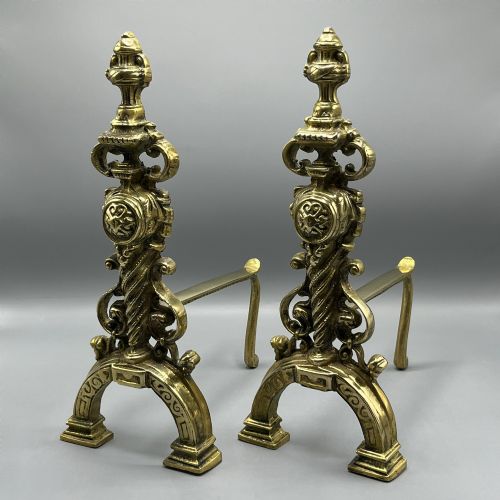
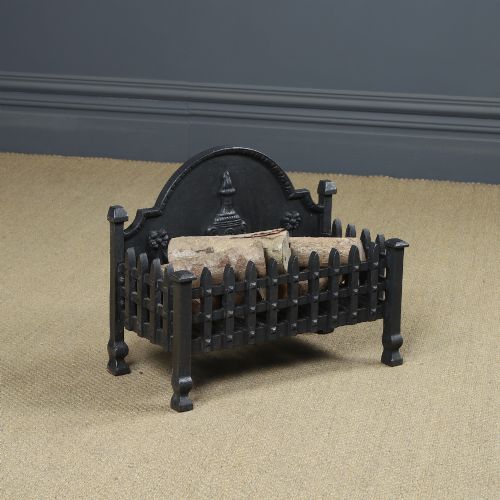
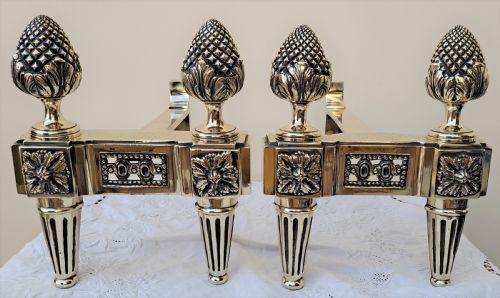
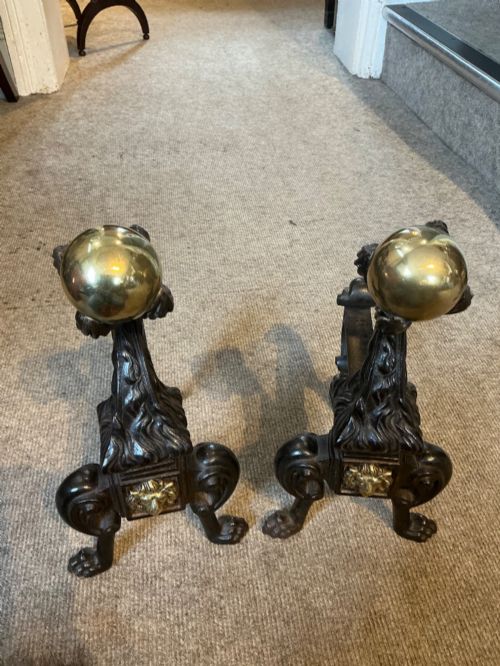
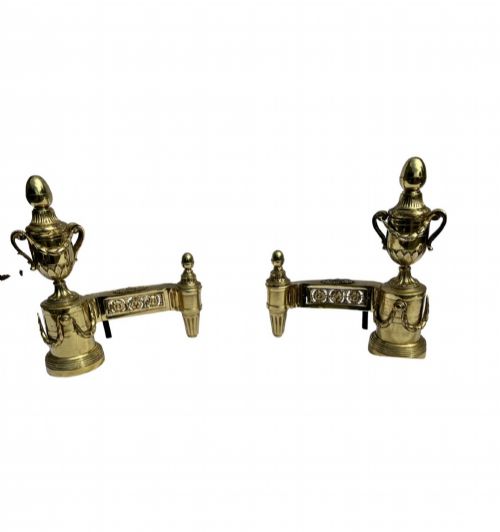
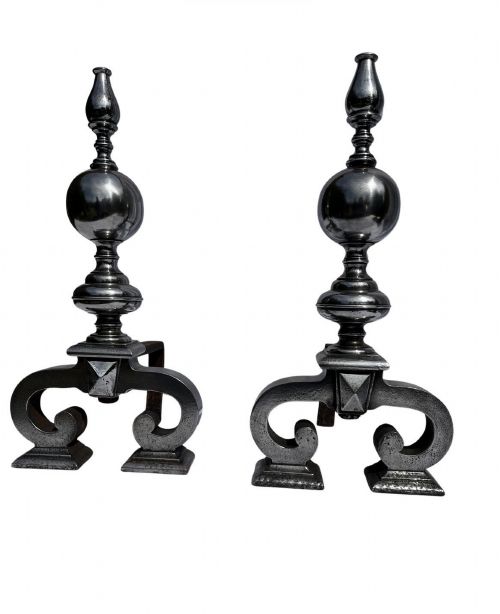

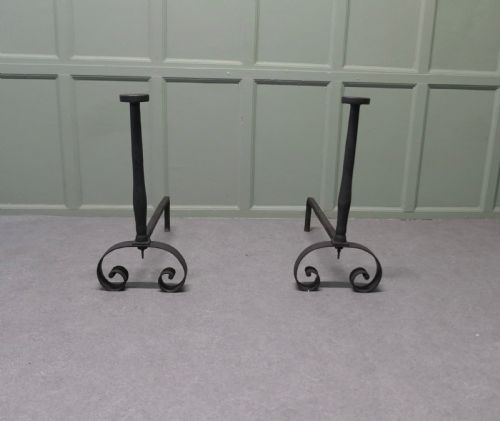


Cast Iron Fireplace Dogs
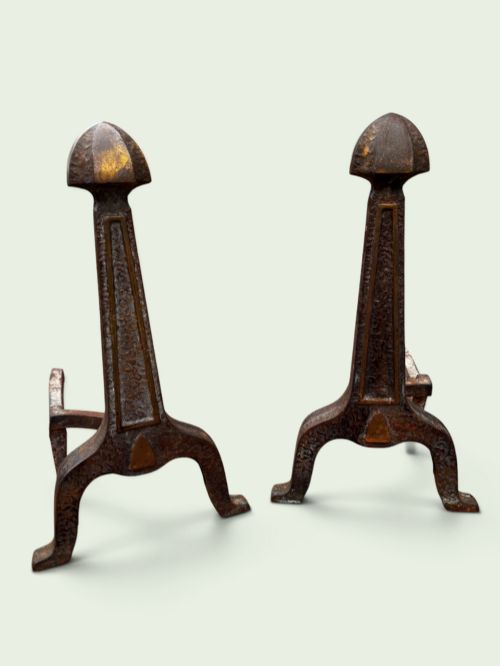
These cast iron fireplace dogs support logs within an open hearth while adding substance and architectural weight to the room.
Cast Iron Fireplace Dogs
When you search for cast iron fireplace dogs, you encounter functional hearth furniture designed to hold firewood above the hearth floor for better air circulation. These items frequently appear paired as andirons, fire dogs, or chenets, often accompanying fire baskets, grates, and fenders.
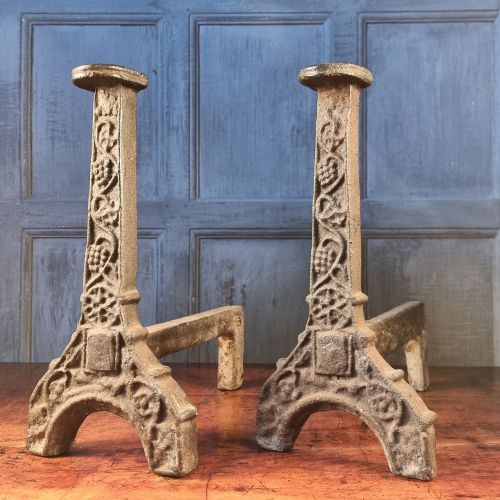
The inventory on this page spans several distinct periods, including Georgian, Victorian, and the sixteenth century, alongside later revivals from the nineteenth and early twentieth centuries. You are most likely to meet Victorian pairs and heavy nineteenth-century examples alongside brass and iron fire grates.
How they were made
Makers utilised cast iron, wrought iron, and steel for the primary load-bearing shafts and grates, capitalising on the metal's heat resistance and structural weight. Molten metal poured into moulds produced solid forms with crisp detailing, which were sometimes polished to a bright finish.
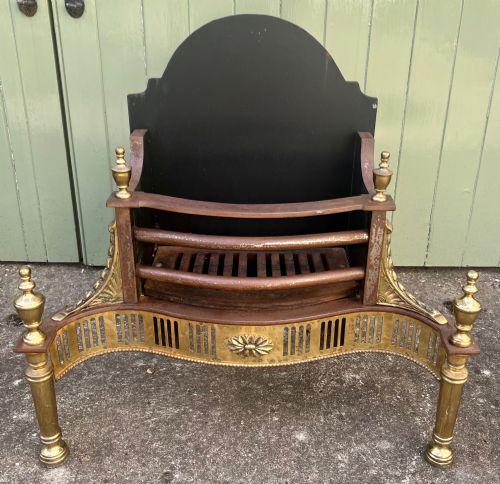
Brass, solid brass, and gilt brass components frequently form the decorative fronts, finials, and feet attached to the iron bodies. These mixed-metal assemblies combine the functional durability of iron with the ornamental brightness of brass.
Listings feature materials including cast iron, solid brass, polished iron, and firebrick across multiple design styles.
What varies in quality
The standard of a pair rests in the crispness of the casting and the thickness of the metal used in the shaft and upright. Heavier pieces possess a substantial physical presence and stability that lighter contemporary reproductions lack.
Design execution distinguishes standard utility items from more ambitious decorative work, particularly in revival pieces displaying Gothic, Renaissance, or Neoclassical motifs. The integration of solid brass elements with well-finished iron creates a more resolved object.
The Cast Iron Fireplace Dogs Glossary
- Andirons
- Supports for logs in an open fireplace, consisting of a horizontal bar with uprights at the front. They are also known widely as fire dogs.
- Chenet
- The French term for an andiron, frequently encountered on decorative pieces bearing Rococo or Baroque stylistic influences.
- Fire basket
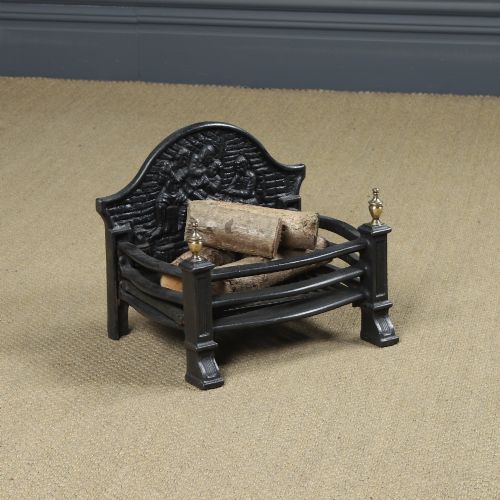
- An iron grate designed to hold coal or wood within the fireplace, often used in conjunction with andirons.
- Fender
- A low metal guard placed before a hearth to contain sparks and ash. They often appear alongside matching fire dogs in period sets.
- Finial
- The decorative ornamental terminal ornament topping the upright post of an andiron. They take various cast and turned brass forms.
Cast Iron Fireplace Dogs: Frequently Asked Questions
How do I use fire dogs?
Fire dogs sit within the hearth to hold logs above the base of the fireplace. This elevation permits air to circulate beneath the wood for an improved burn.
They function independently or flank a matching fire basket to contain rolling logs. Their heavy uprights also serve to anchor the arrangement securely.
What is the difference between andirons and fire dogs?
The terms are used interchangeably to describe the same hearth furniture. Both refer to heavy metal supports designed to hold firewood.
Regional preferences and dealer descriptions dictate which term appears on a listing. Historically, specific forms carried regional names, but today both denote the same object type.
Are these pieces suitable for active fires?
Most historic iron and brass examples were manufactured precisely for active hearth use. Their solid cast iron and wrought iron construction handles high temperatures safely.
Care should be taken with pieces featuring delicate brass ornamentation or specific antique finishes. Checking the metal thickness ensures the piece remains structurally sound for burning wood.
How do I clean cast iron and brass?
Cast iron surfaces benefit from light dusting and occasional treatment with suitable grate polish or blacking to maintain the finish. Avoid using water directly on untreated iron to prevent rust formation.
Brass components respond well to gentle cleaning with a soft cloth to preserve their aged patina. Heavy abrasive cleaners should be avoided so the historic surface remains intact.