



Victorian Style Fire Dogs
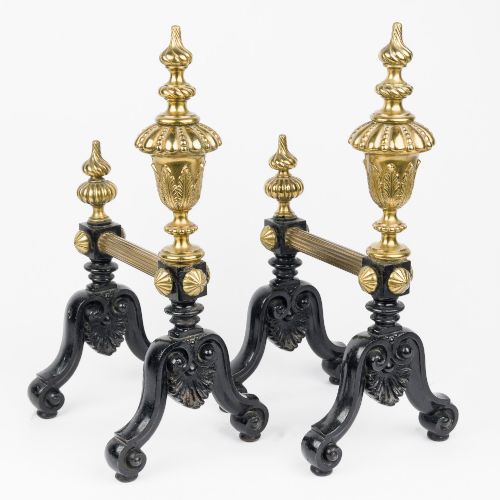
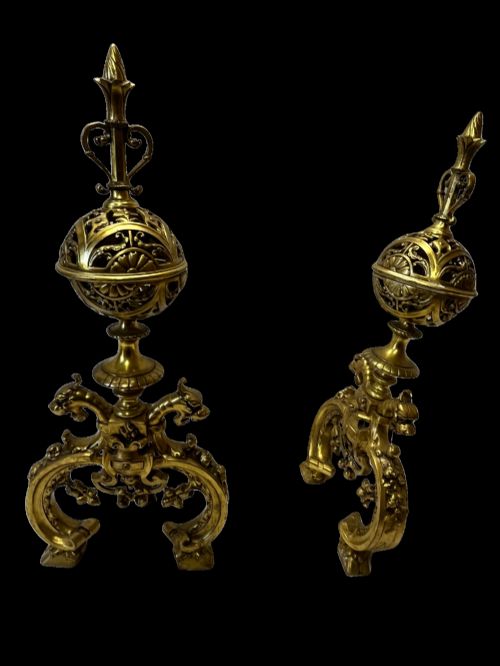
These victorian style fire dogs anchor an open hearth with heavy brass, cast iron and wrought iron forged to historic revivals.
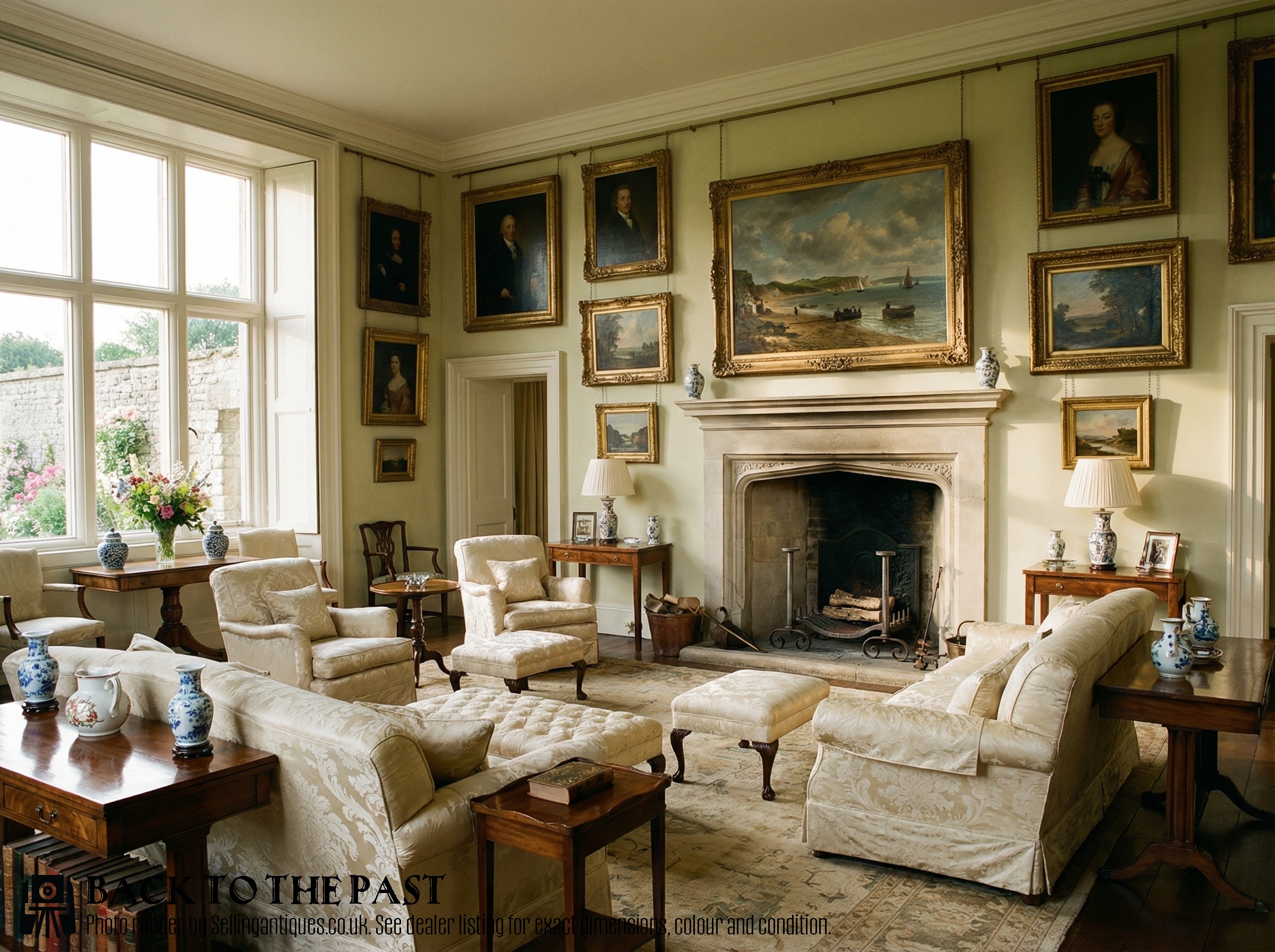
Victorian Style Fire Dogs
When you search for victorian style fire dogs, you encounter heavy iron and brass hearth furniture designed to support logs within an open hearth. These functional pieces range from simple wrought iron supports to elaborate revival designs that dominated nineteenth-century hearths.
The versions most frequently met on this page include nineteenth-century brass andirons, French specimens, and robust cast iron pairs. Makers drew inspiration from earlier aesthetics, producing items that looked back to seventeenth-century forms, Gothic revival motifs, and George III proportions.
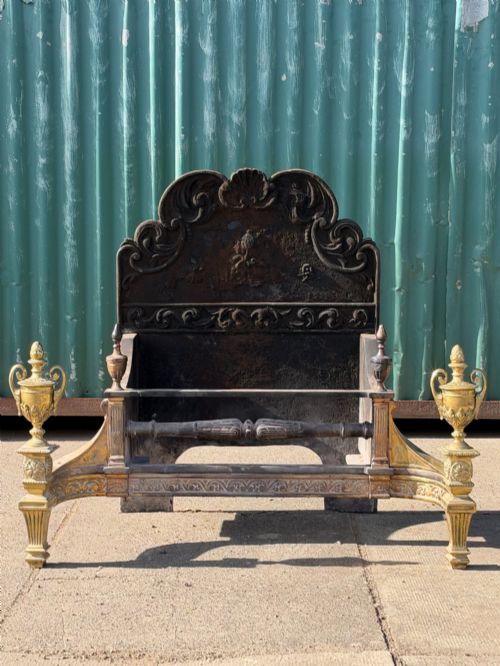
Objects on offer extend beyond basic pairs to include matching fire grates, log baskets, and fireside tool rests. Each piece reflects the nineteenth-century appetite for historical revivals, blending utility with ornamental metalwork.
Materials and construction methods
Foundry workers cast brass and iron into intricate shapes, utilising moulds that allowed for high-relief ornamentation such as claw and ball feet. This casting method produced substantial weights capable of withstanding intense hearth temperatures.
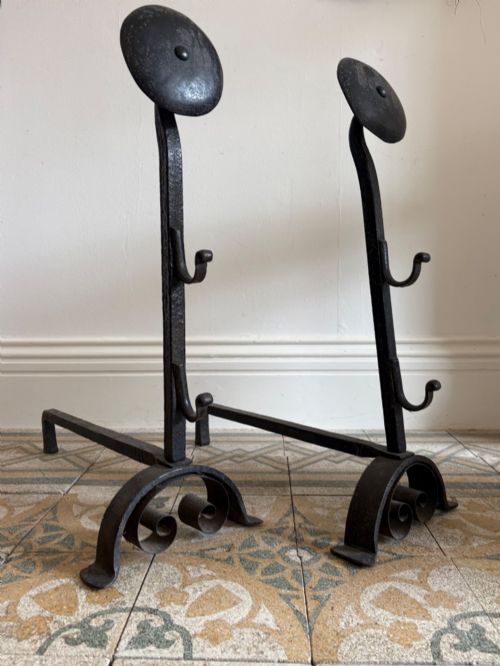
Wrought iron and cast iron components were hand-worked or assembled to form sturdy pairs of andirons and fire grates. Artisans shaped metal through heating and hammering, ensuring structural durability for daily use in open hearths.
Listings feature iron, brass, and wrought iron materials across nineteenth-century and early twentieth-century periods.
Assessing quality in hearth metalwork
Quality rests in the crispness of the casting and the weight of the metal. Finer examples display sharp detailing in revival motifs, whereas simpler items rely on plain surfaces and heavier utility.
Material choice shifts the character of a piece from domestic ironwork to polished brass showpieces. Superior items combine substantial heft with balanced proportions, remaining stable under the weight of heavy logs.
Christopher Dresser
The Victorian Style Fire Dogs Glossary
- Andirons
- Supports used in pairs to elevate logs in an open fireplace, allowing air to circulate beneath the wood. They typically feature an upright ornamental front and horizontal bars behind.
- Fire Grate
- A metal basket or framework designed to hold burning fuel safely within a fireplace opening. These often incorporate decorative metalwork matching companion andirons.
- Aesthetic Movement
- A nineteenth-century design approach emphasising visual beauty over narrative meaning in decorative arts. Pieces from this movement often display refined lines and stylised ornamentation.
- Neo Gothic
- A revival style drawing on medieval architectural forms, pointed arches, and heavy structural elements. Hearth accessories in this style emulate the robust ironwork of earlier centuries.
- Claw and Ball
- A furniture and metalwork foot design depicting a bird talon gripping a ball. This classical motif appeared frequently on eighteenth-century revival pieces produced during the Victorian era.
Victorian Style Fire Dogs: Frequently Asked Questions
What is the difference between fire dogs and andirons?
Fire dogs and andirons are essentially the same objects, serving as horizontal supports for logs inside an open fireplace.
In British usage, the terms often interchange, though fire dogs can sometimes describe simpler utilitarian iron supports while andirons refer to more decorative front pieces.
How were fire dogs used in Victorian hearths?
Pairs of fire dogs sat on the hearth floor to hold logs off the bottom bricks, improving airflow and combustion.
They also prevented burning wood from rolling out into the room while adding a decorative focal point to the fireplace.
Can these fire dogs be used in a modern fireplace?
Many cast iron and brass fire dogs remain robust enough to use in open wood-burning hearths today.
Buyers should check dimensions and weight capacities to ensure the pair fits their specific fireplace opening and grate setup.
How do I identify a revival style?
Revival pieces incorporate decorative motifs from earlier eras, such as seventeenth-century scrolls or Gothic arches, executed with nineteenth-century manufacturing techniques.
Examining the casting quality and fastener types helps distinguish nineteenth-century interpretations from genuine early antiques.