
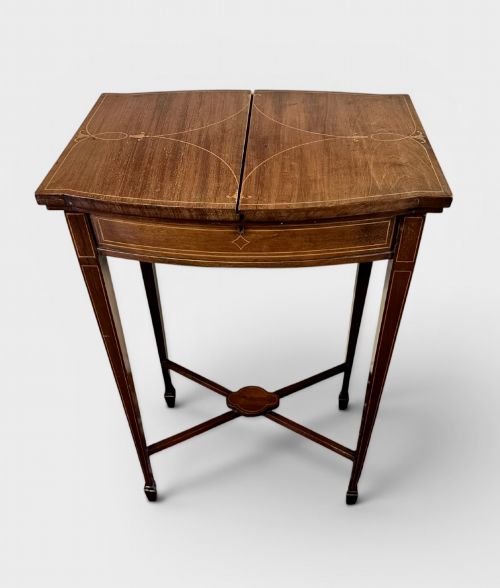


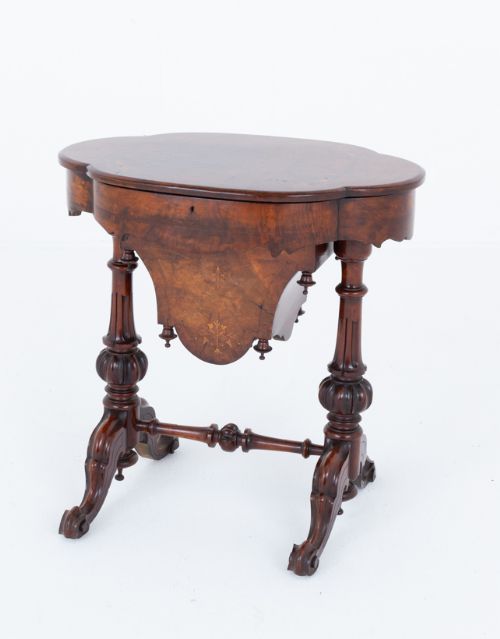


Inlaid Wooden Sewing Box
An inlaid wooden sewing box is a personal receptacle for needlework that combines decorative marquetry with practical fitted compartments, rewarding close inspection.
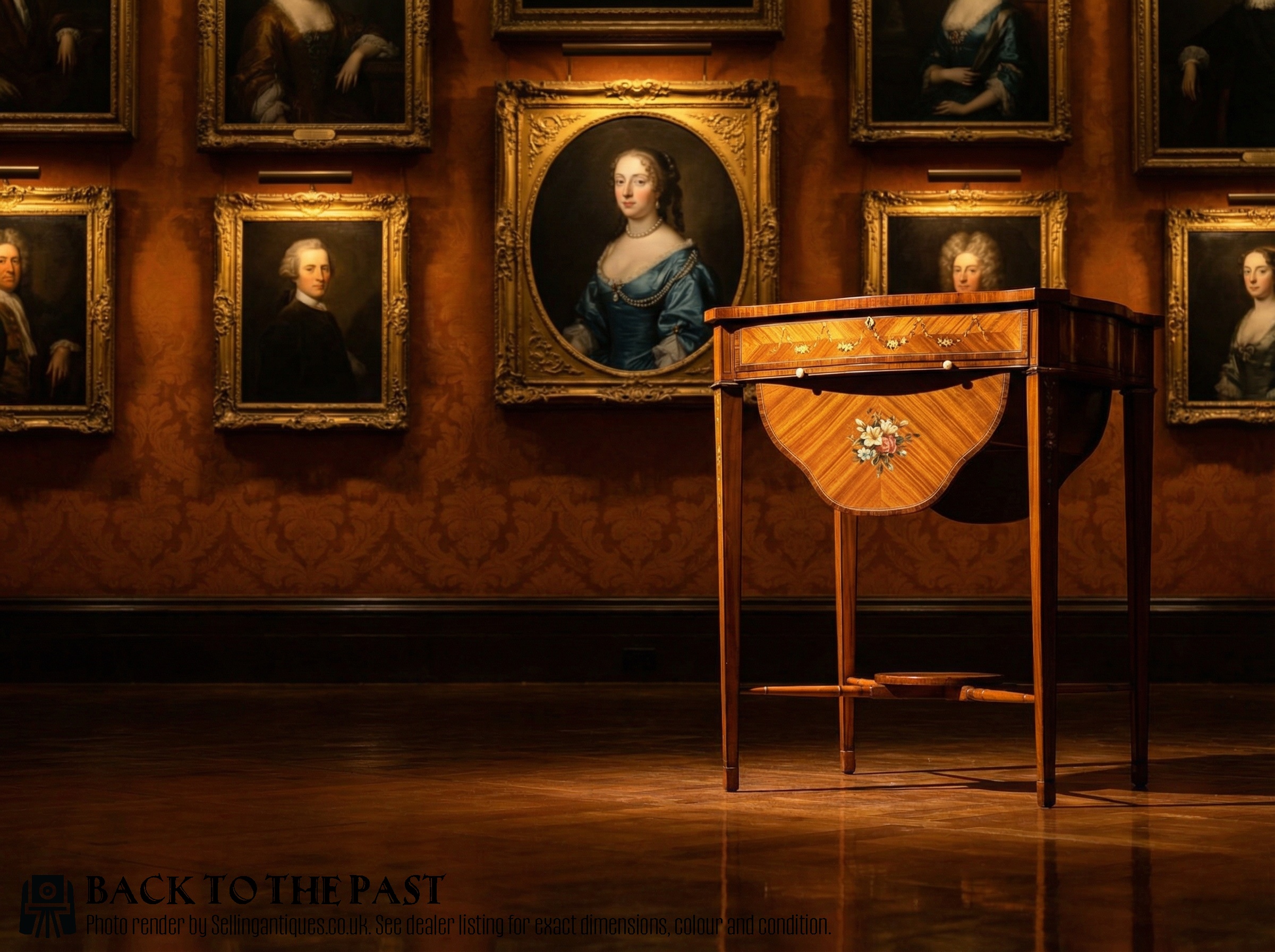
Inlaid Wooden Sewing Box
An inlaid wooden sewing box encompasses portable table-top caskets and larger freestanding work tables designed to hold threads, needles, and textiles. These pieces emerge across the Georgian, Regency, Victorian, and Edwardian eras, reflecting changing domestic tastes in needlecraft organisation.
The most frequent examples on this page are Victorian portable boxes and Edwardian tables constructed in rosewood or walnut. Many retain fitted interiors containing small compartments, trays, and sometimes needlework implements.
Materials and Technique
Cabinetmakers build these boxes using dense timbers such as rosewood, mahogany, walnut, and satinwood, often selecting figured veneers like burr walnut or birdseye maple for the primary surfaces. Finer examples incorporate contrasting woods and materials such as boxwood, bone, and mother of pearl to form geometric or floral motifs.
Specialised techniques like Tunbridge ware utilise thousands of tiny tinted wood blocks assembled to create intricate mosaic pictures. Mother of pearl is meticulously cut and set flush into the timber lid or escutcheon to catch the light.
At least one ambitious maker combined a sewing box with an artist's paint box, hedging their bets on whether the owner preferred watercolours or embroidery.
Distinctions in Execution
Quality rests in the precision of the timber matching and the complexity of the surface ornamentation. Boxes featuring elaborate Tunbridge ware mosaics or detailed mother of pearl inlay demonstrate a higher tier of craftsmanship than simpler banded borders.
The sophistication of the internal arrangement also separates standard production from superior pieces. Fully fitted cedar or satinwood lift-out trays with original velvet or silk linings indicate a commission of greater ambition.
The Inlaid Wooden Sewing Box Glossary
- Tunbridge Ware
- A type of woodwork originating from Kent featuring mosaic designs built from small blocks of naturally coloured timbers. These minute pieces form detailed geometric or pictorial scenes on box lids.
- Sarcophagus Shaped
- A box design characterised by a sloping, tomb-like lid and a flared body resting on bun feet or a plinth. This silhouette was particularly popular during the Regency and Victorian periods.
- Escutcheon
- A small decorative plate surrounding the keyhole of a box, typically fashioned from brass or mother of pearl. It protects the surrounding wood from wear caused by the key.
- Marquetry
- The art of applying pieces of veneer to a structure to form decorative patterns and pictures. Craftsmen use varied wood grains to create tonal contrast and depth.
Inlaid Wooden Sewing Box: Frequently Asked Questions
What is inside a fitted sewing box?
A fitted sewing box contains specialised compartments, lift-out trays, and lidded sections designed to organise threads, bodkins, and thimbles. Many retain their original velvet or silk linings.
These internal components often include miniature bone or wooden spool holders and needle books tailored to specific Victorian and Edwardian needlework habits.
How do I date an inlaid wooden sewing box?
Dating relies on identifying the primary timber, the style of inlay, and the structural silhouette. Regency boxes often favour rosewood with mother of pearl, while Edwardian examples frequently utilise satin walnut and lighter mahogany.
Internal construction details, such as hand-cut dovetails and the style of brass hinges or locks, provide further chronological markers for the piece.
What is Tunbridge ware?
Tunbridge ware is a specialised form of decorative woodwork defined by mosaic patterns constructed from hundreds of differently coloured woods. Craftsmen glue these strips together and slice them crosswise to produce identical pictorial tiles.
Boxes bearing these mosaics often depict castles, butterflies, or complex geometric borders characteristic of nineteenth-century spa souvenirs.
Where were these boxes kept?
These boxes lived in the drawing room or boudoir as both functional sewing companions and decorative objects. Ladies kept them on occasional tables or work tables ready for afternoon needlework.
Their polished rosewood or walnut exteriors ensured they remained on display when not in active use.