
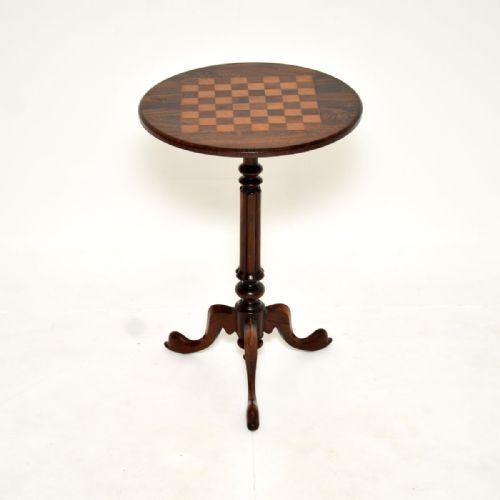
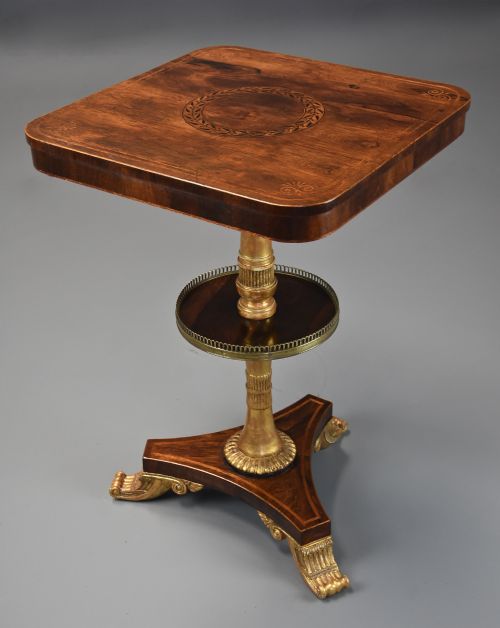
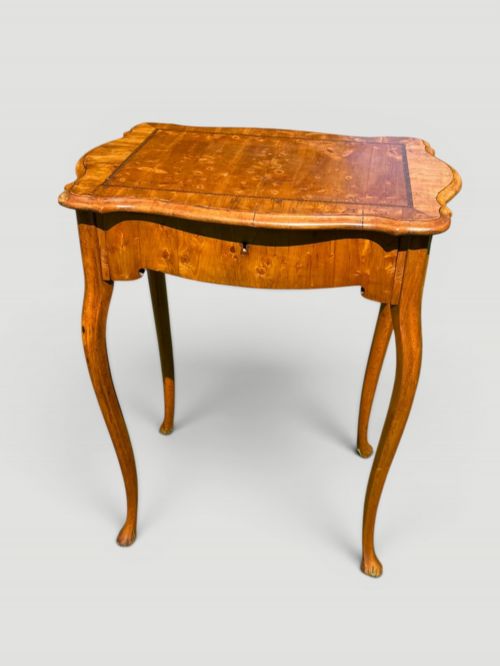


Inlaid Wood Work Table
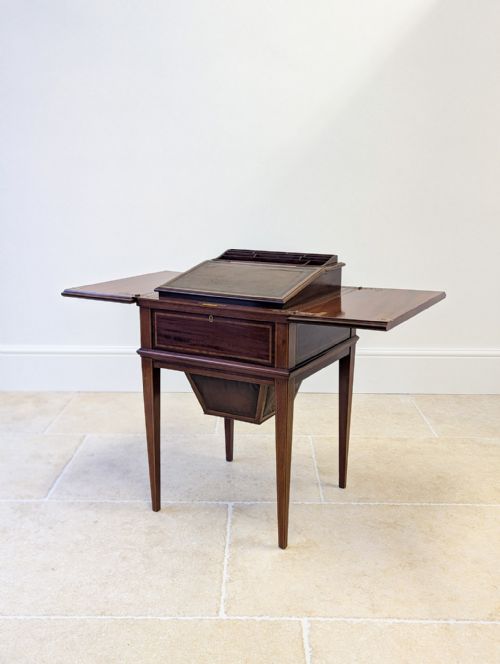
These inlaid wood work tables are versatile Victorian and Regency sewing and games pieces designed to keep needles and boards close at hand.
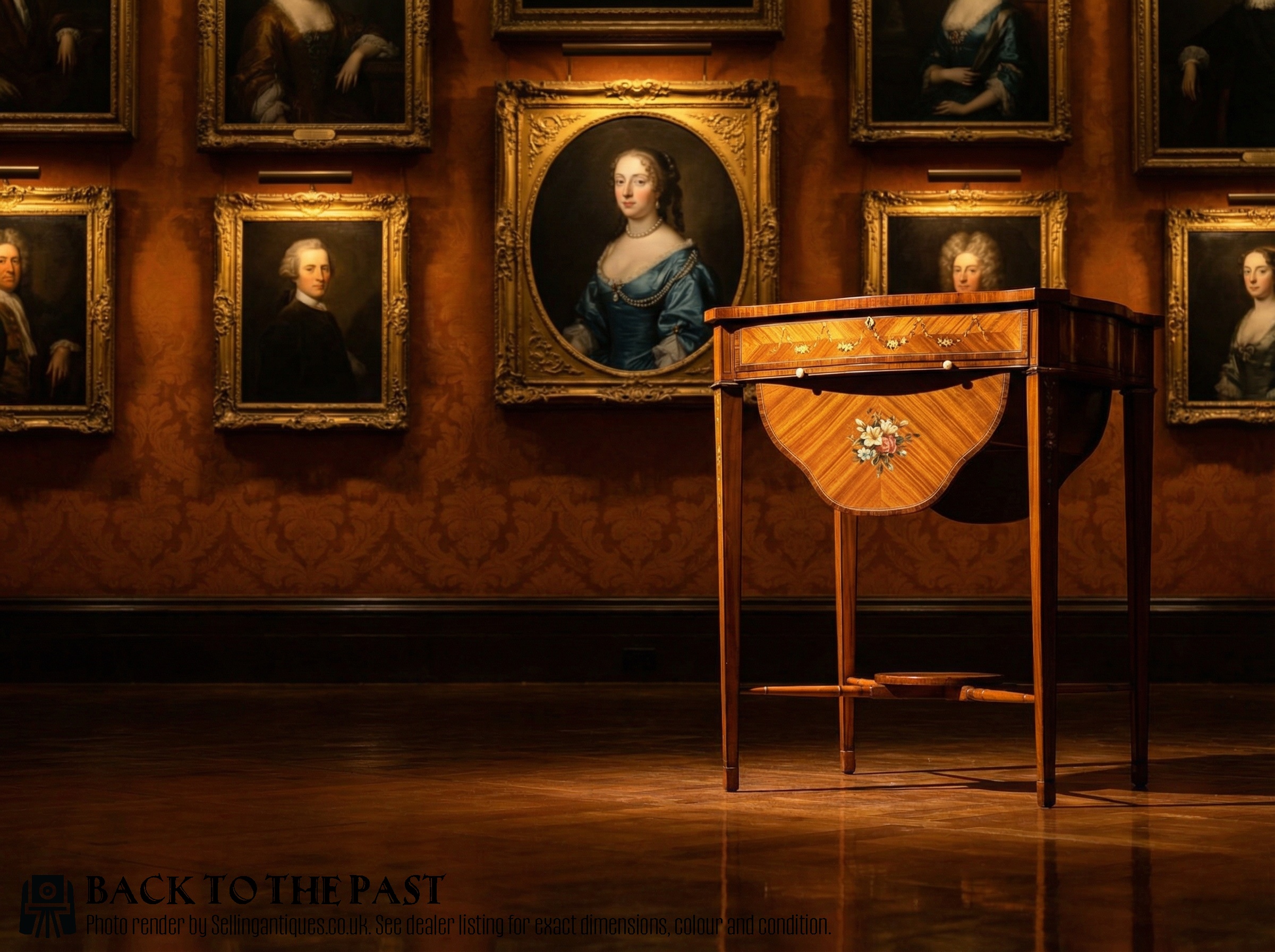
Inlaid Wood Work Table
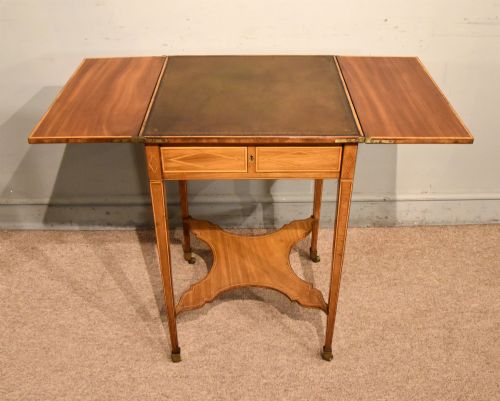
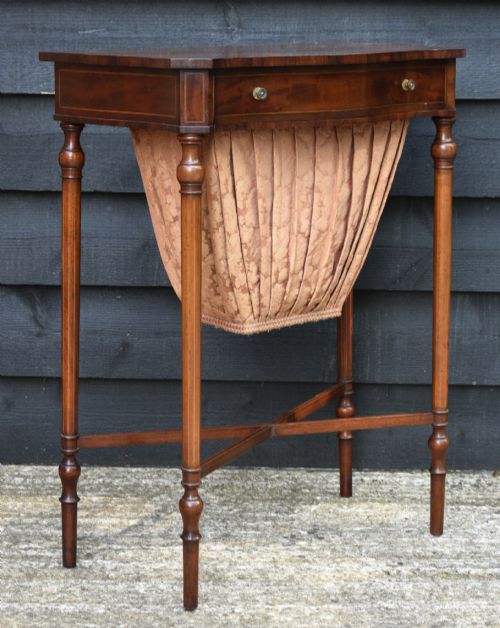
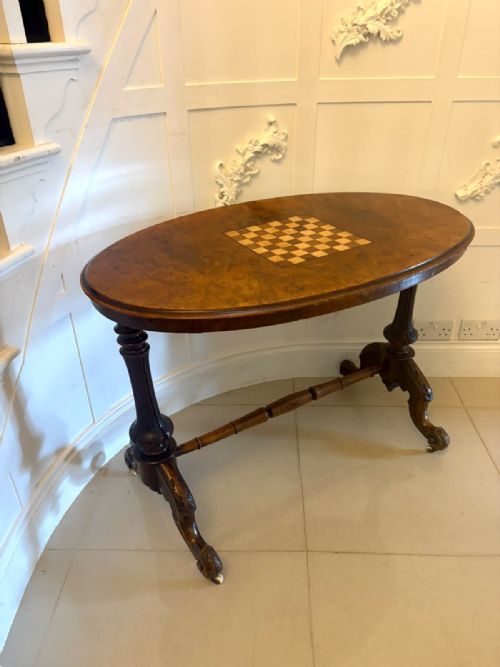
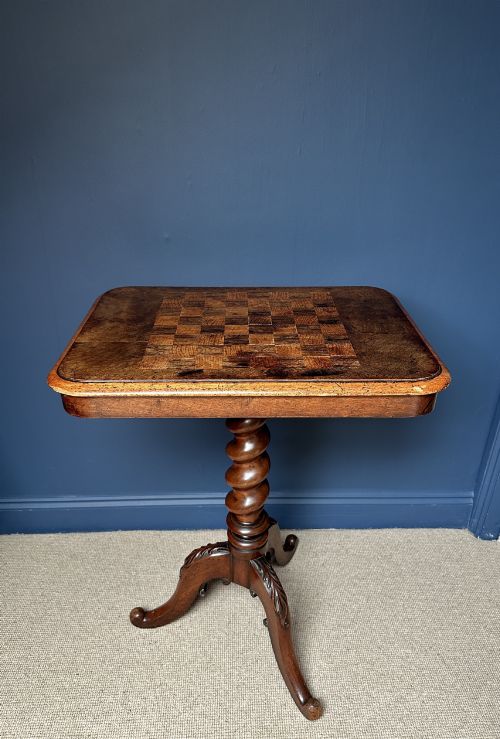
The form typically rests on slender pedestal columns or tapered legs, often incorporating drop leaves or a hanging fabric bag for wool and thread. Many specimens double as chess or backgammon tables, demonstrating the multi-functional ingenuity valued in nineteenth-century drawing rooms.
How they were made
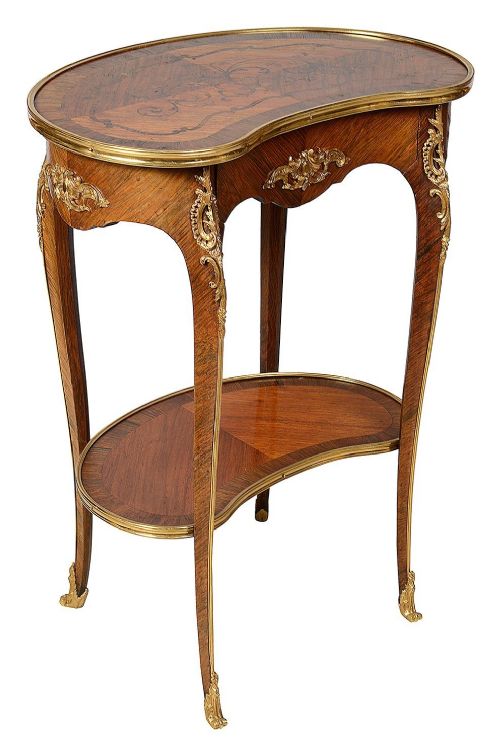
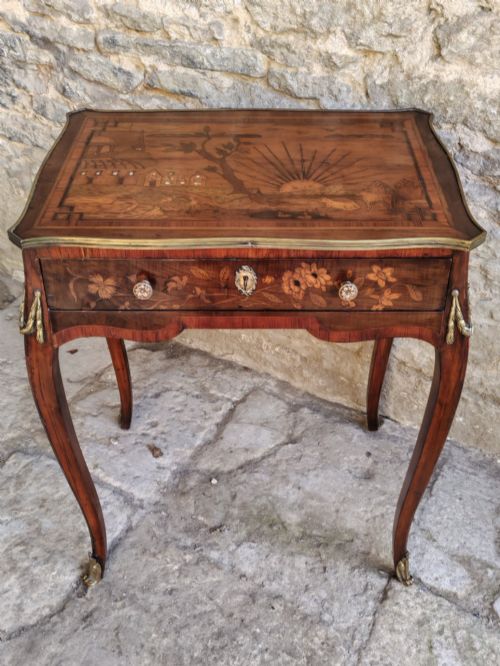
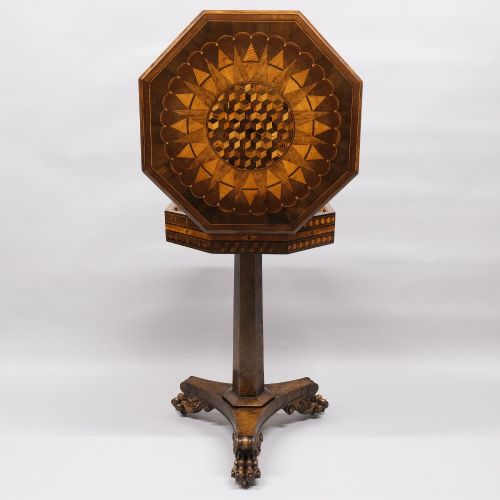
Cabinetmakers utilised dense timbers such as rosewood, mahogany, and walnut as a dark ground for contrasting light veneers. Boxwood, satinwood, and brass were meticulously cut and inlaid into the surface to form geometric parquetry, floral marquetry, or linear stringing.
The internal compartments and sewing wells required precise carpentry, often lined with silk or velvet and fitted with small lidded boxes. Turned pedestals and carved pillar supports frequently rested on platform bases fitted with castors for mobility.
Certain nineteenth-century tables hide clever sewing wells that pop up like tiny wooden mushrooms when the lid is lifted.
What varies in quality
Quality rests primarily in the crispness of the timber selection and the precision of the inlay work. Burr walnut, figured mahogany, and richly grained rosewood command attention through their natural depth and careful book-matching.
The complexity of the interior fittings and the finesse of any carved wooden details separate standard production from exceptional cabinet-making. A well-preserved original silk bag lining or complex combination mechanism elevates the standing of an individual piece.
Ralph Turnbull·George Bullock·Gillows·Edwards & Roberts·Barrett London
The Inlaid Wood Work Table Glossary
- Marquetry
- Decorative patterns formed by fitting together small pieces of wood veneer, shell, or ivory onto a structural surface. This technique creates pictorial or floral designs across table tops.
- Parquetry
- Geometric mosaic woodwork arranged in repeating patterns such as cubes or chequers. It often appears on the tops of tables designed for chess or backgammon.
- Trumpet table
- A form featuring an octagonal or rounded body that flares outward from a slender stem toward the base, resembling the bell of a musical instrument. These frequently conceal a fabric sewing bag beneath.
- Killarney Ware
- Decorative wooden objects produced in Ireland, typically characterised by intricate inlaid motifs of local scenery or flora using native timbers like arbutus. They represent a distinct regional tradition.
- Stringing
- Thin, linear inlay of a contrasting wood or light-coloured material set into channels around the edges of drawers and table tops. It provides a subtle framing effect.
Inlaid Wood Work Table: Frequently Asked Questions
What is an inlaid wood work table used for?
These pieces served as dedicated stations for sewing, needlework, and embroidery, keeping threads, needles, and fabric neatly organised within concealed internal compartments under the lid.
Many examples also incorporated fold-out tops or removable boards configured for chess, checkers, and backgammon, functioning as social entertainment hubs in nineteenth-century sitting rooms.
How do I tell a Regency work table from a Victorian one?
Regency pieces often display classical architectural proportions, crisp brass inlay, and rosewood or mahogany carcases dating from the early nineteenth century. They frequently lean toward restrained elegance with sabre legs or pillar supports.
Victorian specimens, emerging after eighteen-thirty-seven, commonly utilise burr walnut and feature heavier carved pedestal bases, more exuberant floral marquetry, and occasionally multi-functional trumpet bodies with hanging silk bags.
Are these tables sturdy enough for daily use?
Solid mahogany and rosewood construction provides robust durability suitable for contemporary living spaces as lamp tables or bedside stands. Their original purpose demanded reliable daily service, resulting in resilient joinery.
Care should be taken with delicate marquetry veneers and hinged lids to avoid excess moisture or heavy loads on drop leaves. Gentle dusting and occasional wax polishing preserve the historical timber surfaces.
What is the difference between a work table and a sewing table?
The terms are largely interchangeable within antique furniture descriptions, both denoting multi-functional small tables equipped with storage for needlework accessories. Some regional variations or specific maker classifications prefer one term over the other.
Both types typically feature small compartments, partitioned trays, and a suspended fabric receptacle underneath to catch loose threads and hold unfinished stitching projects.