


Inlaid Wooden Knife Boxes
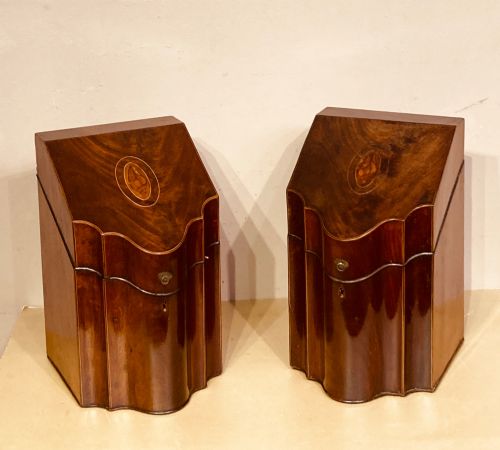
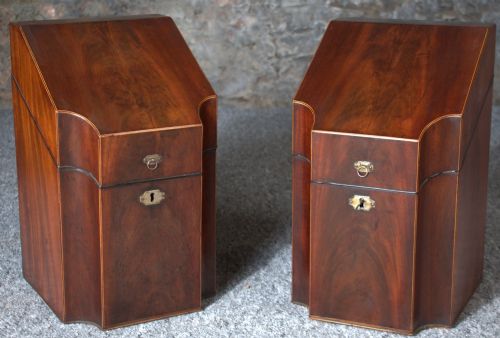
These inlaid wooden knife boxes are refined domestic containers shaped to hold cutlery, offering timeless elegance and practical storage for the dining room.
Inlaid Wooden Knife Boxes
Inlaid wooden knife boxes primarily emerge from the eighteenth and nineteenth centuries, spanning Georgian and Victorian eras, often taking the form of serpentine fronts, slopes, or classical urns. A buyer searching for inlaid wooden knife boxes will encounter mahogany, walnut, and oak examples enhanced by delicate satinwood and boxwood stringing.
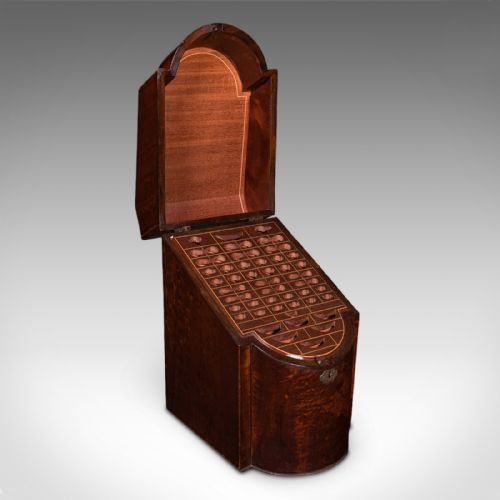
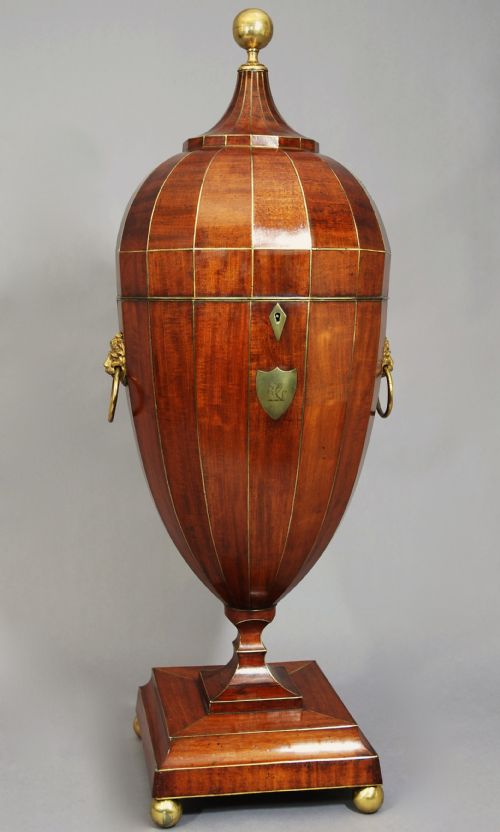
The pieces listed on this page encompass pairs and individual specimens, ranging from standard slanted cutlery storage to tall lidded urns and hanging kitchen boxes. Many retain fitted interiors designed originally for multiple cutlery pieces, reflecting the formal dining habits of their periods.
Geographic origins extend across English workshops alongside continental examples such as Portuguese coromandel pieces. The predominant materials remain mahogany and inlaid wood, often complemented by brass handles and escutcheons.
Materials and construction methods
Cabinet makers utilised dense hardwoods such as mahogany, walnut, and oak as the structural carcase for these containers. These timbers provided both durability and a stable surface for decorative treatment.
Surface ornamentation relied on precise wood inlay, incorporating lighter contrasting timbers like satinwood and boxwood into geometric or classical motifs. Metal fittings, specifically brass handles, hinges, and locks, were integrated to secure the lids and facilitate handling.
Current listings demonstrate a concentration of Georgian mahogany examples alongside nineteenth-century oak and Victorian inlaid varieties.
Assessing craftsmanship and condition
Quality in these containers rests upon the crispness of the wood inlay and the selection of figured timber veneers, such as richly grained mahogany. The sophistication of the silhouette, particularly serpentine fronts or well-proportioned urns, dictates the aesthetic standing of the piece.
Internal completeness significantly influences standing, as surviving fitted wooden inserts for cutlery storage distinguish superior examples. Furthermore, the integration of original brass hardware and working locks separates utilitarian items from finer decorative pieces.
The Inlaid Wooden Knife Boxes Glossary
- Serpentine front
- A furniture shape featuring a concave centre flanked by two convex ends, creating a gentle undulating line. This contour demands high carpentry skill and marks finer eighteenth-century boxes.
- Stringing
- Thin lines of contrasting wood inlaid into the primary surface to create decorative borders. It frequently outlines the edges and lids of Georgian and Victorian containers.
- Cutlery urn
- A tall, vase-shaped wooden vessel designed for storing silverware on a sideboard. These architectural forms often date from the Georgian period.
- Escutcheon
- A protective brass plate surrounding a keyhole. It prevents the surrounding wood from sustaining damage when inserting the key.
- Canteen
- A fitted box or chest designed to hold a complete set of cutlery. These interiors often feature slotted wooden dividers lined for protection.
Inlaid Wooden Knife Boxes: Frequently Asked Questions
What were knife boxes used for?
These boxes stored silver and steel cutlery in the dining room before fitted sideboards became common. Servants kept knives polished and locked inside them until meal times.
They sat upon side tables or pedestals, adding symmetry and decoration to formal dining spaces during the Georgian and Victorian eras.
How do I date a knife box?
Dating relies on observing the timber species, the style of the woodwork, and the nature of any inlay. Eighteenth-century examples frequently employ solid mahogany with subtle boxwood stringing.
Later Victorian pieces often introduce different woods like coromandel or heavier decorative veneers. Hardware such as brass hinges and locks also provides clues to the manufacturing decade.
Are these boxes suitable for modern cutlery?
Many boxes retain internal wooden partitions originally sized for older, smaller cutlery dimensions. Modern stainless steel knives with thicker handles may not fit into the historical slots.
Buyers often utilise them for display, stationery storage, or holding specific vintage cutlery sets rather than everyday modern tableware.
What is the difference between a box and an urn?
Standard knife boxes feature a sloping lid and a flat base designed to sit directly on furniture surfaces. Cutlery urns take a tall, classical vase form with a removable top section.
Both serve the same primary storage function but represent different aesthetic fashions in eighteenth-century and nineteenth-century dining room decoration.