


Georgian Inlaid Cutlery Urns
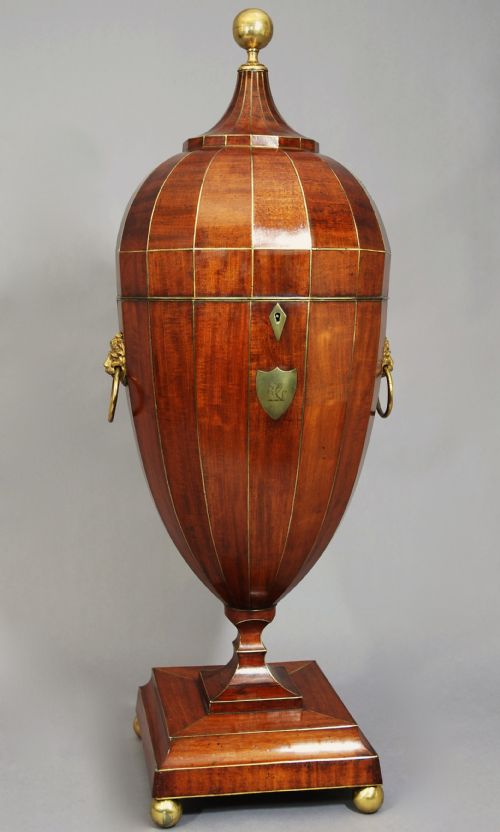
Georgian inlaid cutlery urns are striking neoclassical dining room containers for silver blades, offering sophisticated storage and classic timber grain.
Georgian Inlaid Cutlery Urns
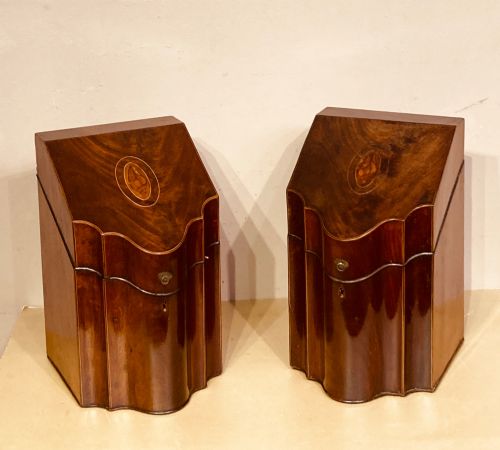
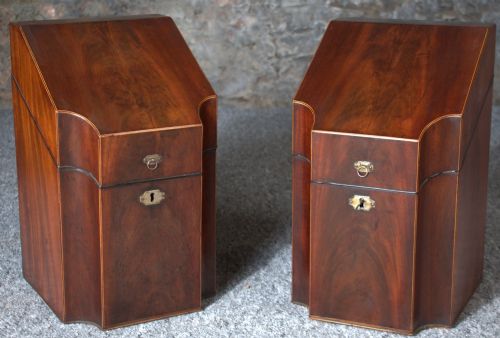
Georgian inlaid cutlery urns sit alongside related knife boxes and serpentine fronted storage pieces originating from the eighteenth century through to Victorian revivals. These table accessories were designed to hold flatware and cutlery upon the sideboard during grand dining occasions.
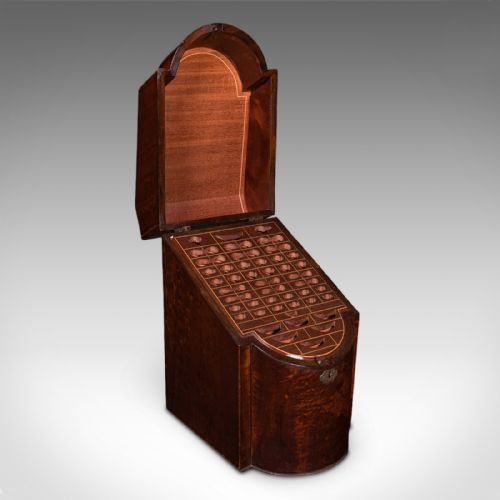
Buyers encounter both traditional wooden urn profiles and sloping knife boxes configured for interior storage. Some examples show later adaptations, including conversions for stationery use while retaining their historic exterior appearance.
How they were made
Joiners constructed these urns and boxes primarily from solid and veneered mahogany, chosen for its rich dark tone and stable grain. Artisans incorporated secondary woods such as satinwood and boxwood to create delicate banded stringing and geometric inlays.
Metal components such as brass hinges, escutcheons, and occasional silver mounts were fitted to secure lids and provide functional handling. Wood inlay techniques required precise cutting of contrasting timbers to ornament the sloping lids and curved bodies.
At least one meticulous owner decided a dining room urn made a fine hiding spot for old letters.
What varies in quality
The hierarchy of quality rests upon the crispness of the timber inlay and the symmetry of the matched grain across pairs. Superior examples display finely figured mahogany panels bordered by intricate boxwood and satinwood stringing without clumsy intervention.
Structural integrity of the curved staves and the retention of original brass hardware elevate certain pieces above standard production. The refinement of the neoclassical proportions determines whether an urn achieves a balanced, elegant silhouette.
The Georgian Inlaid Cutlery Urns Glossary
- Stringing
- A narrow inlay of contrasting wood used to outline panels and edges on furniture. This decorative technique defines the neoclassical aesthetic seen on Sheraton period pieces.
- Serpentine
- A gently undulating curved line forming the front profile of a box or cabinet. This shape creates movement and catches light across the polished timber surface.
- Escutcheon
- A protective plate surrounding a keyhole, usually fashioned from brass. It guards the surrounding wood from wear caused by the key.
- Caddy
- A small container or box historically used for storing dry goods or valuables. The term often overlaps with specialised storage vessels of the eighteenth century.
Georgian Inlaid Cutlery Urns: Frequently Asked Questions
What were georgian inlaid cutlery urns used for?
These vessels stood upon dining room sideboards to hold sets of silver knives, forks, and spoons before the meal commenced. Servants would transfer the cutlery to the dining table as required.
After dining, the implements were returned to the urns or knife boxes to keep them secure and protected from tarnishing in the air.
How do you distinguish georgian from victorian pieces?
Eighteenth-century originals display timber selection and construction methods characteristic of the Georgian and Sheraton eras, utilising specific native and imported hardwoods. Proportions tend to reflect strict neoclassical design principles.
Later Victorian interpretations often replicate these classic forms with subtle variations in timber preparation, hardware styling, and secondary wood choices.
Are these urns still suitable for modern cutlery?
Most surviving interiors were tailored for eighteenth-century flatware sizes, which differ significantly from modern dining sets. Some examples feature fitted velvet or wooden block interiors designed specifically for historical blade shapes.
Buyers frequently use them for display purposes or repurpose the internal compartments for holding letters, stationery, or smaller household items.
How should mahogany and inlaid surfaces be maintained?
The timber surfaces require gentle dusting with a soft, dry cloth to preserve the polished wax finish. Avoid placing antique wood in direct sunlight or near heat sources to prevent timber shrinkage and veneer lifting.
Applying a quality microcrystalline wax periodically helps nourish the mahogany and protect the delicate boxwood and satinwood stringing.