

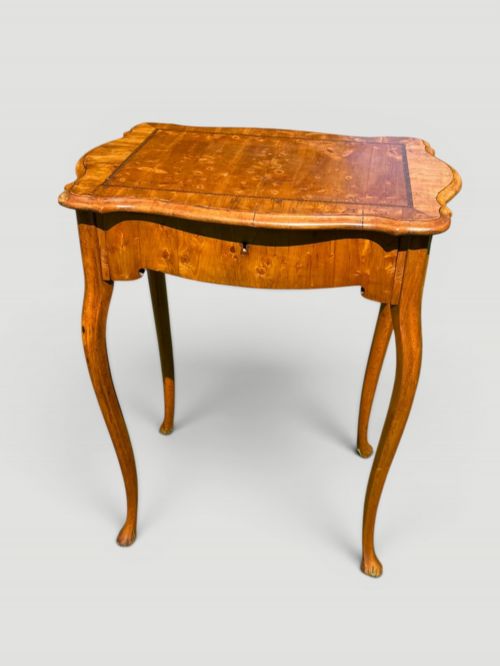


Inlaid Wood End Table
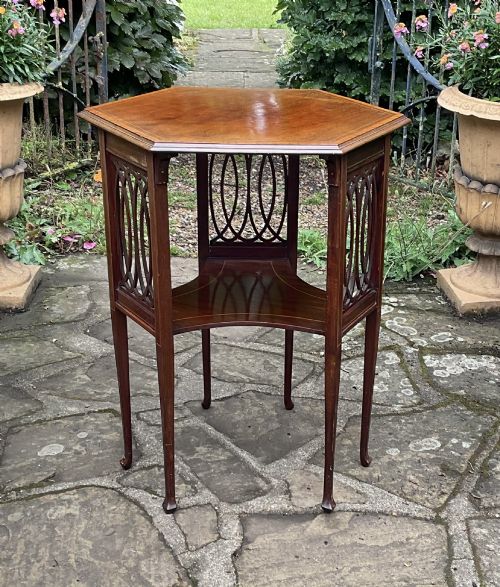
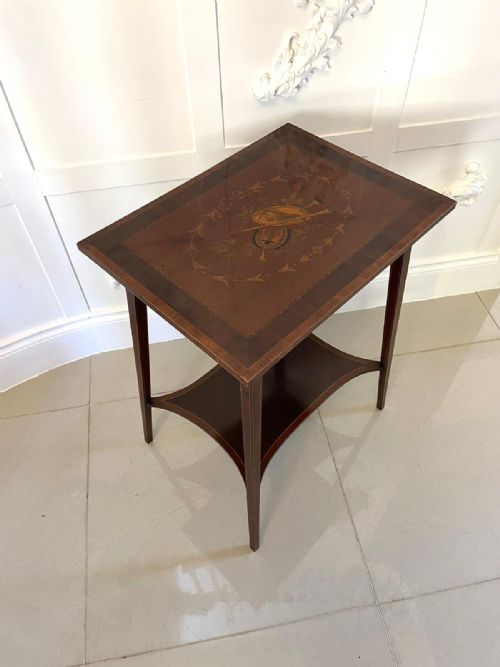
An inlaid wood end table brings surface pattern and warm timber tones to a room, appearing most often in Edwardian mahogany forms on this page.
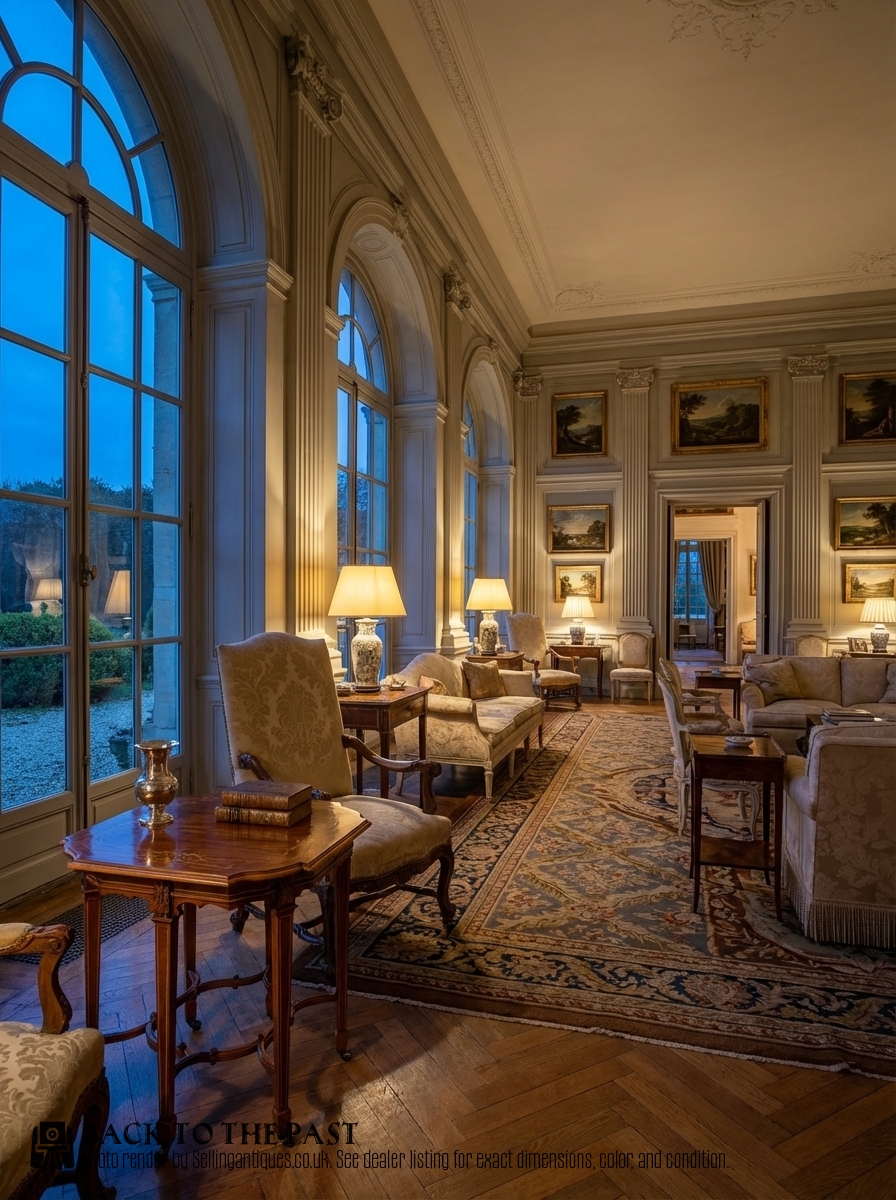
Inlaid Wood End Table
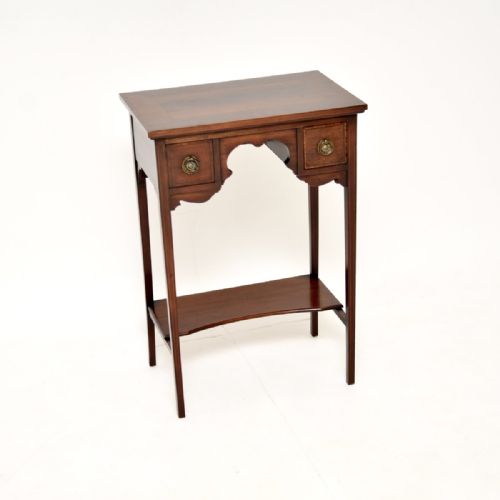
An inlaid wood end table serves primarily as a compact surface for lamps, books, or ornaments beside a chair or sofa. These pieces emerge in various forms across this page, including side tables, occasional tables, lamp tables, nests of tables, bedside tables, and pembroke tables.
The material palette is anchored by mahogany, walnut, rosewood, and satinwood, frequently enriched with contrasting details. Pieces span the Georgian, Victorian, Edwardian, and Regency periods, alongside later twentieth-century examples.
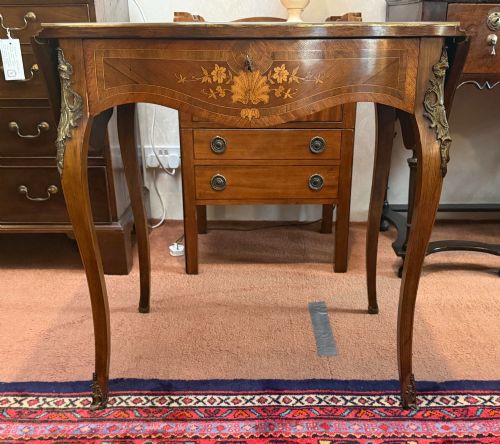
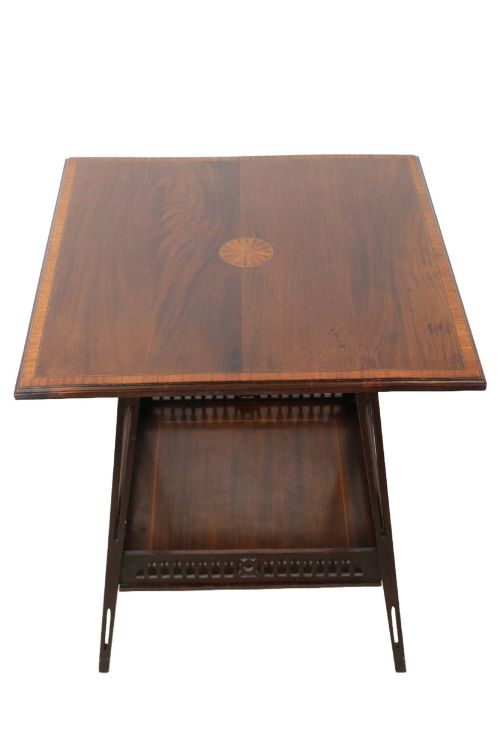
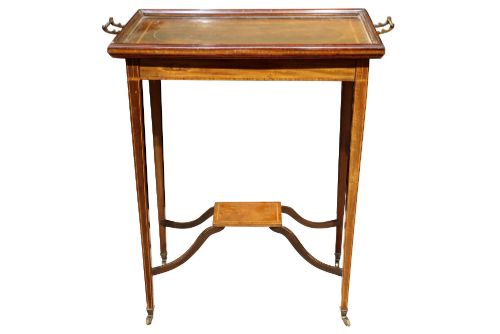
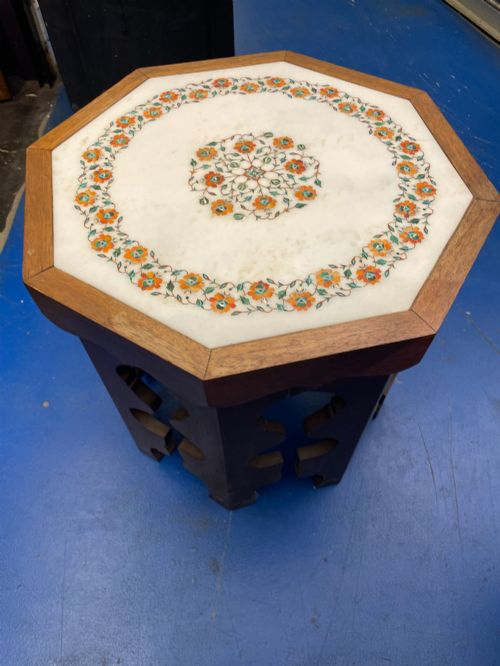
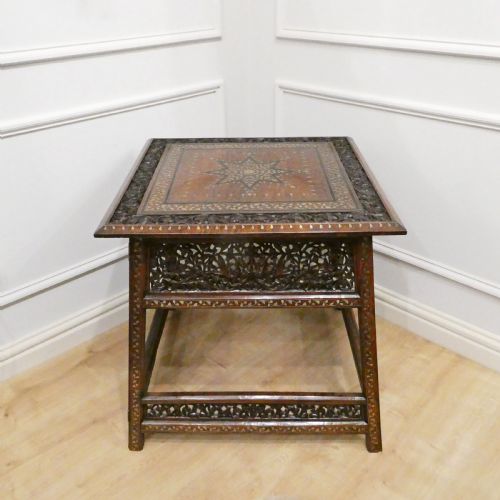
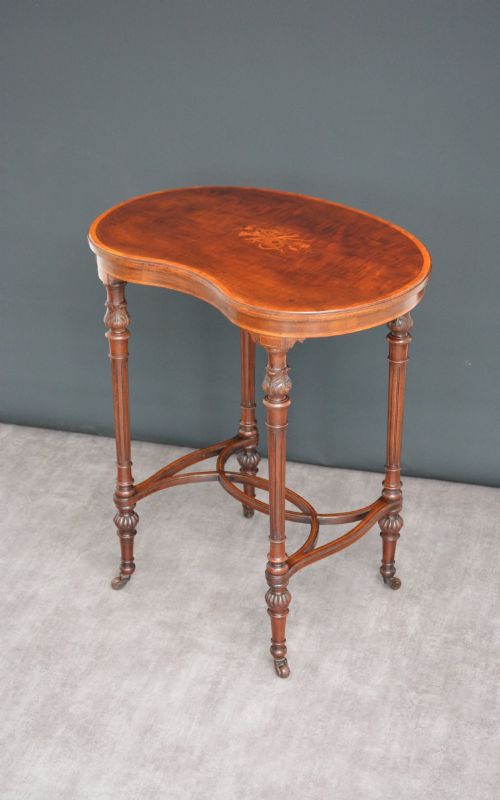
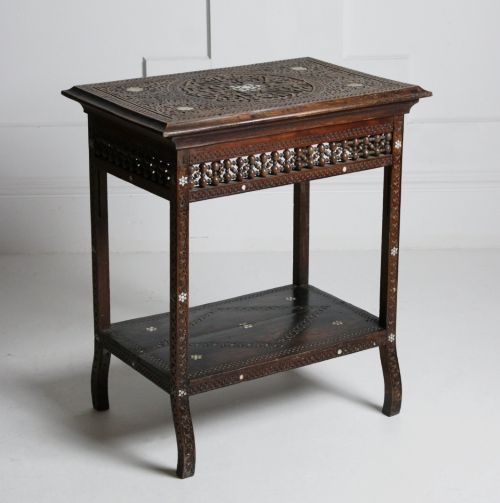
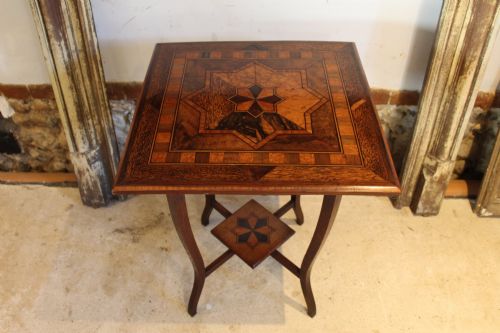
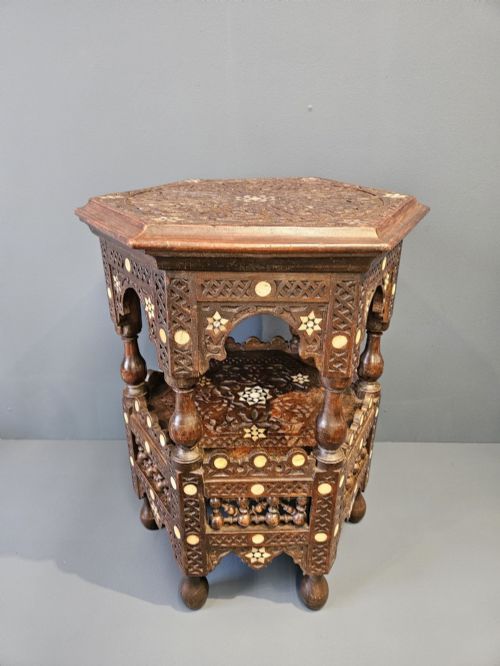
Edwardian mahogany examples dominate the selection, often featuring delicate stringing or floral motifs set into the timber top. Alongside these, nineteenth-century specimen wood tables, Syrian and Hoshiarpur brass inlaid tables, and French kingwood pieces represent broader historical tastes.
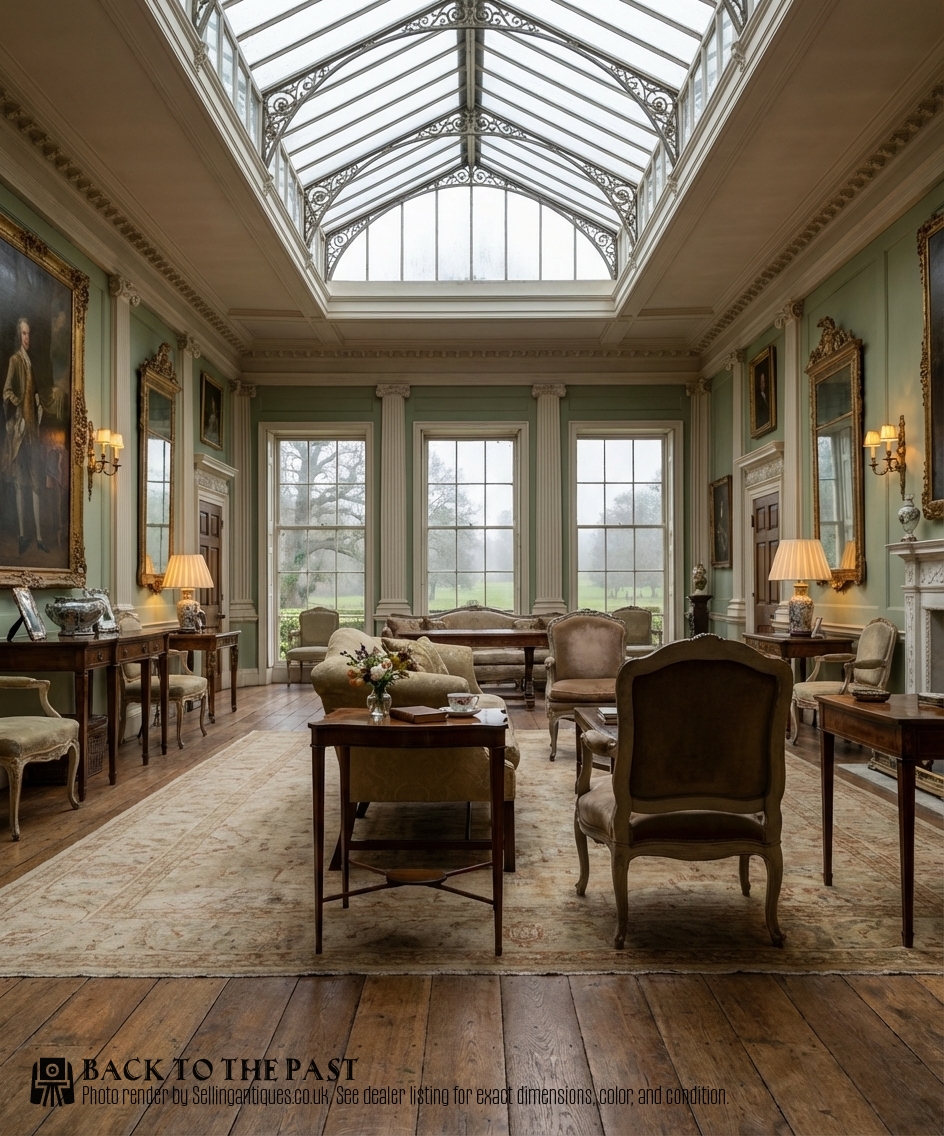
Materials and Construction
Cabinet makers utilised solid timbers and selected veneers such as mahogany, rosewood, walnut, and kingswood over structural carcases. Tops often display contrasting borders or central medallions created through the careful insertion of boxwood and other light or dark woods.
Marquetry and parquetry techniques required precise hand-cutting of diverse timber pieces to form pictorial or geometric patterns across the surface. Brass inlay also appears, characteristic of specific regional workshops and nineteenth-century production methods.
Inlaid Wood End Table Retail Price Guide 2026
Typical asking prices for inlaid wood end table among the pieces listed under this phrase on Sellingantiques today, from the lower quarter to the upper quarter. They describe what is for sale here now, not the wider market.
Listings feature periods spanning from the eighteenth-century Georgian era through Victorian, Edwardian, and Regency times up to the 1930s.
Distinctions in Quality
The caliber of an inlaid wood end table rests upon the crispness of the joinery and the complexity of the surface work. Superior examples demonstrate tight, flush fitting where the contrasting woods meet the primary timber, with no gaps or coarse filler.
Depth of timber selection marks the upper tier, where naturally figured grains like burr wood or varied specimen timbers are chosen with care. Finer pieces also maintain structural stability in their legs and under-tiers, ensuring the decorative top remains flat and secure.
Trevor Page & Co
The Inlaid Wood End Table Glossary
- Inlay
- A technique where small pieces of contrasting material are inserted into a recessed cavity on a solid timber surface to form a design. This method provides permanent surface decoration without altering the flat plane of the table top.
- Marquetry
- The art of creating decorative patterns or pictures on a wooden surface using assembled veneers of various woods and other materials. It allows for intricate floral or pictorial compositions across furniture tops.
- Parquetry
- Geometric mosaic woodwork used for repeating patterns such as cubes or chequers on tabletops. The technique relies on precise alignment of angled veneer segments.
- Specimen wood
- Furniture constructed using a wide variety of native and exotic timbers selected for their contrasting colours and natural grains. These tables often originate from nineteenth-century collections or specialised workshops.
- Pembroke table
- A small drop-leaf table with hinged flaps on either side, introduced in the eighteenth century and continued through later periods. They frequently incorporate inlaid drawer fronts or decorated tops.
Inlaid Wood End Table: Frequently Asked Questions
What is an inlaid wood end table?
An inlaid wood end table is a small occasional piece designed to stand beside seating while displaying decorative surface patterns worked in contrasting timbers.
These tables provide functional surface space alongside historical craftsmanship spanning the Georgian, Victorian, and Edwardian eras.
How do I date an inlaid wood end table?
Dating relies on identifying the underlying timber, the construction methods of the carcase, and the prevailing style of the period. Edwardian pieces often feature light mahogany with delicate stringing, while earlier nineteenth-century examples may utilise rosewood or walnut.
Examining the underside, drawer linings, and the nature of the veneer work helps confirm the likely era of manufacture.
Where were these tables used?
These pieces function primarily as side, lamp, or occasional tables within drawing rooms, parlours, and bedrooms. Their compact dimensions allow them to fit easily beside sofas or chairs.
Many styles, such as nests of tables or Pembroke tables, offered flexible utility for serving tea or holding reading material.
What woods are commonly found?
Mahogany forms the structural and surface foundation for a large portion of the tables listed here, complemented by rosewood, walnut, and satinwood. Boxwood and various exotic timbers provide the contrasting tones used for inlay and marquetry.
Regional variations introduce specialised materials, including brass elements and diverse specimen woods from distant workshops.