


Sheraton Style Pembroke Table
A Sheraton style pembroke table brings refined drop-leaf utility and classic Georgian elegance to any room.
What these tables are
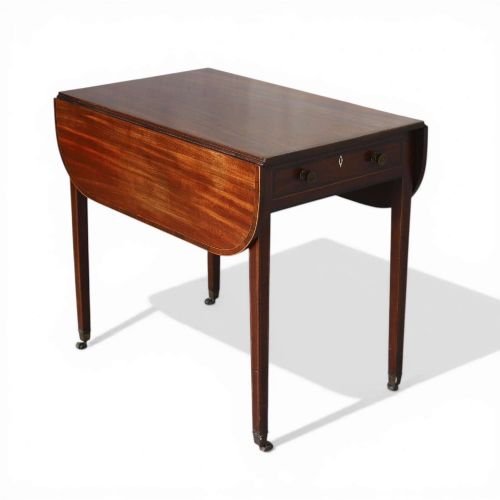
A sheraton style pembroke table is a compact drop-leaf occasional table defined by slender legs and flap leaves supported by hinged brackets. These versatile pieces served historically for writing, breakfasting or light work in the principal rooms of a residence.
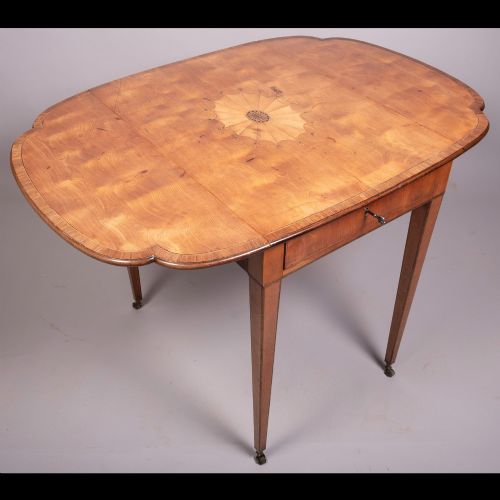
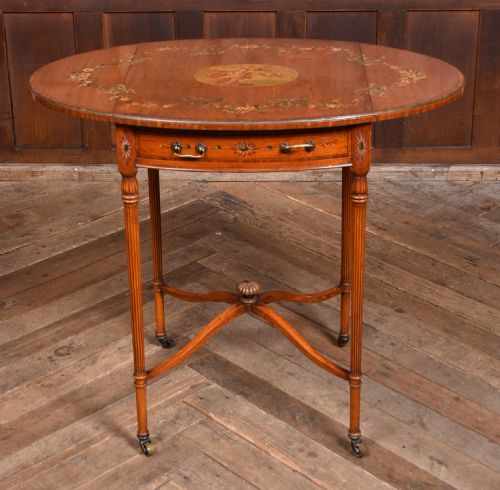
The versions met on this page span the late eighteenth century through the Edwardian era, encompassing both period Georgian originals and later twentieth-century interpretations. Mahogany and satinwood predominate, frequently enhanced by decorative stringing, crossbanding or hand-painted motifs.
Forms vary from rectangular formats to graceful oval tops with single or paired drawers. They sit comfortably as side tables or occasional centres of attention in traditional and modern interiors alike.
How they were made
Cabinetmakers utilised dense timbers such as mahogany and rosewood for structural stability, often applying finely figured satinwood veneers to the tops. Brass hardware, including delicate castors and drawer pulls, completed the movable assembly.
Surface decoration relies on contrasting wood inlays, geometric stringing and occasionally hand-painted floral details directly onto the timber. Drop leaves attach via sophisticated pivoting or rule joints that allow the flaps to hang flush when lowered.
Retail Price Guide 2026
Typical UK retail prices for sheraton style pembroke table, calculated from the Sellingantiques database of over a million retail prices indexed since 2003. This retail price guide relies exclusively on Sellingantiques data; no external sources or auction records are used, so the figures do not describe the wider market.
Some tables feature secret little drawers tucked away beneath the leaves, perfect for hiding away stray spectacles or love letters.
What varies in quality
Quality rests upon the choice of timber and the precision of the cabinetmaker's joinery. Superior examples display impeccably matched veneers and subtle, harmonious inlays rather than heavy-handed decoration.
The structural integrity of the drop-leaf mechanism and the crispness of the leg tapering distinguish fine workshop production from simpler commercial pieces. Original brass fittings and sound, unwarped flaps further elevate a table's standing.
The Sheraton Style Pembroke Table Glossary
- Pembroke table
- A small occasional table with hinged flaps on either side that can be raised or lowered. Thomas Sheraton and other eighteenth-century designers popularised the form for domestic flexibility.
- Satinwood
- A lustrous, yellowish-wood timber prized for high-end furniture decoration. Cabinetmakers used veneers of this wood to create striking contrasts against darker timbers like mahogany.
- Crossbanding
- A strip of veneer applied to the border of a tabletop with the grain running perpendicular to the centre. This technique frames the primary wood and demonstrates skilled craftsmanship.
- Stringing
- A narrow inlay of contrasting wood or light material set into channels cut into the surface. It forms delicate geometric lines that outline drawers and table edges.
Frequently Asked Questions
What is a pembroke table?
A pembroke table is a small, versatile table featuring two hinged drop leaves on opposite sides. It was designed to occupy minimal space when folded down and expand for light tasks.
Cabinetmakers throughout the eighteenth and nineteenth centuries produced them in various woods, making them adaptable pieces for modern living spaces.
How do I date a sheraton table?
Dating relies on examining the construction methods, timber selection and secondary woods used beneath the surface. Eighteenth-century pieces typically show hand-cut joinery and period-appropriate hardware.
Later Edwardian revivals often incorporate softer internal timbers and machine-prepared components while imitating earlier Georgian decorative motifs.
Where should I place a pembroke table?
These tables work well as sofa-side supports, lamp tables or small desks against a wall with one or both leaves dropped. Their compact footprint suits tight corners and hallways.
Keeping leaves raised provides extra surface area when entertaining or displaying decorative objects.
Are painted tables original?
Painted decoration appears on both late eighteenth-century satinwood pieces and Edwardian revivals. Artisans hand-painted floral scrolls, urns or medallions directly onto the wood surface.
Careful inspection of the pigment and underlying timber helps determine whether the artwork belongs to the original period of manufacture or a later enhancement.