


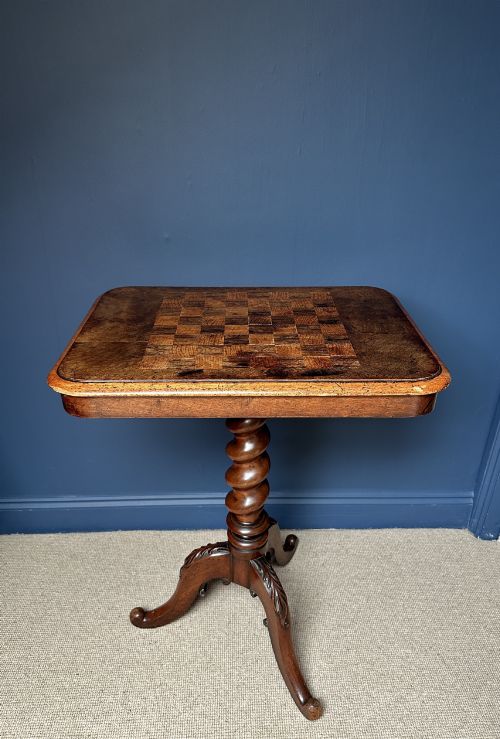
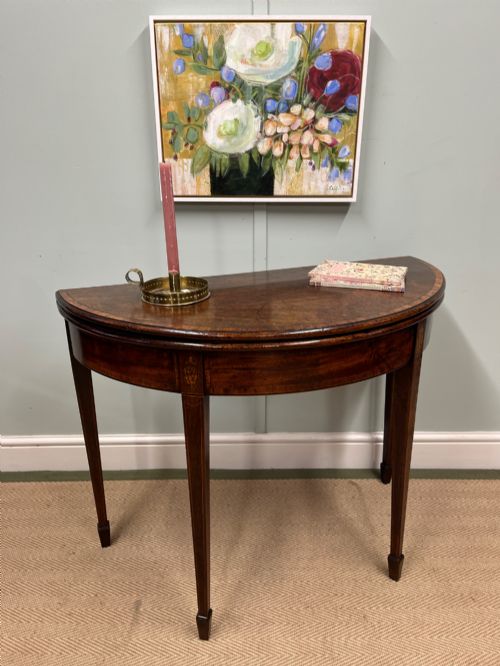
Inlaid Wood Card Table
An inlaid wood card table brings domestic history into a modern room through clever folding tops and meticulous marquetry.
Inlaid Wood Card Table
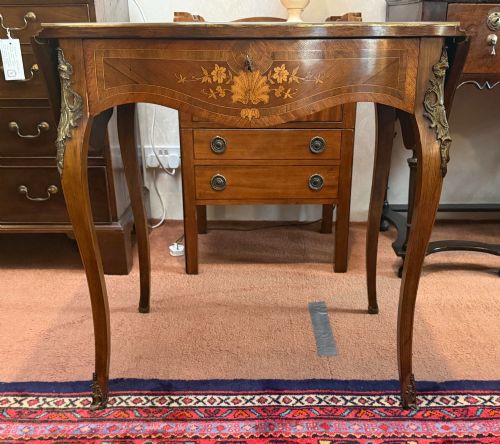
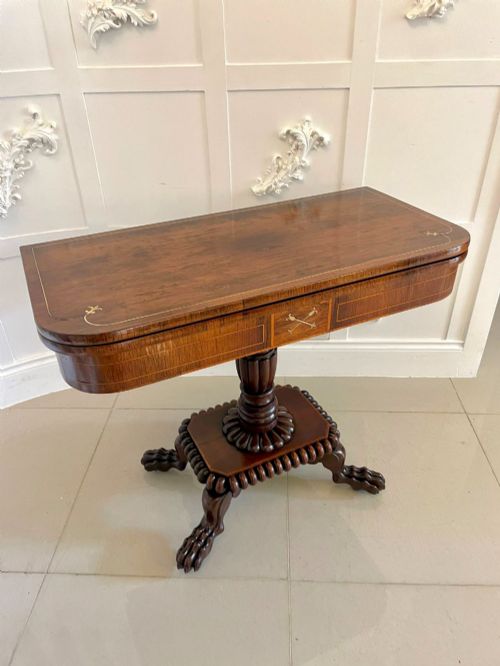
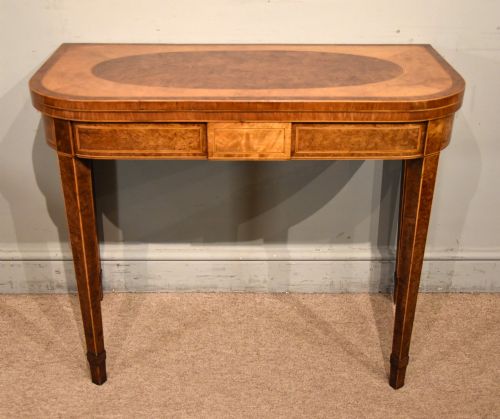
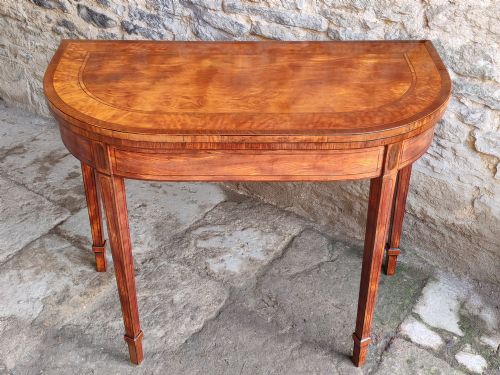
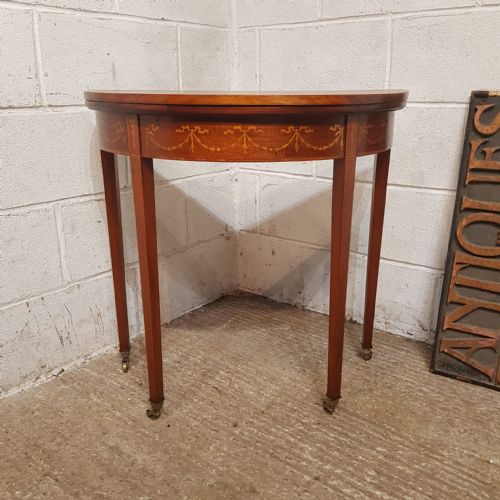
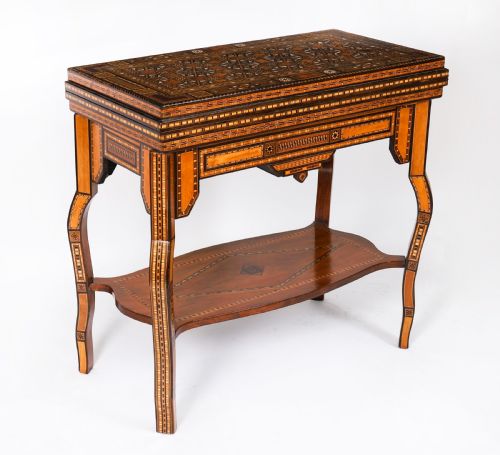
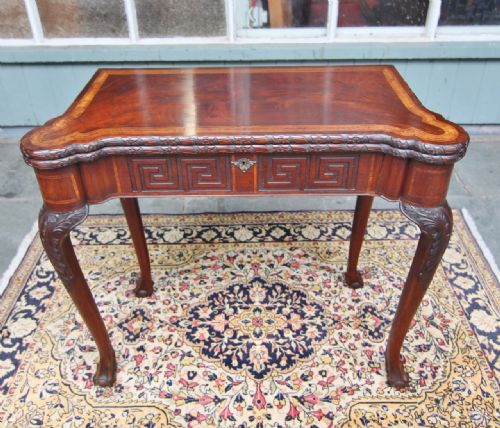
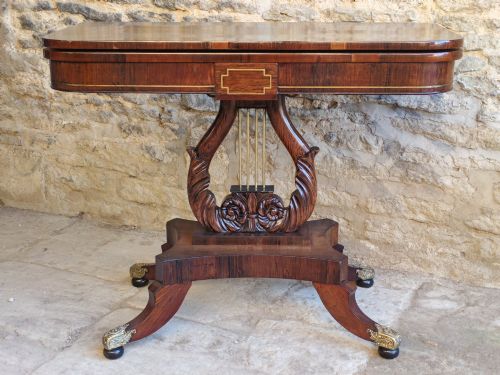
An inlaid wood card table serves as a functional piece of furniture designed for leisure activities like cards and chess, featuring a top that folds or pivots open.
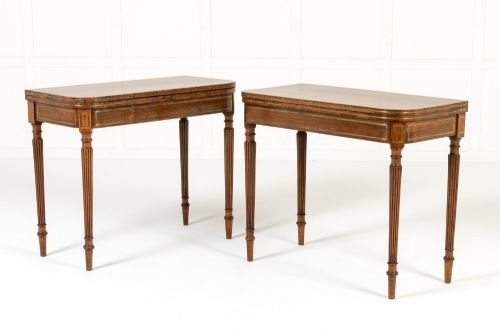
The selections available here span from the 18th century through the Edwardian period, with Georgian, Regency, and Victorian examples appearing frequently.
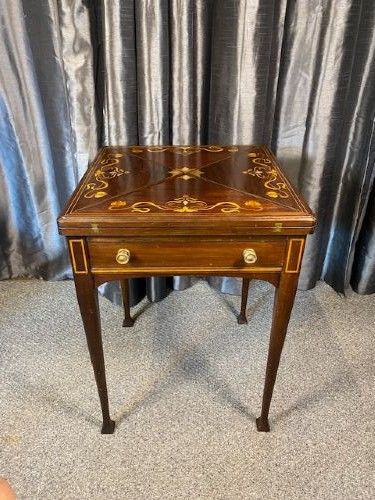
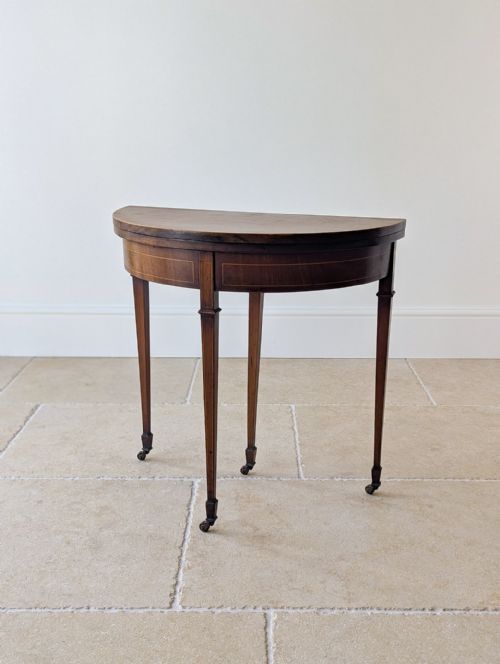
Forms range from D-shaped and demilune profiles to envelope tops that rotate and open into triangular leaves.
Judging the standard of execution
Distinction across the range rests on the precision of the cabinetwork, particularly the seamless alignment of the folding leaves and the crispness of the timber grain matching.
Finer examples demonstrate exceptional control in the botanical or geometric inlay, where contrasting woods fit flush into the primary surface without gaps or excessive filler.
Inlaid Wood Card Table Retail Price Guide 2026
Typical asking prices for inlaid wood card table among the pieces listed under this phrase on Sellingantiques today, from the lower quarter to the upper quarter. They describe what is for sale here now, not the wider market.
Listings feature woods like satinwood, rosewood, and burr yew across Georgian, Regency, and Edwardian periods.
George Bullock
The Inlaid Wood Card Table Glossary
- Demilune
- A half-moon shape commonly seen in the D-shaped tops of 18th and 19th-century tables. This profile allowed the furniture to sit flat against a wall when closed.
- Envelope table
- A square card table with four triangular flaps that swivel and fold open to reveal the baize-lined interior. This clever mechanism became popular during the Victorian and Edwardian eras.
- Marquetry
- The art of applying pieces of veneer to a structure to form decorative patterns and pictures. Craftsmen selected various coloured woods to achieve tonal depth.
- Crossbanding
- A border of veneer laid around the edge of a table top with the grain running perpendicular to the centre panel. This technique frames the primary timber and protects vulnerable end-grain.
Inlaid Wood Card Table: Frequently Asked Questions
How do you open an envelope card table?
The pivoting top rotates on its base to align with the frame corners.
Once turned, the four triangular wooden flaps fold outward individually to reveal the playing surface.
What is the difference between a tea table and a card table?
Tea tables generally feature flat timber surfaces intended for porcelain and hospitality.
Card tables conceal baize or leather playing surfaces beneath their folding leaves for games.
Where were these tables placed in a period home?
They stood flat against drawing room or parlour walls when closed to save domestic space.
Hosts moved them to the centre of the room only when evening entertainment required.
How do you distinguish Regency tables from Georgian ones?
Georgian versions lean toward substantial mahogany structures with discreet satinwood banding and straight or cabriole legs.
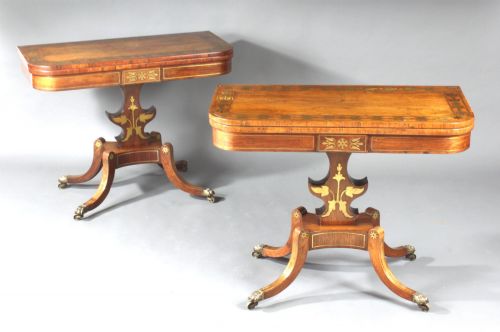
Regency examples frequently incorporate bold rosewood veneers, brass inlay, and pedestal bases with carved feet.