


Inlaid Roll Top Desk
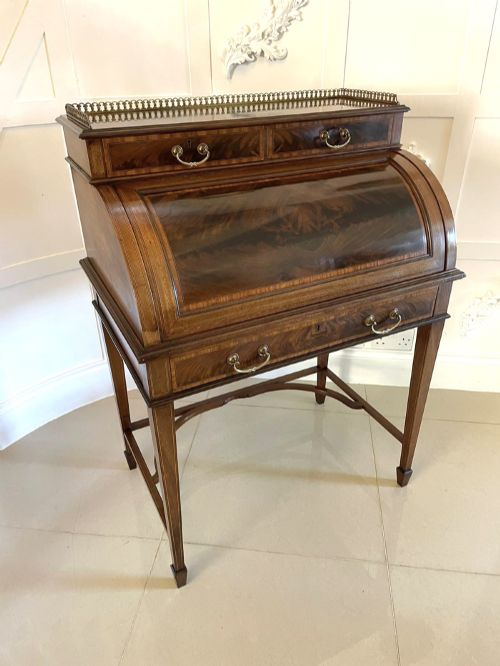
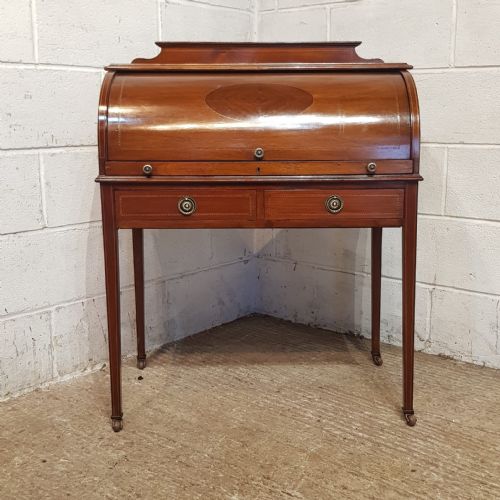
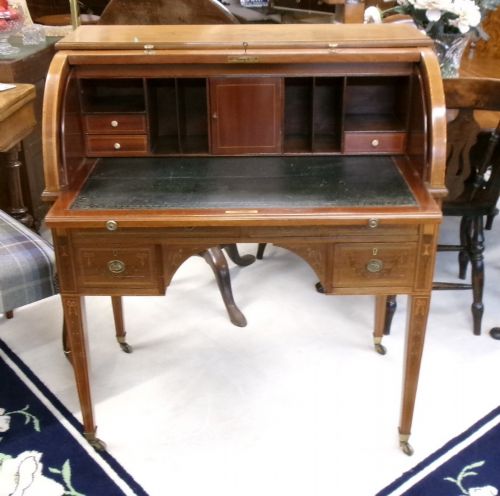
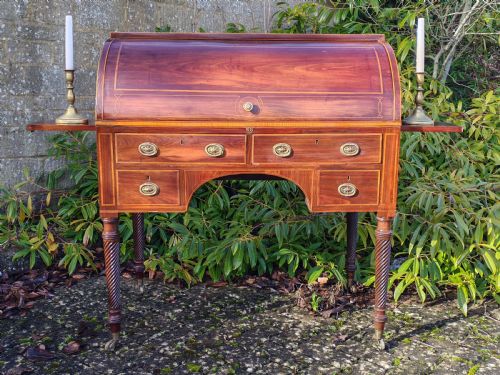
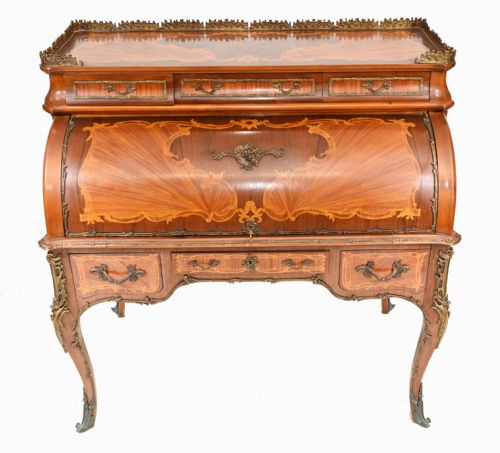
An inlaid roll top desk is a writing cabinet with a curved wooden cover that conceals fitted drawers, prized for both practical storage and decorative marquetry.
Inlaid Roll Top Desk
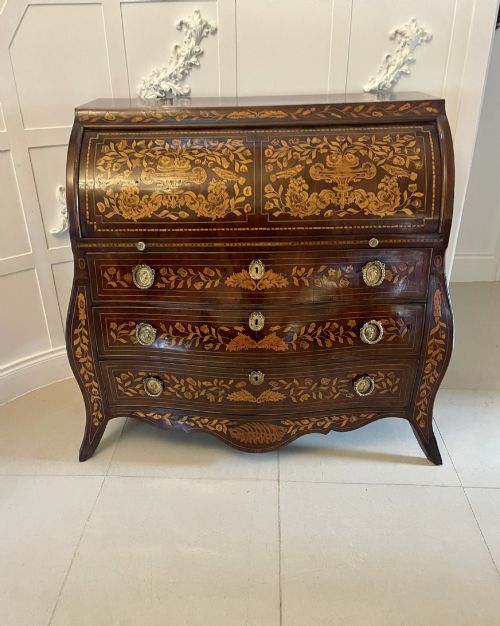
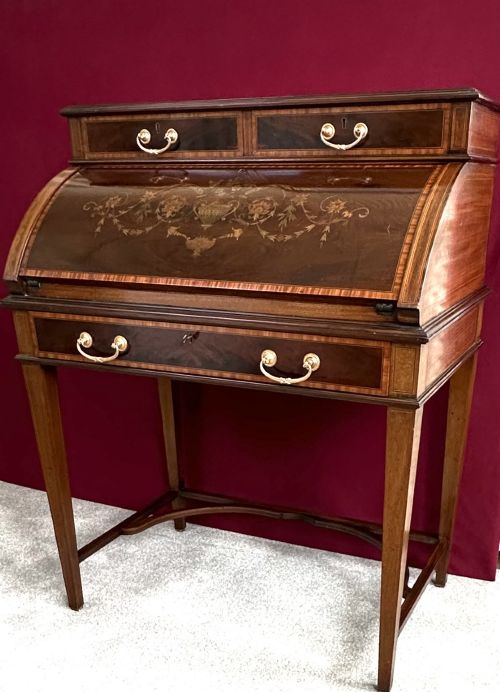
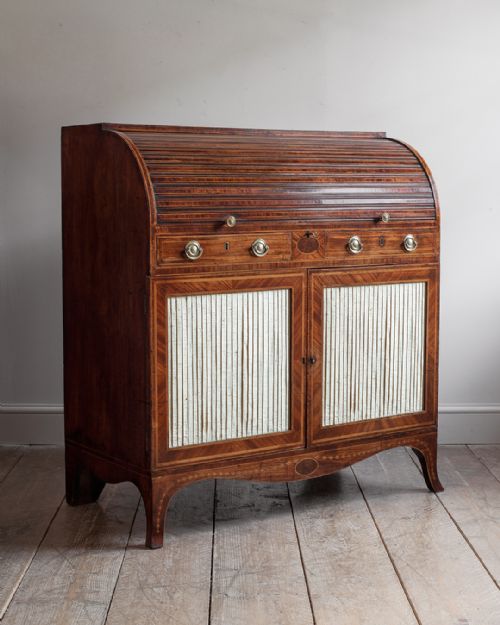
When you search for an inlaid roll top desk, you encounter cylinder desks, tambour desks, and barrel fronted pieces from several centuries. The selection ranges from compact Edwardian ladies desks in satinwood to substantial George III mahogany cabinets and elaborate Dutch floral marquetry pieces.
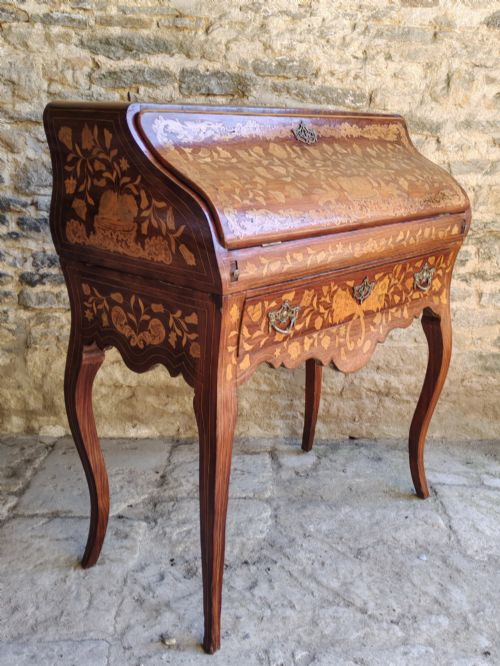
The most common examples on this page are Edwardian and late Victorian mahogany or satinwood pieces decorated with intricate wood inlay. You also find eighteenth century George III and Regency designs alongside Continental work featuring floral marquetry on walnut or fruitwood bodies.
These writing cabinets serve as practical workspaces that close completely to hide correspondence and papers. The roll action, whether solid cylinder or slatted tambour, protects the writing surface while displaying fine timber and brass fittings.
What varies in quality
Quality depends upon the choice of timber and the precision of the marquetry work. Finely figured mahogany and meticulously cut satinwood veneers distinguish superior pieces from simpler workshop productions.
The smoothness of the mechanical roll action indicates the original standard of craftsmanship. Well made cylinder and tambour mechanisms glide evenly without binding, supported by carefully fitted internal pigeonholes and small drawers.
Maple & Co London·Edwards & Roberts·John Mclean
The Inlaid Roll Top Desk Glossary
- Cylinder desk
- A writing desk featuring a solid, curved quarter circle wooden lid that rolls back into the body to reveal the writing surface. This form gained popularity during the late eighteenth century.
- Tambour
- A flexible shutter formed of narrow strips of wood glued to a fabric backing, allowing the cover to slide around a curved track. It serves the same concealing function as a solid cylinder.
- Marquetry
- The art of forming decorative patterns and pictures on furniture surfaces using thin veneers of various coloured woods. Floral motifs are particularly common on Dutch examples.
- Satinwood
- A durable, light coloured timber with a natural sheen, frequently utilised for veneers and banded borders during the Sheraton and Edwardian periods.
- Bonheur du jour
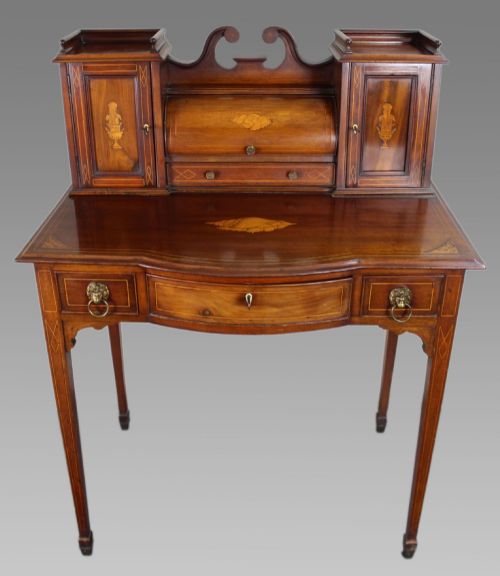
- A light ladies writing desk featuring a small cabinet or set of drawers on top of the writing surface. These elegant pieces often incorporate fine inlay and delicate proportions.
Inlaid Roll Top Desk: Frequently Asked Questions
What is the difference between a cylinder desk and a tambour desk?
A cylinder desk uses a solid, rigid curved wooden panel that rotates on a pivot track to open and close. This solid lid provides a smooth, continuous surface for decorative veneers.
A tambour desk uses a flexible curtain made of narrow wooden slats glued to fabric, allowing the cover to slide around tight curves. Both styles conceal the inner writing surface and drawers when closed.
How do I distinguish George III pieces from Edwardian copies?
George III pieces date from the late eighteenth or early nineteenth century and typically feature heavier structural timbers, hand cut dovetails, and genuine period candle slides or secondary woods like oak and pine. The patination on the timber develops a deep, soft lustre over centuries.
Edwardian reproductions and Sheraton Revival pieces from around nineteen hundred often display lighter construction, machine made interior elements, and brighter satinwood veneers. Examining the drawer linings and internal fixings usually reveals the true period of manufacture.
Where were Dutch marquetry desks made?
Dutch marquetry desks originated in the Netherlands during the eighteenth and nineteenth centuries, often taking the form of bulbous bombe shaped bureaus or cylinder desks. These pieces are characterised by elaborate floral and urn marquetry executed in various fruitwoods across walnut or mahogany bodies.
Makers in the Netherlands continued traditional floral inlay techniques long after other European regions shifted toward simpler neoclassical styles. This distinct regional aesthetic makes Dutch pieces easily recognisable among British furniture.
How do I care for an antique inlaid roll top desk?
Keep the desk away from direct sunlight and heat sources to prevent the delicate satinwood and fruitwood veneers from drying, warping, or cracking. Maintaining a stable room humidity helps preserve both the timber and the glue used in the marquetry.
Apply a microcrystalline wax polish occasionally to nourish the wood and protect the surface. Avoid using liquid cleaners or silicone based sprays that can damage the antique polish.