
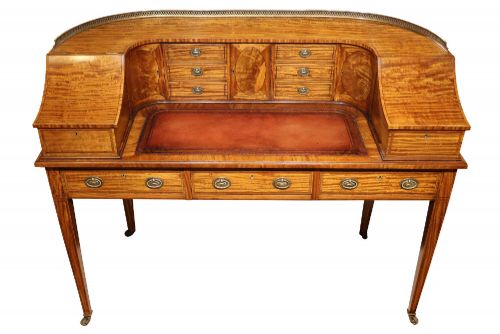


Classical Inlaid Desk
A classical inlaid desk brings refined timber and crisp marquetry into a room, offering a dedicated writing surface that anchors a study with period character.
Classical Inlaid Desk
A classical inlaid desk brings together formal architectural lines and contrasting wood details, offering a practical writing surface with enduring aesthetic value. When you search for a classical inlaid desk, you encounter pieces that range from compact cylinder fronts to large bureau bookcases.
The examples available here lean heavily towards the nineteenth century and the Edwardian period, often drawing upon Sheraton Revival or Victorian interpretations. Mahogany provides the primary structural timber for many of these pieces, while satinwood and fruitwood supply the lighter tones for decorative panels.
Beyond standard writing tables, the category encompasses secretaire cabinets and bureau bookcases that conceal fitted pigeonholes and small drawers behind drop-down flaps. These larger forms combine storage and writing facilities within a single cabinet format.
Materials and construction
Makers built the carcases of these desks using solid mahogany or walnut, applying carefully sliced veneers across flat surfaces to create stable panels that resisted warping. Cabinetmakers then executed intricate marquetry and line inlay by hand, recessing contrasting timbers such as satinwood and fruitwood into prepared channels.
Internal components often feature secondary softwoods for drawer linings, while primary writing surfaces frequently incorporate inset panels of tooled leather or fabric. Brass hardware, including drop handles, keyhole escuteliers and hinges, completes the construction of each piece.
Several desks conceal internal secret compartments designed for hiding private correspondence and small valuables away from prying eyes.
Judging quality and execution
The distinction between standard workshop output and superior cabinet work lies in the precision of the marquetry and the choice of face veneers. Finer desks display crisp, tight joints where contrasting inlay timbers meet, with no visible gaps or heavy adhesive fillers.
Attention to secondary details also defines a superior piece, including the use of figured mahogany with consistent grain patterns across the front drawers and fall-fronts. Furthermore, internal fittings such as secret compartments and satinwood-faced pigeonholes demonstrate the maker's commitment to the interior as well as the exterior.
Edwards & Roberts·Baby and Jannings
The Classical Inlaid Desk Glossary
- Marquetry
- Decorative patterns formed by inserting pieces of veneer into a fitted background of a different wood or material. This technique allows for elaborate floral, geometric or pictorial designs across the desk front.
- Cylinder Bureau
- A writing desk featuring a rounded, quarter-circle wooden shutter that rolls back to reveal a sliding writing slide and internal pigeonholes. It offers a neat way to conceal correspondence.
- Bureau Bookcase
- A tall piece of furniture combining a sloping-flap desk compartment at the lower level with enclosed shelving above. Glazed doors typically protect the upper section.
- Satinwood
- A durable, lustrous yellowish timber native to Ceylon and India, frequently utilised for banding and contrasting inlay work during the eighteenth and nineteenth centuries.
- Sheraton Revival
- A late nineteenth-century design movement inspired by the neoclassical furniture of George Sheraton, characterised by light proportions, satinwood veneers and delicate floral inlay.
Classical Inlaid Desk: Frequently Asked Questions
What is a classical inlaid desk?
A classical inlaid desk is a traditional writing table or bureau decorated with contrasting wood veneers, stringing and marquetry. These pieces originate primarily from the nineteenth and early twentieth centuries.
They combine practical workspace with decorative cabinet work, featuring built-in drawers, pigeonholes and fitted writing surfaces designed for correspondence and administrative tasks.
How do I care for a satinwood desk?
Keep inlaid wooden furniture away from direct sunlight and steady sources of heat to prevent the delicate veneers from drying out and lifting. Maintain a stable indoor climate.
Dust regularly with a soft, dry cloth and apply a quality beeswax polish occasionally to nourish the timber and protect the polished finish.
How do I identify a Victorian inlaid desk?
Victorian desks often utilise dense mahogany or walnut as a base timber, combined with bolder proportions and robust construction methods. Inlay work from this era frequently incorporates classical motifs or geometric banding.
Maker signatures, registration marks or labels inside drawer boxes can sometimes help pinpoint the exact workshop and decade of production.