

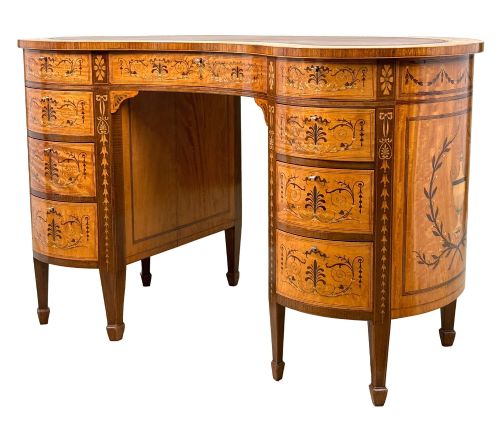
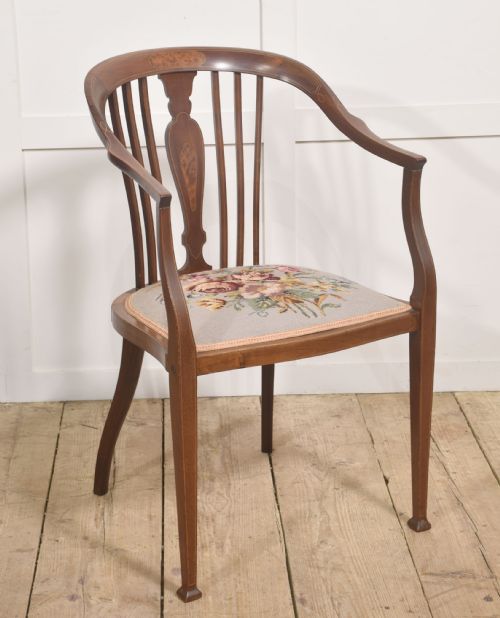


Satinwood Marquetry Desk
Satinwood marquetry desk surfaces unite light timbers with intricate floral and scroll inlays, creating refined writing furniture valued for decorative presence.
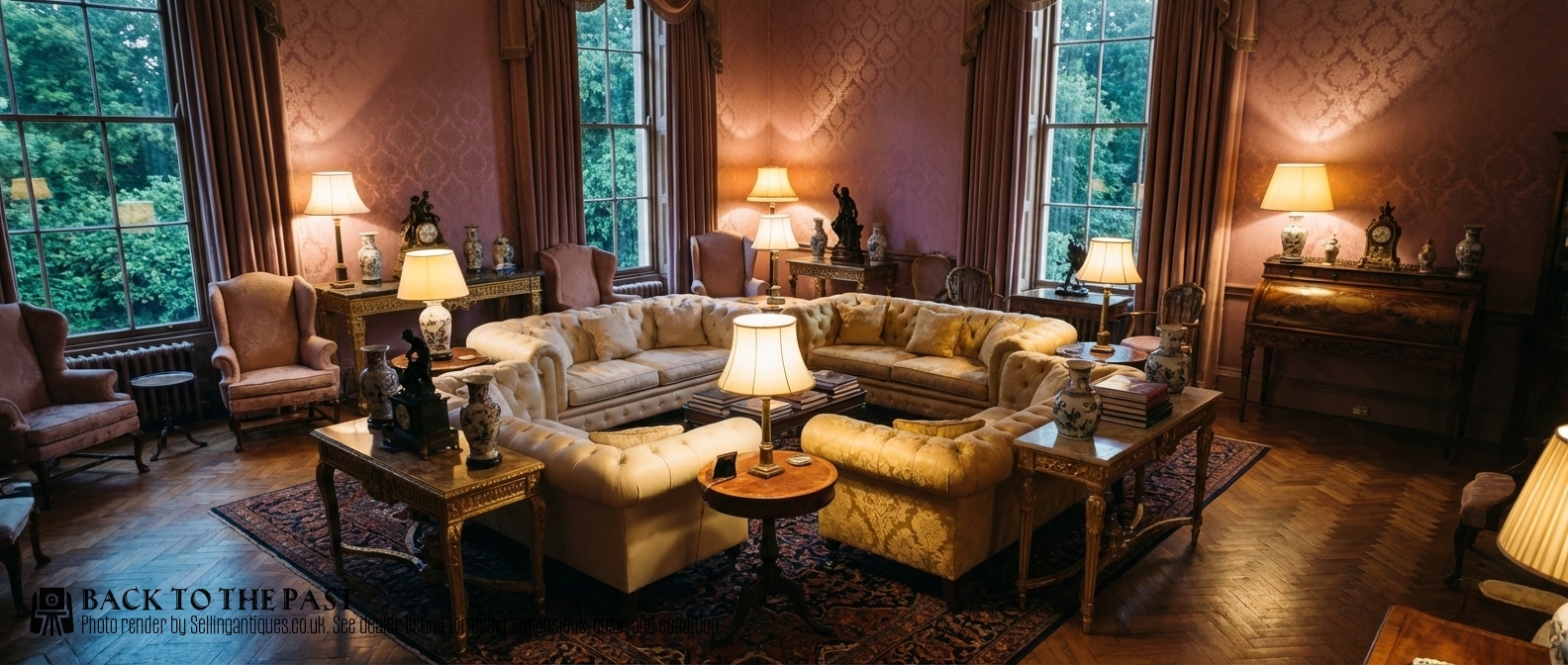
Satinwood Marquetry Desk
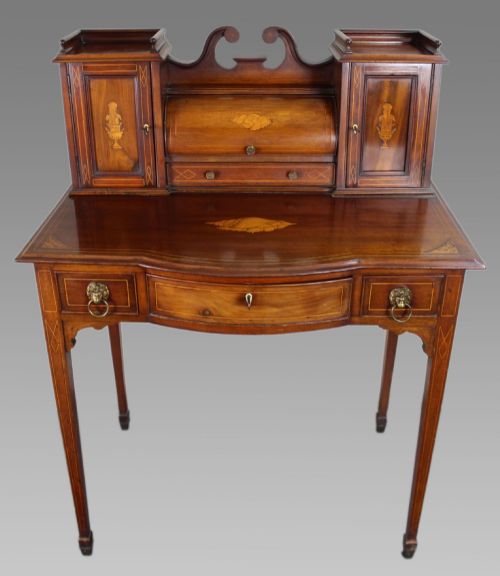
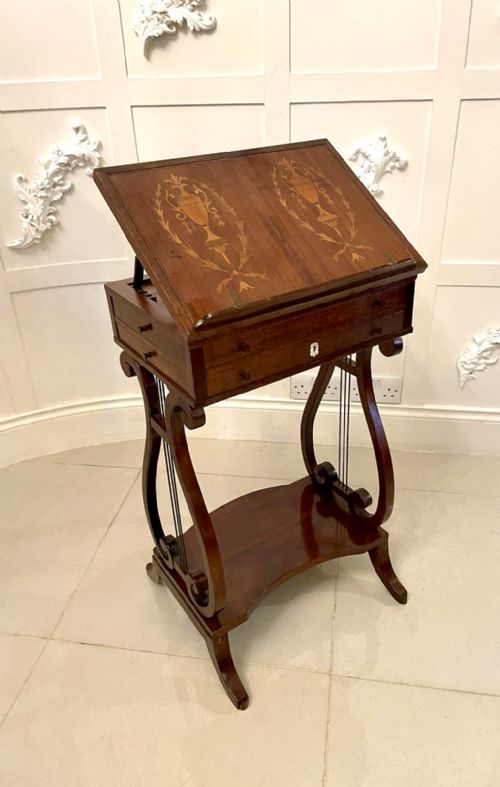
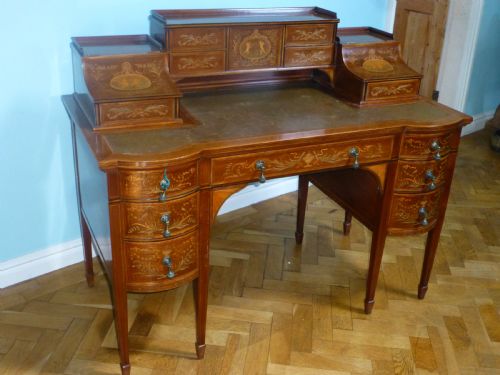
A satinwood marquetry desk combines a pale, light-reflecting primary timber with contrasting dyed and natural wood veneers arranged in pictorial or geometric patterns. Buyers searching this phrase most frequently encounter Edwardian and Victorian examples, alongside occasional 18th century George III and late 19th century pieces.
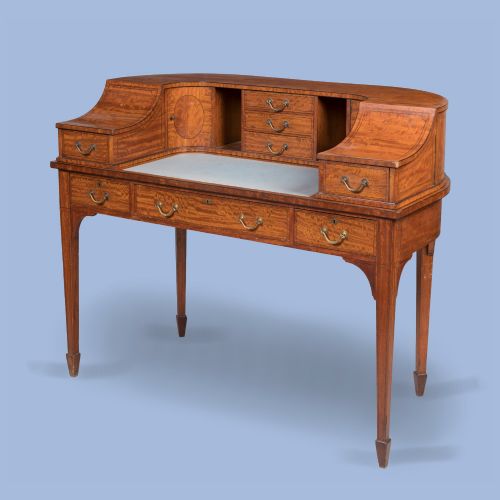
The forms span kidney-shaped writing tables, compact bonheur du jour cabinets, cylinder desks, and elaborate Carlton House tables. Many of these pieces incorporate leather writing inserts, brass galleries, and fitted stationary compartments designed for domestic correspondence.
Materials and Technique
Cabinet makers utilised dense mahogany or walnut as foundational carcass timbers, applying fine satinwood veneers to exterior surfaces. The decorative marquetry relies on precision-cut veneers of various contrasting woods, meticulously fitted together by hand before gluing.
Detailing often includes ormolu mounts, brass stringing, and inset leather writing surfaces bordered by gilt tooling. Selected pieces employ rosewood or maple bands to frame the central satinwood panels and floral marquetry motifs.
The listings show satinwood marquetry desks spanning the 18th, 19th, and early 20th centuries, predominantly featuring Edwardian and Victorian Sheraton Revival styles.
Standards of Craftsmanship
The distinction between standard production and top-tier workshop output lies in the depth and precision of the marquetry cutting, where finer pieces display intricate shading achieved by scorching veneer edges in hot sand. The choice of satinwood figure also determines the grade, with heavily mottled or feathered grain commanding greater visual impact.
Structural integrity reveals itself in the seamless alignment of internal stationery compartments, the weight of cast brass hardware, and the unwarped flatness of large kidney-shaped tops. Superior examples retain crisp edges to the inlaid foliage and bear the subtle stamp of prominent London makers.
Edwards and Roberts·James Shoolbred·Maple and Co·Druce and Co
The Satinwood Marquetry Desk Glossary
- Marquetry
- The art of applying small pieces of veneer to a structure to form decorative patterns or pictorial scenes. Unlike inlay, which sinks pieces into a solid carved recess, marquetry covers the entire surface as a veneer layer.
- Satinwood
- A hard, durable timber with a natural golden sheen and satin-like lustre. It was favoured by 18th and 19th century cabinet makers for its bright surface reflection.
- Carlton House desk
- A form of writing table featuring a curved superstructure of small drawers and compartments enclosing the rear and sides of the writing surface. This layout originated in the late 18th century.
- Bonheur du jour
- A small, light lady's writing desk featuring a tiered cabinet or set of pigeonholes and small drawers mounted on the upper surface. These pieces gained popularity during the revival styles of the 19th century.
- Ormolu
- Gilded bronze mounts applied to furniture edges, feet, and keyholes for decorative enrichment. The technique involves treating metal with a mercury and gold amalgam.
Satinwood Marquetry Desk: Frequently Asked Questions
What is a satinwood marquetry desk?
A satinwood marquetry desk is a piece of antique writing furniture finished with a pale yellow-gold timber veneer and decorated with pictorial wood-inlaid patterns. These tables and bureaus date primarily from the Victorian and Edwardian periods.
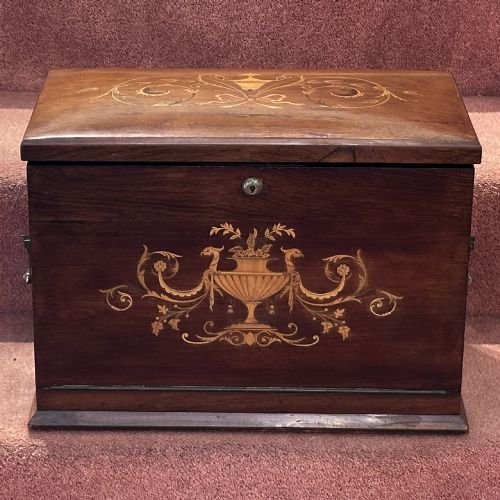
The inclusion of contrasting wood veneers creates floral, ribbon, or urn motifs across the desktop, front drawers, and surrounding galleries. They served as elegant additions to drawing rooms and private boudoirs.
How do I care for satinwood?
Satinwood requires protection from direct sunlight and excessive heat to prevent the pale timber from darkening unevenly or drying out. Regular dusting with a soft, dry cloth preserves the polished surface without stripping the underlying finish.
Applying a traditional beeswax polish occasionally helps nourish the veneer and maintain the natural lustre of the wood. Avoid placing wet containers or unprotecting items directly on the polished timber top.
How do I distinguish Edwardian from Victorian pieces?
Victorian examples frequently display heavier proportions, darker contrasting crossbanding in rosewood or mahogany, and robust ormolu mounts. The marquetry often follows heavier Revivalist interpretations of earlier French and English styles.
Edwardian pieces generally present a lighter, more delicate construction with refined Sheraton Revival influences. The satinwood figure tends to be brighter, and the overall aesthetic leans towards airier, streamlined forms.
Were these desks used for daily writing?
These desks were designed for correspondence, letter writing, and managing household accounts rather than heavy administrative duties. The inclusion of small drawers, pen trays, and stationery slots reflects the social correspondence habits of the period.
Many styles, such as the kidney desk or bonheur du jour, were specifically positioned in reception rooms rather than private studies. Their decorative marquetry ensured they contributed to the aesthetic of the room when not in active use.