

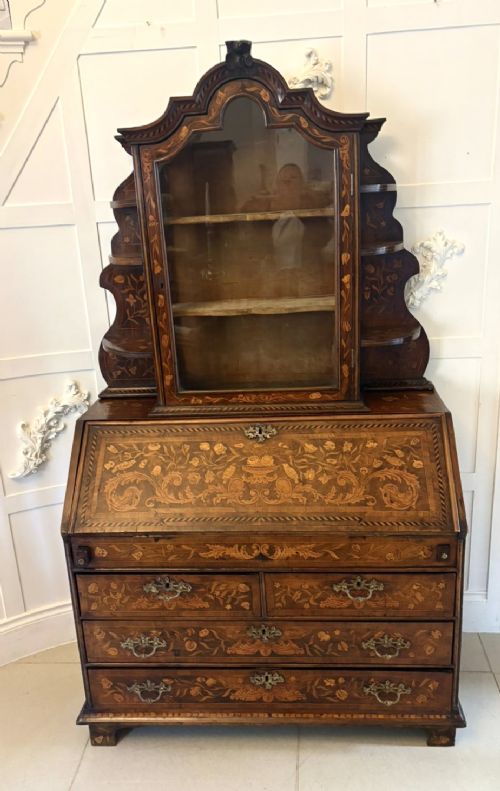


Dutch Inlaid Writing Desk
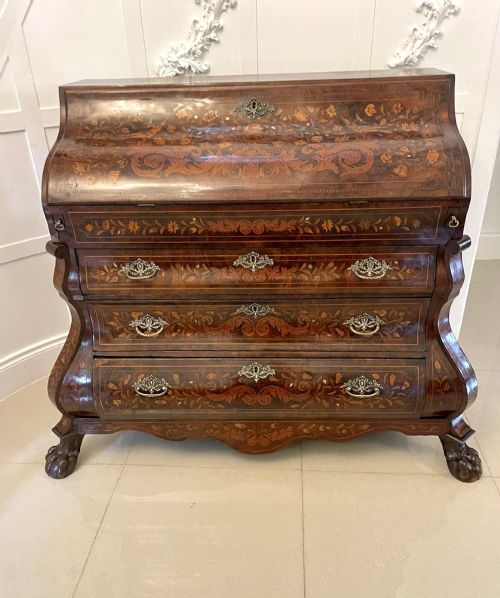
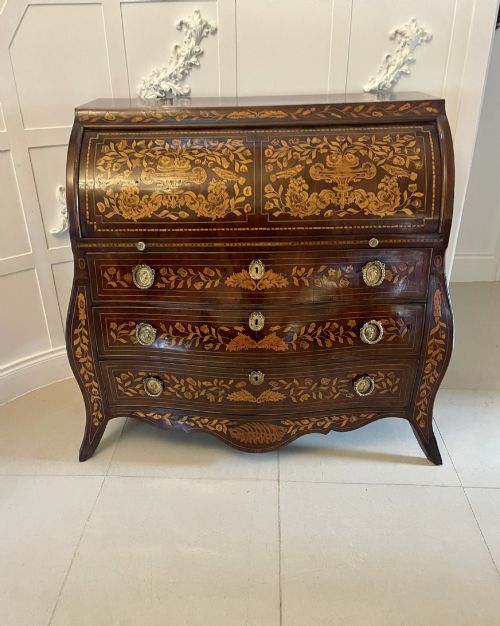
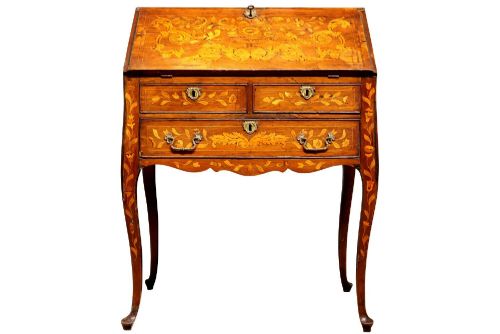
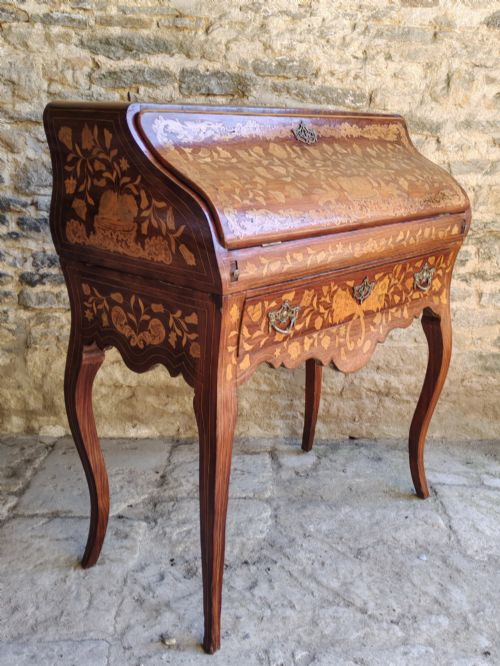
These pieces of dutch inlaid writing desk bring together elaborate floral marquetry and practical compartmentalised storage from the seventeenth to the nineteenth century.
Dutch Inlaid Writing Desk
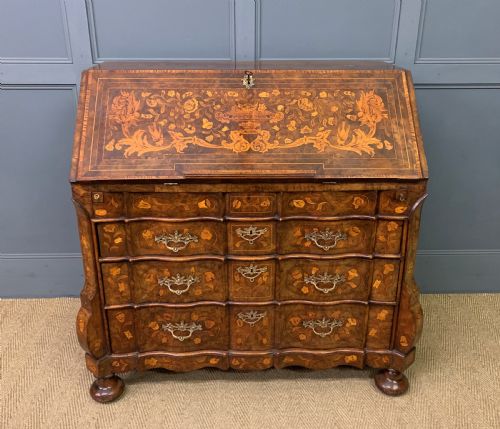
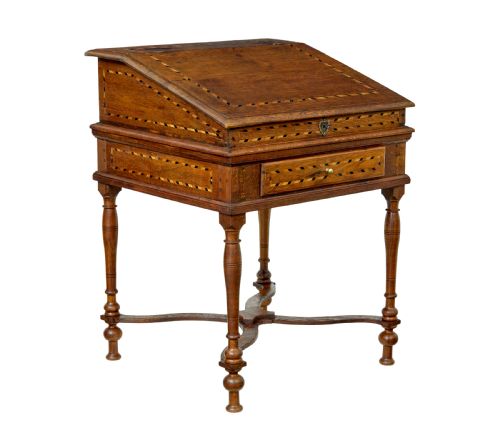
A dutch inlaid writing desk encompasses a variety of forms including bureaux, bureau bookcases, cylinder desks, centre tables, and writing slopes. Buyers seeking these items encounter numerous examples from the eighteenth and nineteenth centuries, often displaying distinct cabinetwork.
The selection ranges from bombe shaped bureaux to tall bureau bookcases and partners desks, reflecting diverse domestic requirements of past centuries. Bureau forms dominate the current offerings, alongside occasional centre tables and architectural writing pieces.
How they were made
Cabinetmakers utilised primary structural timbers such as walnut, burr walnut, oak, and mahogany to construct the carcase and drawers. These woods provided a stable foundation for complex surface decoration.
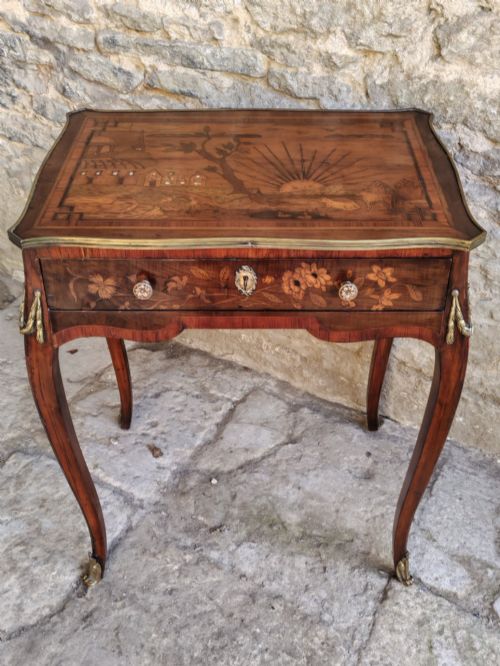
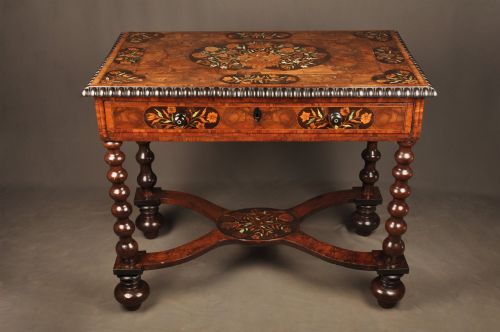
Surfaces received intricate ornamentation through fruitwood inlay and floral marquetry, often combined with brass hardware. Artisans cut contrasting woods meticulously to form floral and foliate patterns across the fall fronts and cabinet doors.
Cabinetmakers occasionally concealed miniature secret drawers behind false pigeonholes within the writing compartments.
What varies in quality
The sophistication of the marquetry design and the choice of underlying timber determine the standing of each piece. Burr walnut and detailed floral arrangements executed with precision distinguish finer examples from simpler provincial work.
Structural complexity, such as bombe front contours or integrated bureau bookcase superstructures, demands advanced carpentry skills. The harmony between internal pigeonholes, secret compartments, and external decoration defines the upper tiers of this cabinetwork.
Morison of Edinburgh
The Dutch Inlaid Writing Desk Glossary
- Bombe
- A bulging or outward curving profile typical of continental furniture fronts. This swelling contour requires specialised shaping of the timber carcase.
- Marquetry
- Decorative veneer work forming pictures or patterns using various coloured woods. Artisans assemble small pieces of fruitwood to create floral motifs across the desk surface.
- Bureau
- A writing cabinet featuring a sloping flap that opens to reveal fitted drawers and pigeonholes. It serves as both a desk and storage unit.
- Escritoire
- A writing cabinet or desk, often fitted with a fall front and internal compartments. The term describes tall or table-standing writing furniture.
- Cylinder desk
- A writing desk enclosed by a quarter-cylinder rolling shutter or lid. This mechanism conceals the writing surface and interior fittings when closed.
Dutch Inlaid Writing Desk: Frequently Asked Questions
How were bureau bookcases used?
These tall pieces combined a lower writing desk with an upper glazed or panelled bookcase cabinet. They provided secure storage for correspondence alongside library shelving.
The fall front opened to create a writing surface while concealing private compartments and small drawers within.
What distinguishes floral marquetry?
Floral marquetry involves assembling finely cut pieces of fruitwood and other tinted timbers into elaborate botanical patterns. These designs cover the exterior surfaces of desks and cabinets.
Artisans utilised contrasting natural tones to depict flowers and foliage without relying on applied paint.
How do walnut and burr walnut differ?
Standard walnut timber provides a straight, even grain used for the structural carcases of desks. Burr walnut comes from the gnarled growth knots of the tree.
This figured burr wood creates highly decorative swirling patterns when sliced into thin veneers for decorative panels.