
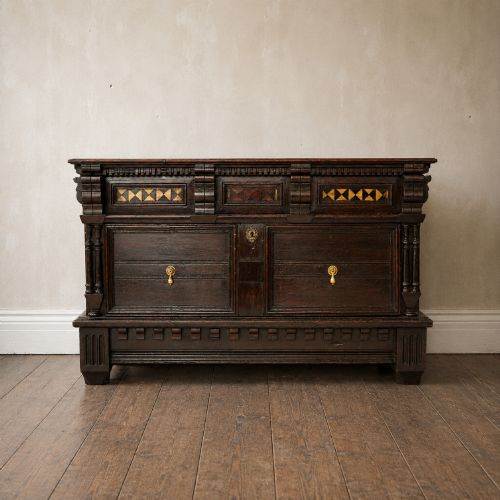
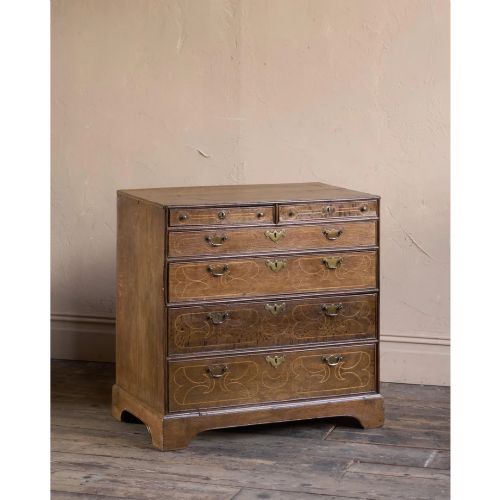
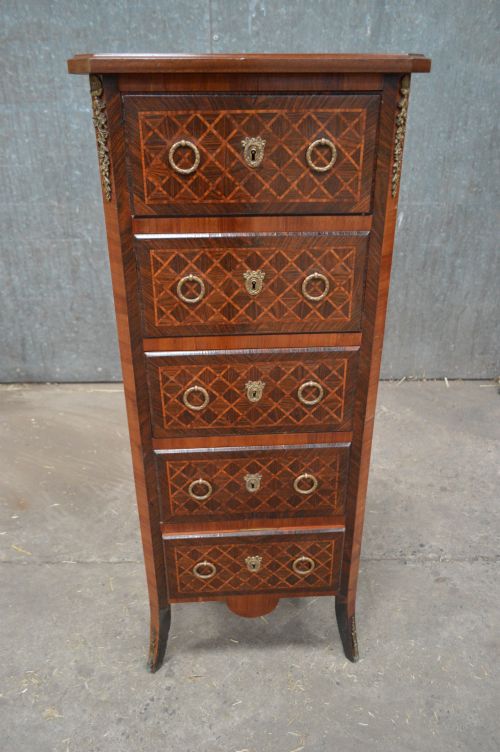
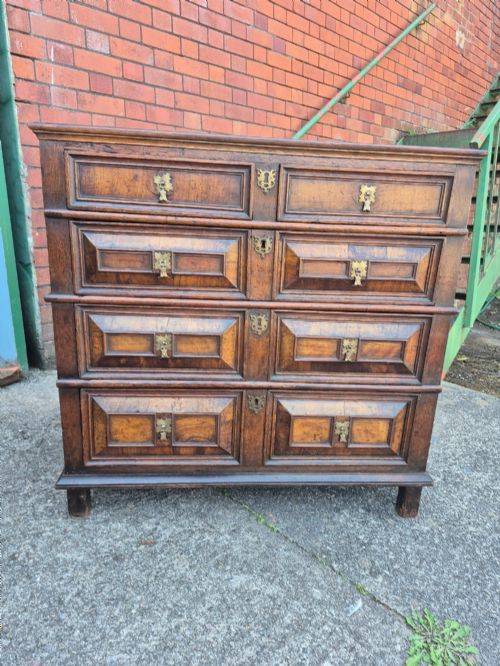
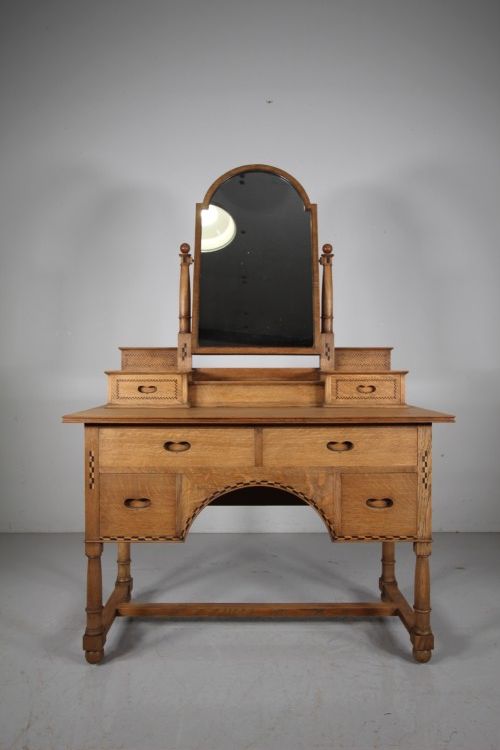
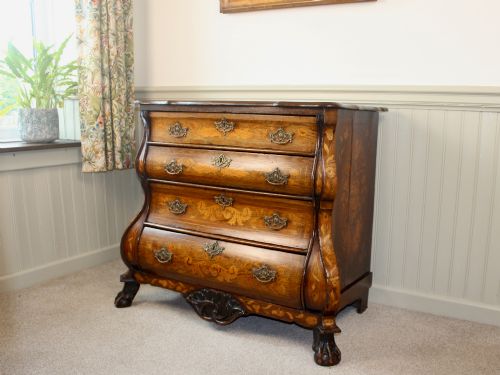
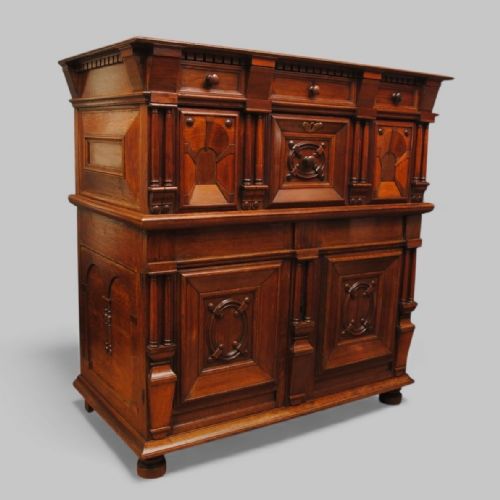
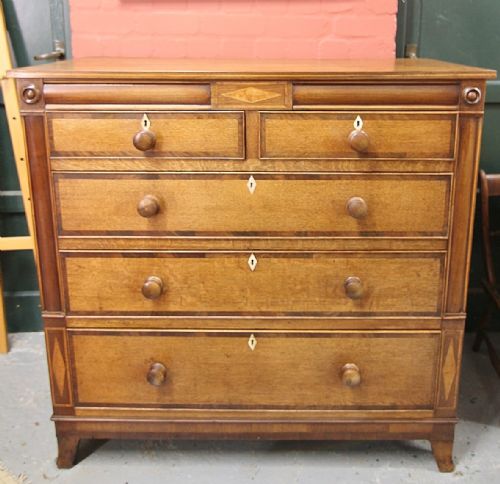
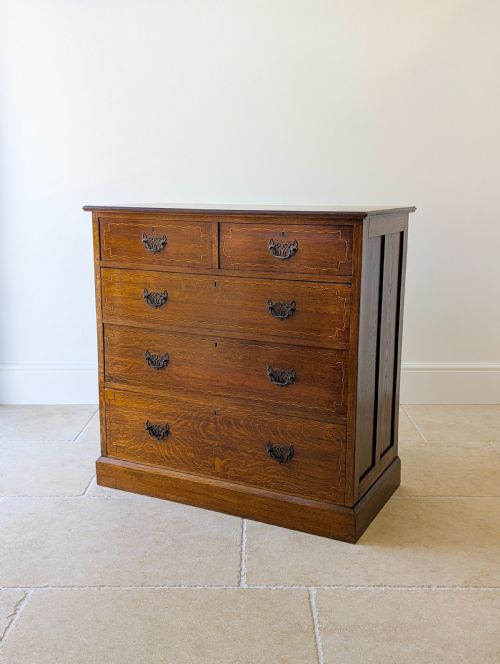


Inlaid Oak Chest
When you search for an inlaid oak chest, you meet centuries of craftsmanship uniting sturdy timber with decorative surface patterns.

Inlaid Oak Chest
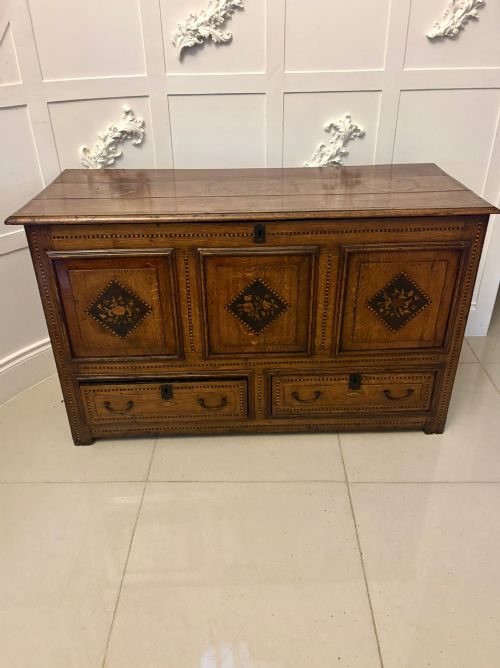
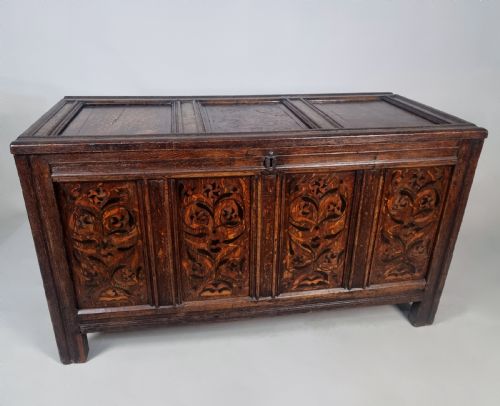
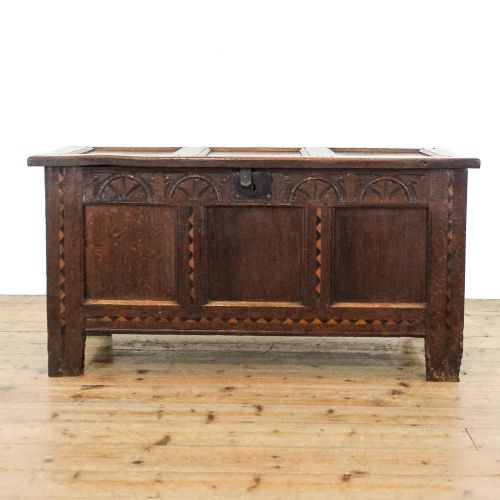
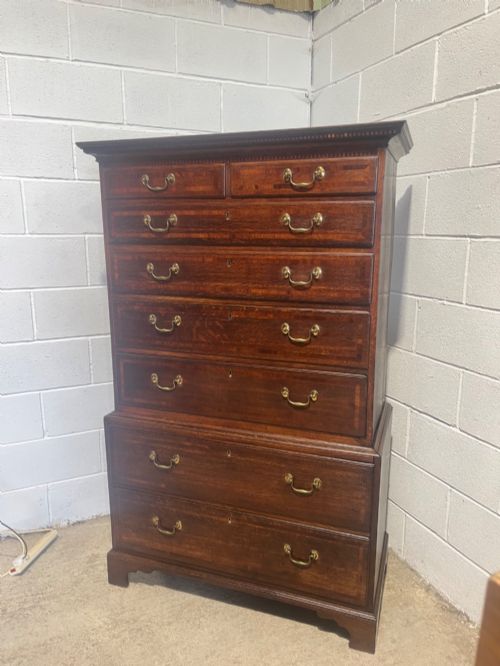
The search phrase inlaid oak chest encompasses a diverse group of storage pieces, ranging from early coffer forms and mule chests to later drawer chests and dressing pieces. Buyers typically encounter seventeenth-century coffers alongside Georgian and Edwardian drawer configurations.
Early examples often function as blanket boxes or hinged coffers featuring geometric wood decoration, whereas later periods introduce functional drawers and cross-banded details. These domestic furnishings record changing storage needs across the seventeenth, eighteenth, nineteenth, and early twentieth centuries.
Materials and construction methods
Carpenters built these carcases primarily from solid oak, frequently incorporating secondary timbers such as walnut, fruitwood, mahogany, and elm for contrasting elements. Surfaces received intricate wood inlay, marquetry, parquetry, and oyster veneering to create complex patterns.
Makers utilised iron and brass hardware, including decorative hinges, lock plates, and swan neck handles, to secure and accent the timber construction. Joinery techniques evolved from boarded and framed coffer construction to sophisticated dovetailed drawer boxes.
Listings feature oak, walnut, fruitwood, and mahogany across styles spanning seventeenth-century Jacobean to Edwardian Arts & Crafts.
Defining characteristics of quality
The standard of an inlaid oak chest depends upon the precision of the joinery and the complexity of the contrasting wood decorations. Superior examples display crisp marquetry and carefully selected timber grains that integrate harmoniously with the primary oak structure.
Proportion and originality dictate value among these pieces, separating utilitarian storage from master-carved or documented workshop commissions. Intact period hardware and undisturbed surface patination elevate individual examples significantly.
Heals·Wright & Hunter of Belfast·Shapland & Petter·B Cohen & Sons
The Inlaid Oak Chest Glossary
- Coffer
- A large heavy box used for storing valuables and household goods. These early forms often feature hinged lids and detailed front panel decoration.
- Mule chest
- A storage chest fitted with one or more drawers at the base beneath the main compartment. They bridge the design gap between simple coffers and multi-drawer chests.
- Marquetry
- The art of applying small pieces of wood veneer to a structure to form decorative pictorial or geometric patterns. Makers used contrasting fruitwoods and walnut to achieve striking visual depth.
- Oyster veneering
- A method of slicing small branches cross-wise to produce circular or oval veneers resembling oyster shells. This technique creates a distinctive repeating pattern across drawer fronts and panels.
- Parquetry
- A geometric mosaic of wood pieces used for decorative floors or furniture surfaces. It differs from marquetry by strictly utilising repeating angular shapes rather than pictorial motifs.
Inlaid Oak Chest: Frequently Asked Questions
How do I date an inlaid oak chest?
Dating relies on observing construction methods, handle types, and the complexity of the wood inlay. Seventeenth-century pieces typically feature pegged frame-and-panel construction and geometric patterns, while later Georgian and Edwardian examples incorporate dovetailed drawers and refined veneers.
Changes in hardware styles and secondary woods also help establish the approximate decade of manufacture. Comparing piece proportions against documented historical examples confirms the stylistic period.
What is the difference between a coffer and a mule chest?
A coffer is essentially a large trunk or blanket box with a top-opening lid, primarily used for general household storage. A mule chest builds upon this basic form by adding one or more drawers beneath the main box compartment.
This drawer addition allowed easier access to stored clothing and linens without needing to disturb items stacked on top. Both forms frequently showcase elaborate inlay and carving across their primary display surfaces.
Where should I place an oak chest at home?
These robust storage pieces suit hallways, living rooms, and bedrooms where their generous proportions provide practical utility. Placing them away from direct heat sources and strong sunlight protects the antique timber and delicate inlay work from drying out.
Allowing sufficient clearance around hinged lids ensures you can open coffers safely without damaging adjacent walls or furniture. Their sturdy construction makes them reliable anchor points in traditional or eclectic interior schemes.
How do I care for antique wood inlay?
Maintain wood inlay by applying a suitable wax polish sparingly to nourish the dry timber and protect the delicate veneer joints. Avoid excessive moisture and chemical cleaning agents that can dissolve historical finishes and loosen inlaid elements.
Stable room temperatures and consistent humidity levels prevent the oak carcase and contrasting fruitwoods from expanding or contracting violently. Regular dusting with a soft cloth preserves the natural surface patination over time.