
Georgian Inlaid Chest
When you search for a georgian inlaid chest, you enter a world of finely figured timbers and delicate contrasting bandings that anchor a traditional interior.
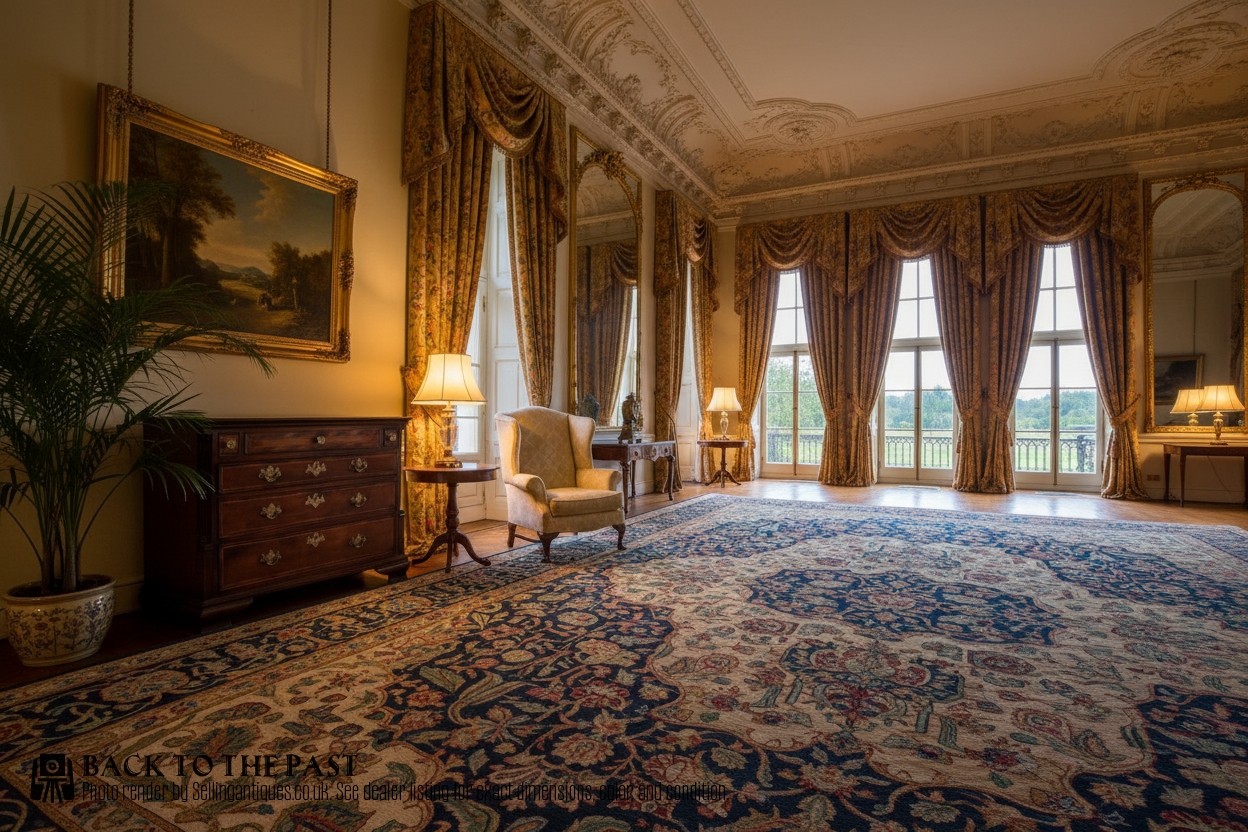
Georgian Inlaid Chest
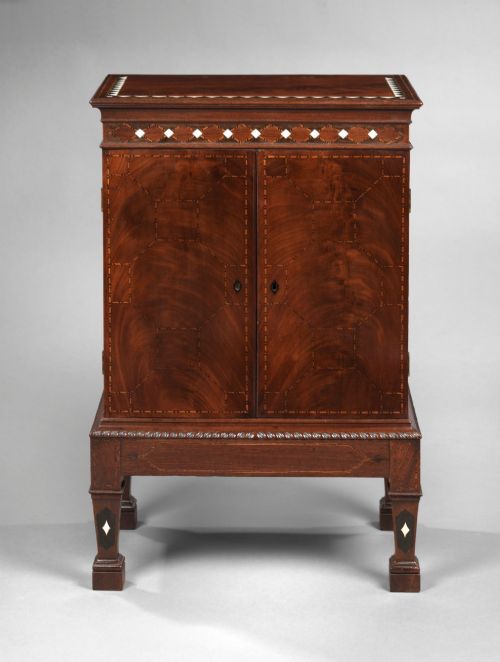
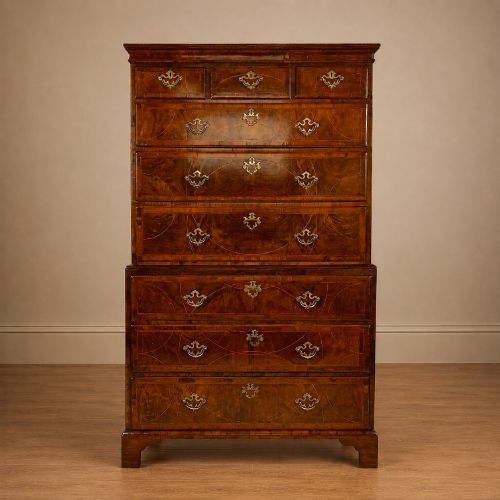
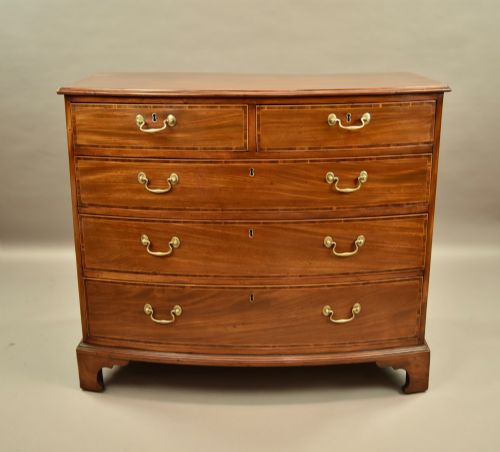
A georgian inlaid chest typically takes the form of a robust storage drawer unit constructed during the eighteenth or early nineteenth century, featuring decorative contrasting wood details. These pieces originate across the Georgian and Regency eras, spanning straight-front designs, bow-front profiles, and grander chest-on-chest configurations.
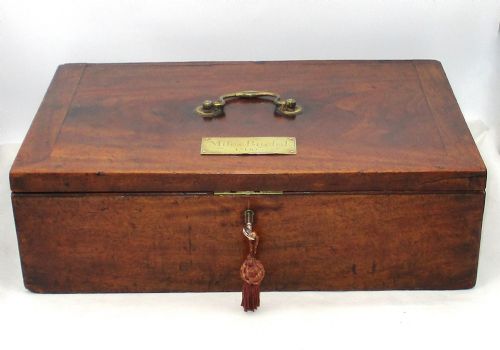
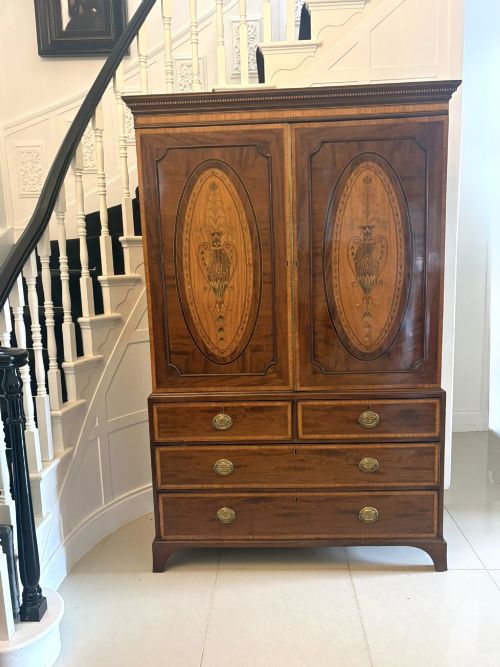
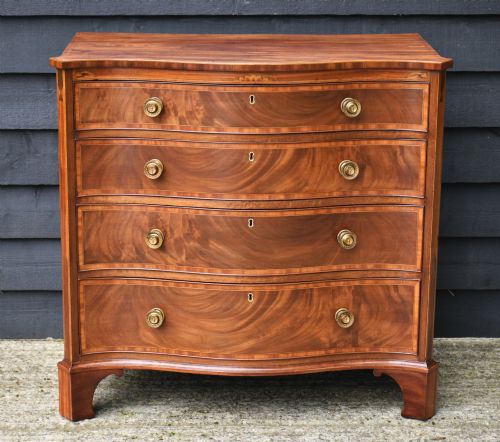
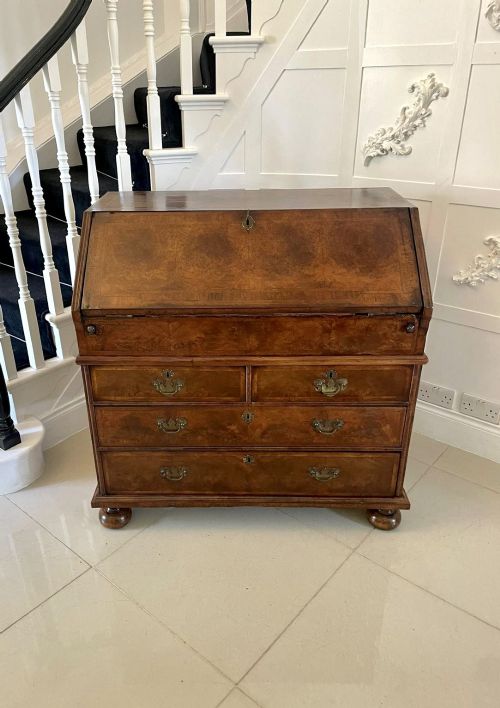
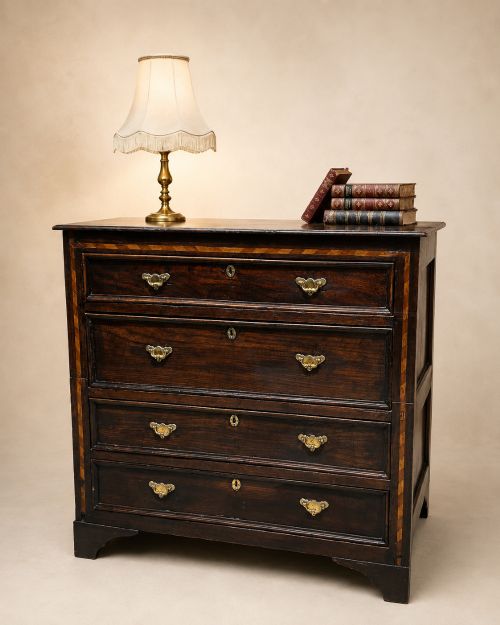
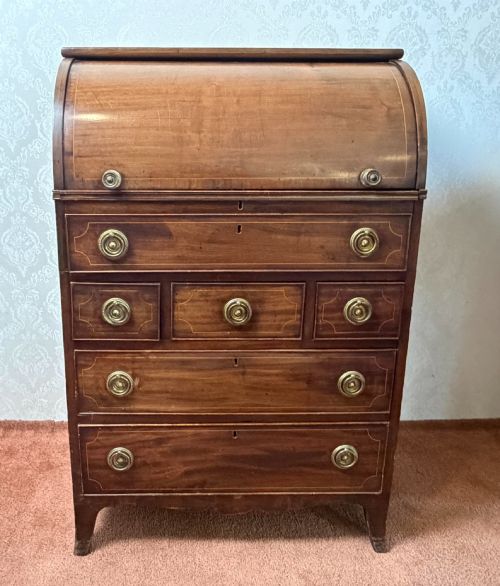
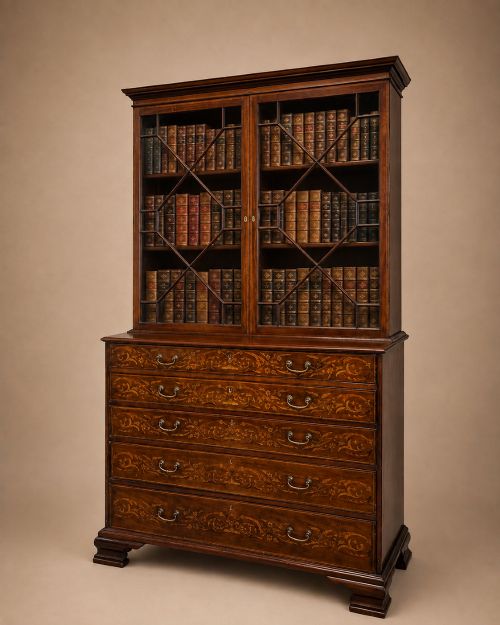
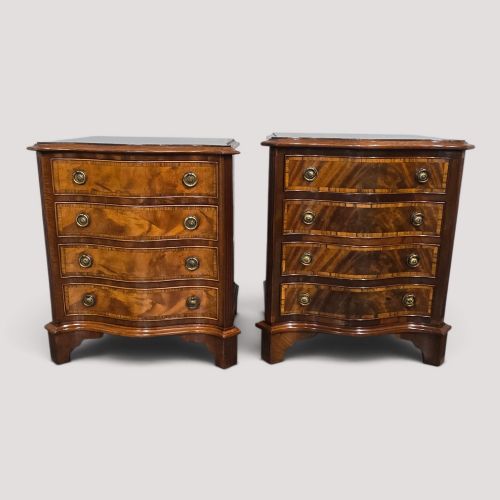
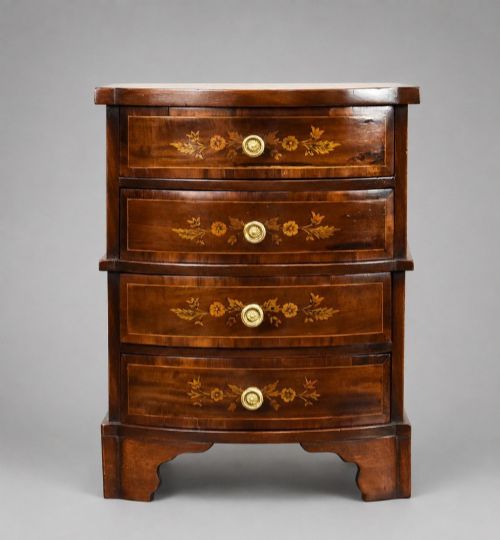
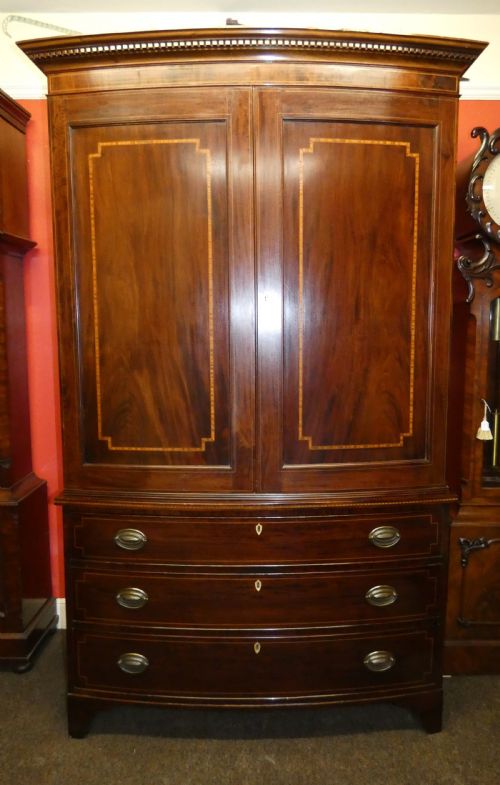
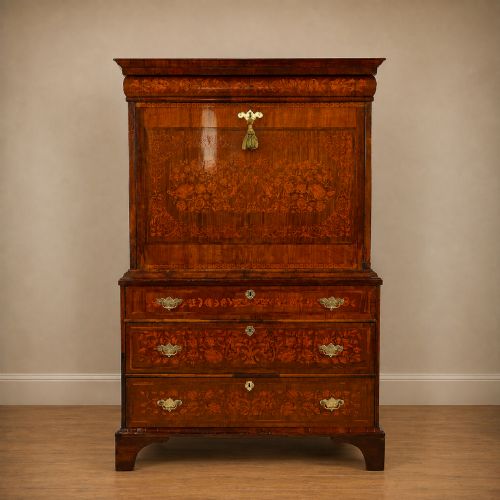
The version most commonly encountered on this page is the mahogany chest of drawers decorated with satinwood, boxwood, or line inlay, often resting on bracket feet or a plinth base. Alongside standard drawer chests, related forms like linen presses, secretaire variants, and bachelor chests appear frequently in the record.
Cabinet makers of the period utilised native and imported timbers, shaping sturdy proportions that combined practical domestic storage with refined surface ornamentation. The stylistic vocabulary encompasses George through Regency influences, showing shifts from heavy walnut to lighter figured mahogany surfaces.
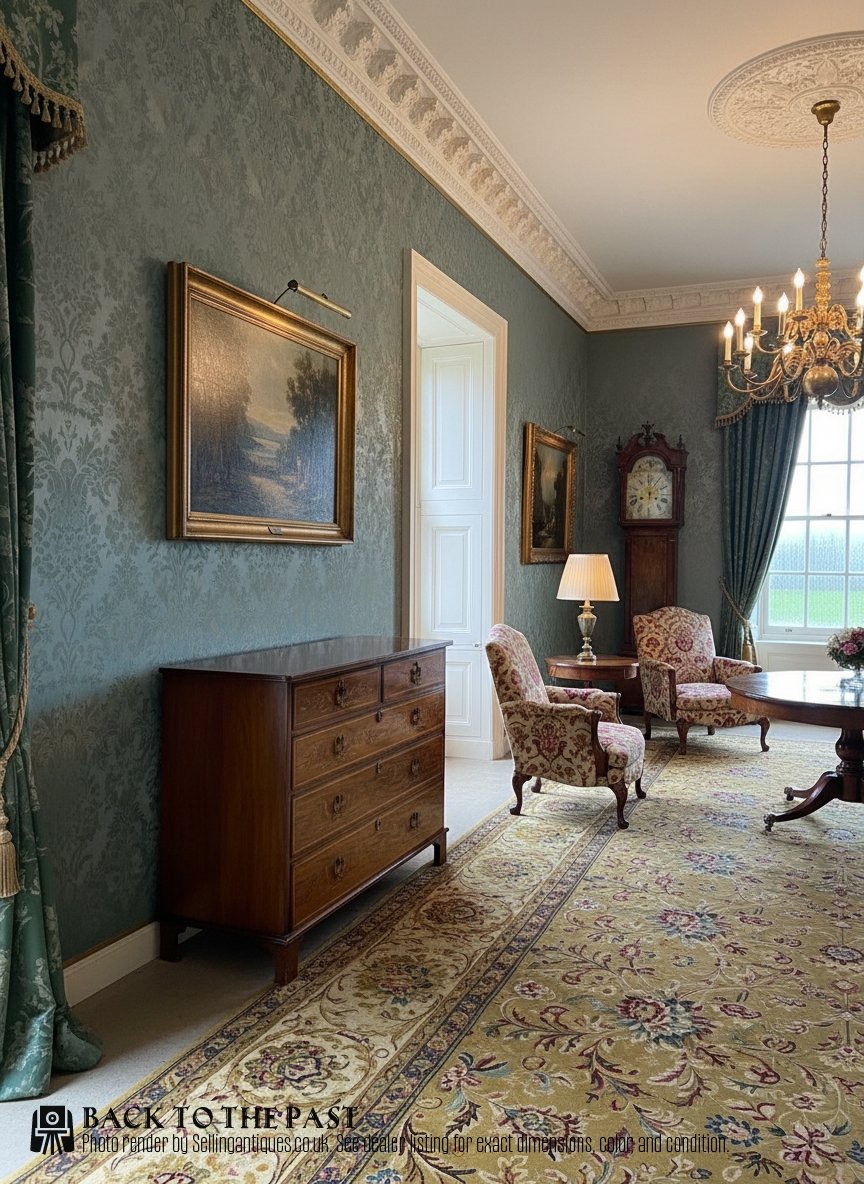
Evaluating Quality and Construction
Quality reveals itself in the selection of timber veneers, where highly figured flame mahogany or burr walnut command greater regard than plain stock. The precision of the cabinet work, from flush-fitting drawer linings to the tight integration of delicate stringing, sets finer examples apart.
The integrity of the original hardware, feet, and internal blocking contributes significantly to the standing of a piece. Finer items exhibit harmonious proportions and uncompromised structural unity throughout the primary carcase and internal drawer components.
Georgian Inlaid Chest Retail Price Guide 2026
Typical asking prices for georgian inlaid chest among the pieces listed under this phrase on Sellingantiques today, from the lower quarter to the upper quarter. They describe what is for sale here now, not the wider market.
Listings feature walnut, mahogany, satinwood, and oak timbers across Georgian, Regency, and Edwardian periods.
Edwards and Roberts·Druce and Co·Gillows
The Georgian Inlaid Chest Glossary
- Inlay
- A technique where small pieces of contrasting wood, bone, or metal are inserted into hollowed-out spaces on the surface to create decorative patterns. This method defines the primary visual appeal of these storage pieces.
- Cross-banding
- A border treatment where veneer strips are laid perpendicularly to the surrounding grain, framing the drawer fronts or top surface. It adds a neat visual boundary to the main panel.
- Line inlay
- Thin, contrasting strips of light or dark wood set into straight channels to outline drawers and borders. This subtle detailing provides geometric definition.
- Marquetry
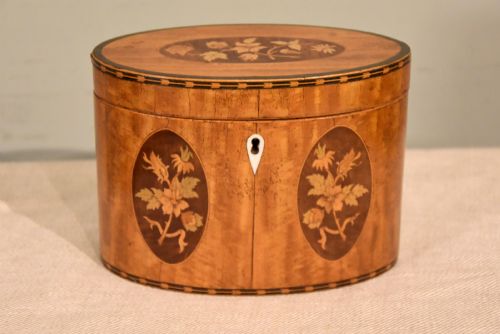
- Elaborate pictorial or floral veneering assembled from various tinted woods and botanical specimens. It appears on higher-status decorative surfaces.
- Bow-front
- A convex, curved front profile popular on late eighteenth-century drawer units. This shape softens the room presence of heavy timber furniture.
- Caddy top
- A raised, moulded tabletop profile resembling the lid of a tea caddy. It gives a distinct stepped edge to the upper carcase.
Georgian Inlaid Chest: Frequently Asked Questions
What is a bachelor chest?
A compact drawer unit equipped with a pull-out brushing slide above the primary storage drawers. This surface served writing and dressing needs in smaller Georgian chambers.
Such pieces combine multi-functional design with domestic scale, making them highly versatile for modern placement.
How do I distinguish walnut from mahogany chests?
Walnut pieces generally belong to the earlier Georgian eras, showing rich brown tones with dark figuring and subtle grain patterns. Mahogany dominates later periods, offering a reddish-brown hue that takes a bright, polished finish.
Examining the underlying timber weight and grain structure clarifies the material distinction between periods.
Where were these chests used in a home?
These storage units served primarily in bedchambers, dressing rooms, and formal withdrawing spaces to hold linens and personal garments. Their decorative surfaces also provided display space for tea caddies, mirrors, and lighting.
Today, they adapt easily to hallways, living areas, and bedrooms as functional statement furniture.
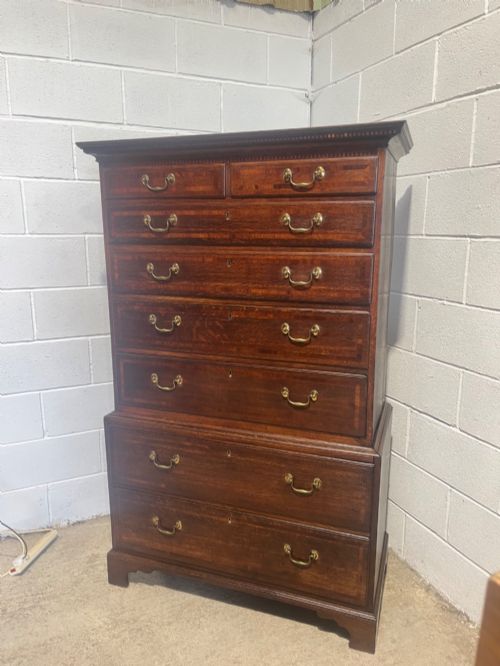
What is a chest on chest?
A tall storage unit constructed in two separate stacked sections, featuring a smaller set of drawers sitting atop a wider base. This form maximised vertical storage capacity without taking up excessive floor space.
Such grand pieces often display superior cabinet work and prominent cornice mouldings.