


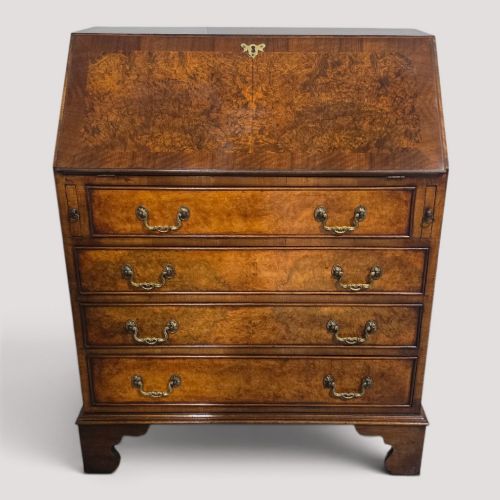
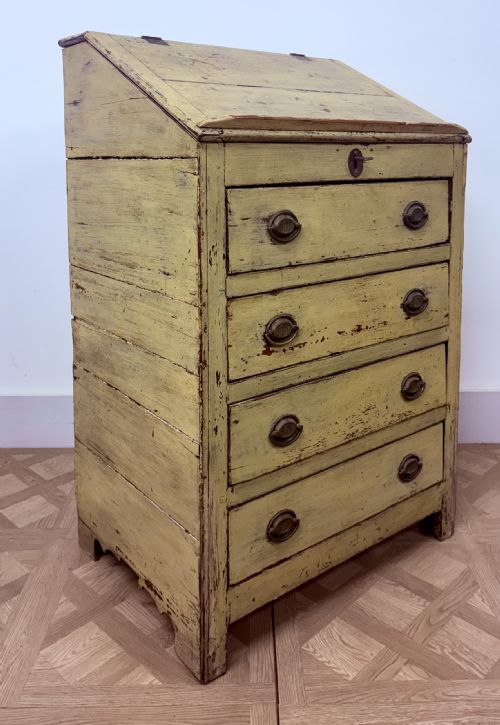
Chest with Writing Drawer
A chest with writing drawer combines deep storage with a concealed writing surface, offering a practical workspace without cluttering the room.
Chest with Writing Drawer
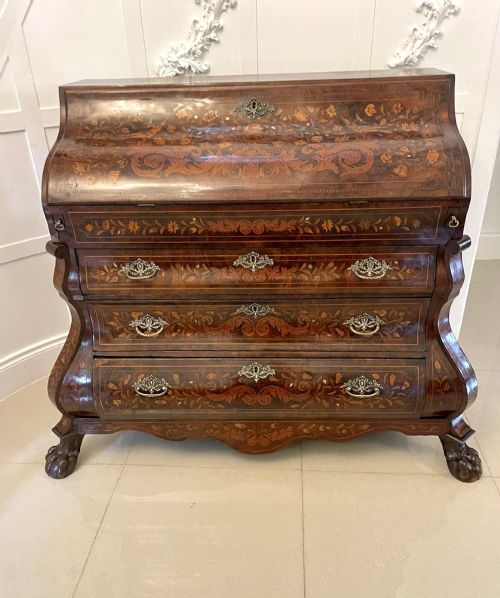
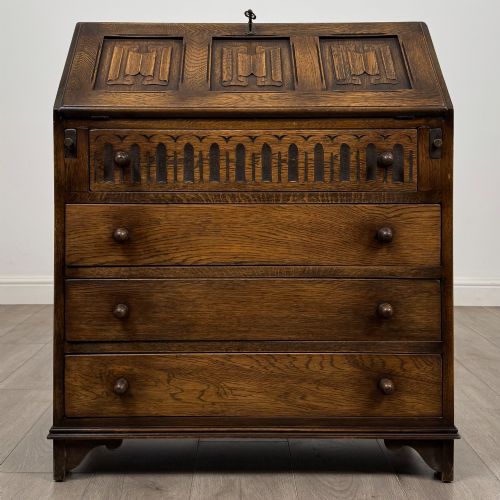
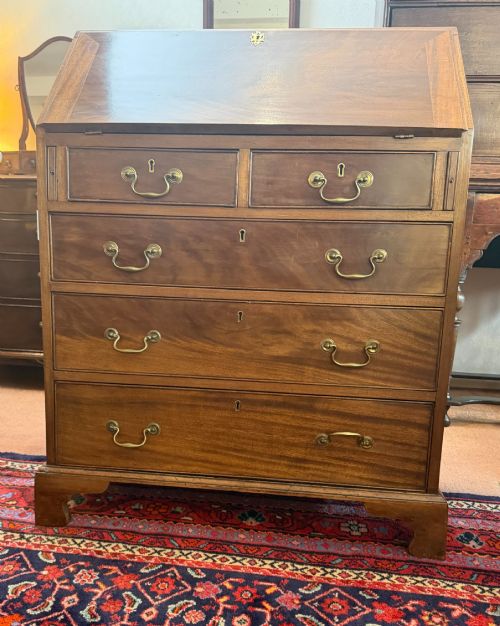
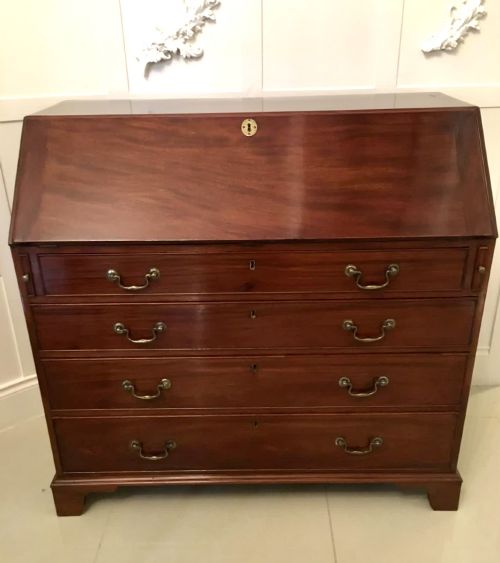
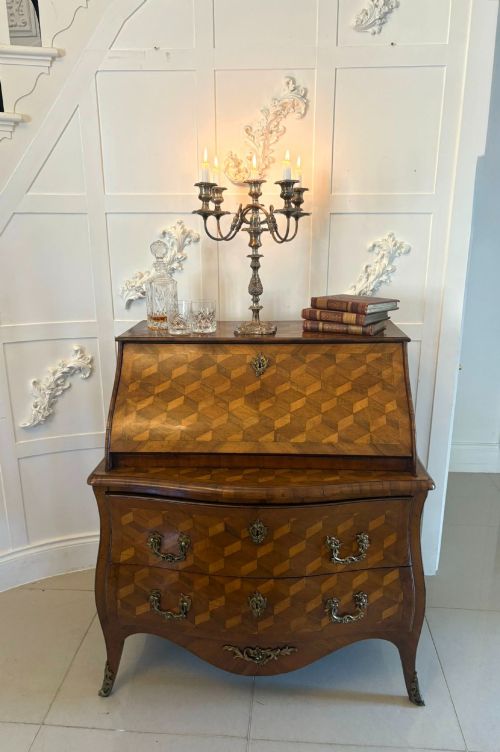
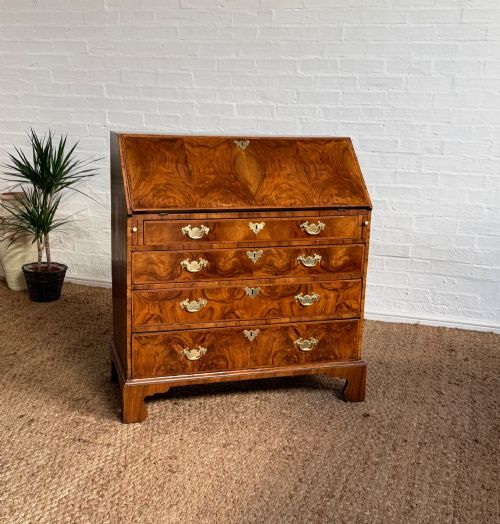
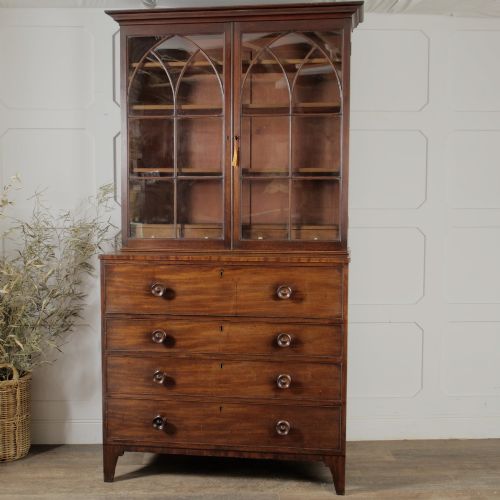
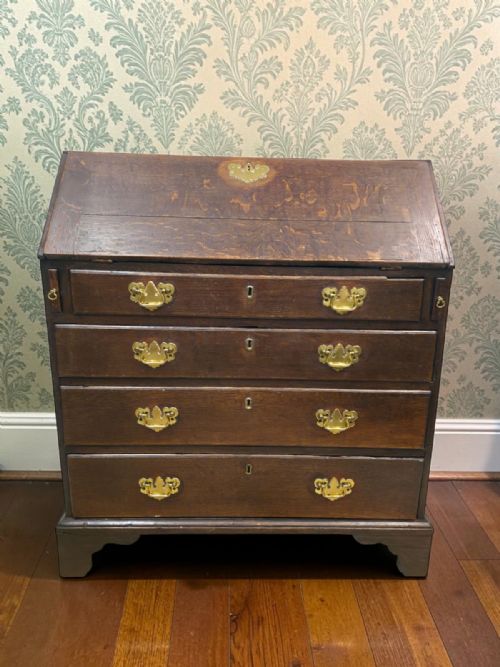
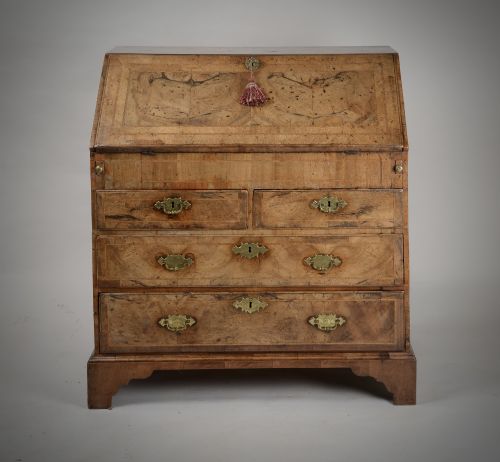
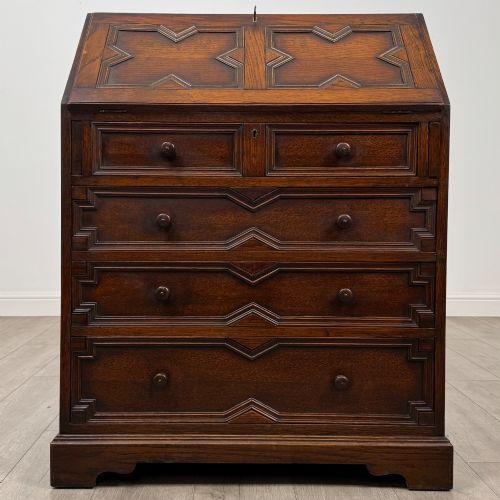
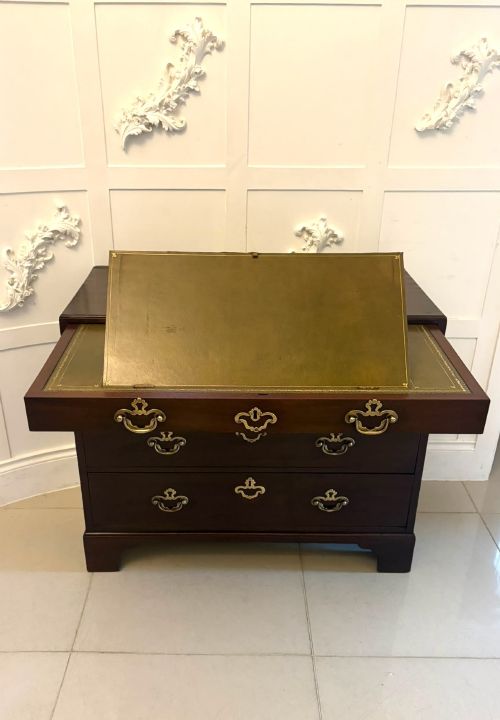
A chest with writing drawer brings together a traditional set of drawers and an integrated desk compartment, taking forms such as bureaux, fall-front writing cabinets, and desks with pull-out slides. You meet these pieces most frequently in mahogany, walnut, and oak, spanning the seventeenth through the nineteenth centuries.
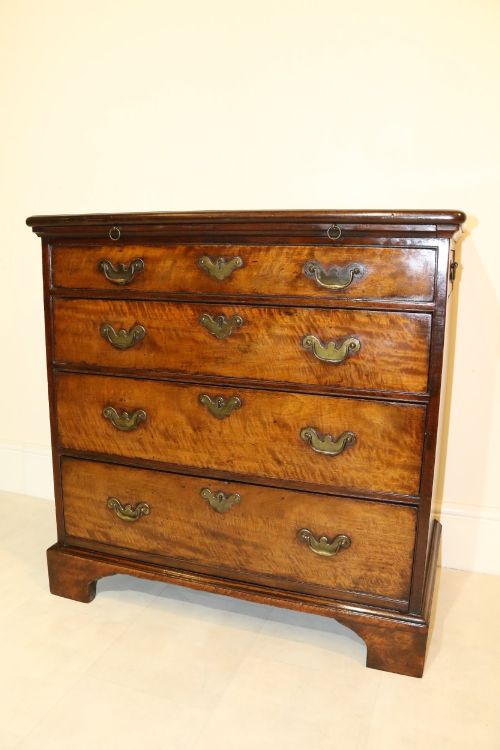
The layout ranges from compact bachelor chests with internal fitted drawers to large secretaire chests on chest and tall escritoires. Georgian and Queen Anne examples dominate the selection, showing substantial craftsmanship in both formal proportions and provincial vernacular designs.
How they were made
Cabinetmakers constructed these carcases primarily using solid timber and rich veneers like figured walnut, burr walnut, and mahogany over secondary woods such as pine and oak. Brass handles, escutcheons, and original ironwork provided functional hardware, while internal writing surfaces were frequently lined with leather or baize.
Joinery techniques relied on precision dovetailing for drawer construction and sturdy framing to support the fall-front flaps and sliding writing drawers. Surface finishing involved polishing to accentuate the natural grain patterns of the wood, complemented occasionally by hand-painted details or subtle rosewood inlays.
Several pieces conceal hidden compartments behind dummy drawers, offering secret hiding spots for forgotten letters and small valuables.
What varies in quality
The calibre of a piece rests heavily on the selection of timber veneers and the coherence of the internal fitments. Superior examples display carefully matched grain patterns across the drawer fronts and fall-front panels, alongside well-organized pigeonholes and secret compartments.
Structural integrity and the preservation of original elements heavily influence the standing of each item. Pieces retaining their original brass hardware, working locks, and unaltered writing surfaces hold greater integrity than those with extensive replacement parts or heavily reworked interiors.
The Chest with Writing Drawer Glossary
- Bureau
- A desk with a sloping hinged lid that drops down to form a writing surface, concealing small drawers and pigeonholes inside. It sits atop a chest of drawer base.
- Secretaire
- A cabinet or chest featuring a drawer or compartment that pulls or folds down to reveal a fitted writing desk with internal compartments. It allows a piece of furniture to serve dual functions as storage and a writing station.
- Escritoire
- A tall writing cabinet or desk, popular in the seventeenth and eighteenth centuries, enclosed by a large fall-front panel that opens to reveal a fitted interior. These pieces provide substantial vertical storage alongside a dedicated workspace.
- Baize
- A coarse woolen material resembling felt, traditionally used to line writing surfaces, pull-out slides, and gaming tables. It offers a soft, durable surface for writing.
- Kneehole desk
- A compact desk or chest featuring a central recess for the user's knees, flanked by pedestals of small drawers. This form allows the user to sit comfortably directly in front of the furniture.
Chest with Writing Drawer: Frequently Asked Questions
What is a chest with writing drawer?
A chest with writing drawer is a dual-purpose furniture item that combines traditional drawer storage with a dedicated writing surface. This surface often pulls out as a slide or folds down via a fall-front panel.
These pieces were designed for correspondence and household administration in homes where space was at a premium. They allow you to write letters or manage accounts before concealing your work away out of sight.
How do I use one in a modern home?
You can use these pieces as compact desks in a home office or as functional drawer chests in a living room or bedroom. The integrated writing flap opens up when you need a laptop surface or writing space.
They offer concealed storage for modern stationery, tablets, and paperwork while maintaining a traditional aesthetic. The upper drawers remain available for general household storage.
What woods were used for these pieces?
Cabinetmakers primarily used mahogany and walnut during the eighteenth and nineteenth centuries, often selecting highly figured grains or burr walnut for decorative impact. Oak and pine appear frequently in earlier pieces or as secondary woods in drawer linings.
Finer examples feature decorative veneers applied to sturdy carcases, sometimes accented with rosewood inlay or hand-painted motifs. The choice of wood often points to the period and regional origin of the maker.