



18th Century Writing Slide
An 18th century writing slide brings hidden functional surface to Georgian furniture, offering a pull-out board designed for correspondence without cluttering the room.
18th Century Writing Slide
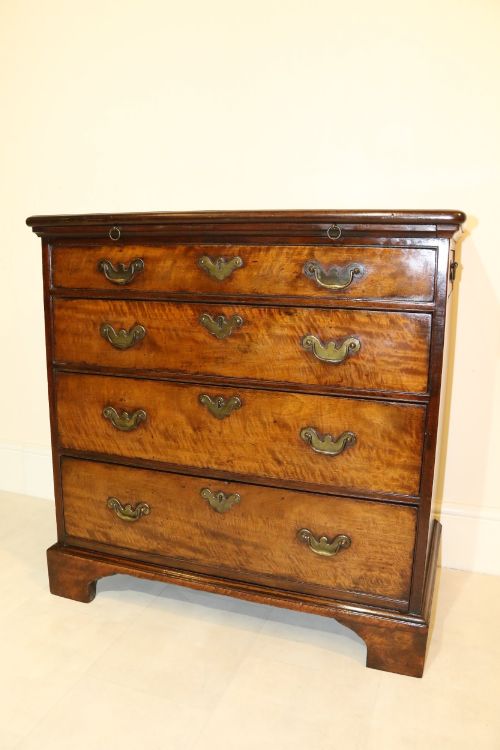
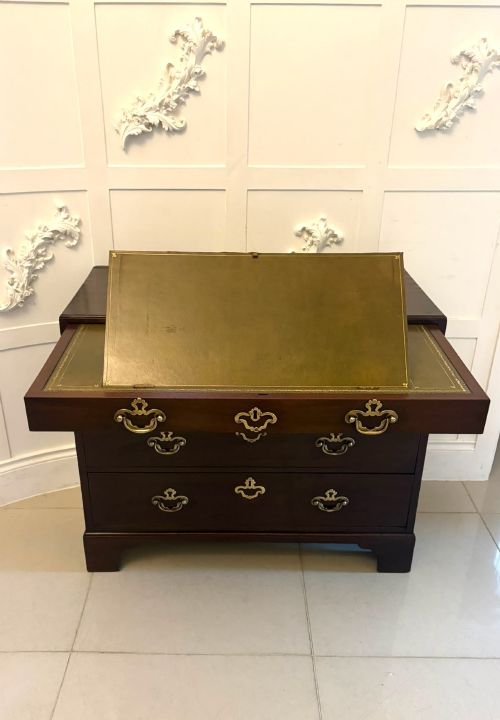
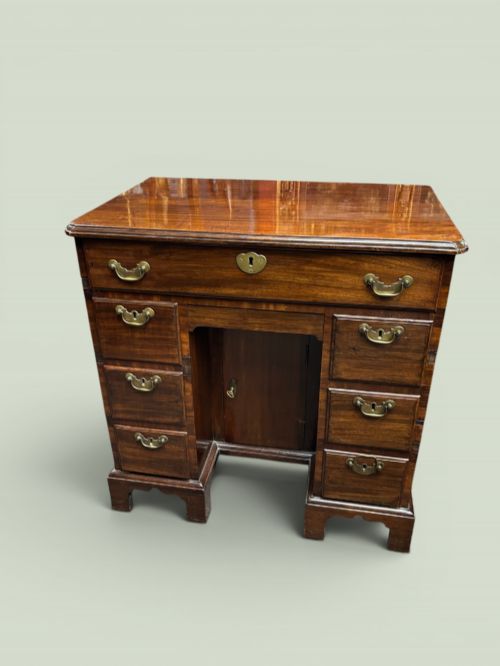
The 18th century writing slide is a pull-out shelf integrated into case furniture, allowing a person to write standing or seated without opening a full desk. Buyers searching for an 18th century writing slide encounter forms ranging from bachelor chests and kneehole desks to bureau bookcases.
Most examples found on this page belong to the Georgian period, spanning the reigns of George I, George II, and George III. These pieces combine standard storage drawers with a concealed pull-out surface, sometimes accompanied by candle slides or fitted writing drawers.
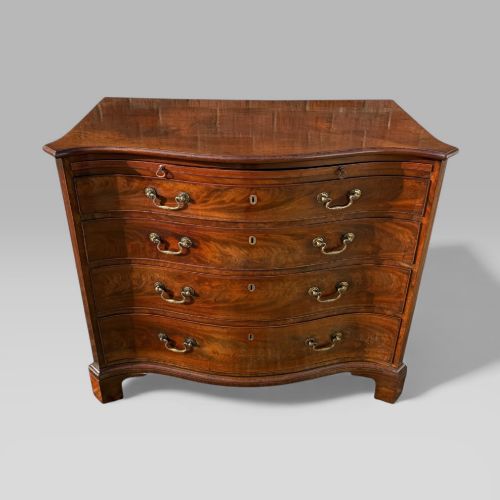
Makers integrated these slides into mahogany, walnut, and pollard oak carcases, occasionally incorporating leather inserts or baize linings. The form serves as a subtle indicator of domestic refinement in 18th century domestic interiors.
How they were made
Cabinet makers constructed these pieces using dense hardwoods such as mahogany and walnut, frequently selecting figured veneers like pollard oak for decorative impact. Timber was seasoned carefully to prevent warping in boards that needed to slide smoothly within tight housing grooves.
The mechanisms rely on simple wooden runners or guides built into the interior framing of the chest or desk. Secondary materials include brass for handles and keyplates, alongside leather and baize applied to the writing surfaces.
18th Century Writing Slide Retail Price Guide 2026
Typical asking prices for 18th century writing slide among the pieces listed under this phrase on Sellingantiques today, from the lower quarter to the upper quarter. They describe what is for sale here now, not the wider market.
Listings feature mahogany, walnut, and pollard oak pieces from the Georgian period, including chests of drawers, desks, and bureau bookcases.
What varies in quality
The sophistication of the internal fitting dictates much of the distinction between standard examples and exceptional pieces. Elaborate interiors feature secret compartments, glass-fronted upper sections, and dedicated writing drawers lined in fine leather.
Timber selection and grain matching across the drawer fronts and slide surfaces reveal the ambition of the original workshop. Clean integration of the slide mechanism without excessive wear to the surrounding timber marks a higher standard of original carpentry.
ROBERT GILLOWS II
The 18th Century Writing Slide Glossary
- Writing slide
- A pull-out wooden shelf integrated into the upper section of a chest of drawers or desk. It provides a temporary surface for correspondence.
- Bachelor chest
- A low chest of drawers equipped with a folding top or a pull-out writing slide. It gained popularity in the Georgian period for compact living spaces.
- Bureau bookcase
- A tall two-part piece comprising a fitted desk compartment below and a glazed shelving section above. Candle slides are frequently incorporated beneath the upper doors.
- Pollard oak
- Oak timber taken from trees that were pollarded, resulting in a dense and highly figured burl grain. Cabinet makers used it for decorative drawer fronts and panel surfaces.
- Serpentine
- A curved front outline featuring a convex centre flanked by concave sides. This shaping demands precise woodworking skill.
18th Century Writing Slide: Frequently Asked Questions
What is an 18th century writing slide?
An 18th century writing slide is a pull-out wooden shelf built into the frame of a chest of drawers, desk, or bureau bookcase. It provided a convenient surface for writing letters without needing a full-sized table.
Cabinet makers during the Georgian era integrated these boards directly beneath the top surface or above the primary drawers. They remain a practical feature for modern homes seeking compact writing spaces.
How were writing slides used?
These slides were pulled out to pen quick notes or letters, then pushed back out of sight when not in use. They offered a clean surface without cluttering the main room.
Some designs included leather or baize inserts to provide a smooth writing texture and protect the wood beneath. Candle slides were also used nearby to hold illumination during evening writing.
How do I identify a Georgian piece?
Georgian pieces are identified through their use of specific timbers like mahogany, walnut, and oak, combined with period construction techniques. Stylistic markers include George I, George II, and George III design vocabulary.
Details such as brass hardware, dovetail joints, and specific cabinet proportions help establish the 18th century origin of the furniture.
What woods were used for these desks?
Makers relied heavily on solid mahogany and walnut for their strength and rich grain patterns. Pollard oak also appears on higher-status pieces for decorative veneer work.
Secondary woods like oak or pine were typically used for drawer linings and internal framing where they remained out of sight.