
Inlaid Marquetry Dresser
An inlaid marquetry dresser brings historical woodcraft and intricate floral or geometric patterns directly into a room, offering both substantial storage and striking visual presence.
Inlaid Marquetry Dresser
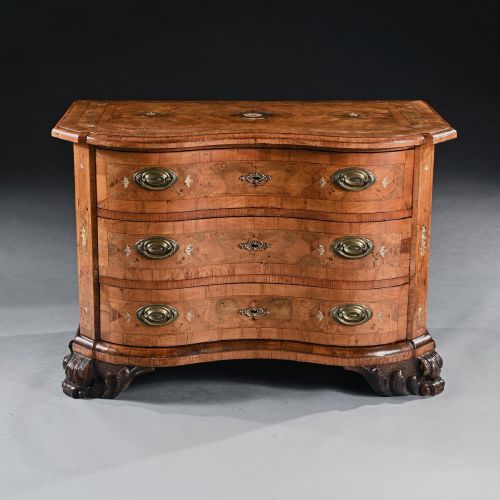
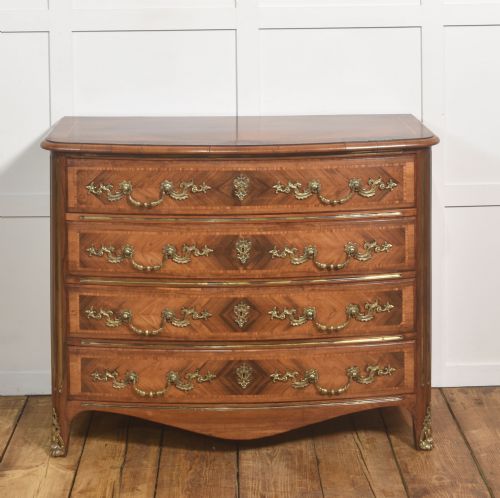
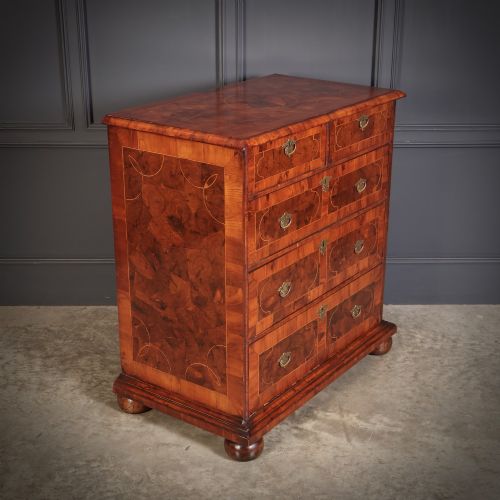
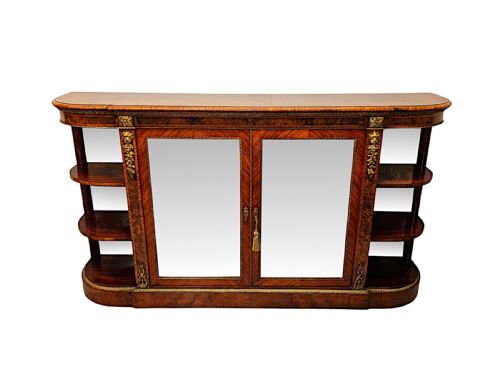
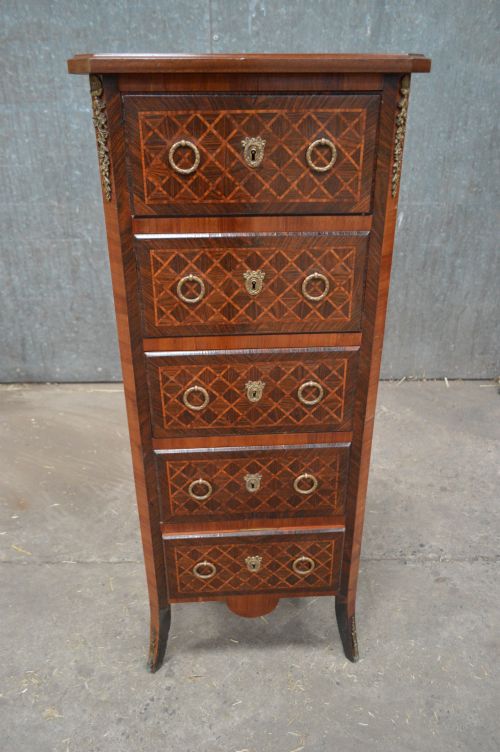
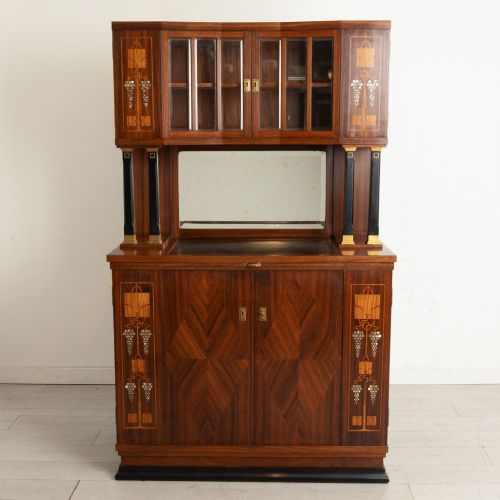
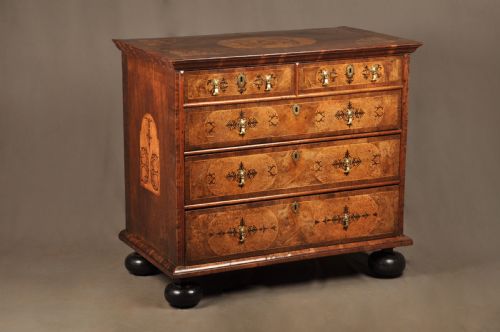
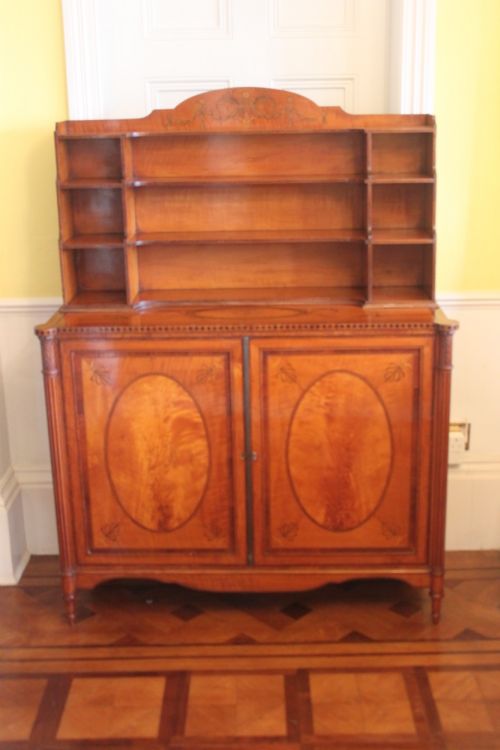
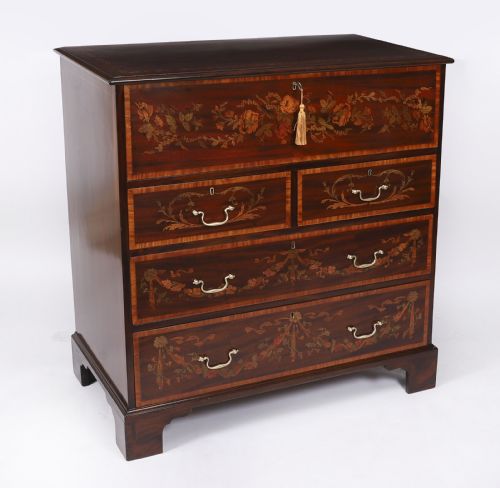
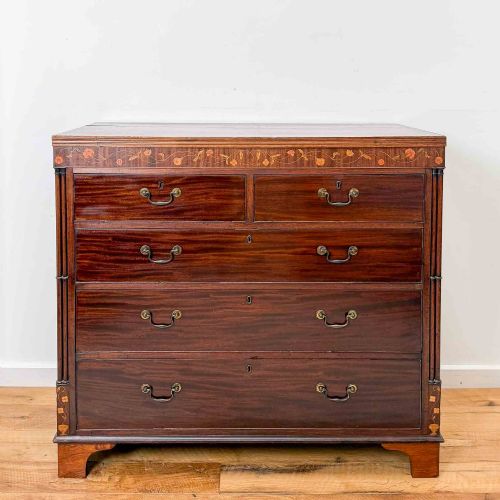
An inlaid marquetry dresser encompasses a diverse group of storage furniture, including chests of drawers, commodes, side cabinets, and dresser bases created across multiple centuries. Buyers encountering this phrase will find pieces ranging from seventeenth-century walnut chests to nineteenth-century French and Dutch examples decorated with detailed veneer work.
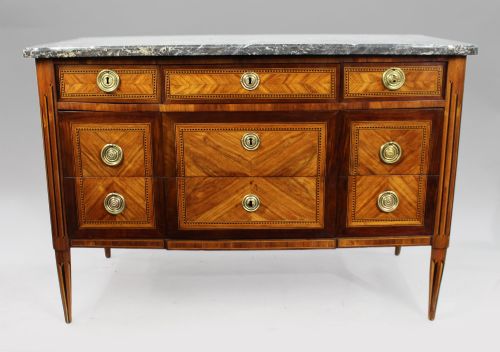
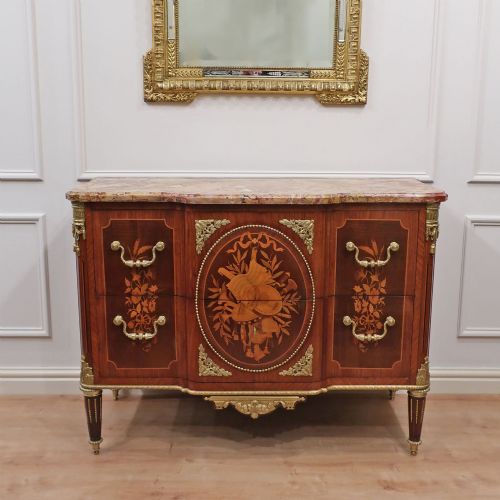
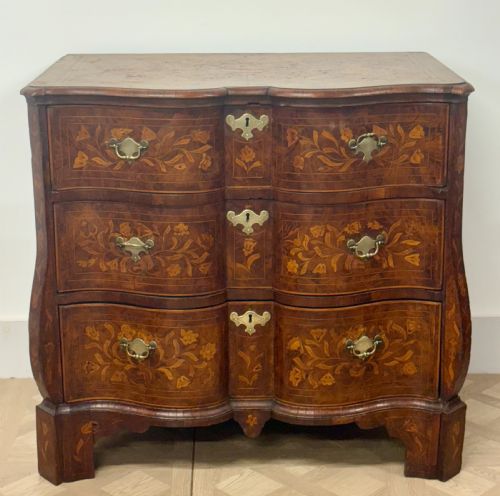
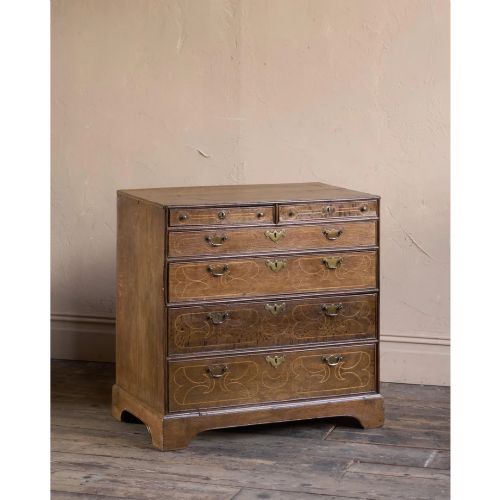
The selection on this page bridges several distinct regional aesthetics, spanning English oak and walnut constructions, ornate German and Italian Baroque commodes, and lighter Satinwood Sheraton or Hepplewhite designs. Formats vary from serpentine fronts and bombe silhouettes to straight-lined sideboards and marble-topped cabinets.
The materials span traditional timbers paired with complex pictorial or geometric surface decoration. Whether examining a William and Mary walnut chest or a Victorian rosewood side cabinet, each piece serves the dual purpose of domestic storage and ornamental display.
Materials and construction
Cabinetmakers built these pieces using structural carcassing timbers such as oak, mahogany, and walnut, upon which they applied fine veneers of fruitwood, satinwood, and burr walnut. Surface patterns were painstakingly hand-cut from thin sheets of timber and assembled like puzzles before being glued to the primary carcase.
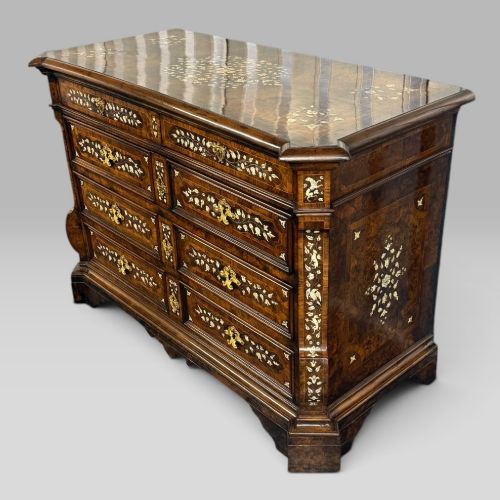
Many examples incorporate contrasting natural elements, utilising pewter, ivory, brass, and ormolu mounts to highlight drawer edges, corners, and key escutcheons. Marble tops appear frequently on continental commodes, adding weight and a contrasting tactile surface to the wooden structures below.
Listings feature walnut, oak, mahogany, and rosewood timbers decorated with intricate floral, arabesque, and geometric marquetry patterns.
Assessing the workmanship
The distinction between ordinary and exceptional pieces rests in the complexity and precision of the veneer work and the integrity of the underlying cabinetmaking. Superior examples display seamless integration of disparate materials like ivory and brass, alongside sophisticated pictorial arabesques or floral scrolls that remain crisp and securely bonded.
Structural harmony also dictates standing, where superior items retain their original brass hardware, stable carcases, and well-fitted drawers without excessive timber shrinkage or crude replacement sections. The depth of the timber's patina and the finesse of the carving on mounts or legs further separate standard production from masterwork pieces.
Gillows·August Ungethüm·Shapland and Petter
The Inlaid Marquetry Dresser Glossary
- Marquetry
- The art of applying pieces of veneer to a structure to form decorative patterns, pictures, or designs. Craftsmen cut various woods and materials together to create complex pictorial surfaces.
- Parquetry
- Geometric mosaic woodwork used for surfaces, similar to marquetry but strictly utilising repeating geometric shapes like squares, triangles, and lozenges. It frequently appears on French and continental commodes.
- Commode
- A low chest of drawers or cabinet, originating in France during the seventeenth century. These pieces often feature decorative marble tops and serpentine fronts.
- Oyster veneering
- A method of cutting branches transversely to produce small, circular or oval pieces of wood with concentric growth rings. This technique was popular in the seventeenth century on walnut furniture.
- Ormolu
- Gilded bronze mounts and decorative elements applied to furniture. It provides a bright metallic contrast to dark woods like mahogany and walnut.
Inlaid Marquetry Dresser: Frequently Asked Questions
How do I date an inlaid dresser?
Dating relies on examining the secondary timbers used inside the drawers, the construction methods of the carcase, and the prevailing decorative style of the period. Stylistic markers such as bracket feet, bun feet, or cabriole legs offer clear indicators of the era in which the piece was constructed.
Changes in veneer thickness and the type of glue or fixings used underneath also help determine whether a piece belongs to the seventeenth century, the Georgian era, or the Victorian revival period.
Are marble tops original to these commodes?
Many continental commodes, particularly French and Italian examples from the eighteenth and nineteenth centuries, were designed specifically to accommodate fitted marble slabs on their upper surfaces. These heavy stone tops provided a durable, decorative finish.
While some marble tops are later replacements, original slabs typically show appropriate edge profiling and historical wear consistent with the age of the wooden carcase beneath.
How should I care for antique marquetry?
Maintaining marquetry surfaces requires stable indoor humidity levels away from direct heat sources and strong sunlight, which can dry out ancient glues and fade delicate fruitwood veneers. Gentle dusting with a dry, soft cloth is usually sufficient for regular upkeep.
Occasional application of microcrystalline wax helps protect the polished timber surface without building up heavy residues that can obscure the fine grain and inlaid details.
What is the difference between a commode and a sideboard?
A commode is typically a lower, freestanding chest of drawers or cabinet designed for formal rooms, frequently associated with continental European styles and marble tops. Sideboards and dresser bases generally function as dining room storage furniture for serving food and storing tableware.
Sideboards often incorporate longer surfaces and varied internal compartments like cellarets, whereas commodes focus on decorative drawer stacks and ornate surface veneer patterns.