
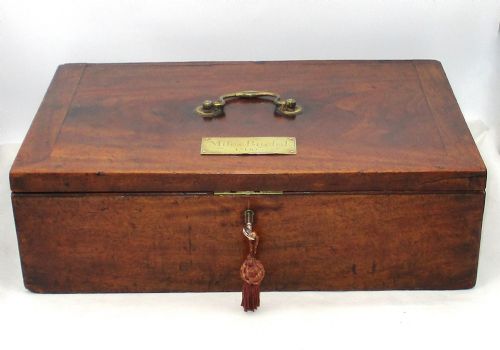
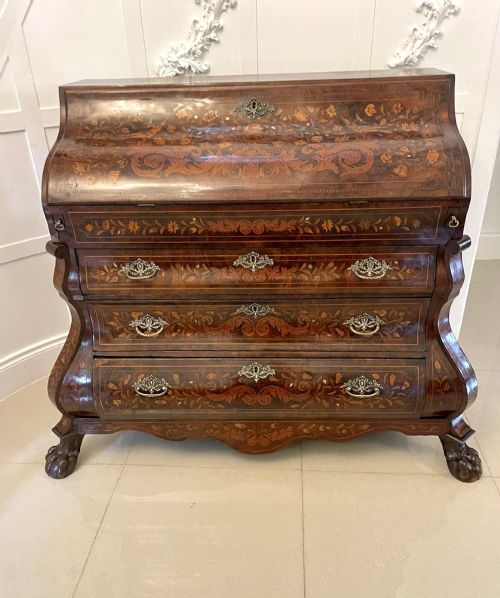
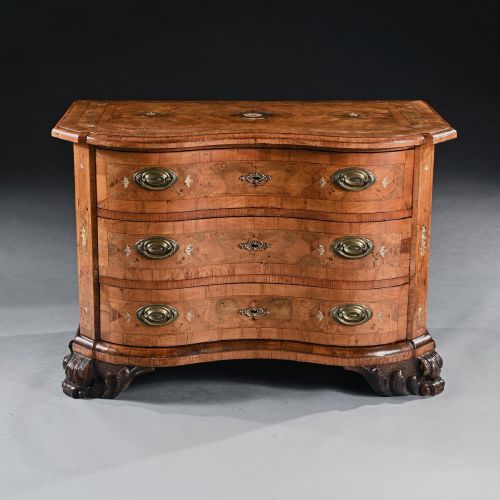
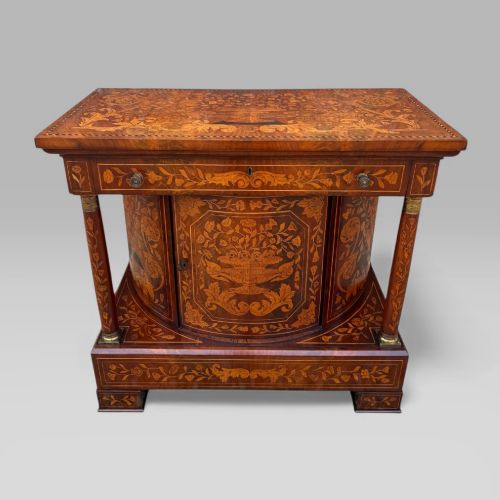


Brown Inlaid Chest
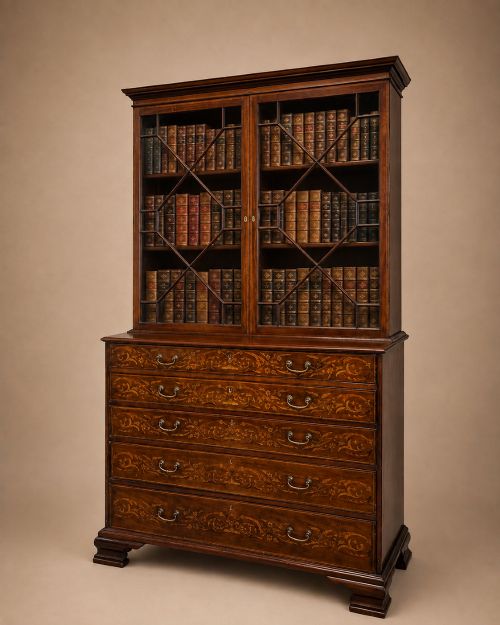
These brown inlaid chest pieces combine rich timbers with contrasting decorative banding, offering practical storage grounded in centuries of cabinetmaking tradition.
Brown Inlaid Chest
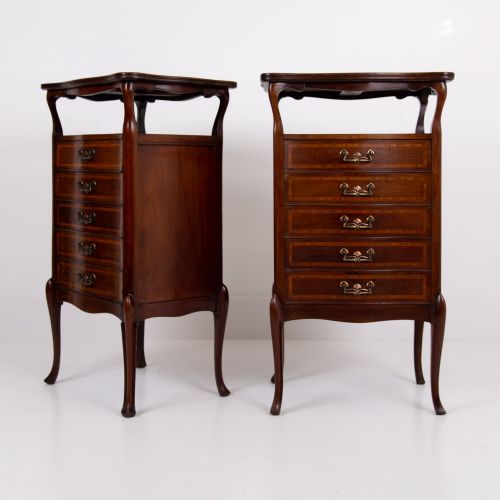
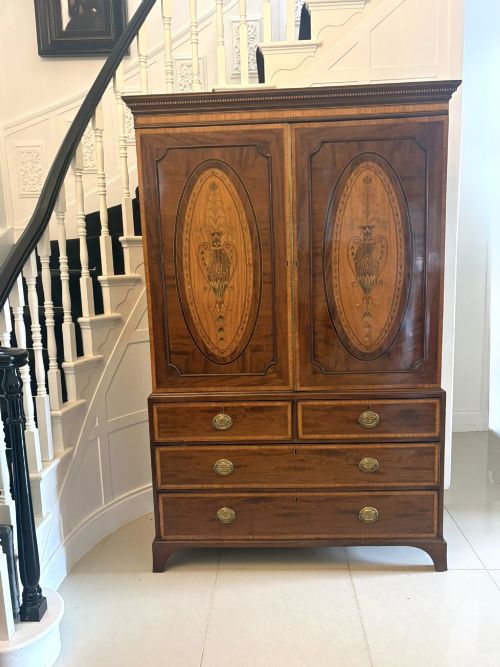
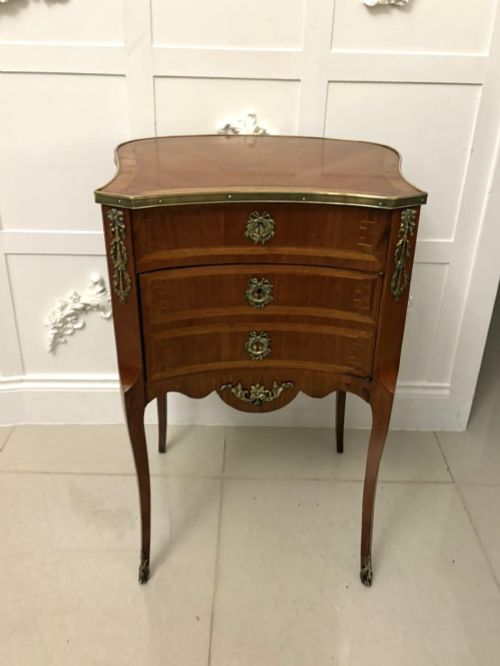
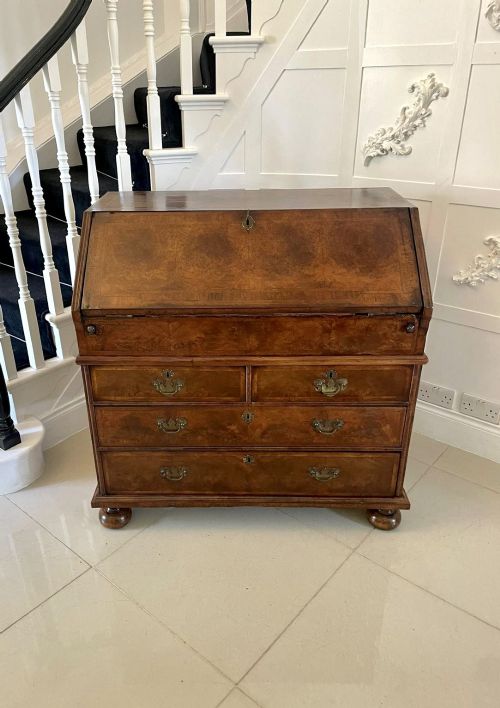
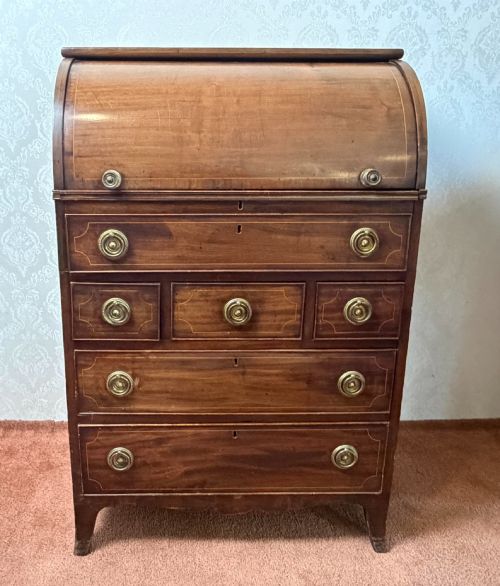
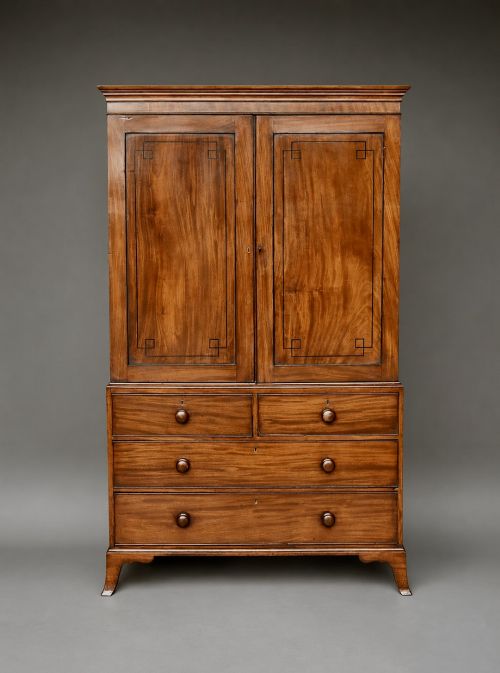
A brown inlaid chest brings together functional storage pieces ranging from substantial Georgian linen presses and tall chests to compact bedside cabinets and writing bureaux. These pieces draw on 17th-century foundations through to Edwardian interpretations, reflecting diverse domestic needs across generations.
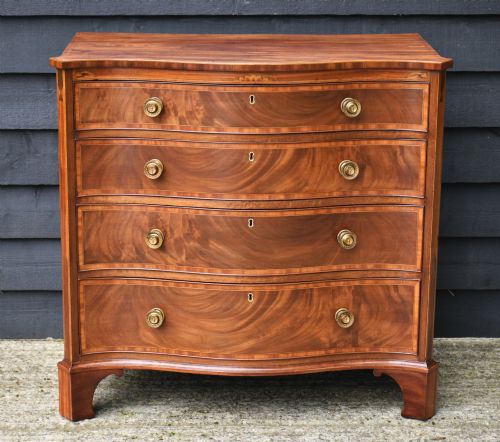
The version most commonly met on this page is the mahogany or walnut chest of drawers featuring contrasting timber banding or marquetry panels. Such pieces integrate naturally into modern rooms while retaining the proportions and character of their original periods.
Materials and construction
Cabinetmakers utilised dense foundational woods such as mahogany, oak, and walnut, building structural carcasses designed to endure heavy daily use. These primary timbers provide a dark, stable base for decorative surface work.
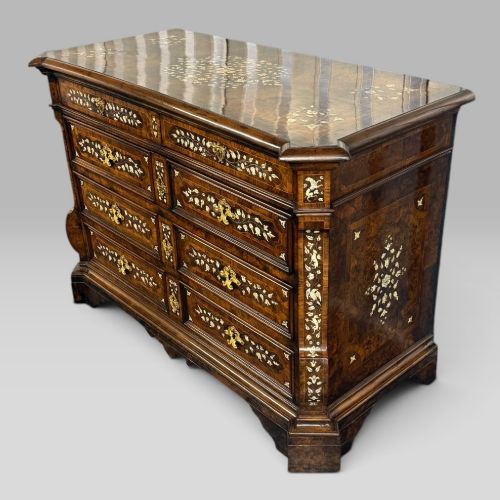
Surfaces receive intricate enrichment through contrasting veneers like satinwood, burr walnut, and kingwood, often enhanced by floral marquetry, parquetry, or fine stringing lines. Metal fitments in brass and ormolu complete the construction details.
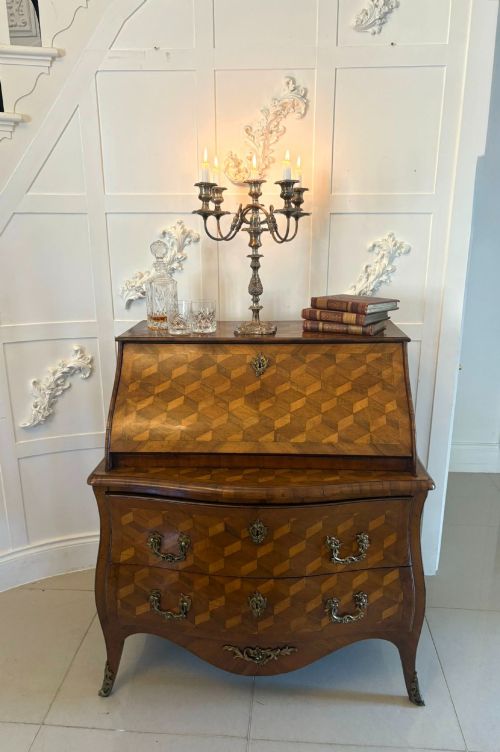
Surface ornamentation ranges from geometric stringing and herringbone banding to elaborate floral marquetry and parquetry.
Separating the grades
Quality rests in the precision of the cabinetwork and the ambition of the surface decoration, distinguishing standard utility furniture from high-status commissions. Finer examples display meticulous alignment in geometric herringbone bands or complex pictorial floral marquetry.
The choice of secondary woods, the crispness of serpentine or bombe shaping, and the integration of original brass hardware further separate ordinary workshop output from exceptional examples.
Druce & Co·A. F. Lloyd
The Brown Inlaid Chest Glossary
- Marquetry
- Decorative veneer work arranged in pictorial patterns such as flowers or scrolls using various coloured woods. This technique requires considerable skill to fit individual pieces together seamlessly.
- Parquetry
- Geometric wood mosaic used for surface decoration on tabletops and drawer fronts. It creates repeating patterns like cubes or triangles.
- Stringing
- Thin inlay lines of contrasting wood set flush into the surface to outline drawers or panels. It defines the architectural proportions of a piece.
- Bombe
- A swelling or outward curving contour found on the front and sides of advanced cabinet furniture. This French-influenced shape demands sophisticated joinery.
- Serpentine
- A gently curving front outline shaped like a horizontal letter S. It provides a softer visual movement than a straight drawer front.
Brown Inlaid Chest: Frequently Asked Questions
How do I date a brown inlaid chest?
Dating relies on observing structural timbers, handle types, and the style of the inlay work alongside construction methods. Oak and early walnut generally point to the seventeenth or eighteenth centuries, while lighter satinwood banding often indicates Georgian or Edwardian periods.
Examining the drawer linings and backboards provides further clues regarding the workshop practices of the era. Comparing these physical characteristics with established historical timelines helps narrow down the decade of manufacture.
Where should I place these chests at home?
These versatile storage items suit bedrooms, hallways, and living rooms depending on their physical scale and drawer configuration. Smaller bedside cabinets fit neatly beside modern beds, while larger tall chests anchor an empty wall in a study.
Keeping them away from direct heat sources and strong sunlight protects the delicate veneers and polished timber surfaces from drying out.
What is the difference between marquetry and parquetry?
Marquetry forms pictorial designs like floral motifs or scrollwork using diverse wood veneers. It focuses on organic, sweeping shapes that demand artistic draughtsmanship.
Parquetry constructs repeating geometric patterns such as cubes or squares. This method creates structured, architectural surfaces across cabinet doors and drawer fronts.
Are these chests suitable for daily use?
Most pieces were built for practical household storage and handle everyday items effectively today. Drawers slide within traditional wooden runners designed for enduring domestic service.
Careful handling and regular waxing maintain the mechanical function and decorative integrity of the timber over decades of use.