
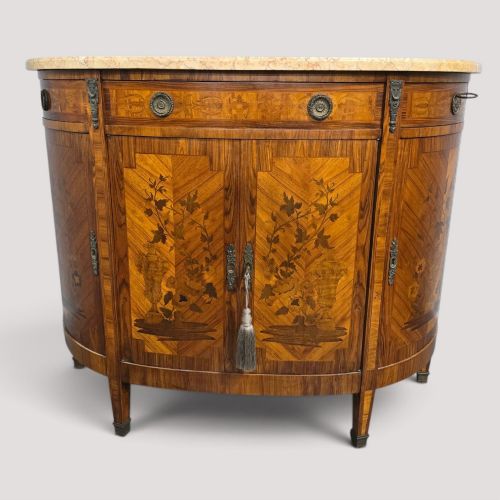
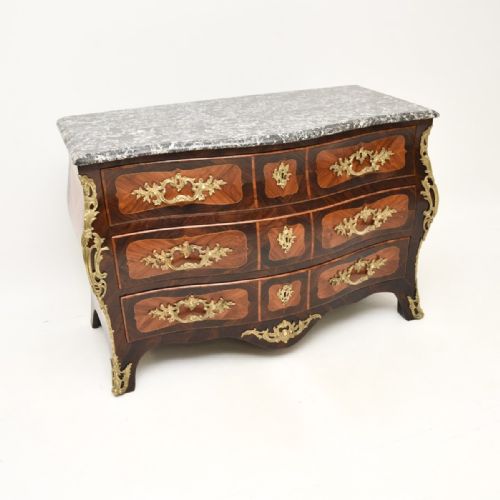
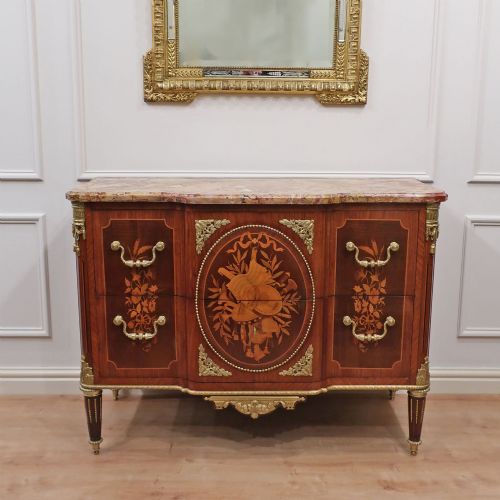
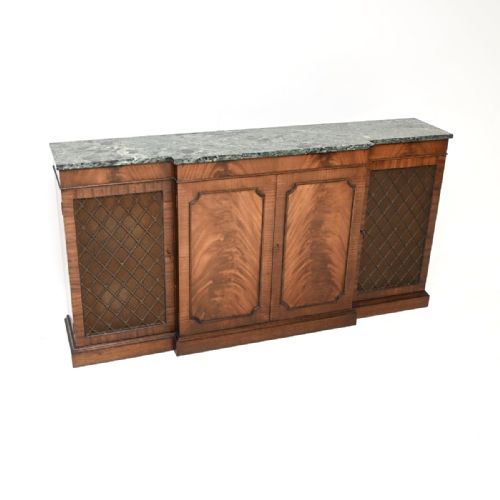


Vintage Marble Sideboard
A vintage marble sideboard brings a durable stone surface and rich timber cabinetry together for practical storage in a dining room or hall.
Vintage Marble Sideboard
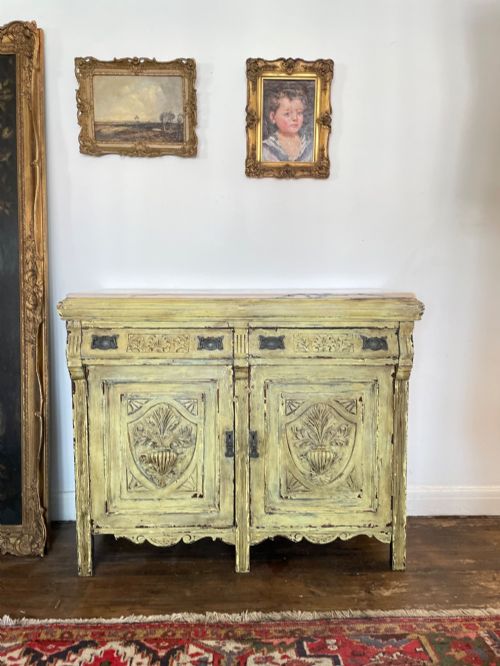
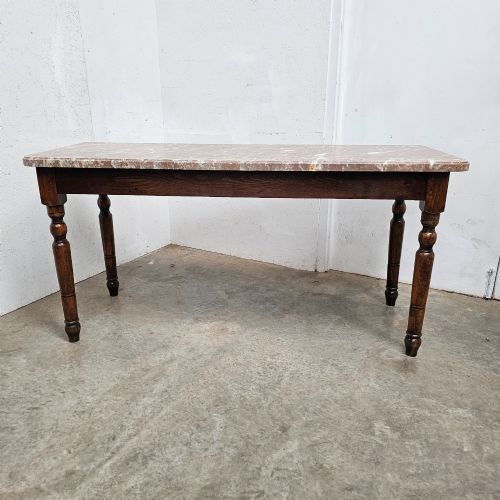
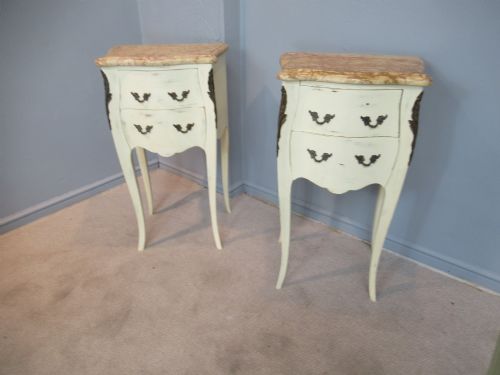
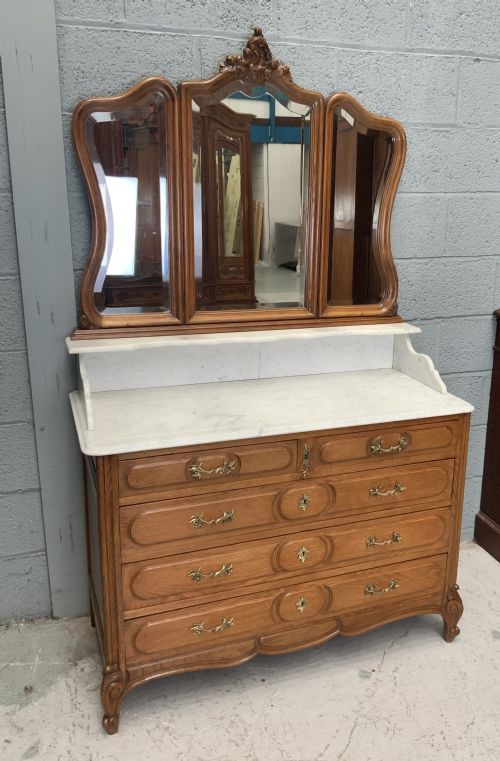
A vintage marble sideboard combines solid wooden cabinetry with a polished stone slab top, serving practical storage needs in dining rooms and living spaces. When buyers search for a vintage marble sideboard, they encounter a diverse selection of forms including commodes, washstands, credenzas, and buffets spanning several centuries.
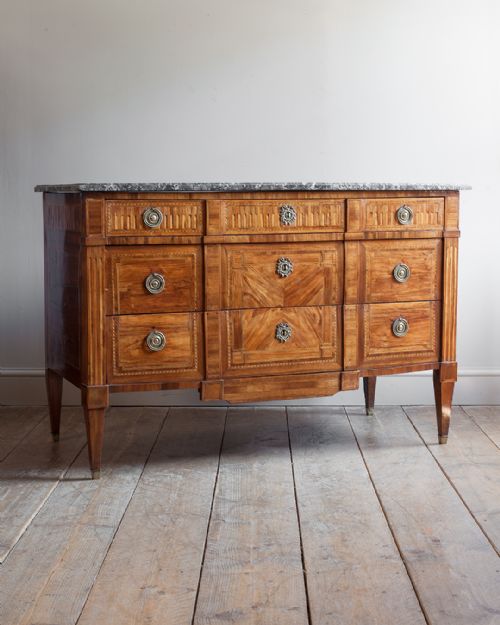
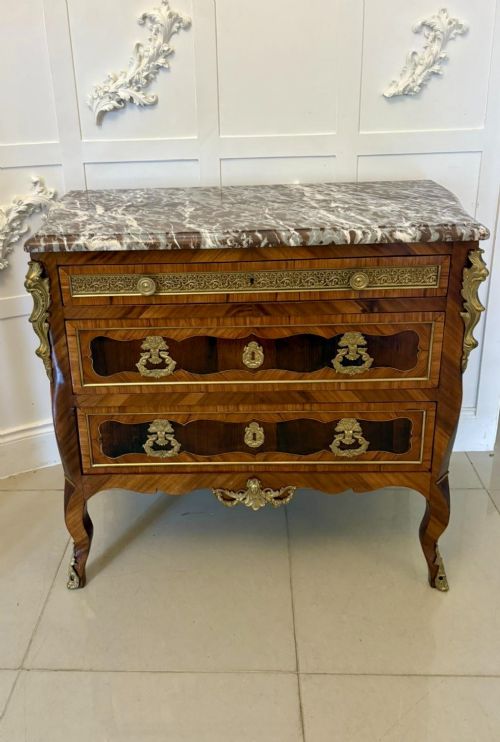
The pieces appearing on this page originate predominantly from French and English workshops, displaying influences from Louis XV, Louis XVI, Edwardian, and Art Deco styles. Walnut, mahogany, oak, and kingwood carcasses provide the structural foundation beneath fitted marble surfaces.
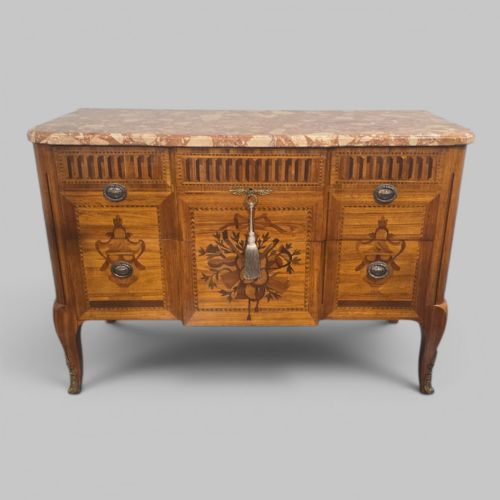
Makers utilised decorative veneers, marquetry inlay, and carved details to embellish the wooden frames. The resulting variety ranges from formal 18th-century commodes to early 20th-century cabinets and washstands equipped with stone tops.
How they were made
Cabinet makers constructed the timber bodies of these sideboards using traditional joinery methods in woods such as mahogany, walnut, oak, kingwood, and satinwood. Carcasses often incorporate intricate marquetry inlay, contrasting veneers, and carved structural elements.
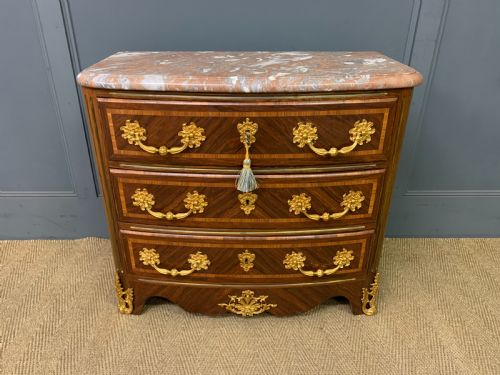
Heavy marble slabs form the upper surfaces, resting atop the timber bases to provide a hard-wearing and decorative counter. Artisans completed these pieces with brass handles, ormolu mounts, and glass panels where appropriate for cupboards and display tables.
Listings feature pieces spanning from the 18th century to the 1930s, incorporating oak, mahogany, walnut, and kingwood.
What varies in quality
The refinement of the timber marquetry and the precision of the veneer work separate standard examples from finer pieces. Cabinetmakers who employed detailed floral or geometric inlay achieved a higher decorative standard than those working with plain timber panels.
The thickness, colouration, and finish of the marble top also dictate quality. Slabs featuring serpentine shaping or distinctive natural veining complement the carved or polished wooden frames more successfully than basic utilitarian tops.
Jacques Bircklé·Collinson and Lock London·Gillows
The Vintage Marble Sideboard Glossary
- Commode
- A low decorative chest of drawers or cabinet, frequently topped with marble and popular in French interior design. These pieces often feature serpentine fronts and inlaid marquetry.
- Marquetry
- The art of applying pieces of veneer to a structure to form decorative patterns and pictures. Craftsmen used various coloured woods to create intricate floral and geometric motifs on cabinet doors and drawer fronts.
- Ormolu
- Gilded bronze mounts applied to furniture for decorative effect. This technique appeared frequently on French furniture styles from the 18th century onwards.
- Credenza
- A sideboard or buffet cabinet typically used for storing dining utensils and serving food. Victorian examples often incorporate burr walnut and glass doors.
- Scagliola
- A composite substance made from glue, isinglass, and pigments mixed with powdered selenite, used to imitate marble and other fine stones. It provides a smooth, polished decorative surface.
Vintage Marble Sideboard: Frequently Asked Questions
How do I clean a marble top?
Wipe the stone surface regularly with a soft damp cloth using mild pH-neutral soap. Avoid acidic liquids like vinegar or lemon juice that can etch the polished finish.
Dry the marble thoroughly after cleaning to prevent water spots. Occasional application of a suitable stone sealer helps protect the surface from stains.
Can I use a washstand as a sideboard?
Washstands and sideboards share similar wooden cabinetry and marble surfaces, making smaller washstands suitable for alternative living spaces. Their compact dimensions often fit well in hallways or dining rooms.
Consider the internal storage configuration and height before placing a washstand in a dining area. Some pieces retain original basins or splashbacks that alter their daily utility.
What is the difference between a commode and a sideboard?
A commode traditionally refers to a low chest of drawers or cabinet with doors, often associated with French craftsmanship and marble tops. Sideboards tend to be longer pieces designed specifically for dining rooms to hold tableware.
Usage and terminology overlap considerably across different periods and regions. Many surviving pieces function equally well in entryways, bedrooms, or living rooms regardless of their original designation.