

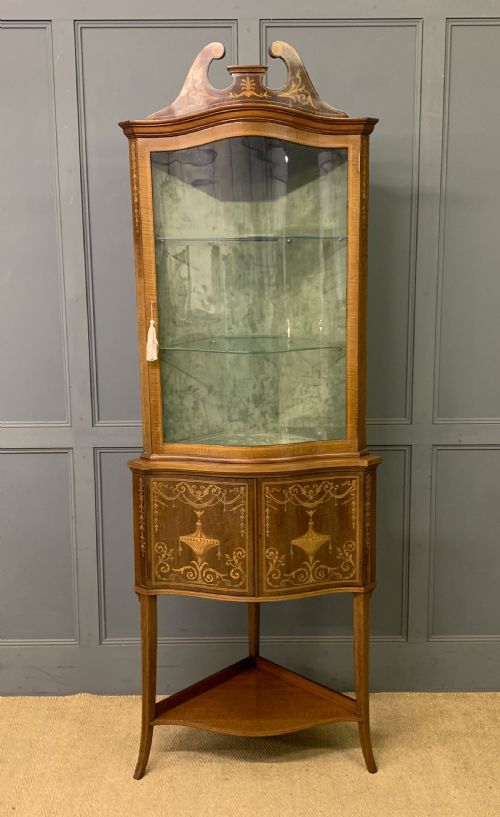
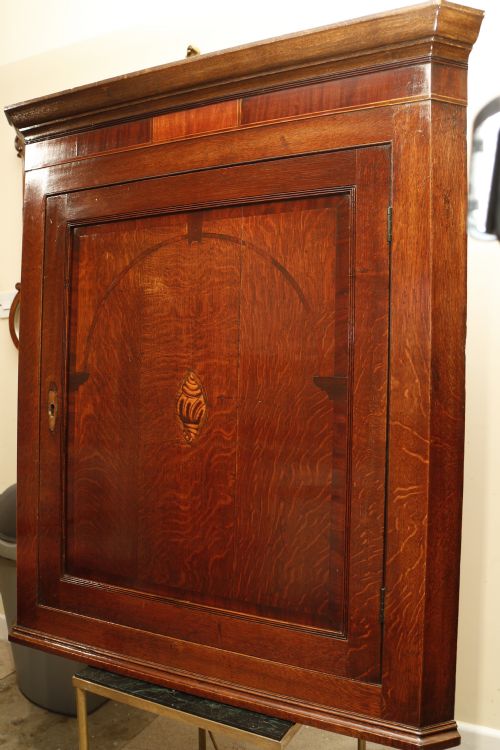

Inlaid Mahogany Corner Cupboard
When you need to make the most of a room's architecture, an inlaid mahogany corner cupboard brings practical storage and period character together.
Inlaid Mahogany Corner Cupboard
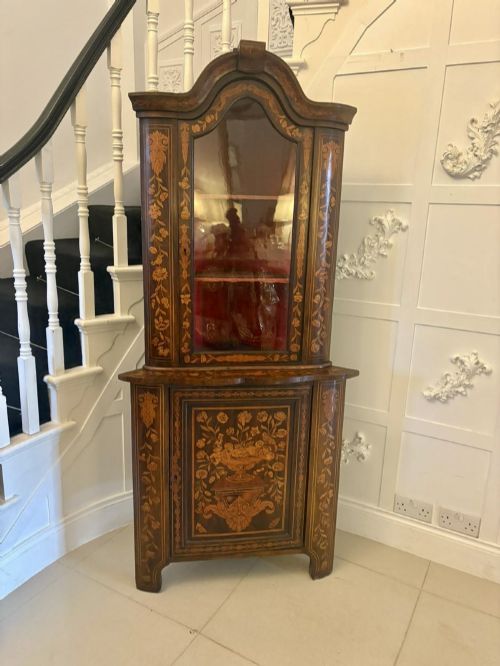
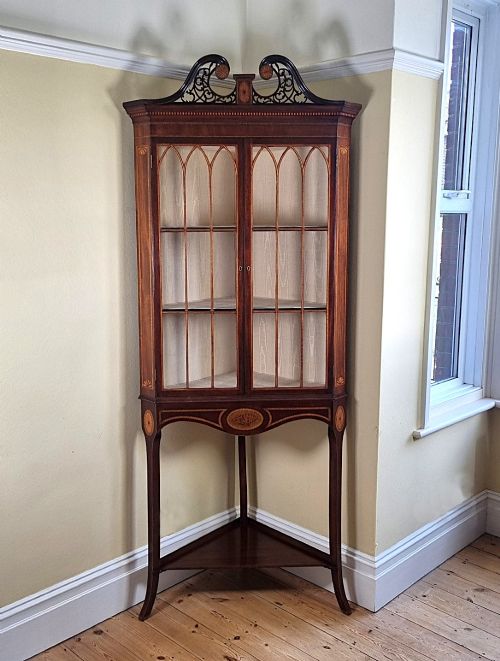
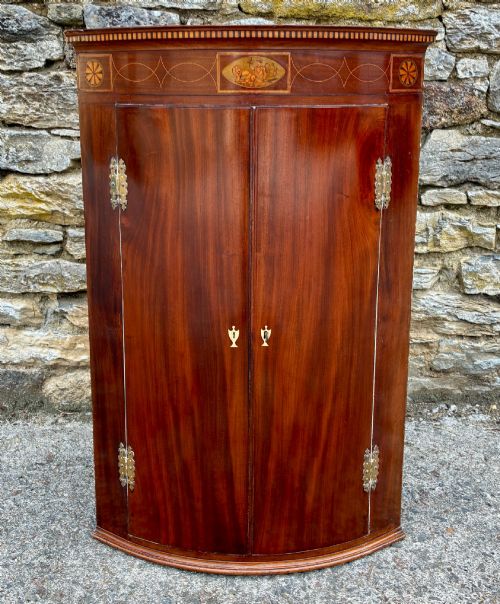
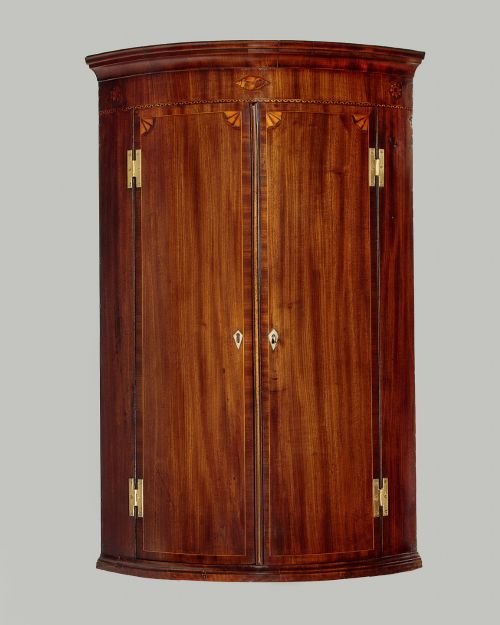
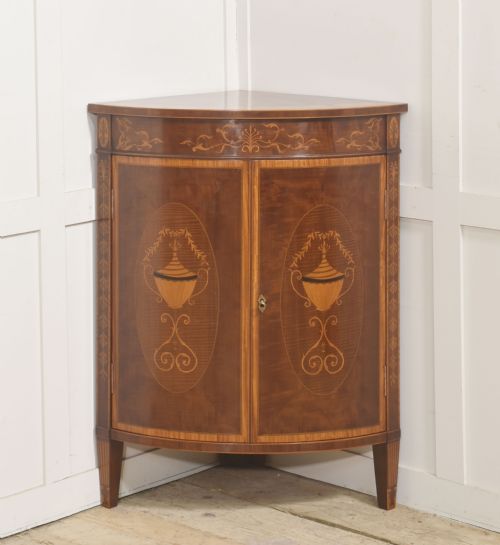
An inlaid mahogany corner cupboard is designed to fit snugly into the intersection of two walls, making efficient use of dead space in a room. The pieces seen here span from the Georgian and George III eras through to the Victorian, Edwardian, and Sheraton Revival periods, offering both wall-hanging and floor-standing formats.
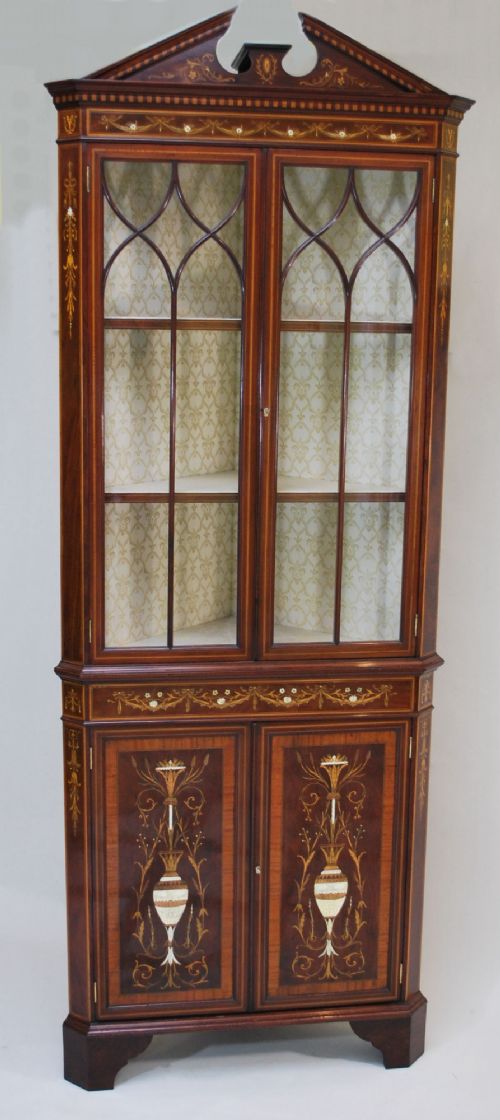
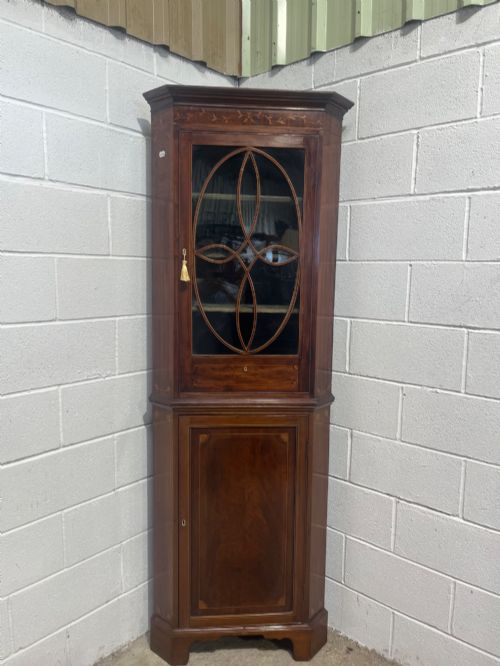
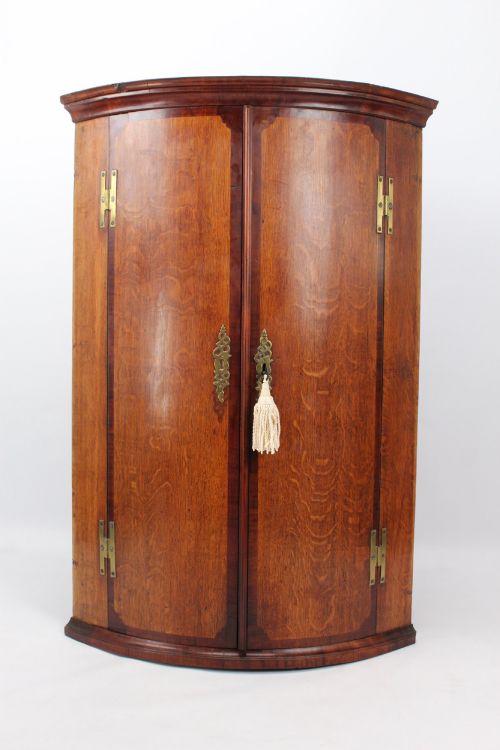
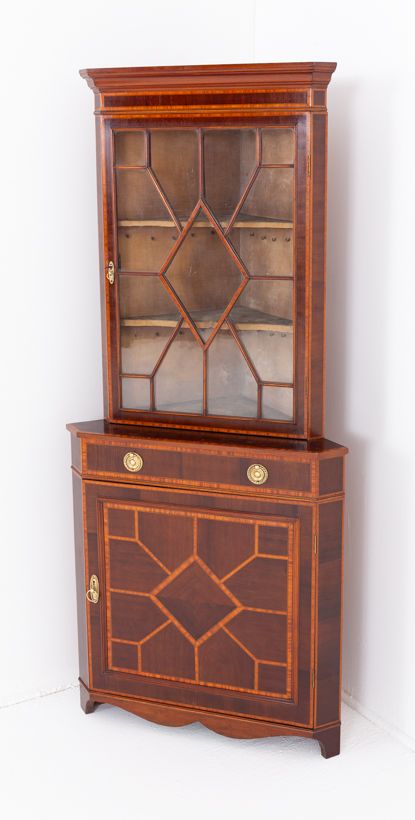
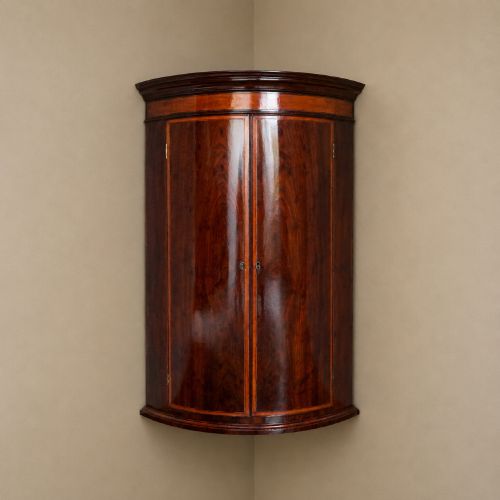
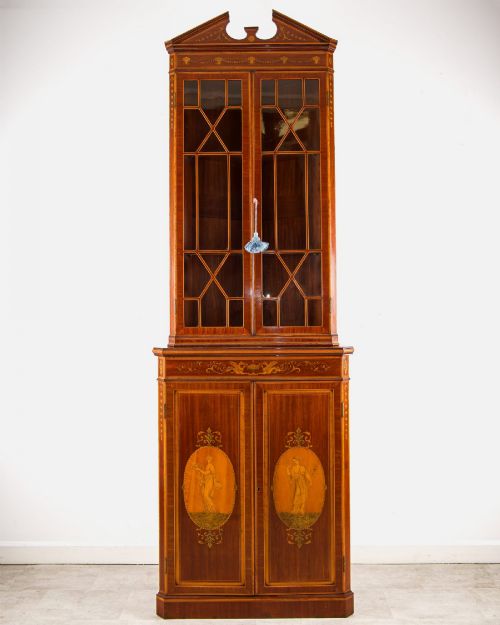
The version most commonly met on this page is the bow-fronted or straight-fronted hanging cabinet from the Georgian or Edwardian eras, often featuring delicate contrasting woodwork details. Tall, double-height standing display cabinets also appear, providing glazed shelving for china and glassware alongside enclosed lower storage.
Makers and cabinet-makers built these units to serve dining rooms and parlours, where they displayed prized tableware or stored spirits. Their geometry relies on a triangular footprint that draws the eye cleanly into the corner while projecting a curved or panelled front into the room.
How they were made
The primary structural timber is mahogany, frequently paired with secondary woods like oak for interior framing and carcase backs. Cabinet-makers shaped the prominent curved doors of bow-front examples from solid timber or utilised clever multi-pieced construction to achieve a smooth, sweeping radius.
Surface enrichment relies on contrasting timbers such as satinwood and boxwood, inlaid into the primary mahogany ground to create geometric banding, shell motifs, or delicate stringing lines. Glazed doors incorporate timber glazing bars, sometimes arranged in intricate astragal patterns to divide the glass panes neatly.
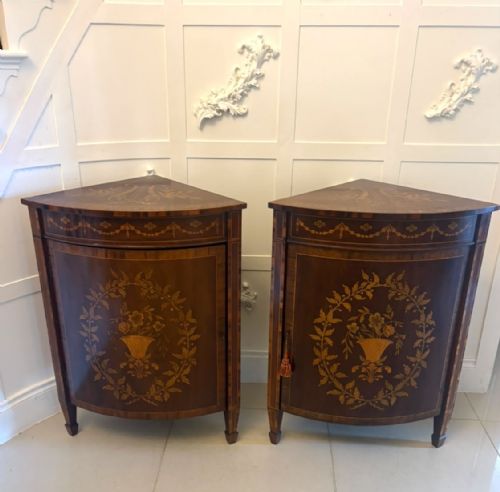
Brass hardware, including butterfly hinges and escutcheons, secures the doors and adds a metallic highlight to the polished wood. Marquetry panels occasionally feature floral or neo-classical urn designs, built up from carefully cut veneers pressed onto the structural substrate.
Some nineteenth-century makers curved the interior shelves by hand so perfectly that stray marbles rolled endlessly in circles until someone opened the door.
What varies in quality
The distinction between standard utility cupboards and finer cabinet-making lies in the crispness of the joinery and the selection of the timber. Dense, deeply figured mahogany and tightly controlled crossbanding indicate a maker who spent significant time choosing and matching veneers for the front elevation.
Inlay work provides another clear measure of execution, where sharp, microscopic margins between the boxwood, satinwood, and mahogany reveal skilled hand-cutting rather than rushed production. The quality of the glazing bars, particularly slender and evenly spaced astragals on Edwardian and Georgian display doors, separates ordinary units from exceptional commissions.
Edwards and Roberts
The Inlaid Mahogany Corner Cupboard Glossary
- Astragal
- Moulding profile used to hold glass panes within a door. These narrow timber strips form grid patterns on display cabinets.
- Bow front
- A convex, outwardly curved front elevation that softens the hard angles of a piece. It is frequently seen on Georgian and Edwardian hanging cupboards.
- Crossbanding
- A strip of veneer applied perpendicularly to the grain of the surrounding wood. This technique creates a neat border around cabinet doors and drawer fronts.
- Marquetry
- The art of forming decorative patterns using fitted wood veneers. Craftsmen assemble different timber species to picture urns, flowers, or scrollwork.
- Sheraton Revival
- A late nineteenth and early twentieth century style drawing inspiration from late eighteenth-century neoclassical designs. Pieces from this period often display lighter proportions and refined satinwood inlay.
- Stringing
- Very narrow lines of contrasting wood inlaid into grooves on the cabinet surface. It creates simple geometric framing around door panels.
Inlaid Mahogany Corner Cupboard: Frequently Asked Questions
Where should I hang a wall cabinet?
Wall-hanging corner cupboards require secure fixing directly into wall studs or solid masonry because of their substantial timber weight. Placing them at a comfortable eye level ensures the contents of the upper shelves remain easily accessible.
Positioning the cabinet away from direct heat sources and strong sunlight protects the polish and prevents the mahogany timber from drying out or splitting over time.
How do I tell Georgian from Edwardian examples?
Georgian cupboards, dating from the eighteenth and early nineteenth centuries, generally feature heavier structural timbers, hand-cut dovetails, and simpler, robust brass hardware. Their timber patination tends to show deeper, richer tones accumulated over centuries of age and waxing.
Edwardian and Sheraton Revival pieces, built around nineteen hundred, often employ finer stringing, lighter satinwood contrasts, and brighter polished surfaces. They also frequently incorporate more delicate glazing bars on the display doors.
What is the difference between hanging and standing models?
Hanging models attach directly to walls, freeing up valuable floor area in smaller rooms or narrow hallways. They provide compact storage typically suited for china, glassware, or small collections.
Standing models rest firmly on the floor, occasionally rising as double-height units with enclosed lower cupboards and upper display sections. These taller pieces offer substantially more storage capacity and serve as major focal points in a dining room.
How do I care for inlaid mahogany surfaces?
Routine maintenance involves dusting with a soft, dry cloth to prevent grit accumulation on the polished wood. Applying a traditional beeswax polish periodically helps nourish the mahogany and preserve the lustre of the grain.
Avoid using modern liquid silicones or harsh chemical cleaners, as these can soften the historic finish and damage the delicate satinwood and boxwood inlay work.