
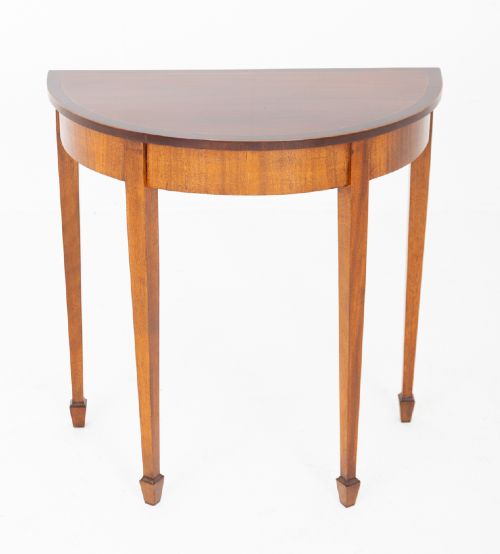
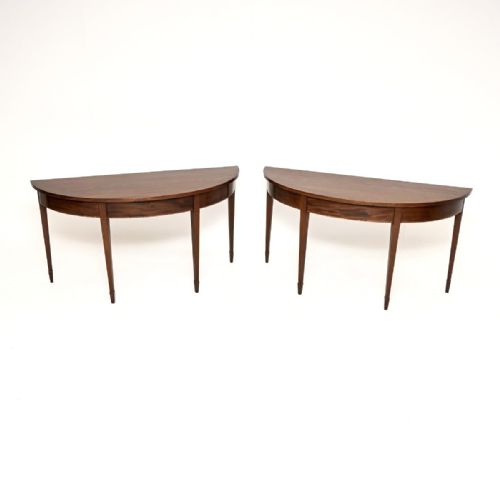
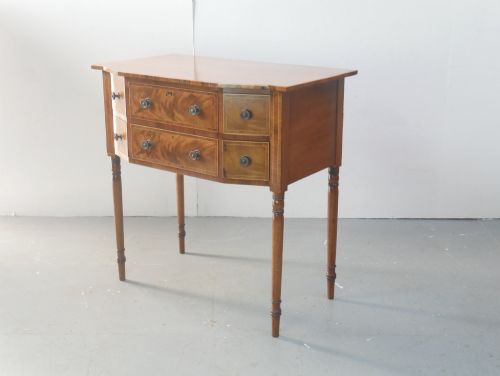
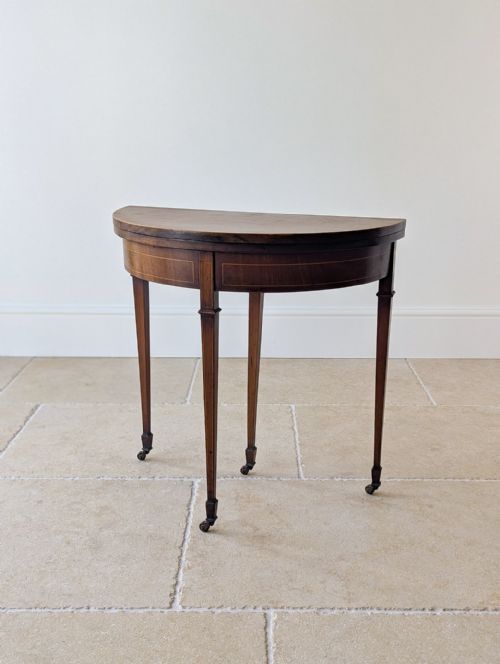
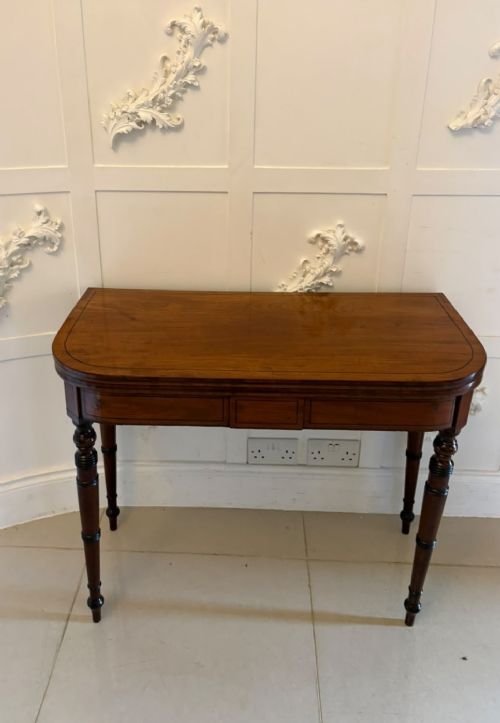
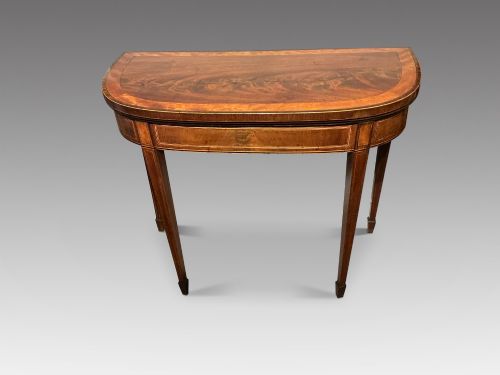


Inlaid Mahogany Console Table
An inlaid mahogany console table brings architectural grace and rich timber tone to a hallway or drawing room.
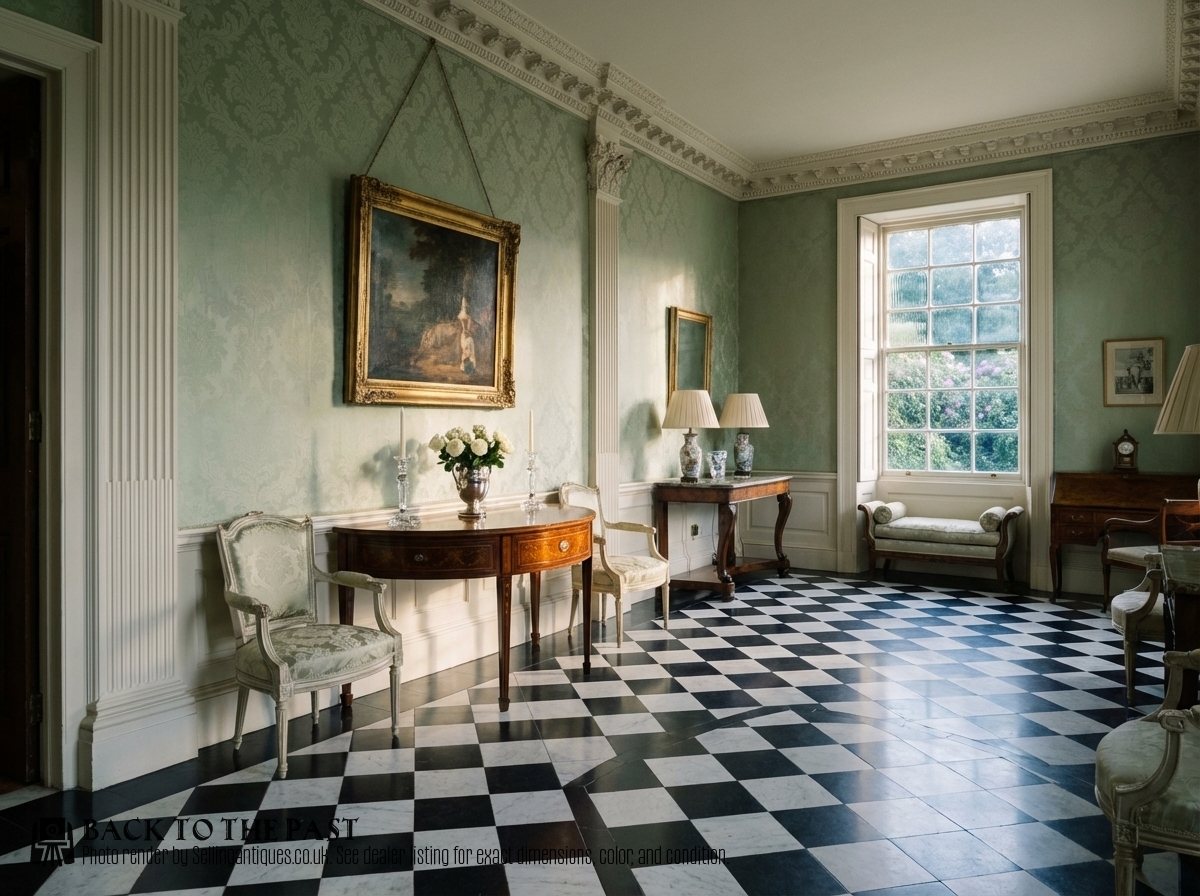
Inlaid Mahogany Console Table
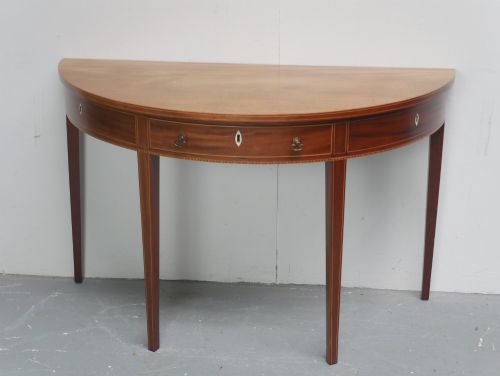
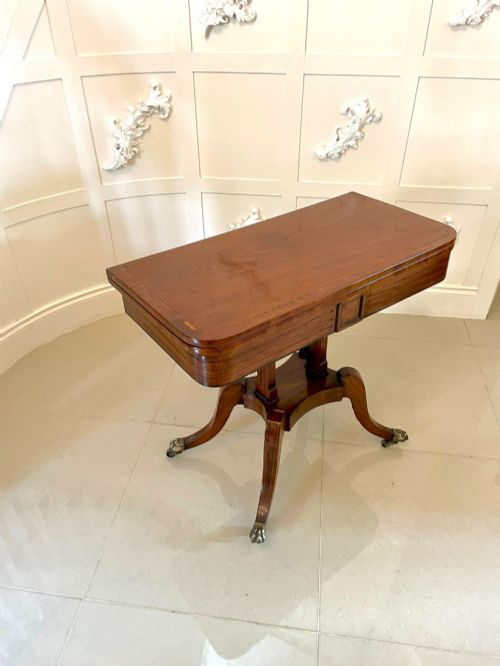
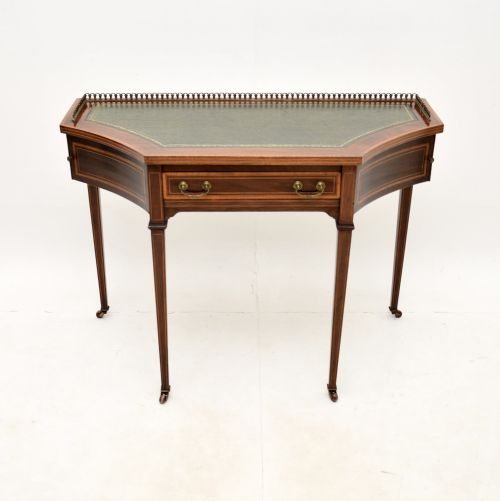
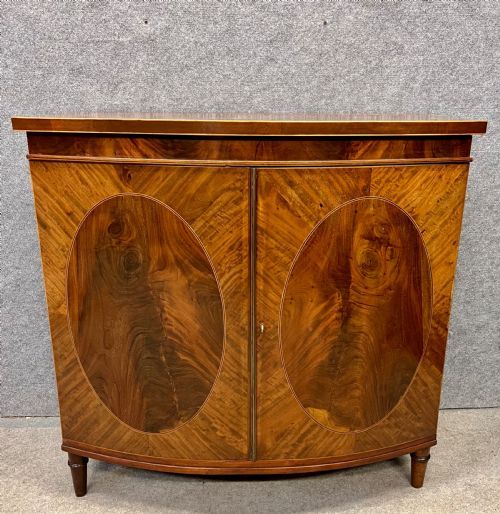
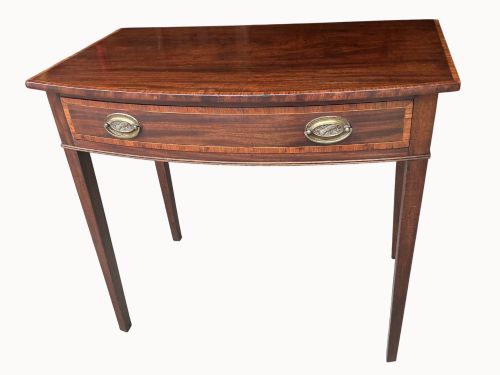
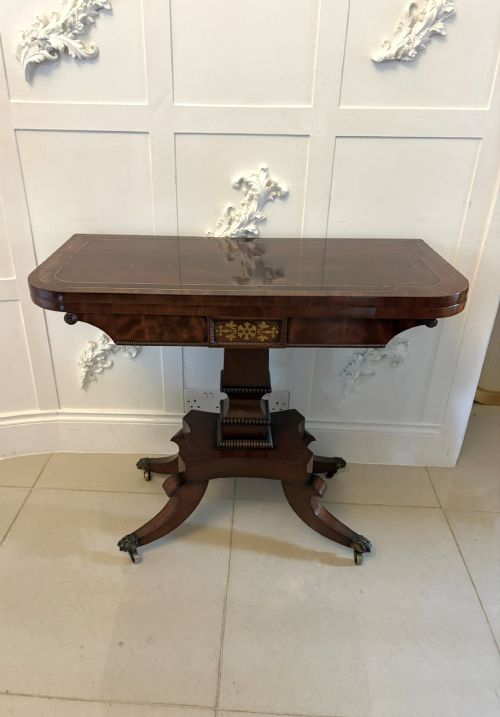
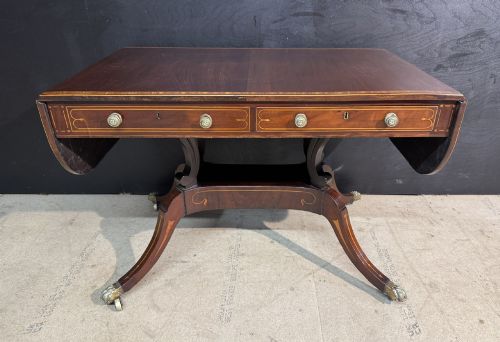
When you search for an inlaid mahogany console table, you encounter a refined group of wall-abutting furniture pieces designed primarily during the Georgian, Regency and Edwardian eras. These surfaces often double as versatile fold-over card tables, tea tables or games tables featuring semi-circular demi-lune shapes or straight fronts.
The versions most commonly met on this page span the late eighteenth century through to the early twentieth century, reflecting shifts from formal neoclassical design to lighter Edwardian interpretations. Makers constructed these items to stand against drawing room walls, serving decorative and utilitarian purposes alike.
How they were made
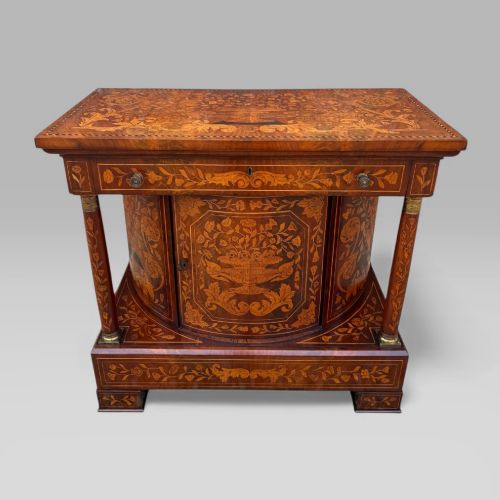
Craftsmen built these tables using dense Honduras mahogany as a primary structural timber, often selecting highly figured stock for the prominent top surfaces. They embellished these foundations through precise marquetry and stringing, employing contrasting timbers such as satinwood, boxwood and rosewood.
Makers integrated delicate brass inlay, banding and geometric stringing to define edges and perimeters. The joinery combines traditional framing methods with specialised veneer work, particularly on curved demi-lune forms requiring segmented timber construction.
Inlaid Mahogany Console Table Retail Price Guide 2026
Typical asking prices for inlaid mahogany console table among the pieces listed under this phrase on Sellingantiques today, from the lower quarter to the upper quarter. They describe what is for sale here now, not the wider market.
Listings feature mahogany, satinwood, boxwood, rosewood, and brass materials across Georgian, Regency, and Edwardian periods.
What varies in quality
The standard of an inlaid mahogany console table rests upon the natural figuring of the timber and the precision of the contrasting marquetry. Superior examples exhibit tightly controlled grain patterns and crisp, hand-cut inlay work that sits entirely flush with the primary mahogany surface.
Proportion, structural integrity and the crispness of edge banding separate high-grade workshop output from standard production. Cabinetmakers who achieved balanced proportions and retained original brass hardware or subtle patination elevate certain pieces above standard functional items.
Bruce & Burns of Edinburgh·Lamb of Manchester
The Inlaid Mahogany Console Table Glossary
- Demi-lune
- A half-moon shape characteristic of console tables and card tables designed to sit flush against a wall. This profile became particularly popular during the Georgian and Sheraton periods.
- Stringing
- Thin, linear inlay of contrasting wood used to outline panels, drawer fronts or table edges. It provides subtle visual framing without overwhelming the primary timber.
- Marquetry
- Decorative veneer work arranged in pictorial or geometric patterns using various woods. Craftsmen cut contrasting elements to fit precisely into a prepared ground.
- Crossbanding
- A border of veneer laid around the edge of a table top with the wood grain running perpendicular to the centre panel. This technique frames the primary timber visually.
- Fold-over top
- A hinged table surface that opens to double its area, frequently revealing a baize-lined interior for card games. It allows a compact wall console to function as a gaming table.
Inlaid Mahogany Console Table: Frequently Asked Questions
How were console tables used?
These tables stood against drawing room or hallway walls to display decorative objects, or served dual purposes as card and tea tables when visitors arrived. Their hinged tops allowed them to convert quickly from slim wall consoles into functional playing surfaces.
In period interiors, they anchored the perimeter of a room while providing accessible auxiliary surfaces for entertaining or holding lighting.
How do I date an inlaid mahogany console table?
Dating relies on examining the timber species, the style of the inlay, and construction methods like secondary woods used in the framing. Georgian pieces often display restrained stringing and solid mahogany framing, while Edwardian revivals incorporate machine-sawn veneers and lighter internal structures.
Hardware fixings and the specific curve of the demi-lune frame also offer clear indicators of whether a piece originates from the eighteenth century or later.
How do I care for mahogany and inlay?
Maintain these surfaces by keeping them away from direct sunlight and sudden temperature shifts that cause timber and delicate stringing to dry out. Regular dusting with a soft, dry cloth preserves the polish without introducing moisture to vulnerable veneer joints.
Occasional application of appropriate natural wax feeds the mahogany grain and protects historical French polish finishes without sealing the wood.
What is the difference between a console and a side table?
Console tables traditionally anchor directly against a wall, sometimes relying on wall fixings or specific leg placement suited for perimeter display. Side tables are generally freestanding pieces designed to be viewed from multiple angles within a room.
Many examples listed under these search terms bridge both categories, functioning as decorative wall furniture that pulls out for card games.