
Inlaid Mahogany Chest Drawers
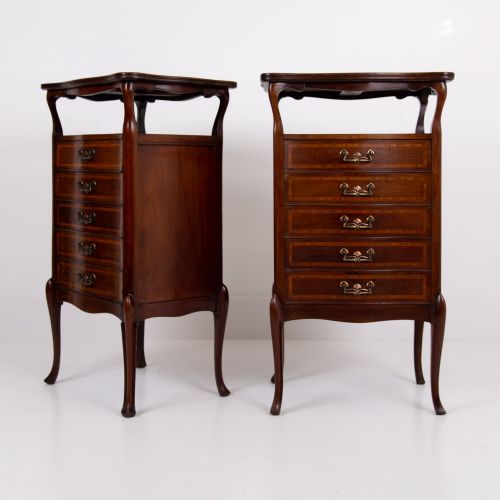
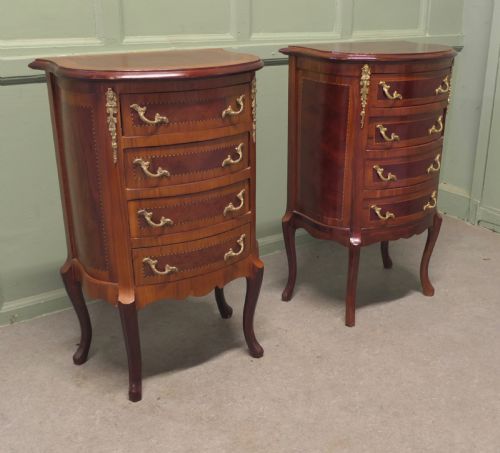
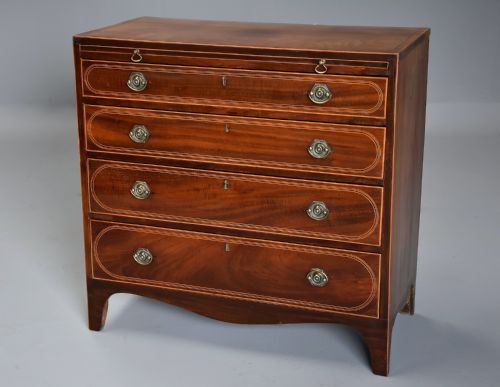
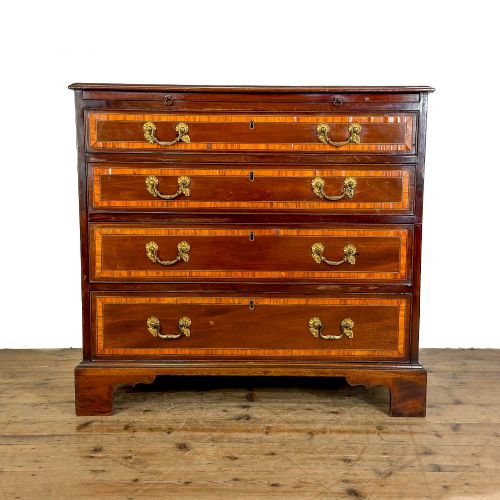
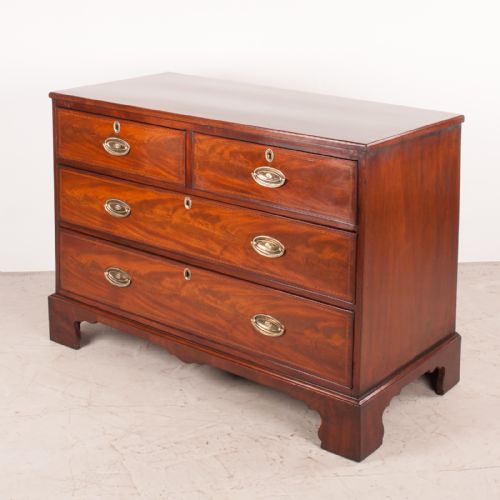
When searching for an inlaid mahogany chest drawers, collectors encounter sturdy timber storage units decorated with contrasting botanical or geometric borders across Georgian and Edwardian periods.
Inlaid Mahogany Chest Drawers
An inlaid mahogany chest drawers primarily serves as functional bedroom or parlour storage, appearing across Georgian, Regency, Victorian, and Edwardian periods.
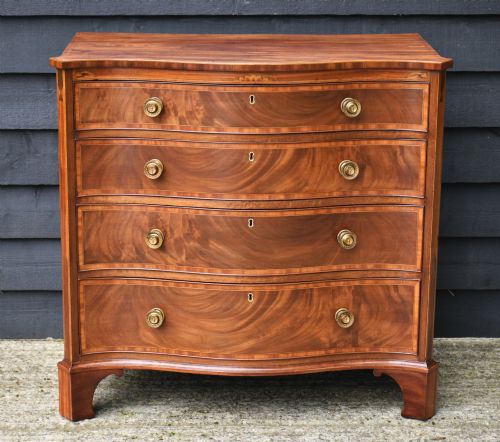
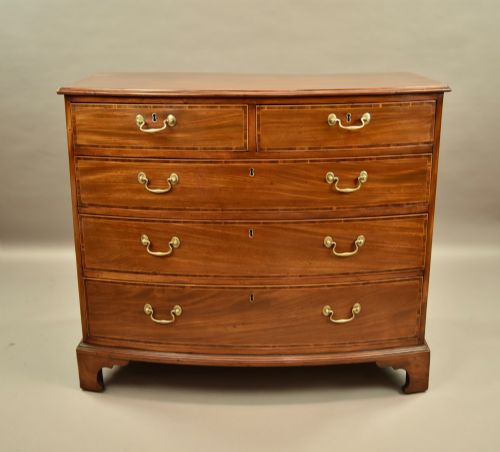
The standard form met on this page is a rectangular carcass with multiple horizontal storage tiers, though bow-front, serpentine, and tall formats also occur.
Originating largely from British workshops and regional makers, these pieces combine structural timber framing with decorative surface ornamentation.
Materials and Technique
Makers utilised solid mahogany and figured veneers for the primary carcass, providing a dense, stable foundation with deep reddish-brown grain patterns.
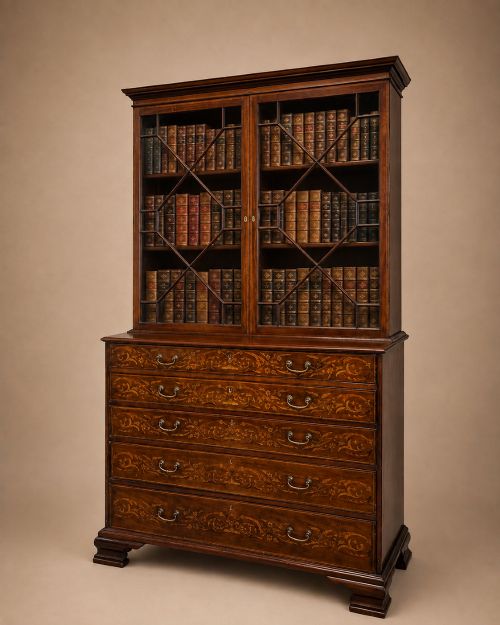
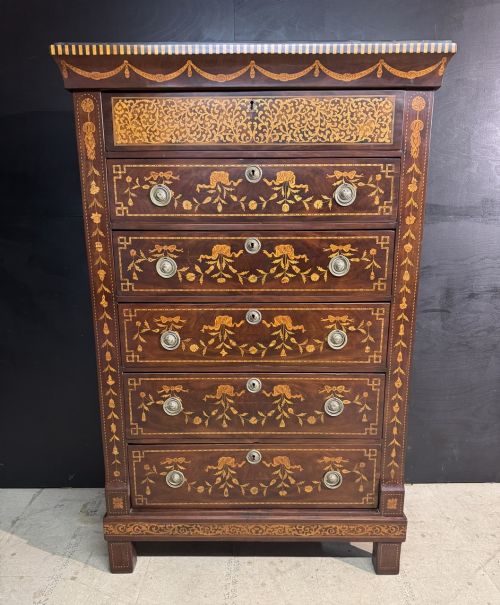
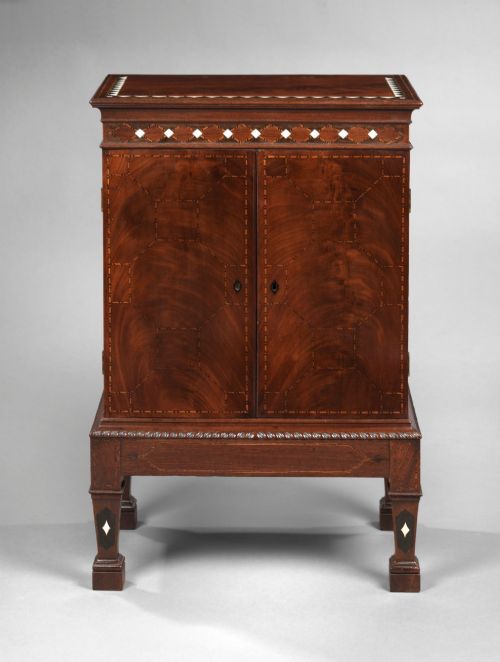
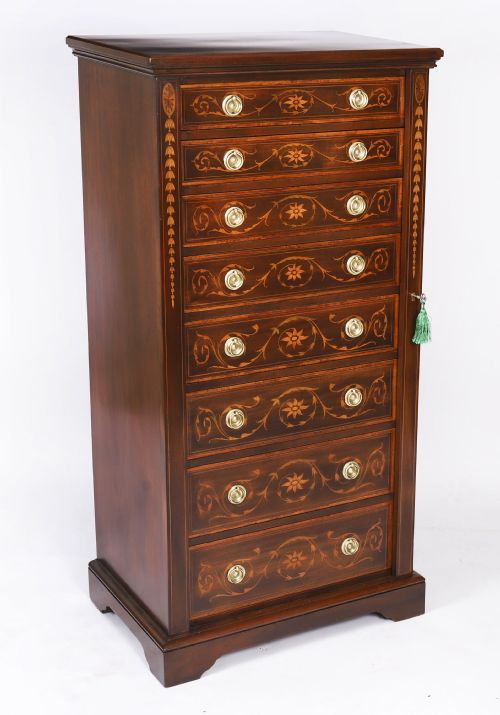
Surfaces received delicate ornamentation through contrasting elements of satinwood, boxwood, and ebony, inlaid into channels to form geometric lines or floral motifs.
Hardware typically incorporated cast brass handles and escutcheons, secured to drawer faces alongside hidden dovetail joints joining the internal timber walls.
Inlaid Mahogany Chest Drawers Retail Price Guide 2026
Typical asking prices for inlaid mahogany chest drawers among the pieces listed under this phrase on Sellingantiques today, from the lower quarter to the upper quarter. They describe what is for sale here now, not the wider market.
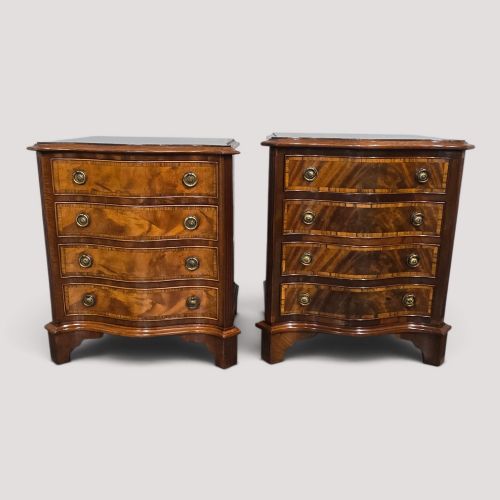
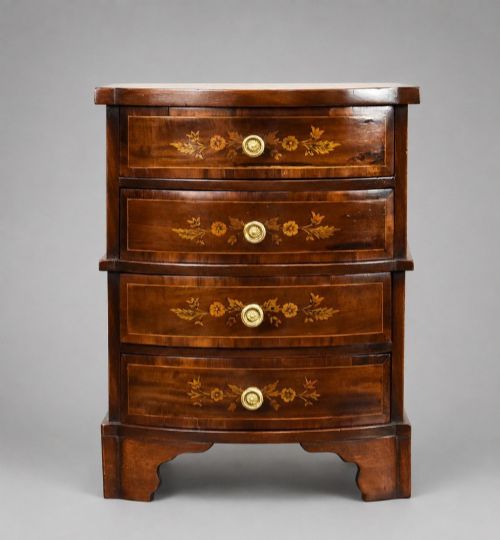
Some miniature chests offer perfect storage for minuscule treasures.
Assessing Craftsmanship
Differentiation in quality rests upon the selection of timber figure, where highly figured flame mahogany and precise matching of grain elevate a piece significantly.
The execution of the inlay work separates standard utility items from finer commissions, requiring crisp, tight joins between the mahogany ground and the contrasting woods without visible gaps.
Internal construction standards, including hand-cut dovetailing on drawer boxes and the retention of original brass hardware, indicate the original workshop tier.
J Shoolbred·Druce & Co·Christopher Pratt Bradford
The Inlaid Mahogany Chest Drawers Glossary
- Bow front
- A convex curved cabinet front that projects outward in a smooth arc. This shape appears frequently on Georgian and Regency pieces.
- Crossbanding
- A strip of veneer applied perpendicularly to the surrounding grain along the border of a drawer or top. It frames the central panel.
- Marquetry
- Elaborate pictorial or decorative veneer work assembled from various woods. It creates complex floral or symmetrical patterns across the surface.
- Serpentine
- A shaped furniture front featuring a concave centre flanked by two convex ends. This flowing contour requires advanced woodworking skill.
- Secretaire
- A cabinet incorporating a pull-down writing drawer fitted with internal compartments. It conceals small drawers and pigeonholes behind a drop front.
Inlaid Mahogany Chest Drawers: Frequently Asked Questions
How do I date an inlaid mahogany chest?
Dating relies upon evaluating construction methods, timber choice, and the specific style of the inlay borders. Georgian examples often display crisp hand-cut dovetails and restrained line inlay, whereas Edwardian pieces commonly utilise lighter satinwood banding.
Secondary indicators include the form of the brass hardware, the thickness of the drawer linings, and overall proportions that align with documented period workshops.
What is a caddy top?
A caddy top describes a raised, moulded tabletop edge resembling the lid of a tea caddy. This profile is typical of 18th-century and Regency case furniture.
The moulded edge adds a distinct architectural definition to the upper surface of the chest drawers.
How should I clean mahogany furniture?
Maintenance requires gentle dusting with a dry, soft lint-free cloth to remove surface particles. Avoid silicone sprays or modern household detergents that can degrade antique finishes.
Occasional application of traditional beeswax helps nourish the timber and preserves the natural lustre of the polished mahogany surface.
Where were these chests used historically?
These pieces functioned primarily as essential bedroom furniture for storing clothing, linens, and personal valuables. Smaller variations also served in dressing rooms, libraries, and parlours.
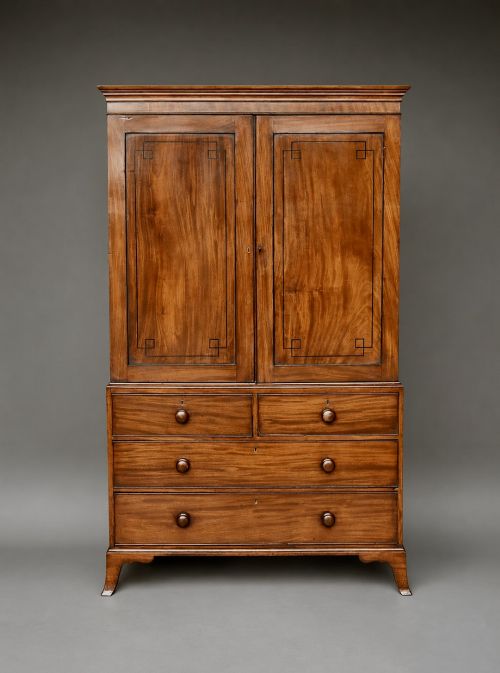
Gentlemen's wardrobes and bachelor chests were specifically designed to accommodate specialised garments and personal documents.