

Serpentine Front Drawers
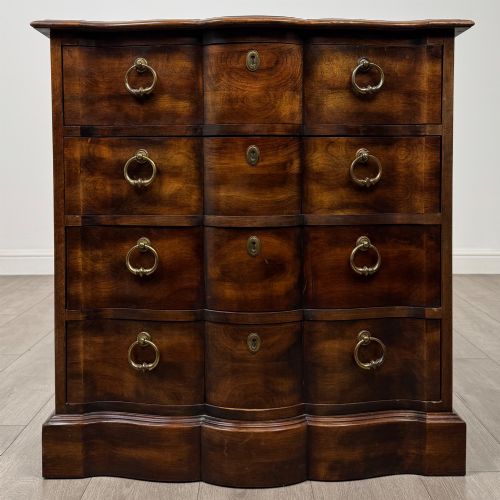
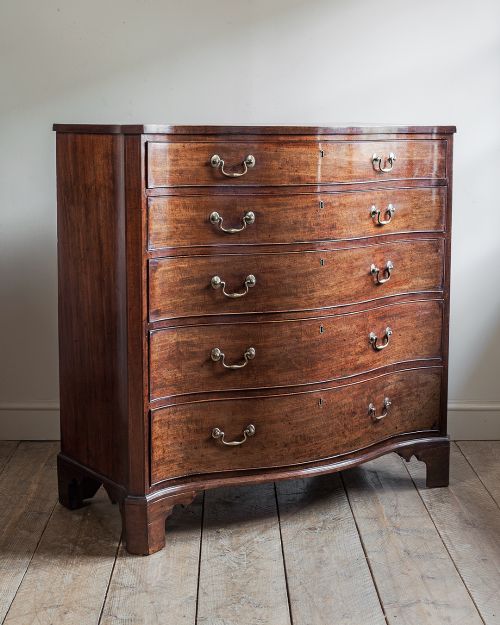
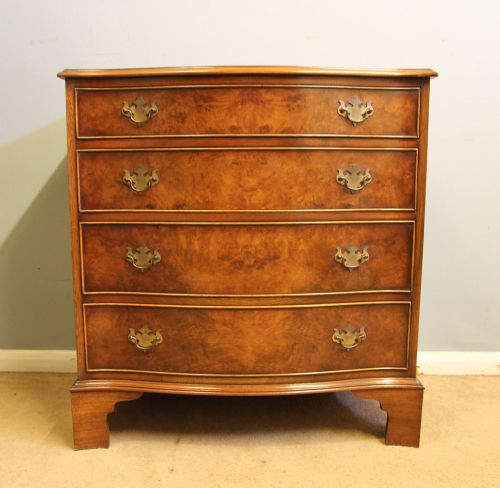
Serpentine front drawers offer a rhythmic, undulating outline that brings immense character and sophistication to traditional room settings.
Understanding Serpentine Front Drawers
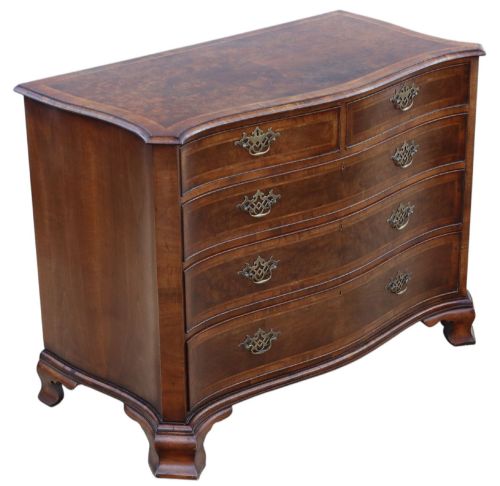
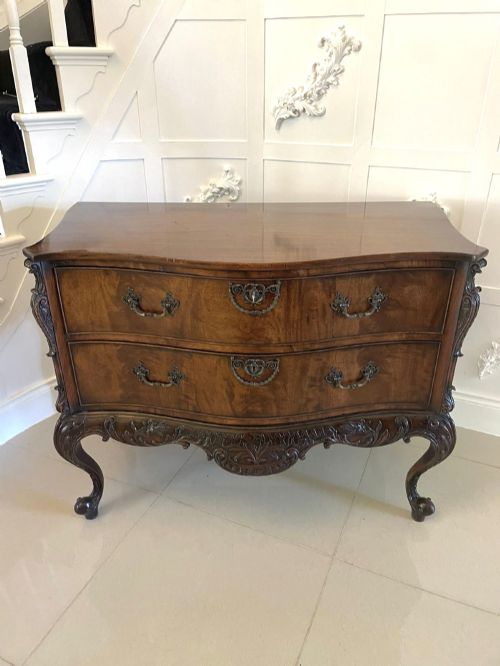
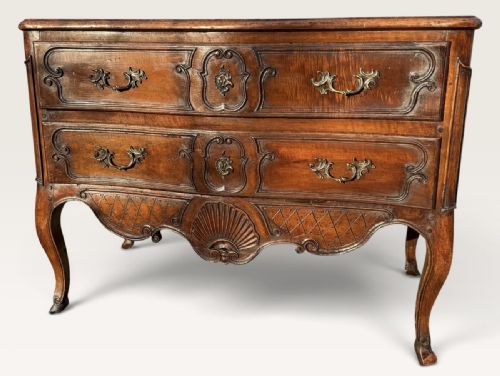
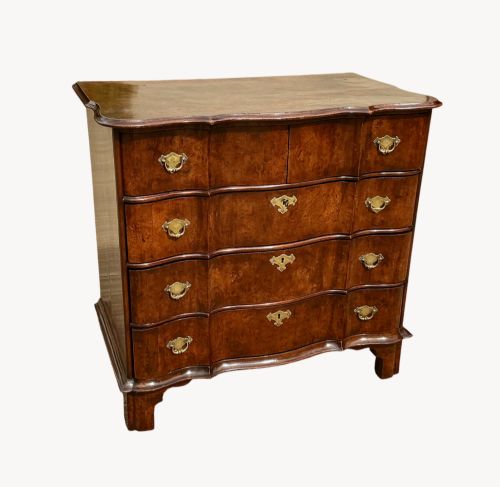
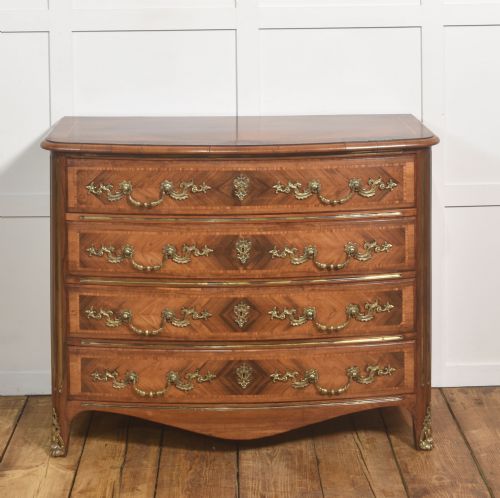
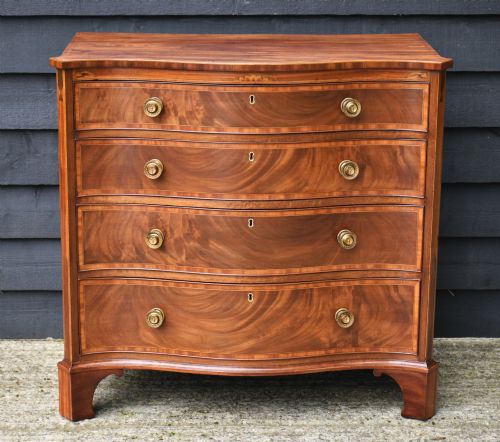
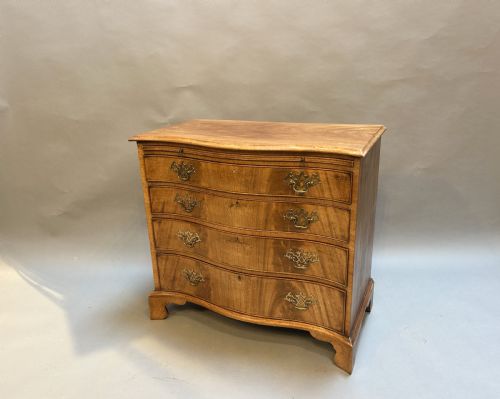
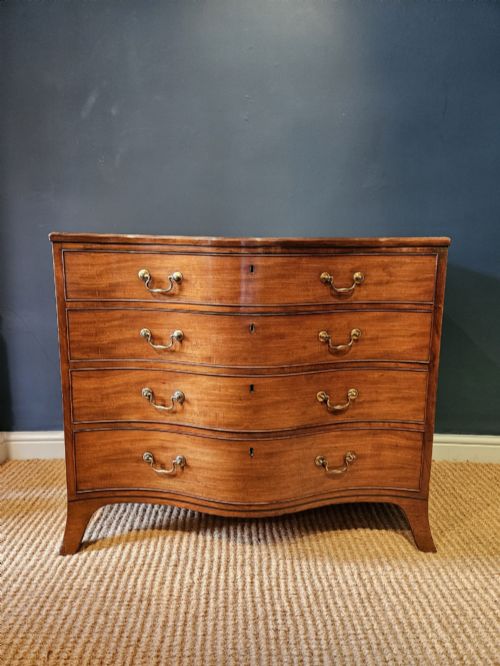
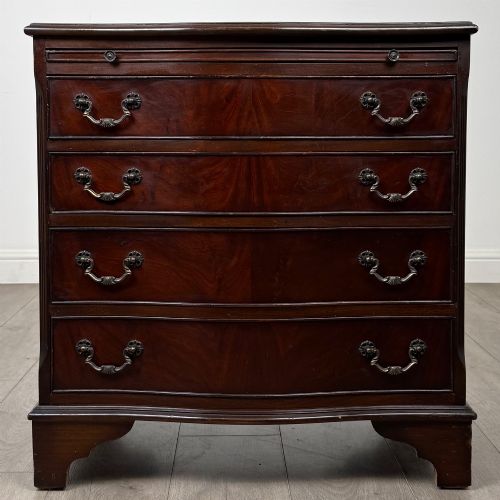
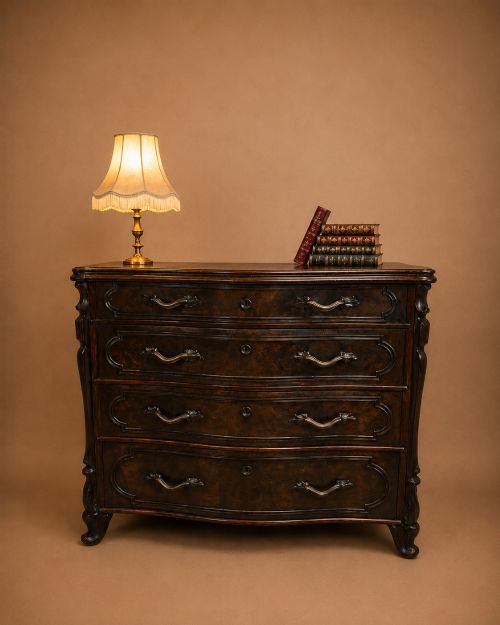
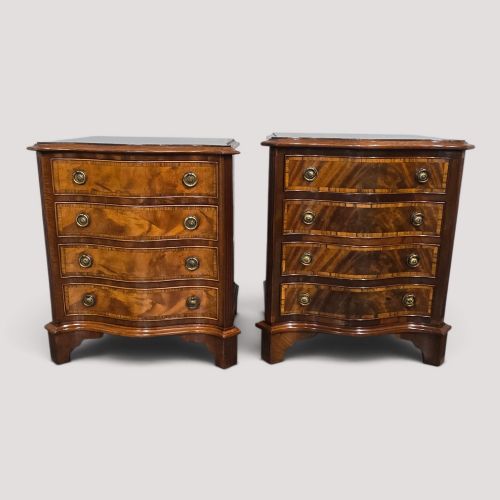
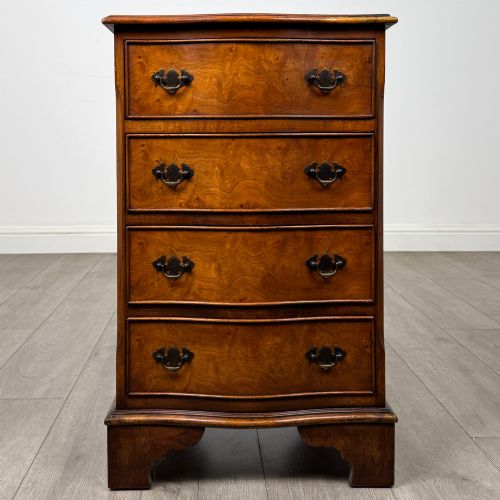
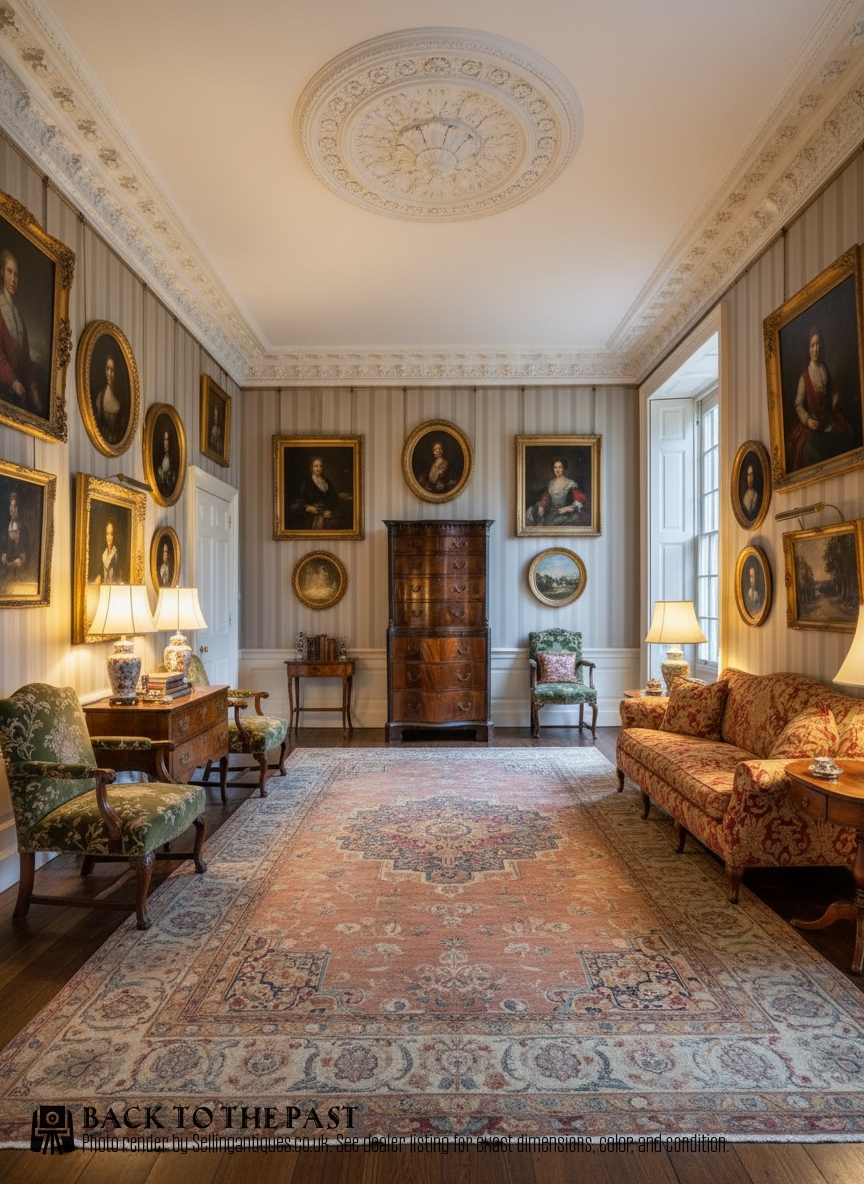
Serpentine front drawers combine sweeping convex centre curves with concave corners to create a dynamic, undulating profile. When searching for serpentine front drawers, buyers encounter chests of drawers, commodes, and chests on chests spanning the eighteenth century through to the early twentieth century. Mahogany and walnut dominate the selection, often taking the form of diminutive proportions, dwarf heights, or grander Georgian and Victorian room pieces.
The pieces on this page range from eighteenth-century commodes and Georgian masterpieces to later Edwardian and revival interpretations. Many examples feature fitted brushing slides, pull-out writing compartments, or intricate line inlay. Whether examining a compact cabinet from the nineteen-twenties or a cabinetwork piece from seventeen-eighty, the distinctive sinuous contour remains the defining characteristic.

Materials and Construction
Cabinetmakers utilised solid timbers alongside figured veneers such as mahogany, burr walnut, and birds-eye maple. Timber selection dictated how well the wood could be shaped to follow the complex curves of the front facade without splitting or warping over time.
Internal carcase construction required exceptional skill from joiners to match the undulating drawer fronts with shaped drawer dividers and side panels. Brass handles, gilt mounts, or ormolu details frequently accompanied the polished timber surfaces, secured with traditional joinery methods.
Retail Price Guide 2026
Typical UK retail prices for serpentine front drawers, calculated from the Sellingantiques database of over a million retail prices indexed since 2003. This retail price guide relies exclusively on Sellingantiques data; no external sources or auction records are used, so the figures do not describe the wider market.
Listings feature mahogany, walnut, burr walnut veneer, oak, marble, and ormolu across eighteenth-century, Georgian, and twentieth-century periods.
Judging Quality and Execution
The calibre of a piece rests upon the precision of the curves along the front and how harmoniously the grain of the wood follows the sweep. Superior examples display seamless veneer matching across multiple drawers and crisp moulding profiles that maintain their definition along every edge.
Hardware selection and internal drawer construction further separate standard items from finer cabinetwork. Original cast brass handles, well-fitted pull-out writing slides, and secondary timbers like oak indicate higher workshop standards during manufacture.
Maple and Co
The Serpentine Front Drawers Glossary
- Serpentine
- A furniture front shape featuring a convex centre curving outwards between two concave outer sections. This undulating profile requires advanced woodworking skill to execute properly.
- Commode
- A low chest of drawers or cabinet originating in France during the eighteenth century. These pieces often feature decorative veneers and ormolu mounts.
- Brushing slide
- A pull-out shelf located above the top drawer used for dusting or writing. It retracts flush into the cabinet frame when not in use.
- Veneer
- A thin layer of figured wood applied over a stable secondary timber base. This technique allows cabinetmakers to utilise decorative grains like burr walnut or flame mahogany.
- Chest on chest
- A tall storage unit formed by stacking a smaller chest of drawers directly on top of a larger base chest. This form maximises vertical storage capacity.
Frequently Asked Questions
What periods do serpentine front drawers come from?
The pieces originate primarily from the eighteenth century, the Georgian era, and the nineteenth century. Later revival examples also date from the Edwardian period and the nineteen-twenties.
Craftsmen continued reproducing these flowing forms well into the twentieth century, utilising traditional timber choices like mahogany and walnut.
How do I identify a pull-out slide?
A pull-out slide sits directly above the topmost drawer and pulls outward from the frame. It served historical functions as a temporary writing surface or a place to brush clothing.
Many Georgian and later mahogany chests include this integrated feature, which slides completely flush when closed.
What is the difference between a chest and a commode?
A chest of drawers is a standard British storage form with stacked horizontal drawers. A commode refers to a lower, wider cabinet style often associated with French eighteenth-century designs and revival pieces.
Both utilise the characteristic undulating serpentine front profile to create visual movement.
Where were these pieces used in the home?
Bedrooms and dressing rooms accommodated these chests for storing garments and linens. Drawing rooms and hallways also housed finer commodes to display decorative objects on top.
Their decorative fronts made them suitable for prominent display spaces rather than private quarters alone.