

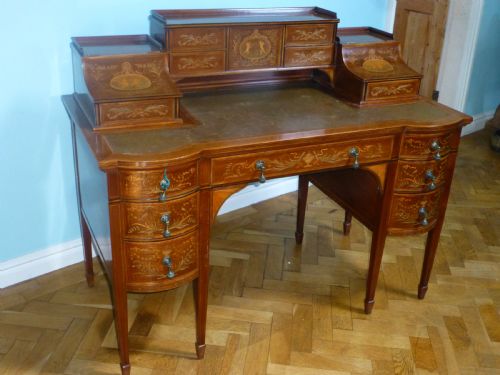
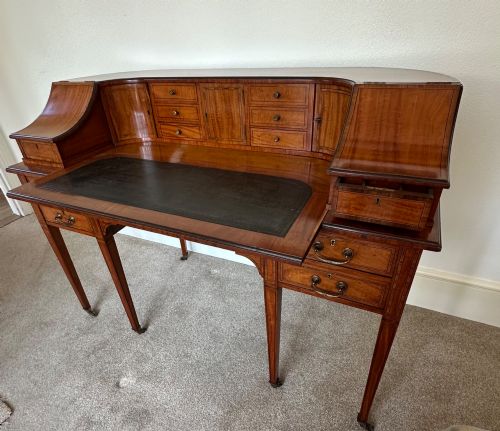

Inlaid Ladies Desk
An inlaid ladies desk brings compact writing grace to a room, combining fine marquetry with practical elegance for the collector.

What an inlaid ladies desk is
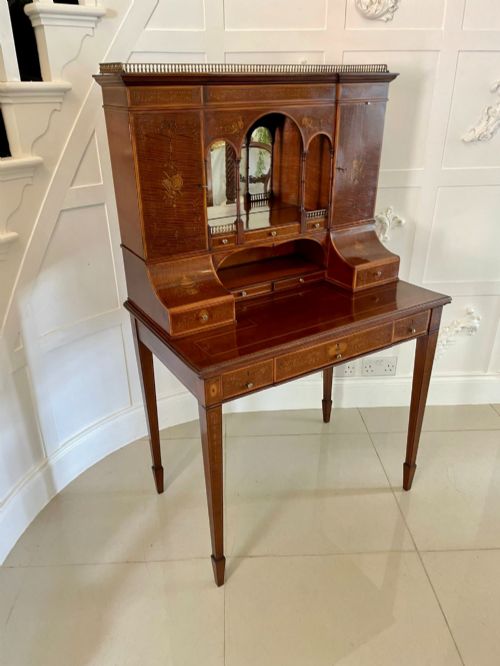
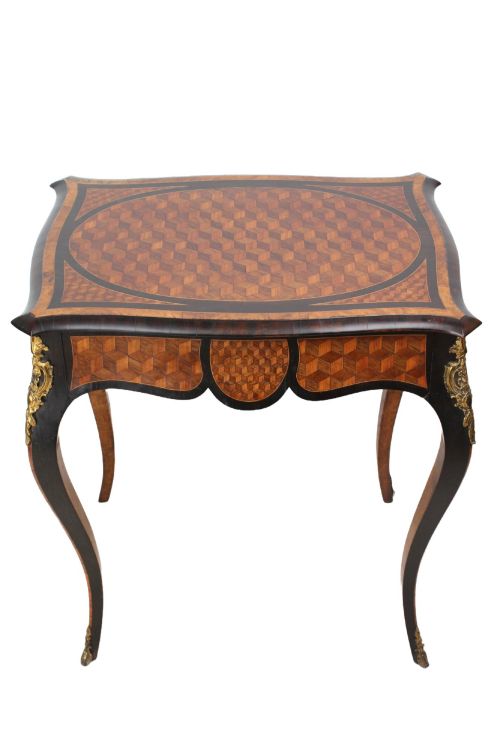
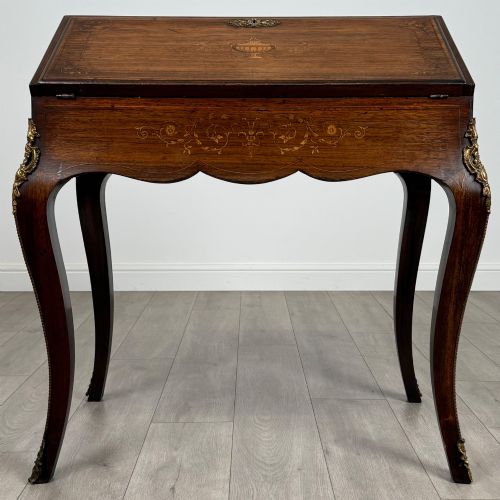
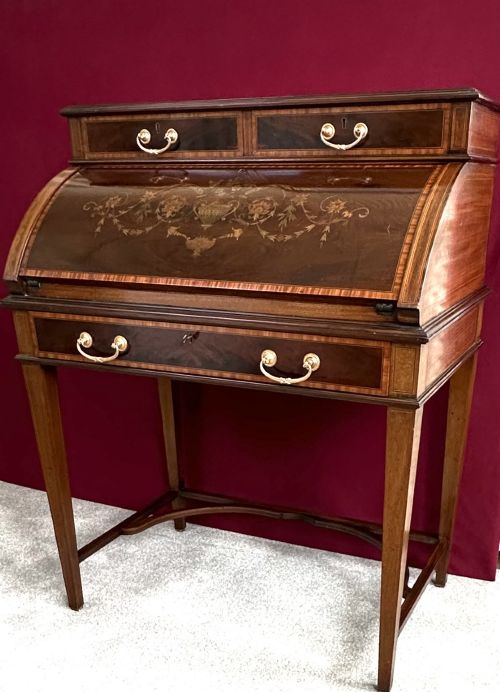
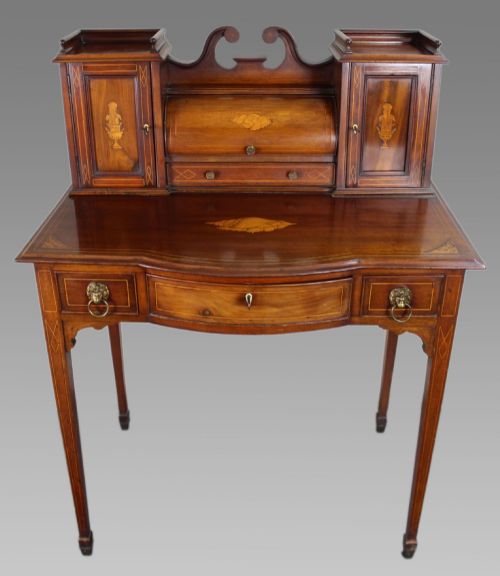
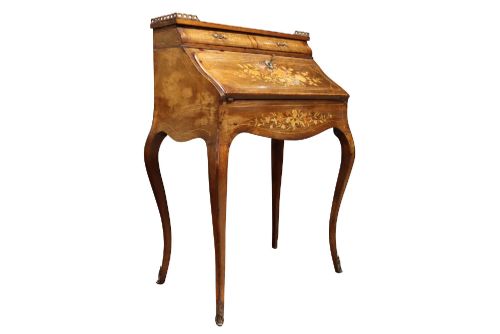
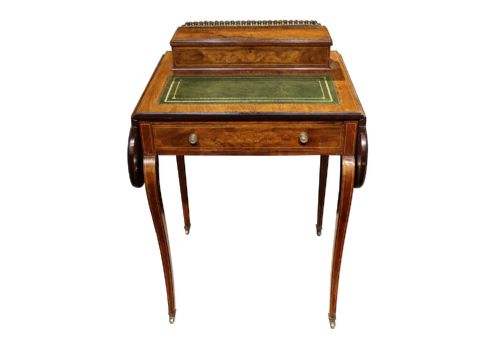
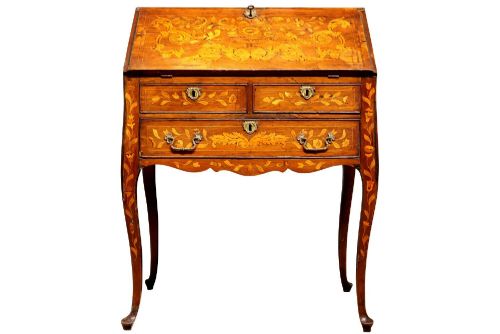
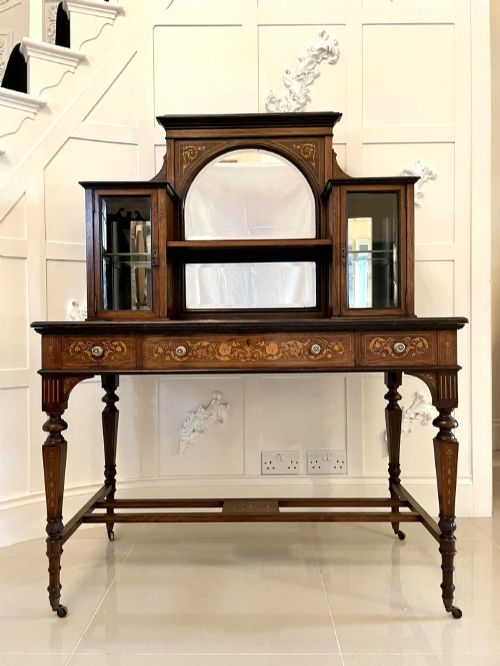
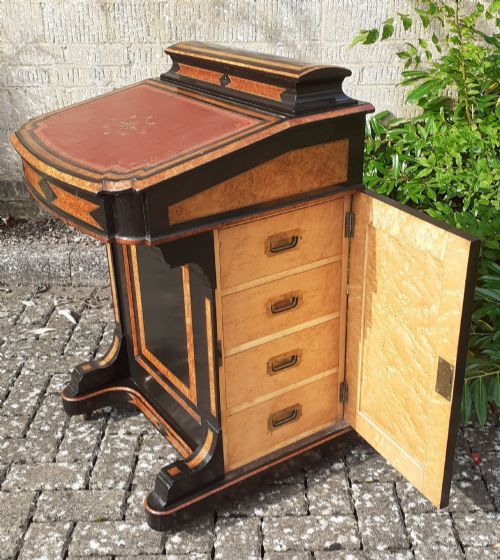
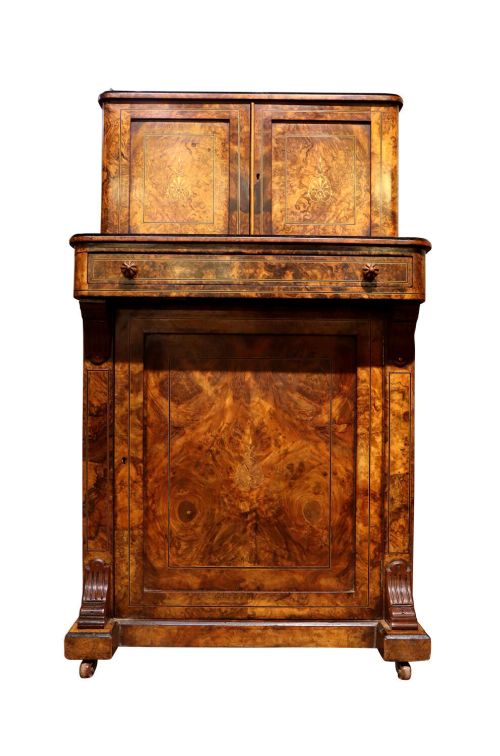
When you search for an inlaid ladies desk, you encounter compact writing furniture primarily produced during the Victorian and Edwardian periods, including the Sheraton Revival style. These pieces frequently manifest as writing tables, cylinder desks, or the refined bureau de dame and bonheur du jour formats.
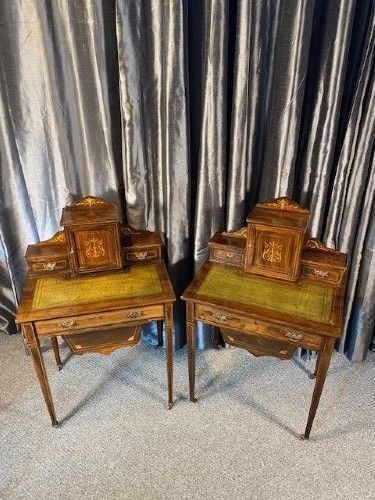
The version you are most likely to meet on this page is an Edwardian mahogany or rosewood model featuring delicate contrasting stringing and floral motifs. They offer smaller proportions suited to domestic settings while retaining functional drawers and compartments.
Originating largely from British workshops and French makers of the nineteenth century, these desks served as personal writing spaces for correspondence. Their surviving forms demonstrate the enduring appeal of portable, ornamental writing furniture.

Materials and construction
Cabinetmakers constructed these desks using foundational timbers such as mahogany, walnut, and rosewood, often applying veneers of satinwood or amboyna to primary surfaces. Brass mounts, gilt accents, and leather writing inserts completed the structural composition.
Inlay work relied on contrasting woods like boxwood and specialised tinted veneers to create detailed marquetry patterns and linear stringing. Artisans inlaid these decorative elements directly into the solid or veneered timber bodies.
Retail Price Guide 2026
Typical UK retail prices for inlaid ladies desk, calculated from the Sellingantiques database of over a million retail prices indexed since 2003. This retail price guide relies exclusively on Sellingantiques data; no external sources or auction records are used, so the figures do not describe the wider market.
The listings show Edwardian and nineteenth-century pieces employing rosewood, mahogany, satinwood, and boxwood inlay.
Judging quality in these desks
The distinction between standard production and exceptional work rests on the precision of the marquetry and the choice of timbers. Superior examples display crisp, intricate boxwood inlay and richly grained rosewood or satinwood without visible gaps in the joinery.
Maker attribution elevates certain pieces, with signed works by established cabinetmakers demonstrating superior internal drawer construction and finer cast brass hardware. The overall harmony of proportion and the depth of the timber finish separate ordinary utility pieces from distinguished cabinetwork.
Jas Shoolbred·Paul Sormani·S and H Jewell·Maples
The Inlaid Ladies Desk Glossary
- Bonheur du jour
- A light lady's writing desk featuring a small set of drawers, shelves, or a cabinet on the upper surface. This French form gained popularity in Victorian and Edwardian revival furniture.
- Marquetry
- The art of applying decorative veneer pieces to a structure to form pictorial or geometric designs. Craftsmen utilised contrasting woods like boxwood and satinwood for this detailed work.
- Sheraton Revival
- A late nineteenth and early twentieth century style inspired by the neoclassical designs of Thomas Sheraton. These pieces often incorporate satinwood, delicate tapering legs, and precise inlay.
- Stringing
- Thin strips of contrasting wood inlaid into channels cut into the primary timber surface. It defines borders and structural outlines on table tops and drawer fronts.
Frequently Asked Questions
What is a bonheur du jour?
A bonheur du jour is a small, light writing desk featuring an upper tier of compartments, small drawers, or a cabinet. These pieces appeared frequently during the Victorian and Edwardian eras as decorative writing furniture.
They allowed users to manage correspondence and store small items in a compact footprint. The design combined display space with a functional writing surface.
How do I identify a Sheraton Revival desk?
Sheraton Revival desks typically date from the late nineteenth century to the Edwardian period and draw inspiration from eighteenth-century neoclassical designs. They frequently feature satinwood or mahogany with fine boxwood inlay and tapering legs.
These pieces emphasise symmetry, light proportions, and delicate floral or geometric marquetry patterns. They reflect the period's fascination with refined, graceful cabinetry.
What woods were used for these desks?
Cabinetmakers utilised a foundation of mahogany, walnut, or rosewood, often applying finer decorative veneers to the exterior surfaces. Satinwood and amboyna provided contrasting golden and figured tones for top panels and drawer fronts.
Inlay work incorporated lighter timbers such as boxwood to create sharp linear stringing and floral details. Brass hardware and leather inserts completed the material palette.
How were these desks used?
These desks served primarily as private writing spaces for writing letters, managing personal accounts, and storing stationery. Their compact dimensions made them suitable for drawing rooms and boudoirs rather than grand libraries.
Many included specialised compartments, small drawers, and lockable compartments for confidential papers. They combined the roles of a functional workspace and an ornamental domestic furnishing.