

Inlaid Dining Chairs
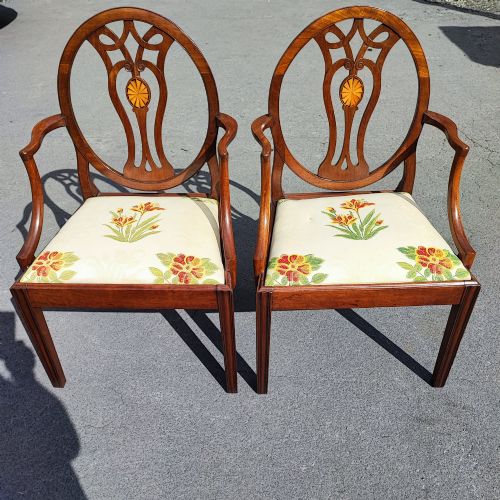
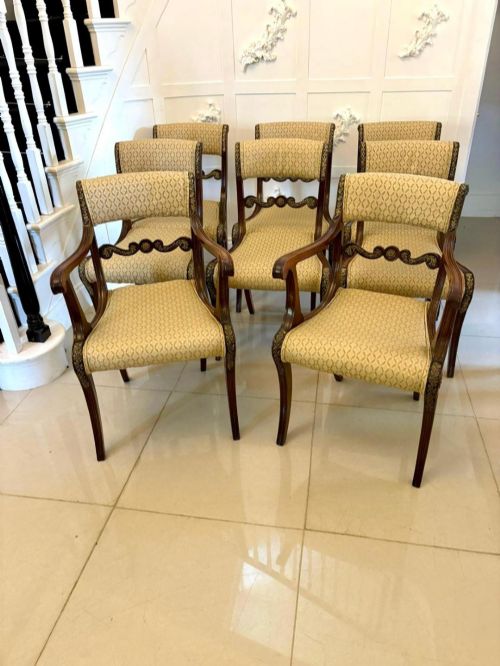
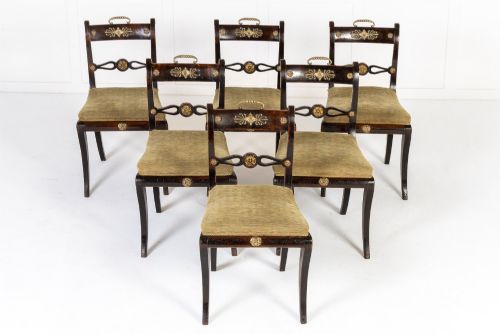
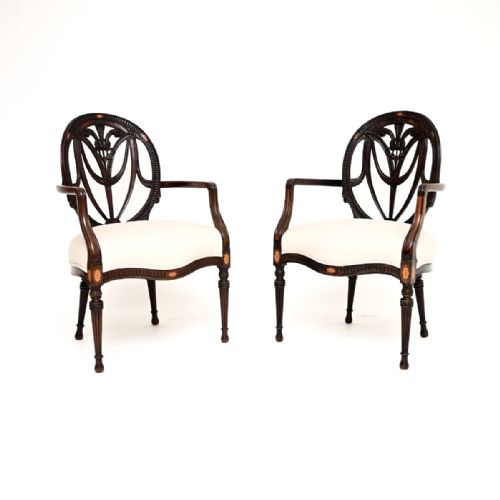
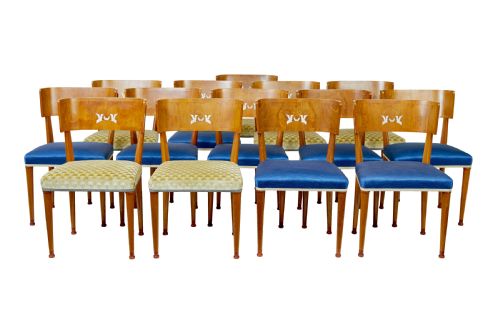
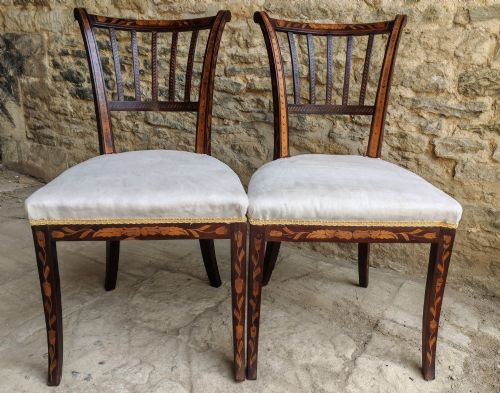
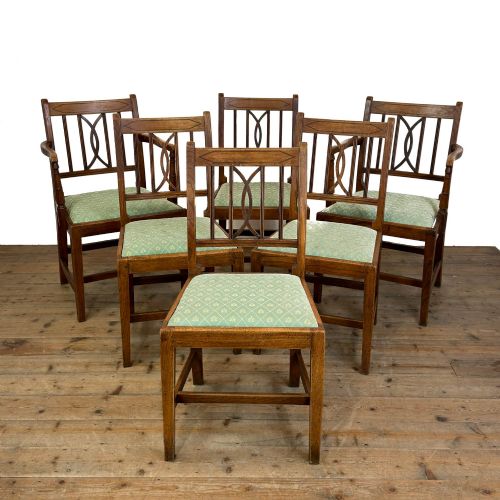
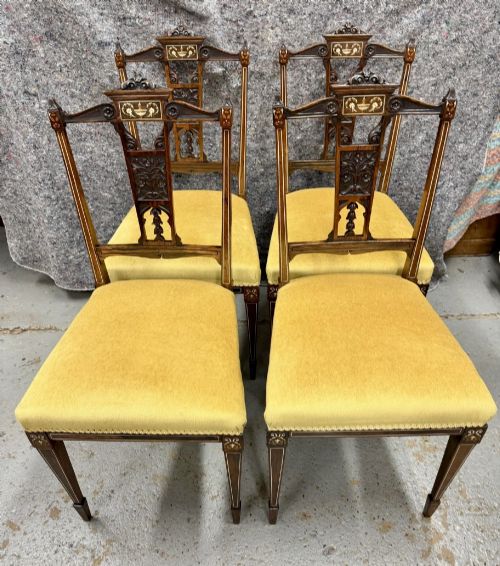
These inlaid dining chairs bring disciplined geometry and contrasting woods to the table, combining structural timber with precise decorative banding.
Inlaid Dining Chairs
Inlaid dining chairs bridge structural seating and surface ornamentation, bringing decorative patterns directly into the formal dining room. The pieces found here span the eighteenth, nineteenth and early twentieth centuries, reflecting changing tastes from Georgian restraint to Edwardian lightness.
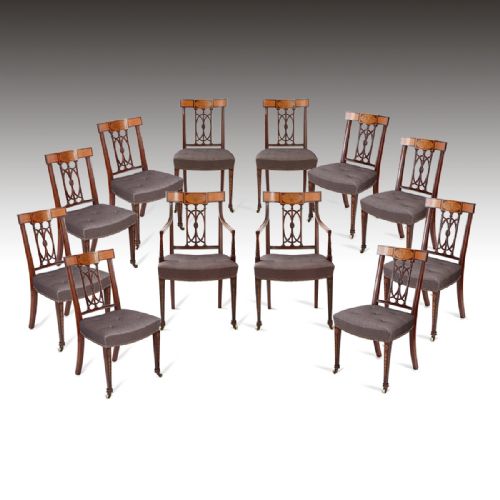
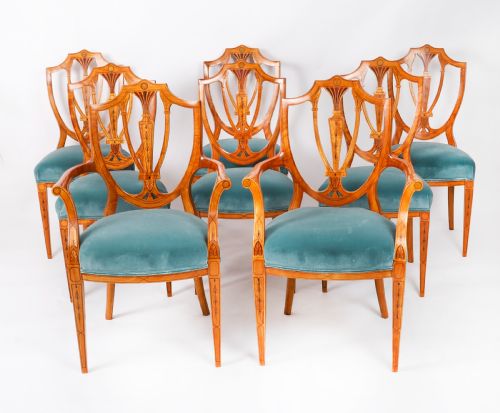
Most examples encountered in this selection are constructed from mahogany, walnut or rosewood, ornamented with contrasting insertions of satinwood or brass stringing. The form typically follows side chair or armchair configurations, often surviving in matched sets rather than isolated pieces.
Makers drew on established historicist vocabularies, producing interpretations in the Sheraton, Regency, and George III styles alongside later Edwardian revivals. These seating options remain practical for contemporary dining spaces while carrying decades of decorative history.
Materials and Technique
Cabinetmakers built the primary framework using dense hardwoods like mahogany, walnut and oak, selected for their tensile strength under daily loads. Joinery relied on traditional mortise and tenon construction to ensure rigidity across the seat frame and back support.
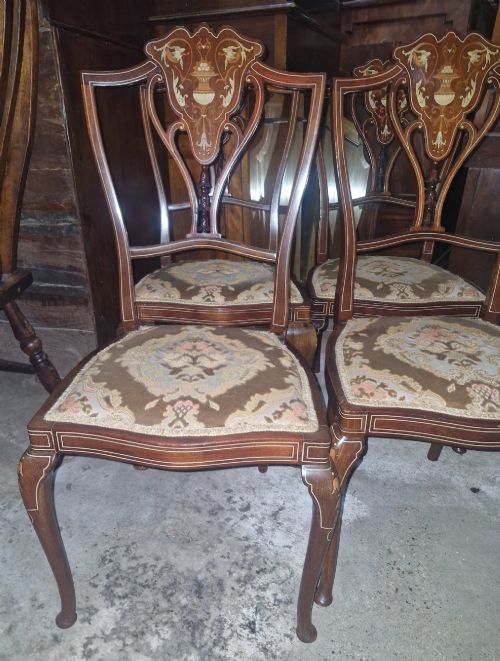
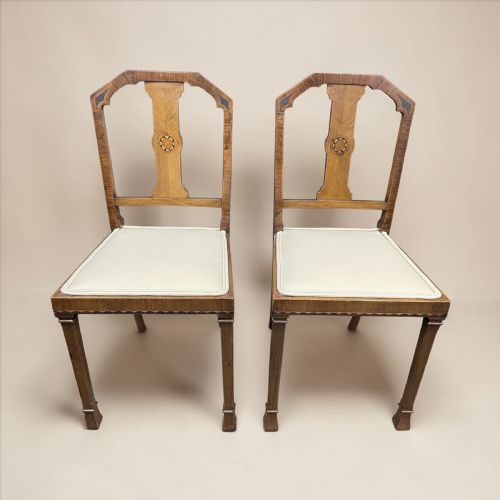
Decoration involved recessing thin veneers of lighter timbers, such as satinwood, or strips of brass into prepared channels within the primary wood surface. Marquetry techniques introduced pictorial motifs using varied natural wood grains, whilst upholstery was secured over webbing and stuffing within the drop-in or fixed seat frames.
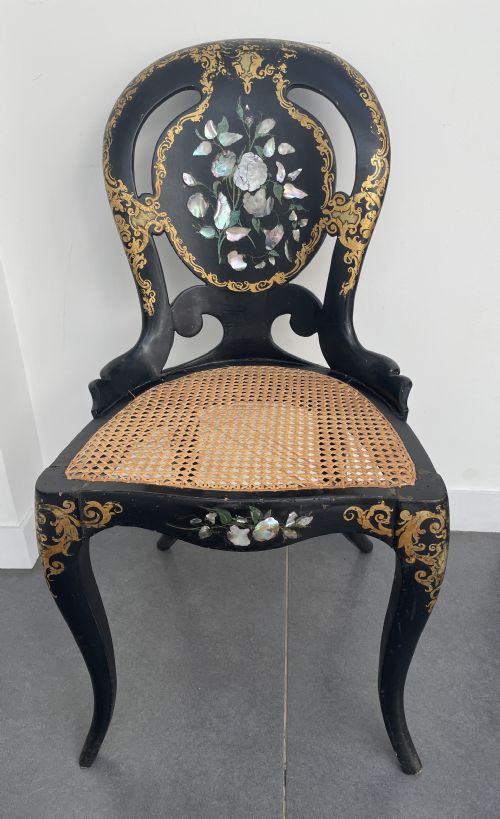
One exceptional nineteenth-century chair even conceals a built-in musical movement inside its wooden frame.
Assessing Quality
Quality rests upon the precision of the timber selection and the exactness of the inlay work, where superior examples exhibit seamless integration between the contrasting woods and the base ground. The crispness of carved elements and the integrity of the underlying joinery dictate how well the structure withstands repeated use.
Sets that retain their original timber patina, matching grain patterns and unified proportions command greater regard than assembled groups sharing only approximate similarities. The complexity of the decorative program, from simple stringing to elaborate floral marquetry, also separates standard utility seating from high-status commissions.
Cowtan And Sons·Lamb Of Manchester
The Inlaid Dining Chairs Glossary
- Marquetry
- The art of forming decorative patterns by fitting together dissimilar pieces of wood veneer onto a structural ground. This technique allows for complex pictorial or geometric designs across flat chair backs and splats.
- Stringing
- A narrow, inlaid line of contrasting timber or brass used to outline panels or structural borders on furniture. It provides a subtle linear definition without overwhelming the primary wood grain.
- Satinwood
- A durable tropical timber with a lustrous, golden-yellow sheen frequently utilised for contrasting inlay work and banding. Its bright appearance creates sharp visual division against darker primary woods.
- Carver
- A traditional term for an armchair, typically featuring elbow rests, designed to sit at the head of a dining table. These pieces often repeat the decorative motifs of the matching side chairs.
- Splat
- The vertical central strip of wood within a chair back connecting the seat to the top rail. Inlaid versions frequently display decorative banding, urns or classical motifs along this surface.
Inlaid Dining Chairs: Frequently Asked Questions
How do I care for antique inlaid chairs?
Maintain a stable indoor humidity and avoid placing timber seating near direct heat sources to prevent the wood from drying and warping. Clean surfaces using a soft, dry cloth and apply occasional natural wax to nourish the grain.
Protect the inlay work by avoiding abrasive polishes and excessive moisture. Regular inspection of the joints ensures the structural framework remains stable during daily use.
Can I use antique dining chairs daily?
These historical chairs were built for daily hospitality, utilising durable hardwoods and robust joinery designed to support regular seating. Many survive precisely because their original construction methods were sound and capable of handling domestic life.
Positioning chairs on even flooring prevents undue stress on individual legs and frame joints. Periodic checks by a specialist keep the internal framing secure over decades of use.
How do I identify Regency inlaid chairs?
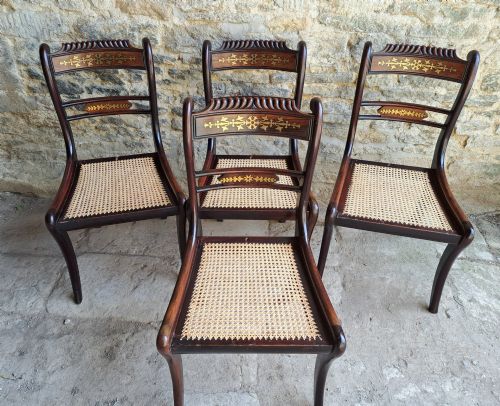
Regency examples often feature dark rosewood or mahogany paired with bright brass inlay, reflecting the neoclassical aesthetic of the early nineteenth century. Look for saber legs, reeded framing, and classical motifs such as anthemia or brass stringing.
Proportions during this era tended toward architectural restraint and clean linear profiles. The integration of metal alongside timber remains a defining hallmark of this period style.
What is the difference between a side chair and a carver?
Side chairs are built without arms, designed to slide neatly beneath a dining table along its flanks. They offer compact profiles whilst maintaining the decorative aesthetic of the wider set.
Carvers feature integrated armrests and occupy the heads of the dining table. They share matching design vocabularies with the accompanying side chairs but provide greater lateral support.