

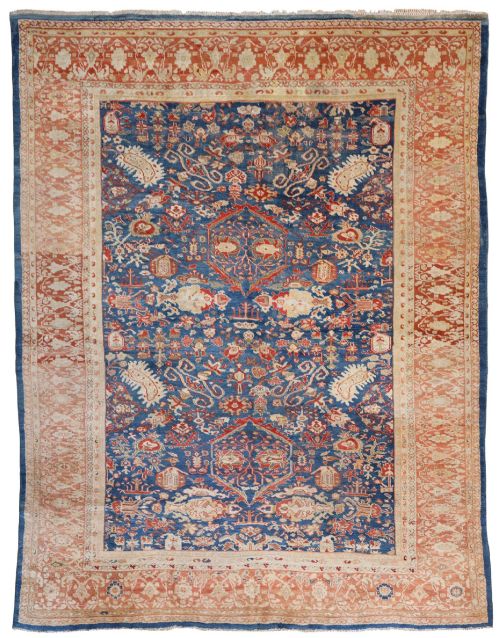
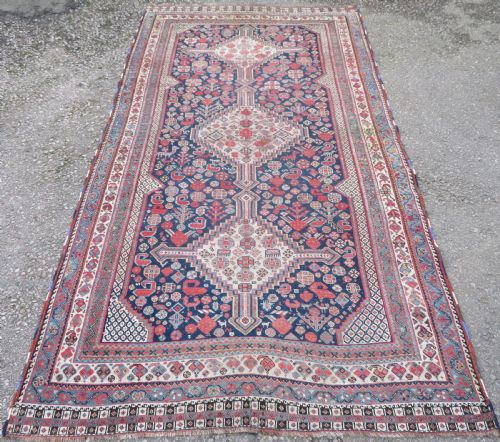
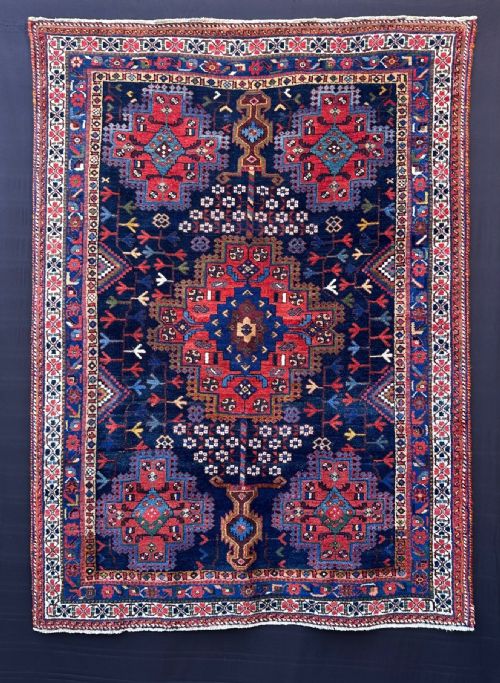
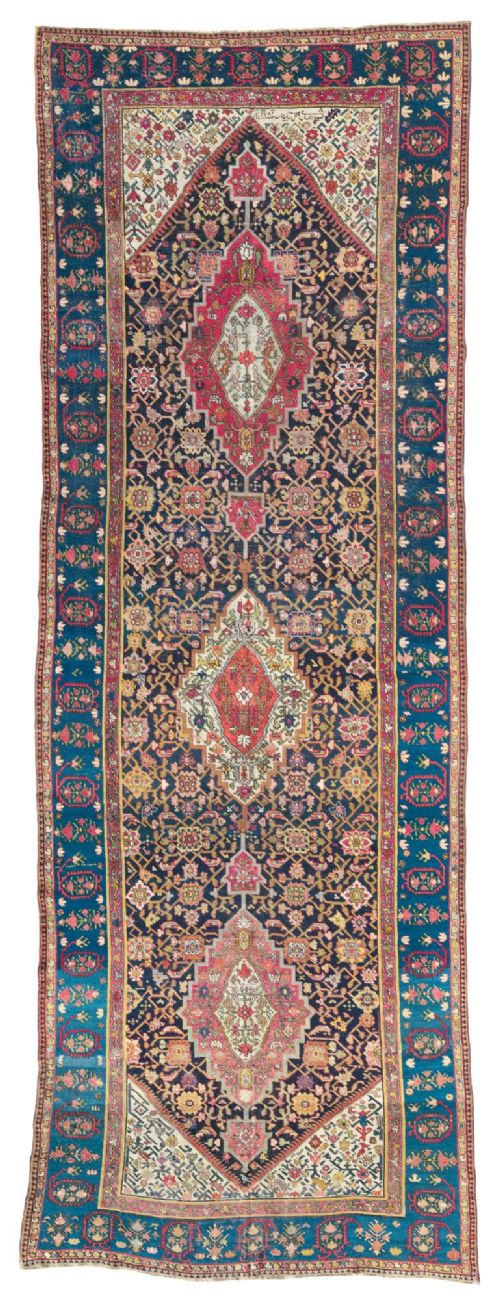

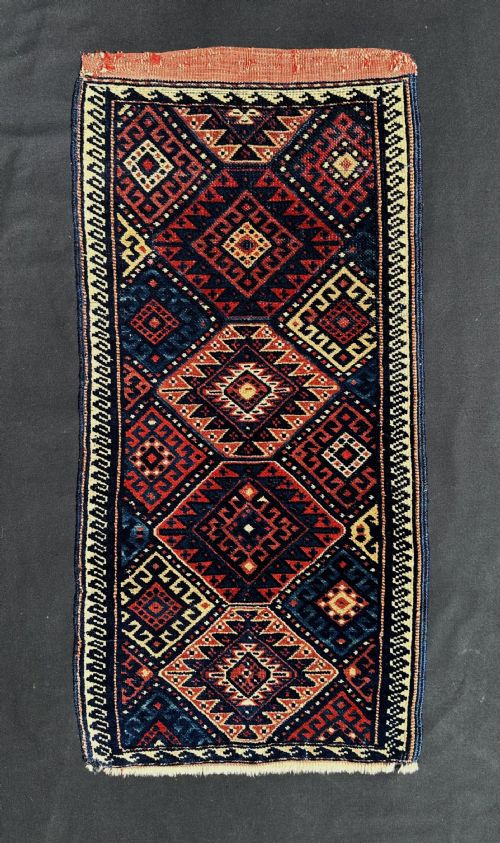


Indigo Persian Rug
An indigo persian rug brings deep, dark-blue botanical and tribal geometry into a room, offering centuries of regional weaving heritage underfoot.
Indigo Persian Rug
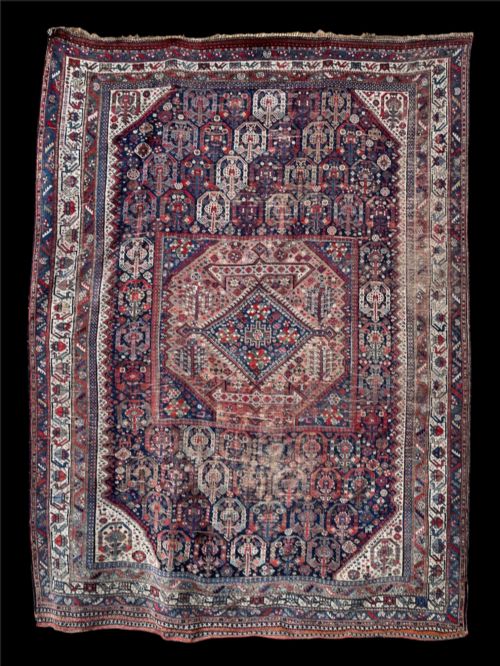
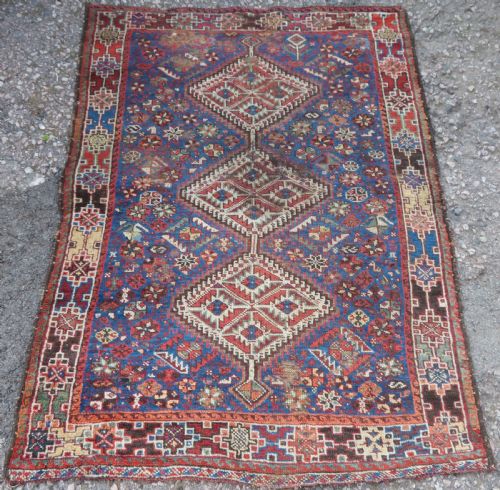
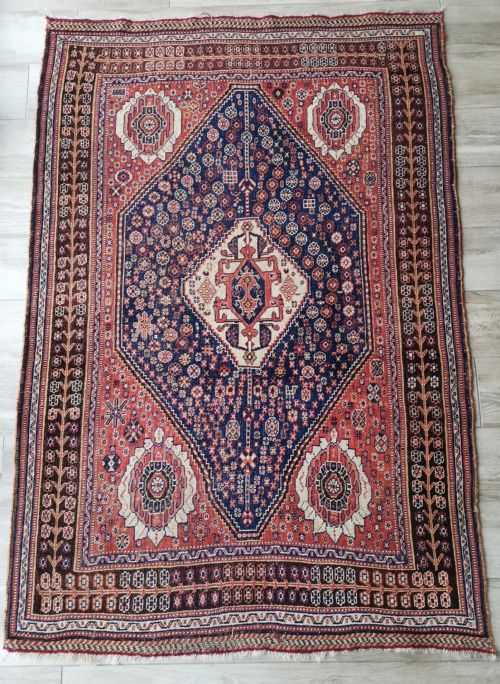
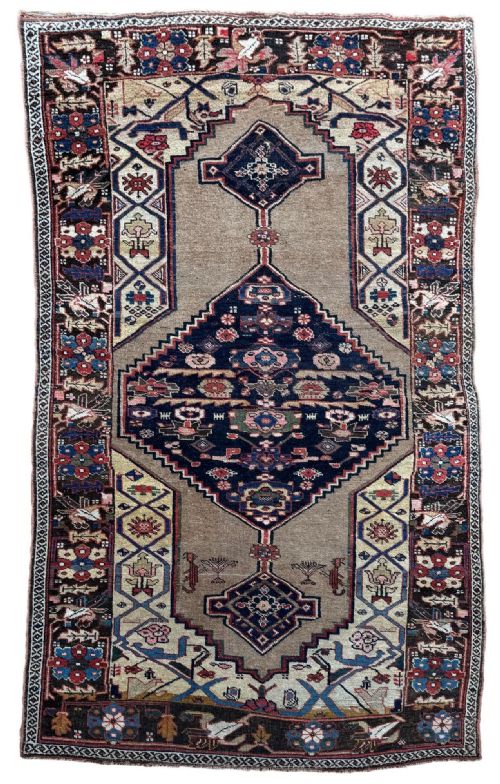
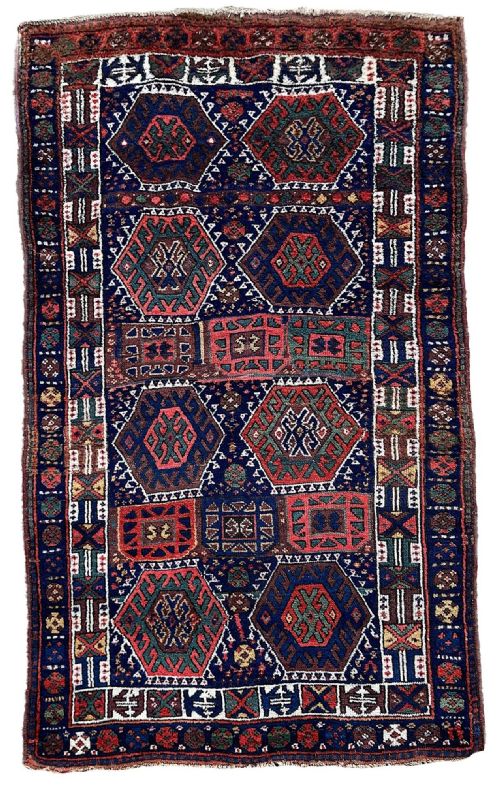
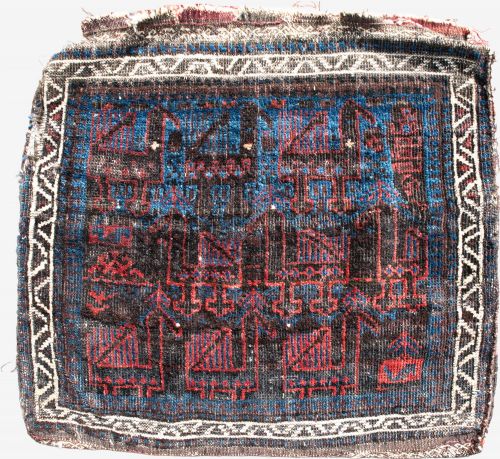
An indigo persian rug spans village, nomadic, and tribal workshop productions from across the nineteenth and early twentieth centuries. Pieces range from small pillow bag faces and runners to large carpets woven by confederacies such as the Khamseh and Qashqai.
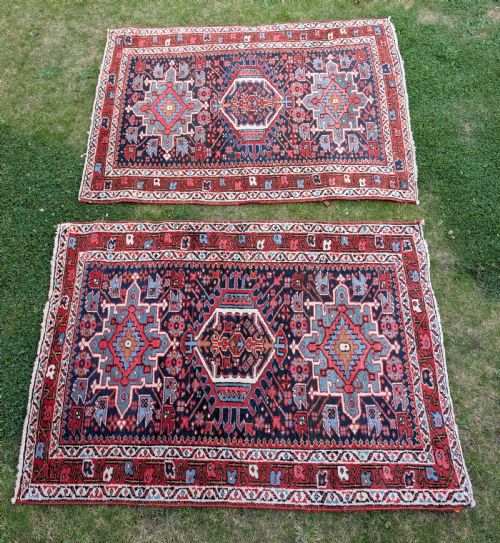
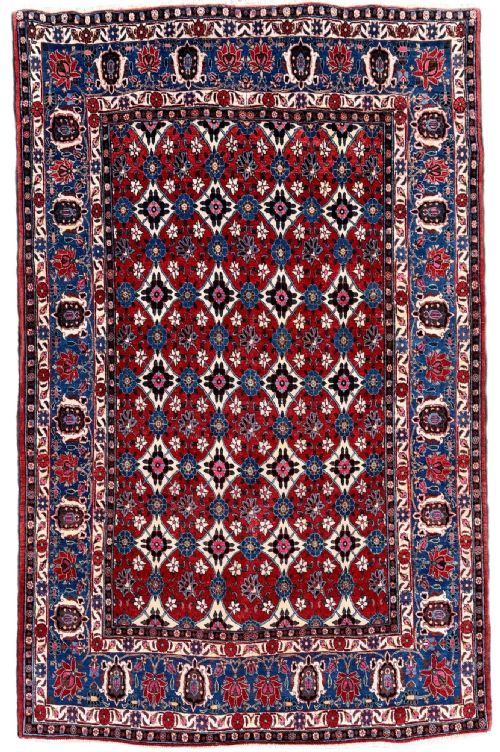
Village examples from regions like Heriz, Karaja, and Bidjar appear alongside tribal textiles originating from Afshar, Baluch, and Kurdish makers. The dominant palette relies on rich blue dye grounds contrasted with madder reds and ivory.
Formats vary significantly, including long runners, square scatter rugs, and utilitarian bags repurposed as decorative textiles.
How they were made
Weavers utilised hand-spun wool and cotton foundations, occasionally incorporating goat hair for durability on tribal pieces. Natural dyes provided the colour palette, with indigo plant processing yielding the characteristic deep blue grounds.
Construction techniques include asymmetrical and symmetrical knotting, alongside flat-woven Soumak work found on utilitarian bags and salt bags.
Indigo Persian Rug Retail Price Guide 2026
Typical asking prices for indigo persian rug among the pieces listed under this phrase on Sellingantiques today, from the lower quarter to the upper quarter. They describe what is for sale here now, not the wider market.
Some nomadic weavers tucked tiny protective amulets directly into the wool foundation to ward off misfortune.
What varies in quality
Quality rests upon the saturation and depth of the natural indigo dye and the crispness of the tribal motifs. Tightly packed hand-spun wool foundations create a denser pile that holds detail far sharper than loose structures.
Proportion and balance in the central medallions or repeating field patterns distinguish standard village output from superior tribal weaving.
The Indigo Persian Rug Glossary
- Balisht
- A traditional small pillow or sleeping bag face woven by nomadic tribes. These diminutive textiles frequently display compressed versions of larger tribal field designs.
- Kelleh
- A distinctive elongated carpet format, narrower than a standard room-size carpet but broader than a hallway runner. They were traditionally suited to specific architectural layouts in Persian homes.
- Soumak
- A flat-weaving technique where the coloured weft threads are wrapped over the warp threads before passing back. This method creates a sturdy, textured surface without a cut pile.
- Boteh
- A stylised floral or almond-shaped motif representing a cypress tree or flame. It appears frequently across Afshar and Kurdish textile designs.
- Pushti
- A small mat or rug designed for sitting upon or leaning against. They share the dense knotting and portable scale typical of nomadic household items.
Indigo Persian Rug: Frequently Asked Questions
How do I clean an antique rug?
Gentle surface brushing and professional specialist washing preserve the natural dyes and wool fibres. Avoid harsh chemical immersion or abrasive scrubbing.
Water temperature and modern detergents break down historic wool integrity, so consult a specialist familiar with vegetable-dyed textiles.
Where were these tribal pieces woven?
Nomadic confederacies and village weavers produced these textiles across various Persian provinces, including Kerman, Khorassan, and Azerbaijan. Tribal groups moved seasonally, carrying portable looms.
Local flora and regional water sources influenced the specific shades of blue and red achieved in each district.
Can I place these textiles on the floor?
Heavily utilised runners and area rugs withstand moderate foot traffic when paired with a quality underlay. The sturdy hand-spun wool handles daily domestic use.
Fragile bag faces or fine flatweaves are better suited to wall mounting to prevent fibre wear.
How do I identify natural indigo dye?
Natural indigo exhibits subtle tonal variations and abrash across the pile where dye batches shifted during processing. Chemical dyes present a flat, uniform tone throughout.
Examining the base of the wool knots reveals whether the colour penetrated fully to the core of the fibre.