
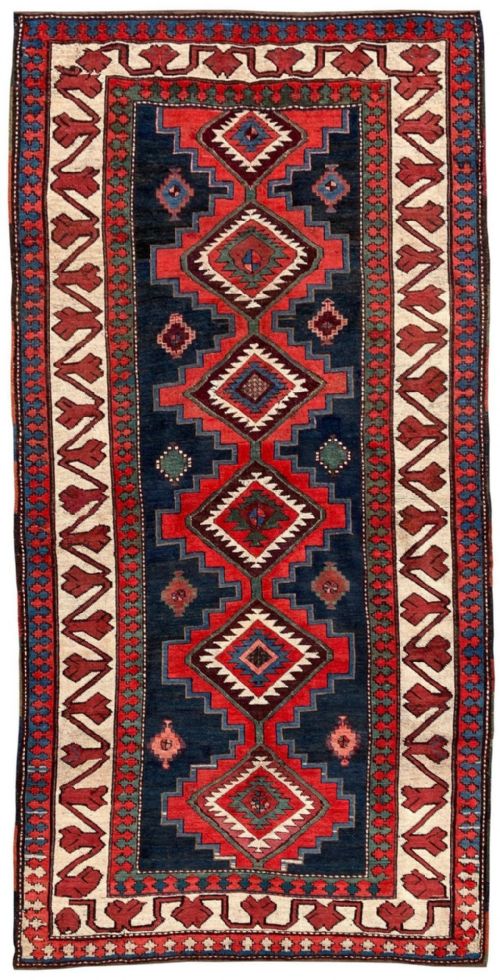
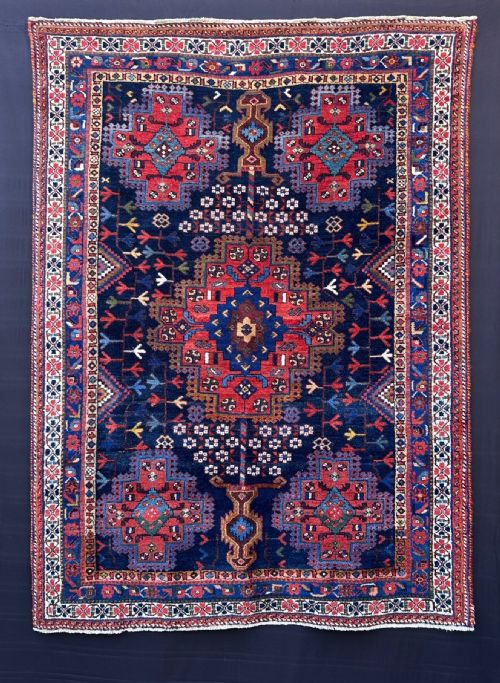
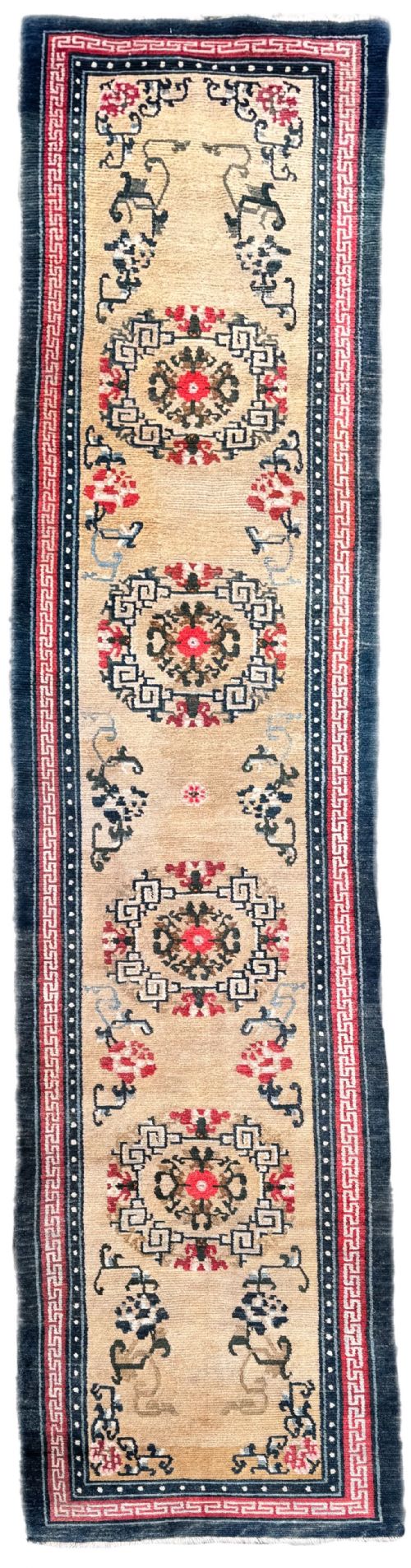
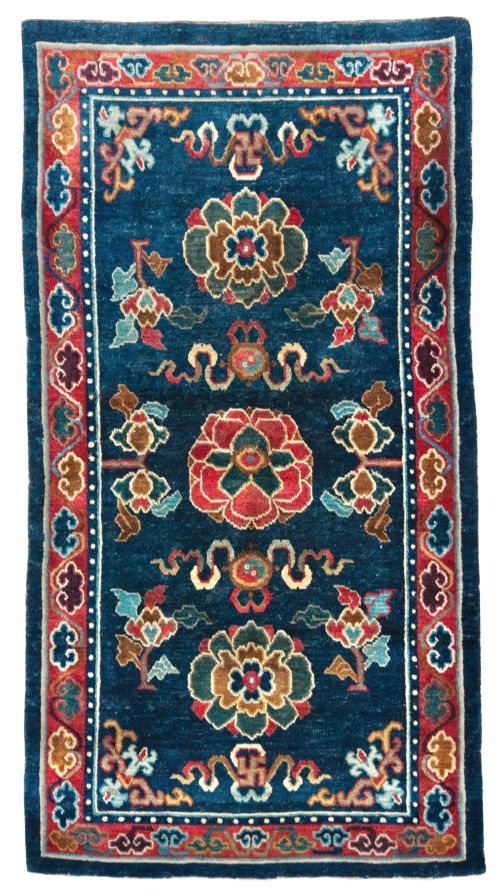
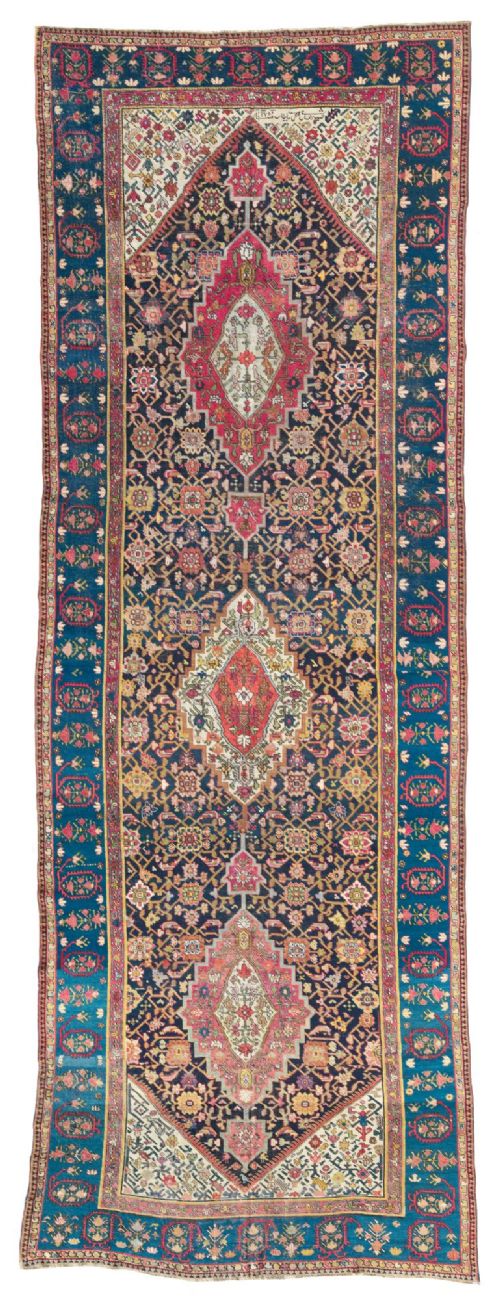
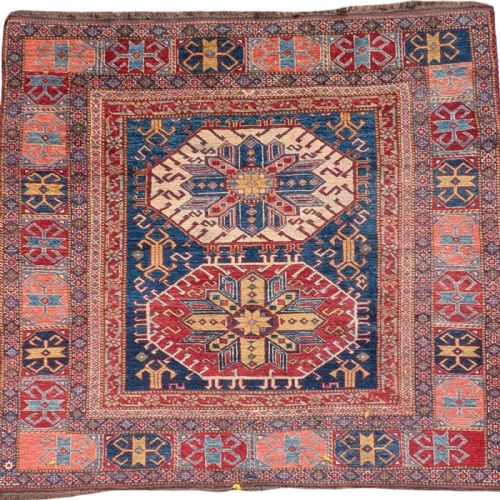
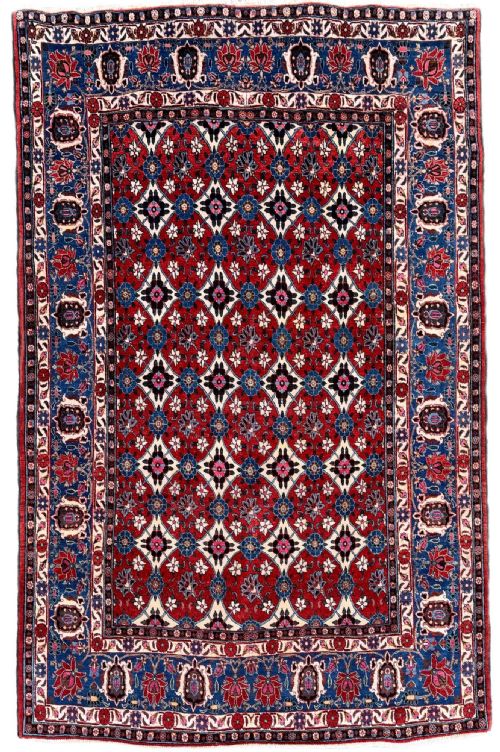
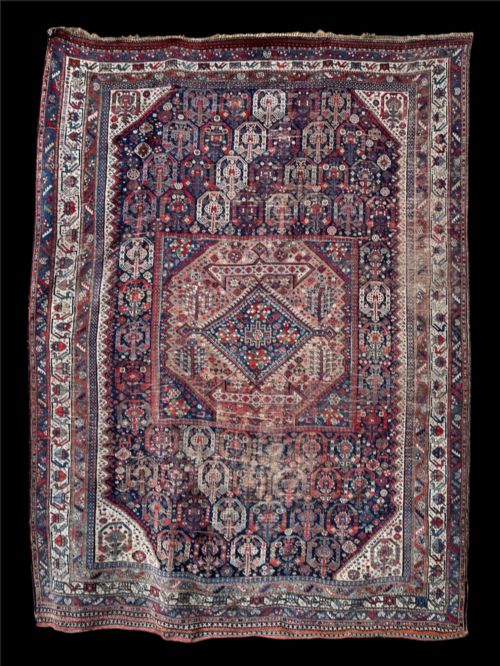
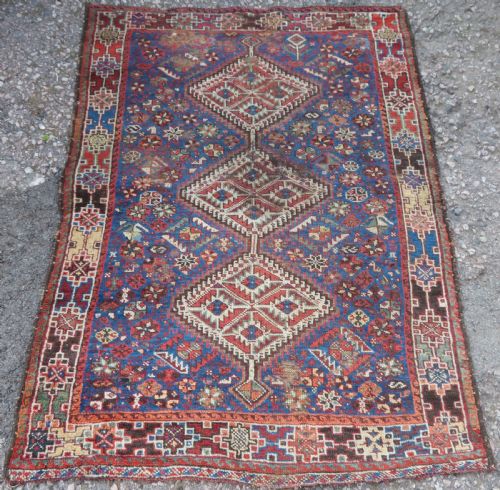
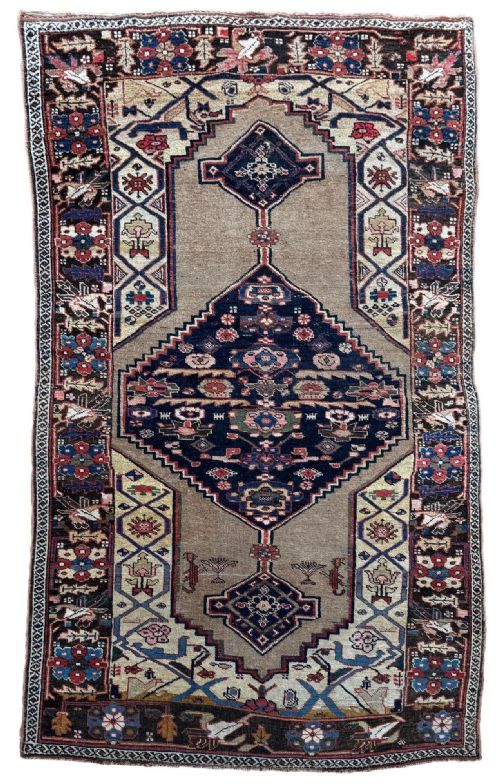
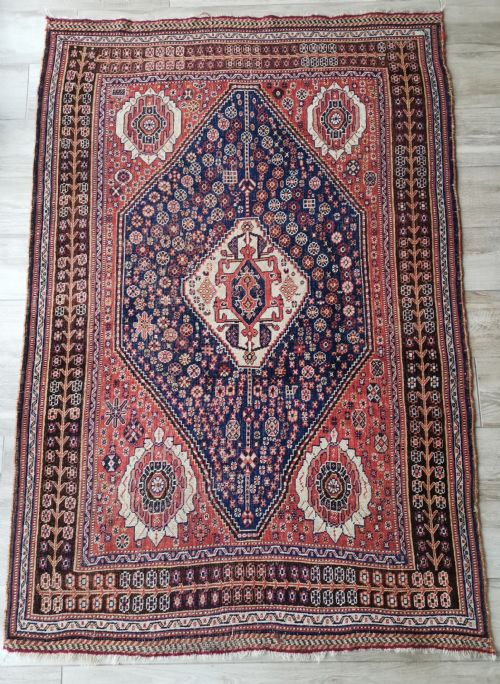
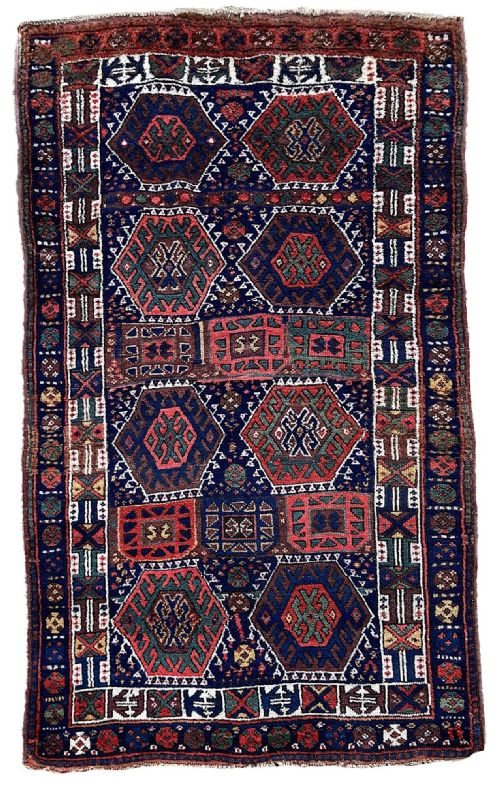


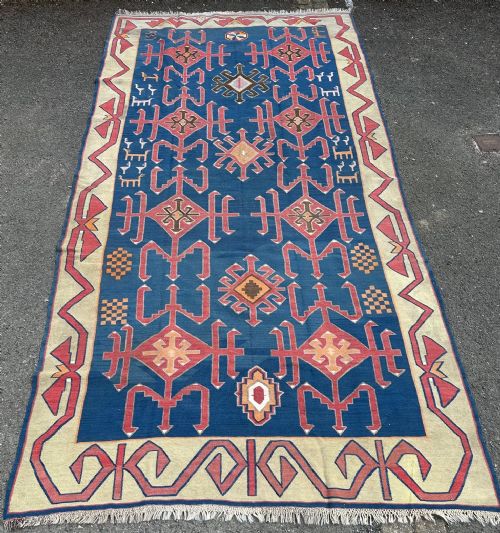
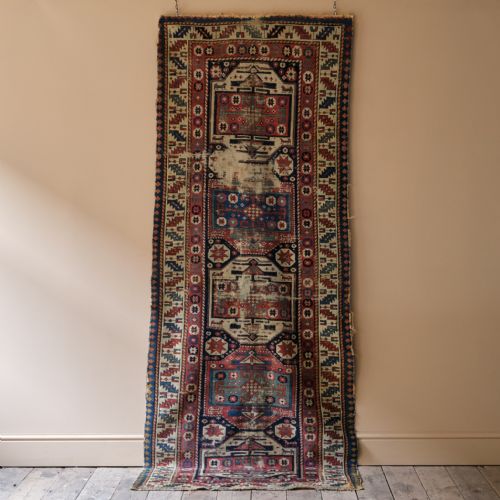
Indigo Blue Carpet
An indigo blue carpet delivers deep, saturated tones rooted in natural dyes and historic tribal traditions.
Indigo Blue Carpet
When you search for an indigo blue carpet, you encounter hand-knotted and flat-woven floor coverings originating from Persian, Caucasian, Turkish, and Tibetan weaving traditions. These pieces span from the late nineteenth century into the early decades of the twentieth century, reflecting distinct regional designs.
You meet various forms on this page, including runner rugs, large carpets, area rugs, flat-weave kilims, and specific tribal formats such as Sofreh eating cloths or seating mats. The predominant visual anchor across these examples is the rich blue ground colour achieved through traditional dyeing methods.
The selection ranges from geometric Caucasian Kazak and Talish pieces to curvilinear Persian formats like Afshar, Bidjar, and Khamseh rugs. Each regional group utilises specific motifs, from Lezghi stars to tribal medallions, executed within traditional wool and cotton structures.
How they were made
The weavers constructed these textiles primarily using wool for the pile and foundation yarns, alongside cotton foundations and occasional goat hair elements in tribal pieces. Natural dyes provided the characteristic deep blue palette, interacting with supplementary colours to create lasting visual depth.
Techniques varied between pile knotting and flat-weave construction, encompassing both village and nomadic workshops across the Caucasus, Persia, Anatolia, and Tibet. Artisans tied symmetrical or asymmetrical knots on vertical looms or executed intricate warp-faced flat-weaves for kilims.
The listings show nineteenth and early twentieth-century regional weaving traditions utilising wool, cotton, and natural dyes across Persian, Caucasian, and Tibetan forms.
What varies in quality
Quality in these textiles depends upon the precision of the knotting, the handling of natural dye saturation, and the integrity of the wool foundation. Finer knot density allows for sharper definition in geometric and floral motifs.
The vitality of the indigo ground colour and the balance of secondary tones separate standard village work from exceptional tribal weaving. Well-preserved pile height and intact original edges contribute significantly to the standing of an individual piece.
The Indigo Blue Carpet Glossary
- Indigo
- A natural vat dye extracted from plants, yielding deep blue shades that form the ground colour of these carpets. It penetrates the wool fibres thoroughly, often showing subtle abrash variations.
- Kilim
- A flat-woven textile produced without a pile, featuring slit-woven geometric patterns. These pieces function as lightweight rugs and floor coverings across Caucasian and Turkish traditions.
- Kazak
- A designation for rugs woven in the southern Caucasus region, characterised by bold geometric medallions and primary colours. They typically employ strong wool foundations and saturated blue or red fields.
- Sofreh
- A woven spread or cloth traditionally used for communal dining or food preparation among nomadic tribes. These functional textiles frequently display distinctive field designs.
- Abrash
- Variations in colour shading across the field of a carpet, caused by changes in dye batches or hand-spun wool. Collectors value this characteristic as evidence of traditional natural dyeing techniques.
Indigo Blue Carpet: Frequently Asked Questions
What is an indigo blue carpet?
An indigo blue carpet is a hand-knotted or flat-woven textile featuring a dominant blue ground produced from natural plant dyes. These pieces originate from historic weaving centres in Persia, the Caucasus, Anatolia, and Tibet.
They encompass various formats, from long runner rugs to square seating mats and large tribal carpets, dating from the nineteenth and early twentieth centuries.
How do I identify a Caucasian rug?
Caucasian rugs typically feature bold geometric medallions, rectilinear borders, and striking primary colours set against dark fields. Artisans in this mountainous region utilised specific star motifs, such as Lezghi stars, and crisp angular designs.
The structural use of wool foundations and characteristic blue or red grounds further distinguishes these regional pieces from Persian curvilinear weaving.
Where were tribal runners used?
Nomadic and village weavers produced long runner rugs to fit narrow architectural spaces such as hallways, corridors, and tent entryways. Their elongated formats accommodated the specific interior layouts of traditional homes and encampments.
These runners combined durable wool piles with sturdy foundations to withstand heavy foot traffic while displaying intricate repeating motifs.
How should I care for an antique rug?
Maintain antique rugs through regular gentle vacuuming without rotary brush heads to protect the wool pile and fringe edges. Professional specialist cleaning ensures natural dyes and historic foundations remain stable.
Positioning the textile away from direct sunlight prevents fading of the indigo blue ground and preserves the original coloration.