



Indian Hardwood Side Table
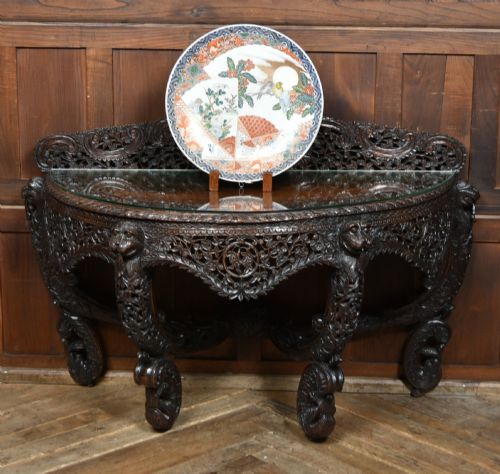
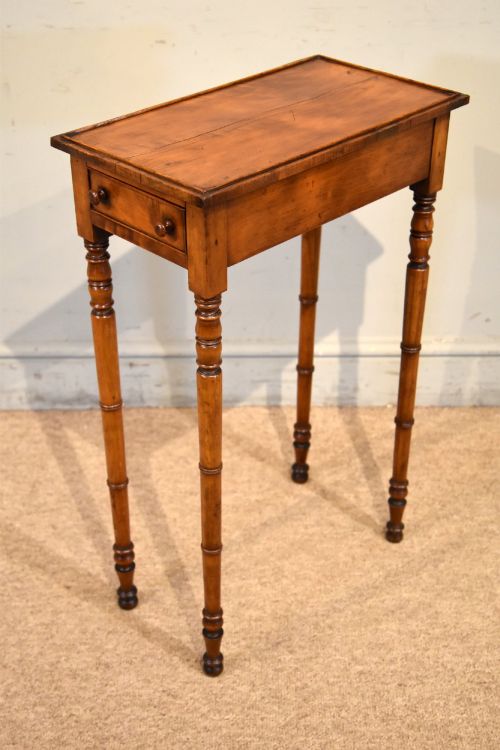
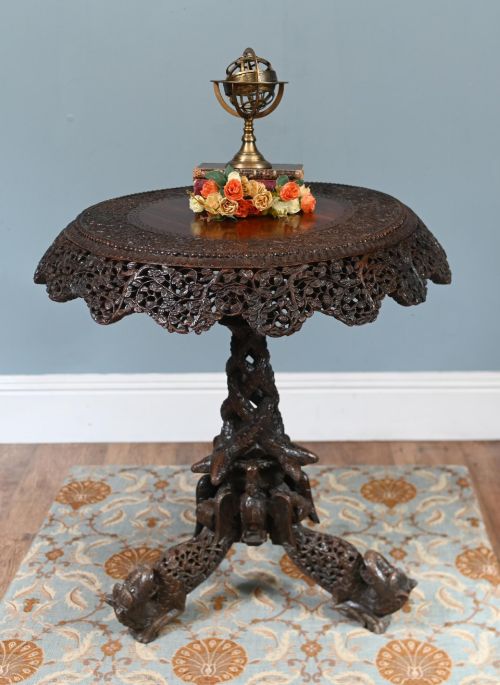
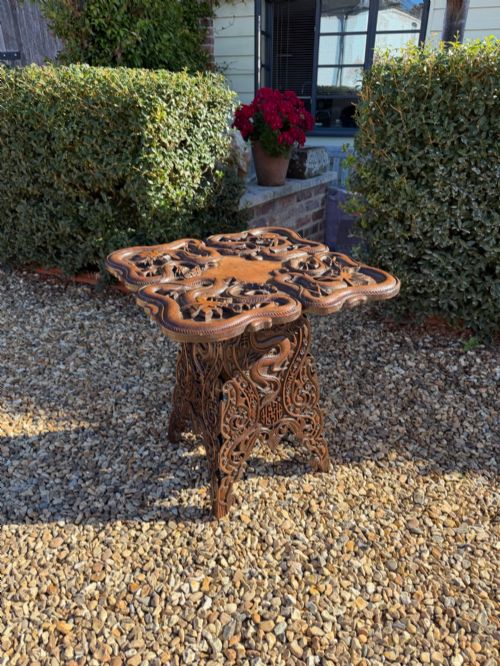
An indian hardwood side table brings dense, richly carved colonial craft into a room, combining practical surfaces with intricate figural or botanical detail.
Indian Hardwood Side Table
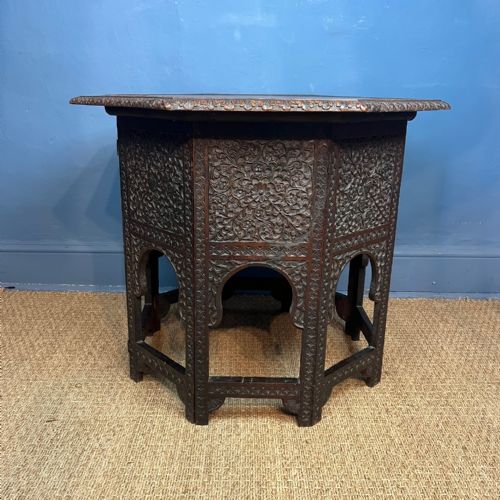
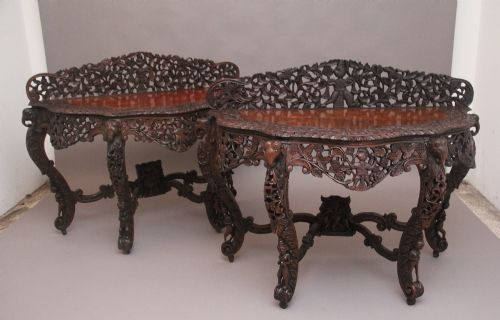
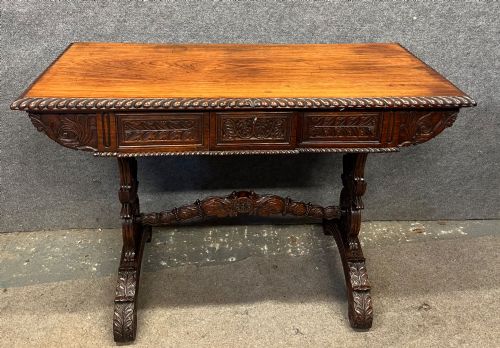
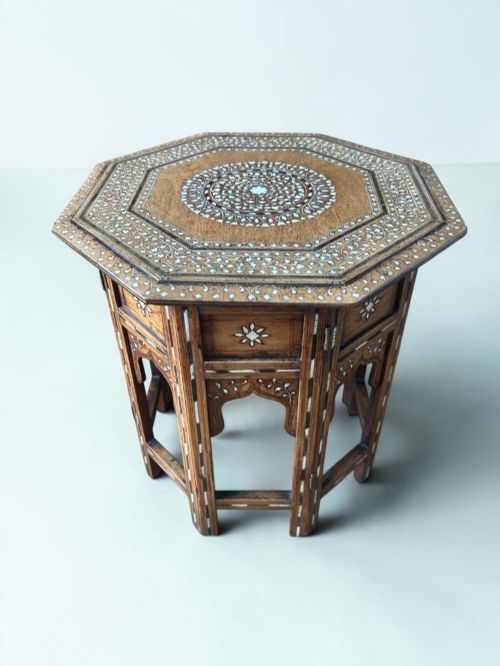
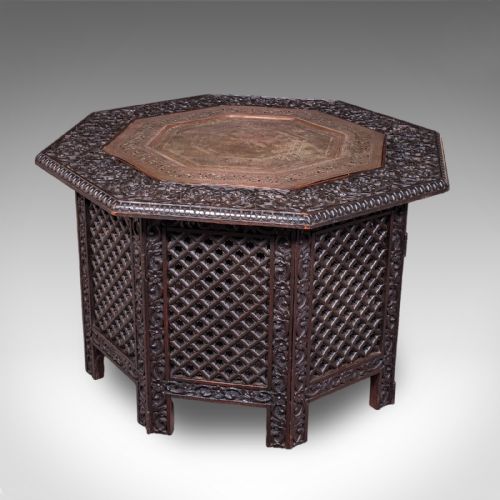
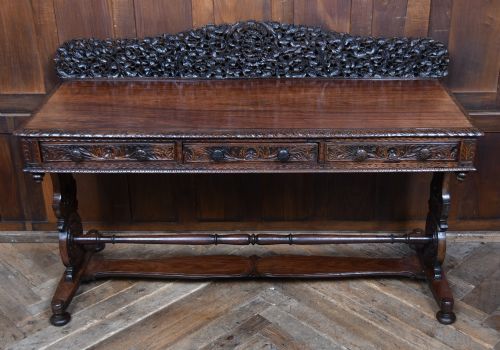
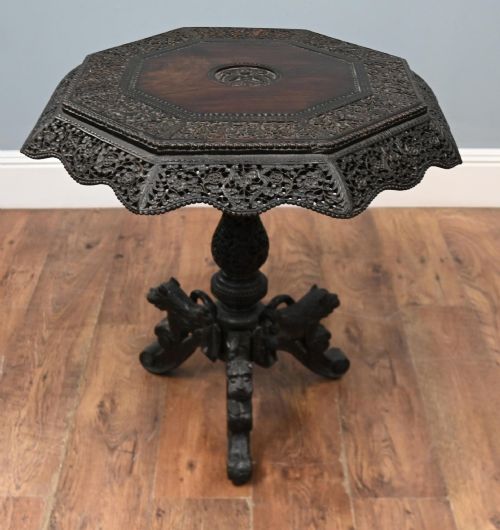
When you search for an indian hardwood side table, you encounter pieces spanning the nineteenth and early twentieth centuries, created under Anglo-Indian, Burmese, and Moorish colonial influences. The forms range from simple occasional and coffee tables to elaborate octagonal tables, plant stands, nesting tables, and console tables.
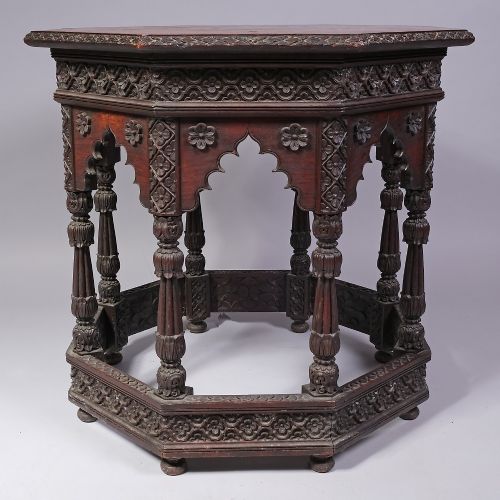
The most common formats you will meet on this page are circular and octagonal tables resting on carved folding bases or figural supports, such as elephants or camels. These domestic pieces served diverse roles in colonial homes as tea tables, lamp tables, and serving surfaces.
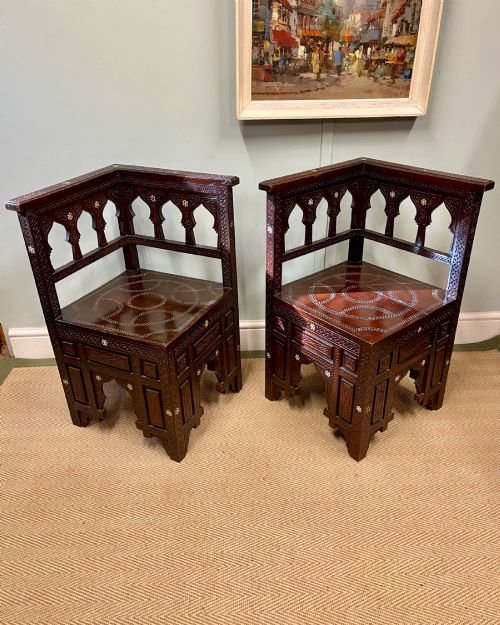
The regional origins of these works stretch across the Indian subcontinent and Burma, utilising dense native timbers shaped for both local utility and export to British markets. They carry distinct aesthetic signatures, from dense floral leaf motifs to geometric brass and bone inlay.
How they were made
Cabinetmakers constructed these tables using dense timbers such as padauk, teak, rosewood, and walnut, chosen for their ability to hold deep, crisp relief carving without splintering. These woods are frequently finished to a rich, dark patina that accentuates the grain beneath the ornamentation.
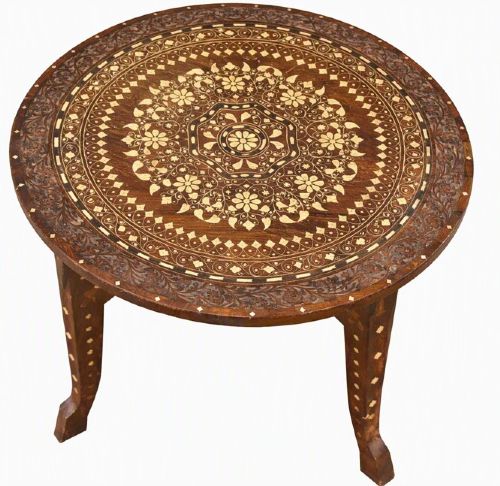
Surface decoration relies heavily on contrasting materials set directly into the timber, utilising sheet copper, brass wire, and sections of bone to trace geometric or floral patterns. Carving is executed by hand, creating layered depth across octagonal tops, aprons, and figural support legs.
Indian Hardwood Side Table Retail Price Guide 2026
Typical asking prices for indian hardwood side table among the pieces listed under this phrase on Sellingantiques today, from the lower quarter to the upper quarter. They describe what is for sale here now, not the wider market.
Listings feature woods such as padauk, teak, rosewood, and walnut, alongside inlaid copper, brass, and bone.
What varies in quality
The distinction between standard production and superior work lies in the depth and crispness of the hand carving, where finer examples display undercut foliage and sharply articulated animal figures rather than shallow surface incisions. The complexity of the joinery and the precision of the bone or brass inlay also separate simpler export items from master-carved pieces.
Material selection dictates much of the inherent quality, with dense, heavy timbers like padauk and figured rosewood holding structural integrity better than softer secondary woods. The integration of functional elements, such as smoothly folding campaign bases and well-fitted copper or brass trays, further defines the grade of the piece.
Liberty And Co
The Indian Hardwood Side Table Glossary
- Anglo-Indian
- Describing furniture made in India during the British colonial period, often combining local carving traditions with European furniture forms. It reflects the aesthetic exchange between British commissioners and Indian artisans.
- Padauk
- A heavy, durable tropical hardwood with a reddish-brown colour that darkens with age. It is prized by cabinetmakers for its stability and resistance to decay.
- Occasional table
- A small, movable table designed for intermittent use around a sitting room or parlour. Examples include tea tables, lamp tables, and small display stands.
- Bone inlay
- The technique of embedding small, shaped pieces of animal bone into carved recesses within the wooden surface. This creates pale, contrasting geometric or floral patterns.
- Tilt-top table
- A table with a hinged top that can be pivoted vertically when not in use to save space. This mechanism is frequently found on circular occasional tables.
Indian Hardwood Side Table: Frequently Asked Questions
What is an indian hardwood side table?
These pieces are decorative and functional tables produced in South Asia and Burma during the nineteenth and early twentieth centuries, primarily for British colonial households and export markets.
They are characterised by dense hand-carved ornamentation, native hardwoods, and occasional metal or bone inlay, taking forms such as octagonal occasional tables and folding tea tables.
How were elephant tables used?
Elephant tables served as occasional, lamp, or tea tables in colonial interiors, functioning as both practical furniture and exotic decorative statements.
The figural carved legs depicting elephants or camels supported circular or octagonal tops, bringing sculptural presence into a Victorian parlour or drawing room.
How do I care for padauk furniture?
Padauk and other tropical hardwoods require stable indoor humidity levels to prevent timber movement and protect the delicate hand-carved relief details.
Dust the intricate carvings gently with a soft brush and avoid placing the timber in direct sunlight or near heat sources that might dry out the wood.
How do I identify a folding campaign table?
Campaign tables were constructed with collapsible or removable bases to allow for easy transport and storage by travellers and military officers.
Look for clever hinged joints, interlocking wooden supports, or drop-in metal trays that lift away from the folding frame.