
Indian Carved Accent Table
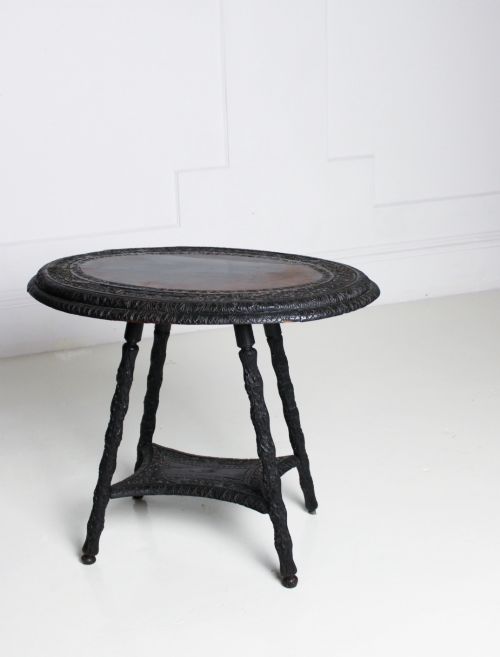
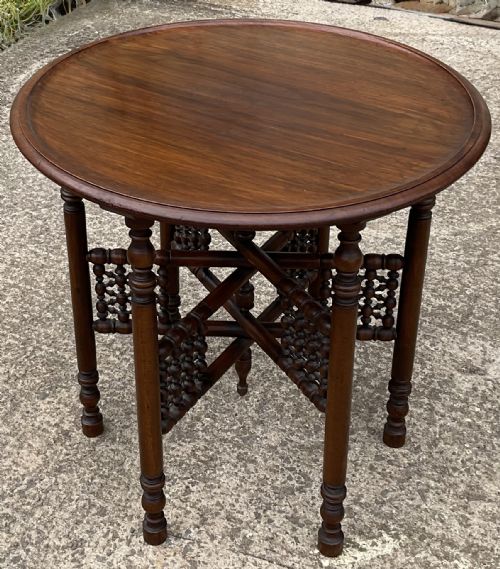
An indian carved accent table brings dense floral motifs and rich hardwoods from colonial workshops straight into a modern room.
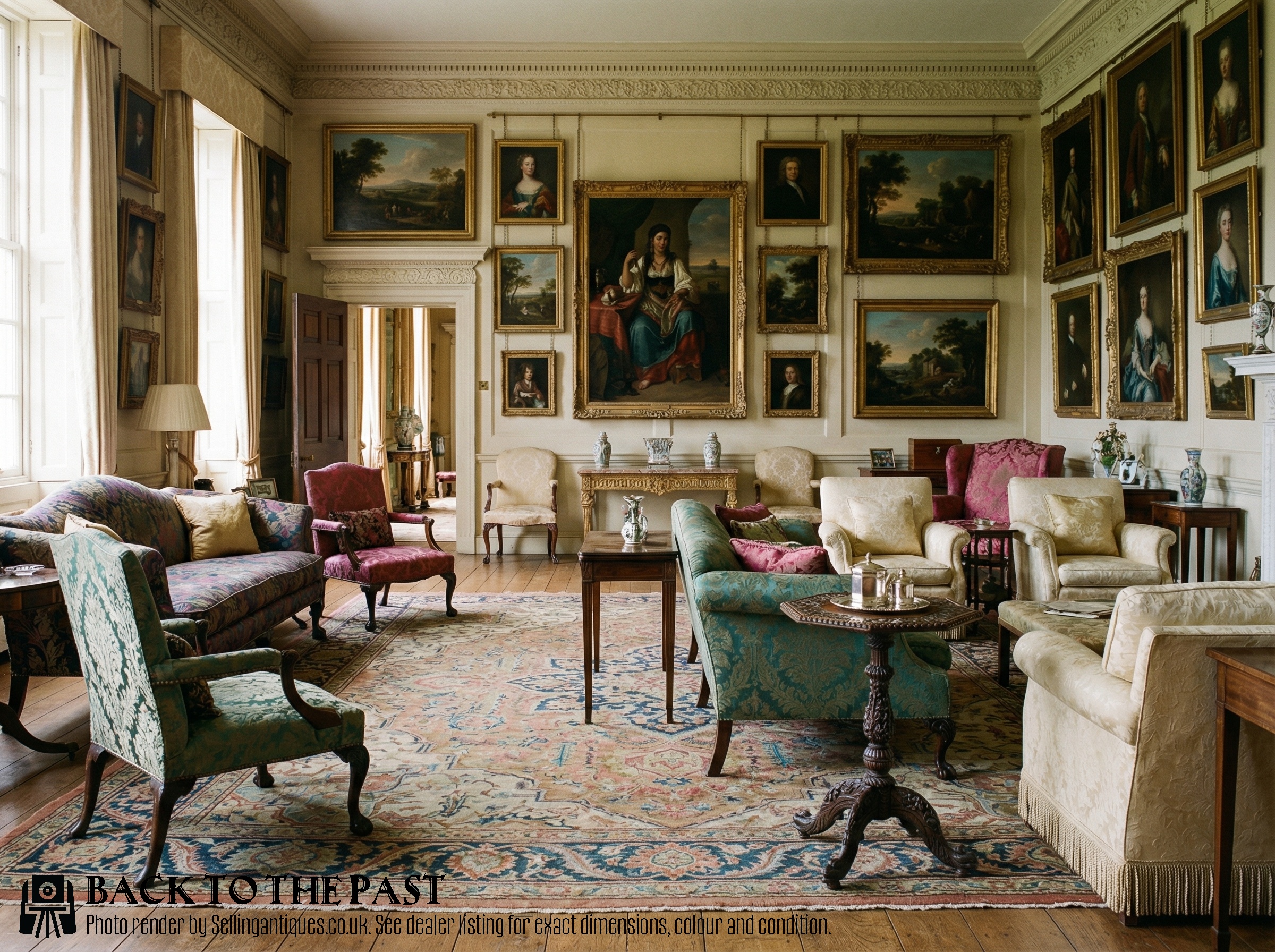
Indian Carved Accent Table
An indian carved accent table encompasses various occasional, side, coffee, and pedestal forms produced across the subcontinent and Britain's colonial networks. Buyers search for these pieces to introduce intricate woodwork and distinct regional styles into domestic interiors.
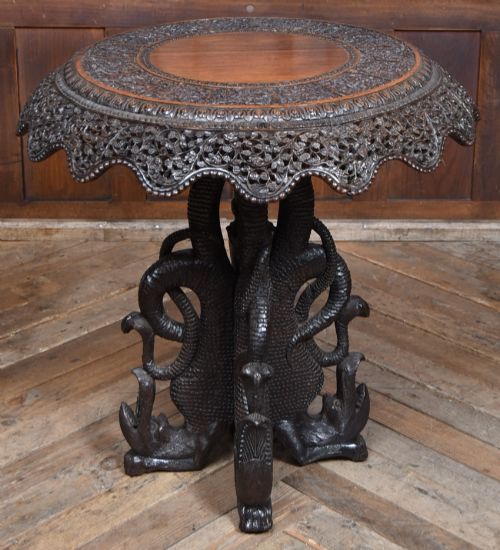
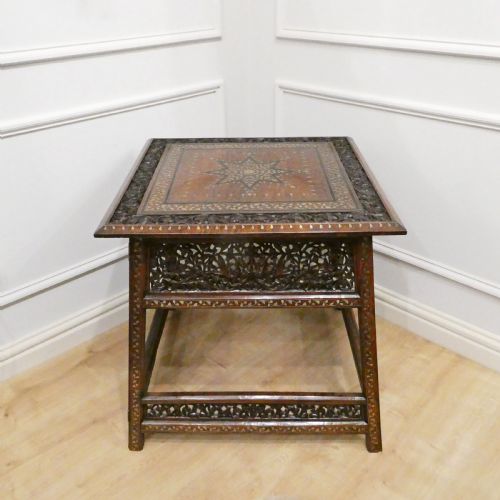
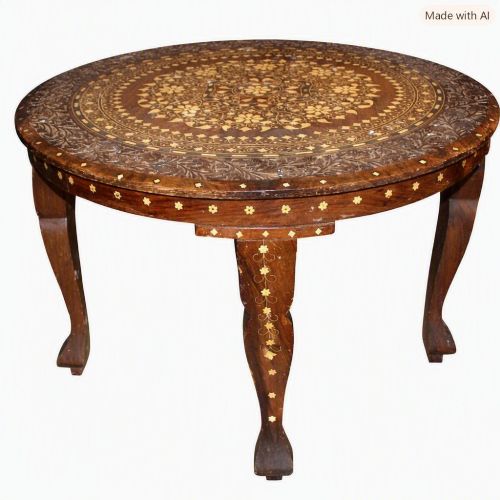
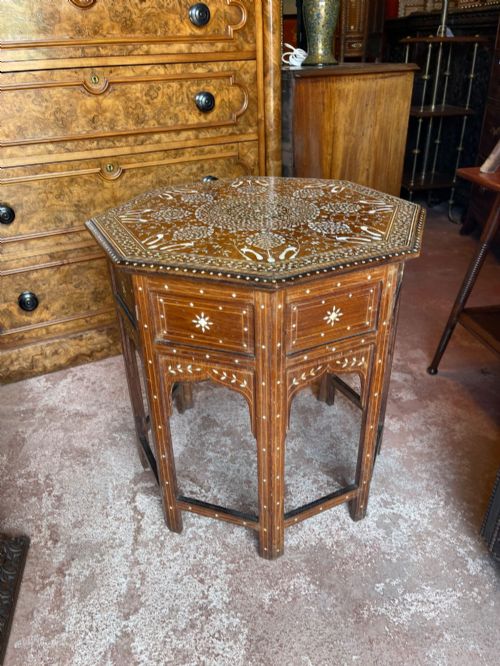
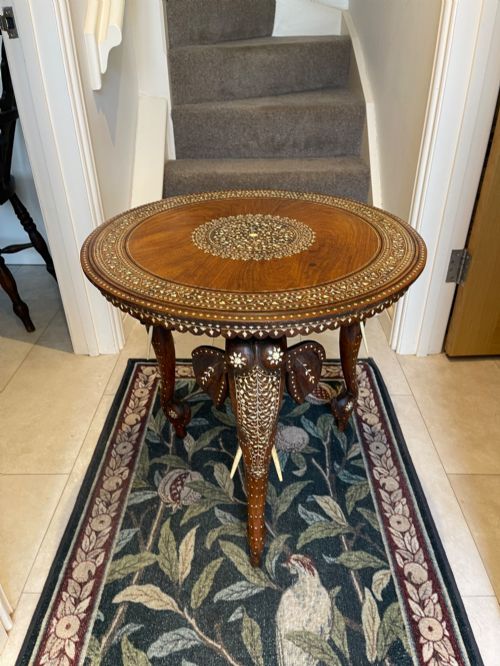
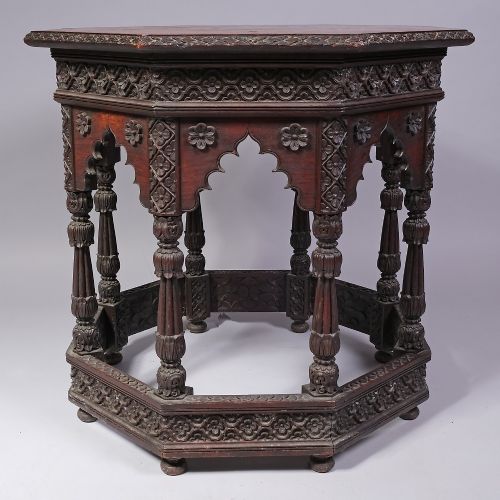
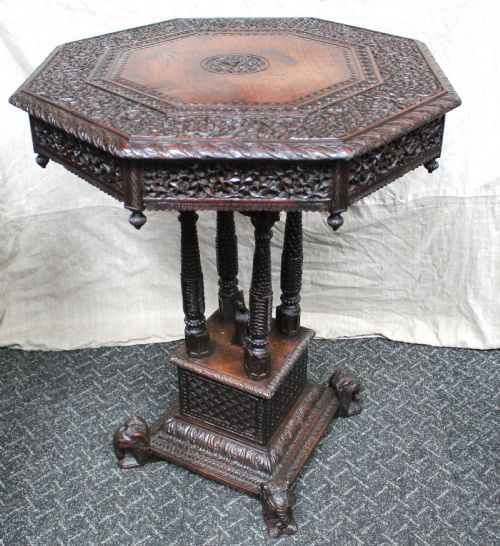
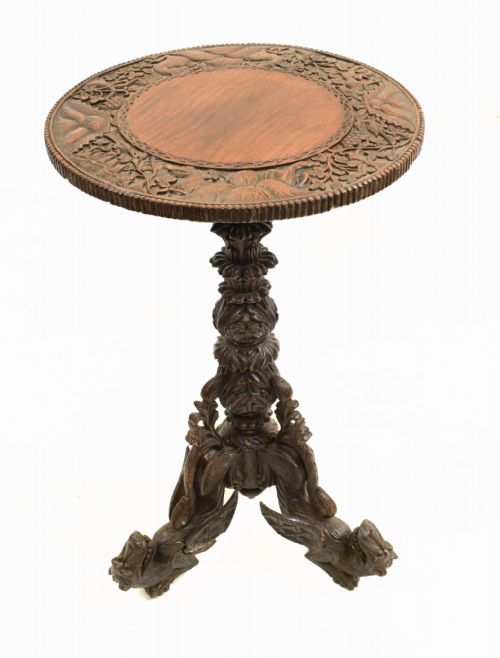
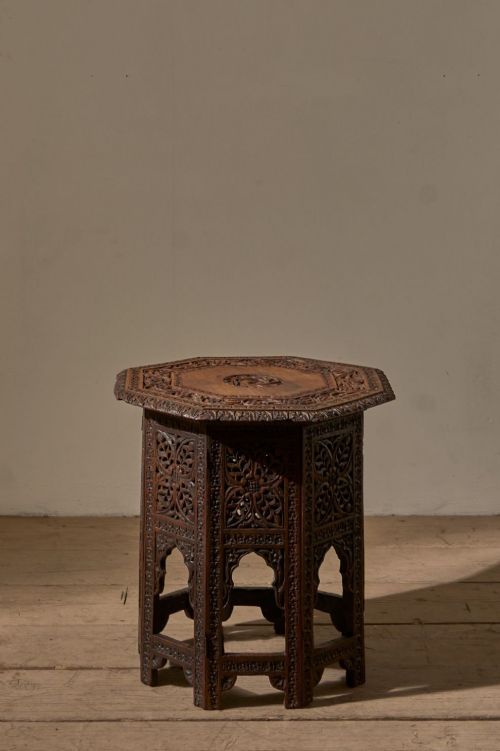
The version most commonly met on this page is the octagonal or circular side table, often supported by carved elephant figures or tripod bases. These items typically date from the nineteenth century through the early decades of the twentieth century.
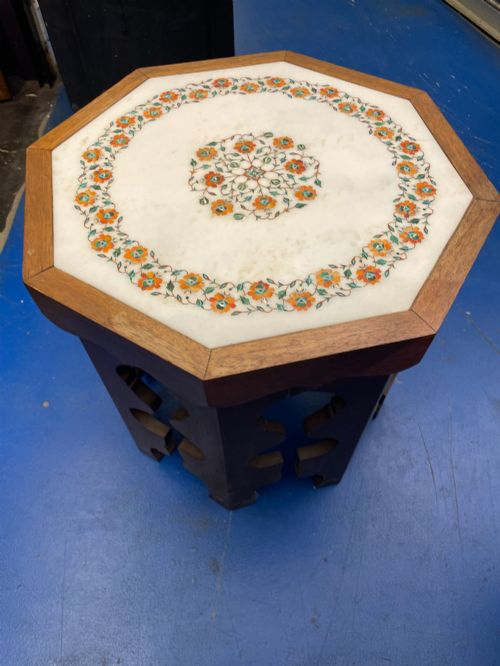
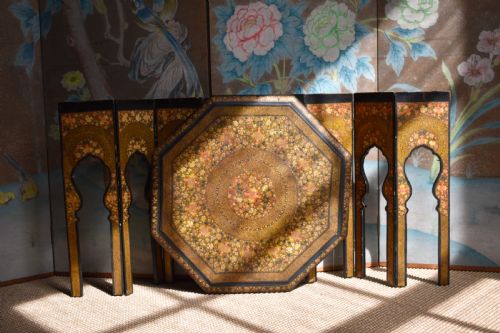
The selection includes specialised regional designs such as Kashmiri painted surfaces, Hoshiarpur inlaid works, and Burmese folding or tip-top tables. Each designation reflects specific local traditions of carving and assembly.
Materials and construction methods
Workshops utilised dense regional timbers including teak, rosewood, padauk, and walnut, chosen for their ability to hold minute detail under chisels. Artisans carved these woods deeply to create high-relief floral, leaf, and animal motifs across tops and aprons.
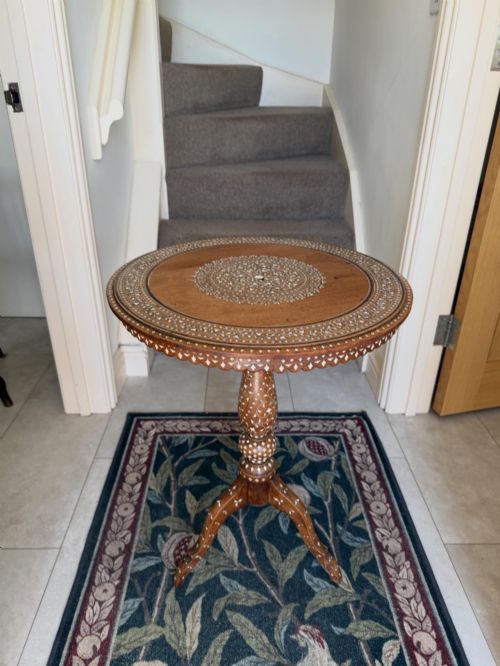
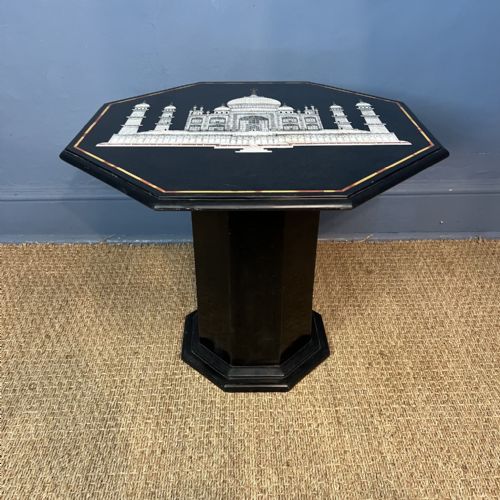
Surface ornamentation frequently incorporated contrasting materials such as bone, brass wire, mother-of-pearl, and black marble. Inlayers set these elements into precise channels carved into the primary hardwood substrate.
Several tables rely entirely on carved wooden elephants to hold up afternoon tea.
Distinctions in craftsmanship
Depth and clarity of the carving separate standard items from superior examples, where relief work appears crisp and undercut rather than shallow and blunt. The complexity of figurative elements, such as elephant heads and peacock motifs, also indicates the maker's skill.
Integrity of the inlay work marks another distinction, with finer pieces maintaining tight alignment of bone, brass, or mother-of-pearl without gaps or excessive filler. The choice of solid primary timbers like padauk or rosewood rather than secondary softwoods elevates the standing of a piece.
Liberty and Co
The Indian Carved Accent Table Glossary
- Anglo-Indian
- Describing furniture made in India during the British colonial period, often combining British furniture forms with traditional Indian carving. These pieces frequently integrated regional timber with European proportions.
- Hoshiarpur
- Referring to the town in Punjab renowned for intricate woodwork and inlay. Items from this centre typically feature dense geometric patterns executed in brass and bone.
- Padauk
- A heavy, durable tropical hardwood with a reddish hue used extensively in nineteenth-century cabinetmaking. This timber resisted shrinkage and supported deep relief carving.
- Tip-top table
- A table with a hinged top that pivots vertically for storage against a wall. This mechanism appeared frequently in occasional and side tables from Burma and India.
Indian Carved Accent Table: Frequently Asked Questions
How do I identify a Hoshiarpur table?
A Hoshiarpur table is recognised by its dense surface geometric patterns formed from intricate bone or brass wire inlay. The surrounding wood is typically heavily carved with foliage.
These pieces often feature folding or octagonal structures designed to be easily moved within a room.
Were these tables made for export?
Many of these items were produced specifically for export to Britain and Europe during the nineteenth and early twentieth centuries. Local craftsmen adapted traditional motifs to suit Western domestic furniture forms.
As a result, side tables, coffee tables, and plant stands dominate the surviving output.
How should I care for bone inlay?
Bone inlay requires stable indoor humidity levels to prevent the wood substrate from expanding and loosening the embedded pieces. Dust gently with a dry, soft cloth and avoid liquid cleaners.
Applying wax occasionally helps preserve the finish of the surrounding hardwood without affecting the inlay.
What is an elephant table?
An elephant table uses carved elephant figures or heads as structural supports or base elements. These figures are typically integrated into the legs or pedestal of the piece.
They appear frequently in nineteenth-century octagonal and occasional table designs from the Bombay Presidency.