





Imari Ware Display Plates
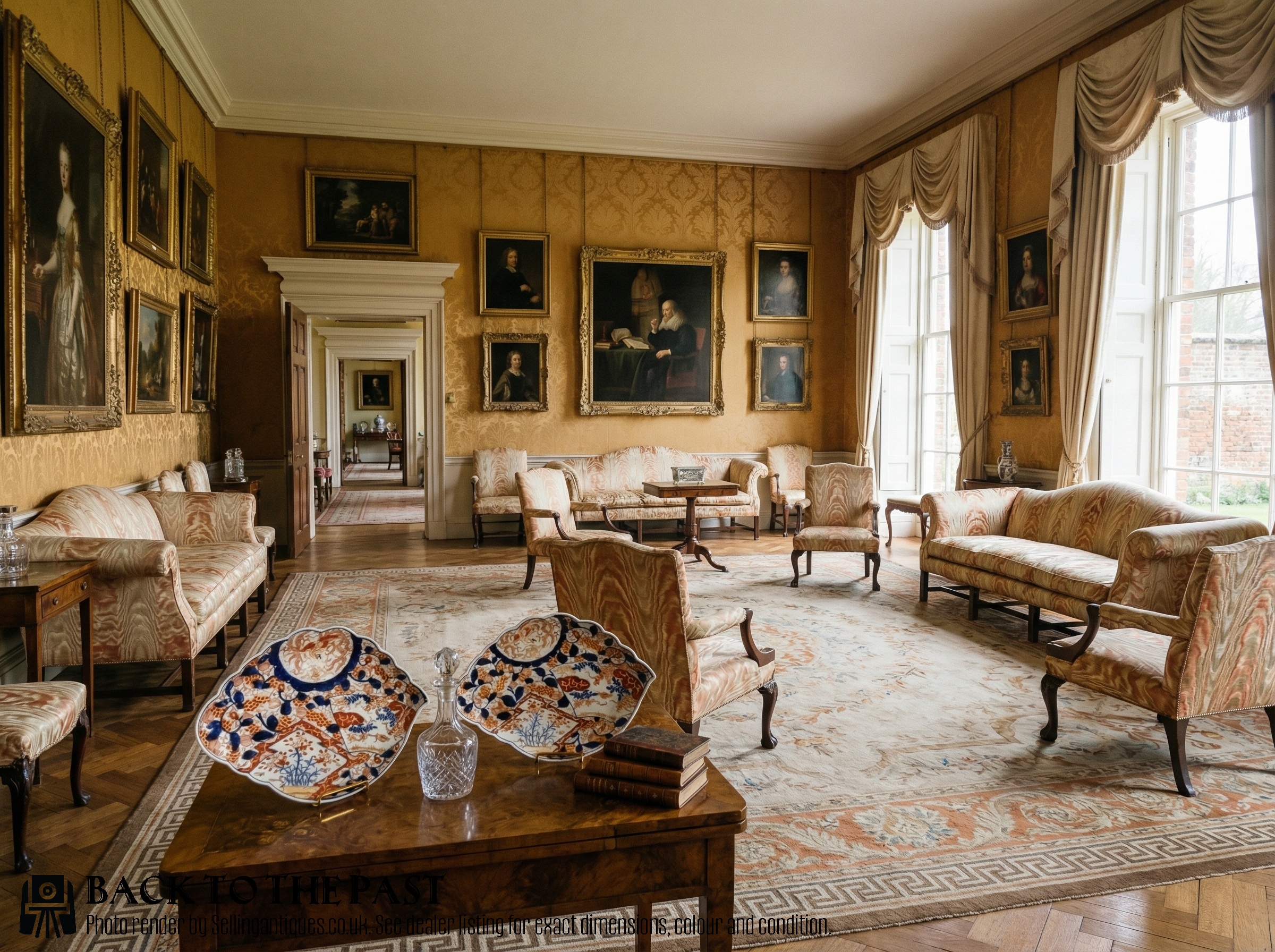
Imari ware display plates bring a rich palette of cobalt blue and iron red to a wall or cabinet.
Imari Ware Display Plates
When you search for imari ware display plates, you encounter pieces spanning from the seventeenth century through to the early twentieth century, originating from Japan. The material predominantly takes the form of porcelain and ceramic, categorized under Japanese Imari, Edo Period, Meiji Period, and Arita styles.
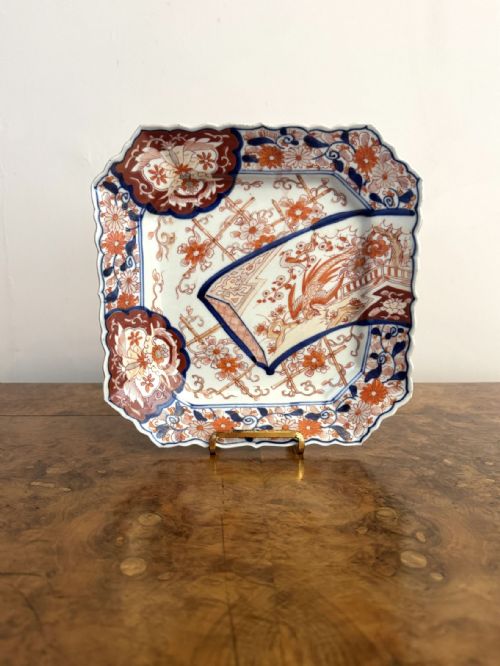
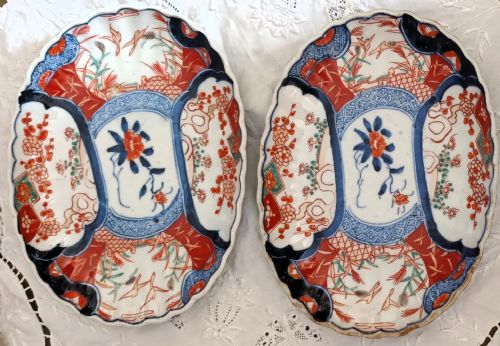
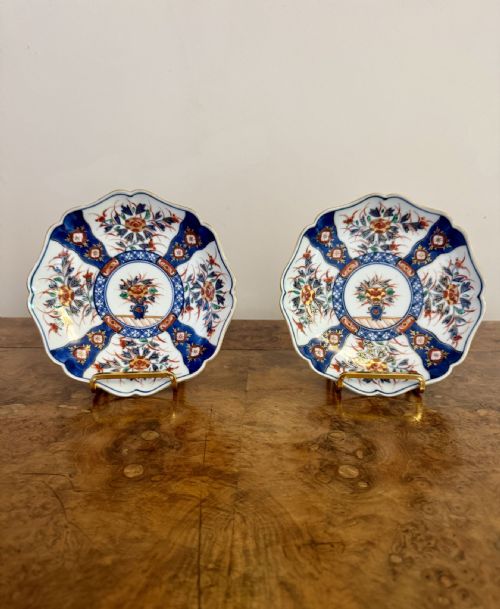
The objects themselves range from large chargers and decorative dishes to square, scalloped, shell, and fan shaped plates. You are most likely to meet circular plates and large chargers dating from the late nineteenth century on this page.
The designs incorporate hand painted floral and bird motifs, alongside scrolling foliate borders typical of Arita production. These items served primarily for display and decorative use rather than dining.
Materials and construction
Potters shaped these objects from porcelain and ceramic, applying underglaze blue alongside enamel glaze to build the characteristic palette. Artisans then introduced details in gold leaf, gilt, and gilding to enrich the surface decoration.
The decorative schemes relied heavily on hand painting, executing floral and bird designs directly onto the ceramic body. Kiln firing fixed the cobalt blue under the glaze before the application of enamel colours and gold accents in subsequent firings.
The listings span periods from the seventeenth century through to the early twentieth century, featuring porcelain, enamel, and gold leaf.
Assessing quality and execution
The standard of an imari ware display plate rests upon the precision of the hand painting and the crispness of the cobalt blue underglaze. Stronger examples display deliberate brushwork in the floral and bird motifs rather than rushed execution.
The integration of enamel glaze and gold leaf separates finer plates from standard production. Rich gilding and balanced compositions across complex shapes like shell or fan formats elevate the visual impact of the piece.
The Imari Ware Display Plates Glossary
- Imari
- A style of Japanese porcelain originating from the port of Imari, traditionally characterised by a palette of underglaze blue, iron red, and gold. This decorative approach became popular for export and domestic display.
- Arita
- The Japanese town in Hizen province where the production of porcelain centered during the Edo period. Arita wares form the foundation of what is recognised as Imari.
- Charger
- A large decorative plate intended for display on a sideboard or wall rather than for serving food at table. These pieces measure significantly larger than standard dining plates.
- Edo Period
- The period in Japanese history spanning from sixteen hundred and three to eighteen hundred and sixty-eight. Works from this era display specific regional aesthetic traditions.
- Meiji Period
- The era in Japanese history running from eighteen hundred and sixty-eight to nineteen hundred and twelve. Production during this time catered heavily to international export markets.
Imari Ware Display Plates: Frequently Asked Questions
What is imari ware?
Imari ware is Japanese porcelain decorated with a distinctive palette featuring cobalt blue, iron red, and gold.
Production centered around the town of Arita and shipped through the port of Imari for both domestic use and export.
How were display plates used?
These pieces functioned primarily as decorative objects for display on walls, cabinets, or sideboards.
Their substantial size and elaborate hand painted designs made them unsuited for everyday dining.
How do I identify Edo period pieces?
Edo period pieces date between sixteen hundred and three and eighteen hundred and sixty-eight.
They exhibit distinct potting characteristics and traditional Arita blue and white or polychrome designs.
What is the difference between a plate and a charger?
A charger is a substantially larger decorative plate designed to make a visual statement on a wall or sideboard.
Standard plates measure smaller and often appear in matching pairs or collections.
How should I clean antique porcelain?
Dust these decorative surfaces gently with a soft, dry brush or cloth.
Avoid using water, chemical cleaners, or abrasives that might damage the enamel glaze or gold leaf.