

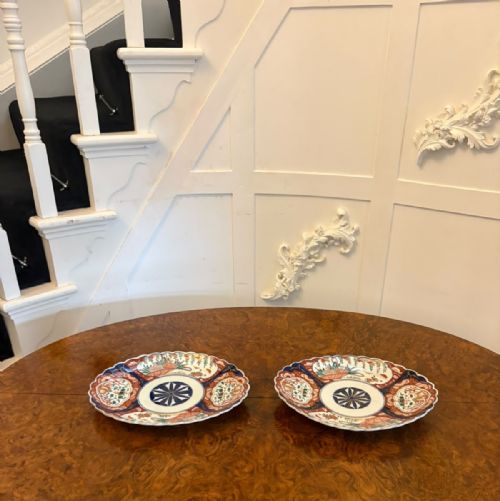
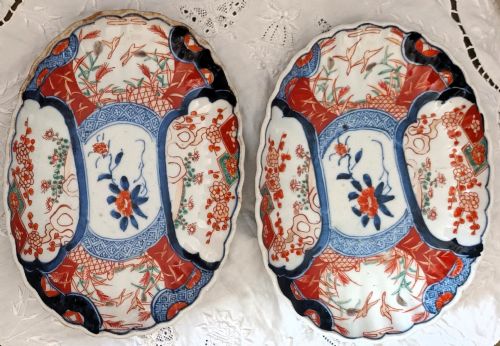
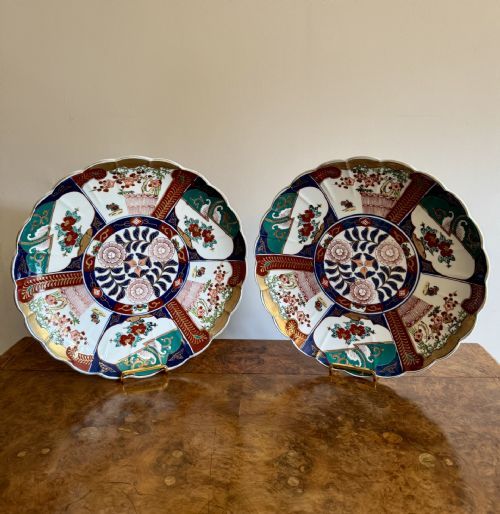
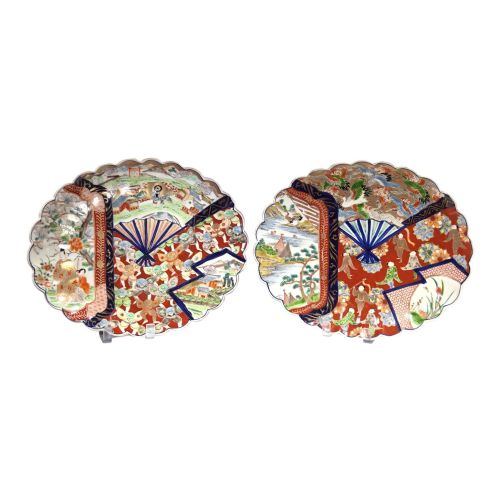


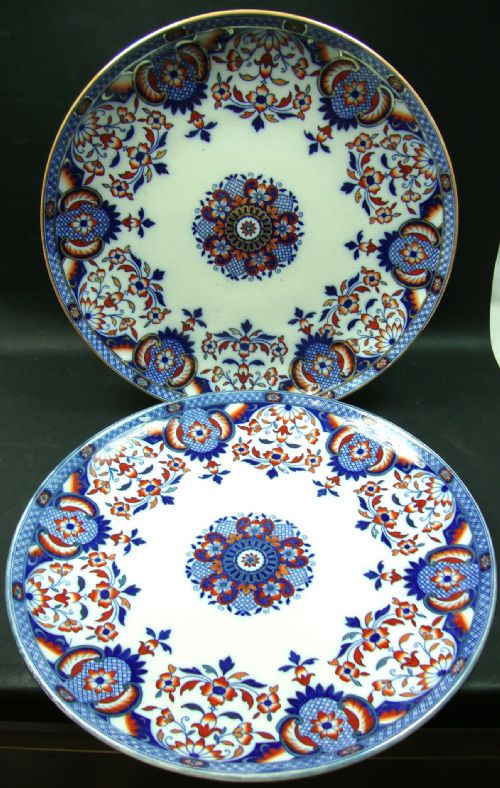

Japanese Imari Platter Pair
These japanese imari platter pair selections bring rich cobalt blue underglaze and vibrant enamels to your table, offering centuries of ceramic artistry.

Japanese Imari Platter Pair
A japanese imari platter pair consists of matching decorative chargers, plates, or dishes produced in Japan and exported to Western markets. You are most likely to encounter nineteenth century Victorian period examples on this page, alongside earlier Edo period pieces.
The forms range from large round ceramic chargers and shaped plates to scalloped charger plates and clam shell dishes. These items were designed primarily for display rather than heavy dining use, serving as striking decorative wall chargers or table centrepieces.
The design repertoire spans traditional motifs such as the Seven Lucky Gods alongside the distinctive palette associated with Japanese Meiji and Arita traditions. Occasional British interpretations, such as nineteenth century Mintons pieces, also appear within these listings.
Materials and Techniques
Potters built these pieces using fine porcelain and ceramic bodies shaped into plates, platters, and large chargers. The foundational structure relied on cobalt pigment applied under the glaze to create deep blue tones.
Makers added overglaze enamel in rich colours alongside gold leaf and gilding to build up the characteristic complex palette. Firing multiple times ensured the fusion of underglaze blue with the vibrant surface enamels.
Keep an eye out for clam shell shaped dishes alongside the traditional round chargers, proving that potters liked to play with the geometry of dinnerware.
What Varies in Quality
The standard of painting on japanese imari platter pair examples dictates much of their visual impact. Finer pieces display crisp cobalt blue underglaze work and meticulous application of overglaze enamels.
The application of gold leaf and gilding varies from simple accents to dense, complex surface enrichment. Condition and the preservation of the enamel colours across both matched pieces also influence the overall character.
The Japanese Imari Platter Pair Glossary
- Imari
- A style of Japanese porcelain decorated in underglaze blue, iron red, and gold. This ware was manufactured in the town of Arita and exported extensively from the port of Imari.
- Charger
- A large decorative plate used historically for formal service or displayed upright on a sideboard. These substantial pieces form the core of many collections.
- Underglaze
- Pigment applied to the ceramic body before the transparent glaze is applied and fired. This technique protects the blue decoration beneath a glossy vitrified layer.
- Overglaze enamel
- Coloured glass decoration applied on top of the fired glaze and fixed at a lower temperature. This method allows for brilliant reds, greens, and gilt details.
- Meiji Period
- The era of Japanese history spanning from eighteen sixty-eight to nineteen twelve, marked by extensive international trade and distinct ceramic artistry.
Japanese Imari Platter Pair: Frequently Asked Questions
How were Imari platters used?
These large pieces served primarily as decorative chargers and display items in wealthy European and British households. They were stood on edge on sideboards or hung upon walls to catch the light.
They were rarely used for heavy dining purposes due to their ornamental value and artistic finish.
Are these pairs genuine antiques?
The listings on this page span the eighteenth, nineteenth, and early twentieth centuries, including Victorian period interpretations. Materials such as porcelain and ceramic bodies reflect traditional manufacturing periods.
Examining the glaze depth and enamel wear helps distinguish between the Meiji period originals and later nineteenth century items.
How do I care for my plates?
Display these platters securely using stable wall brackets or proper plate stands designed for heavy chargers. Keep them away from direct sunlight to protect the surface gilding and enamel colours.
Clean them only with a soft, dry cloth and avoid harsh washing liquids that might damage the overglaze decoration.
What is Arita porcelain?
Arita is the Japanese town where the clay and kilns originated for traditional Imari production. The local miners and potters developed the refined porcelain body used for these chargers.
Most pieces identified as Imari actually trace their production roots back to the workshops operating around Arita.