








Imari Temple Jars
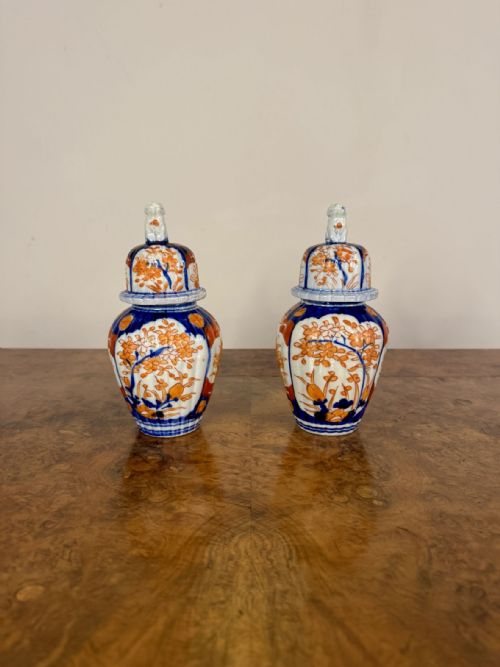
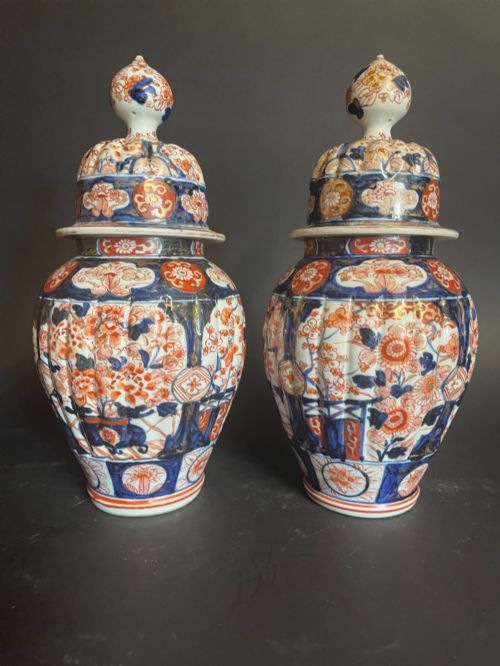
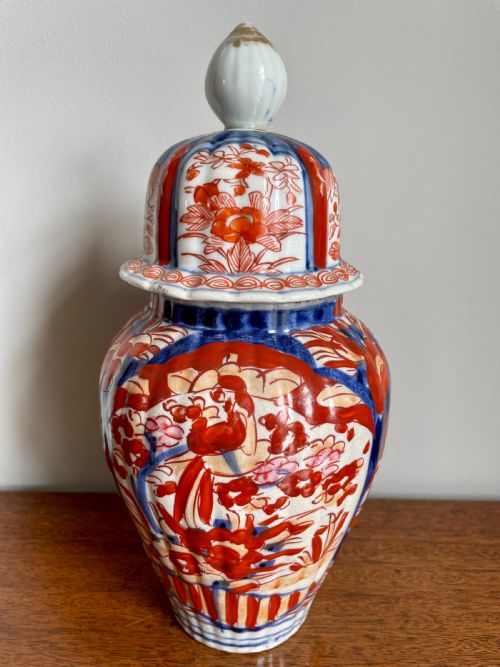
Imari temple jars are large lidded vessels displaying the characteristic palette of iron red, cobalt blue and gold.

Imari Temple Jars
Imari temple jars span several centuries of production, originating in Japan and capturing the aesthetic of the Edo and Meiji periods. Buyers exploring this selection will encounter lidded vases and covered ginger jars alongside garnitures designed for interior display.
The objects take various forms, including baluster shapes and octagonal vessels, often accompanied by matching covers. Many examples derive from the seventeenth and eighteenth centuries, while nineteenth-century productions also appear frequently.
Makers in Europe also produced pieces in this manner, as demonstrated by French works executed in the Edo manner or Imari style. This mix gives collectors both Asian export porcelain and later European interpretations to examine.
Materials and Construction
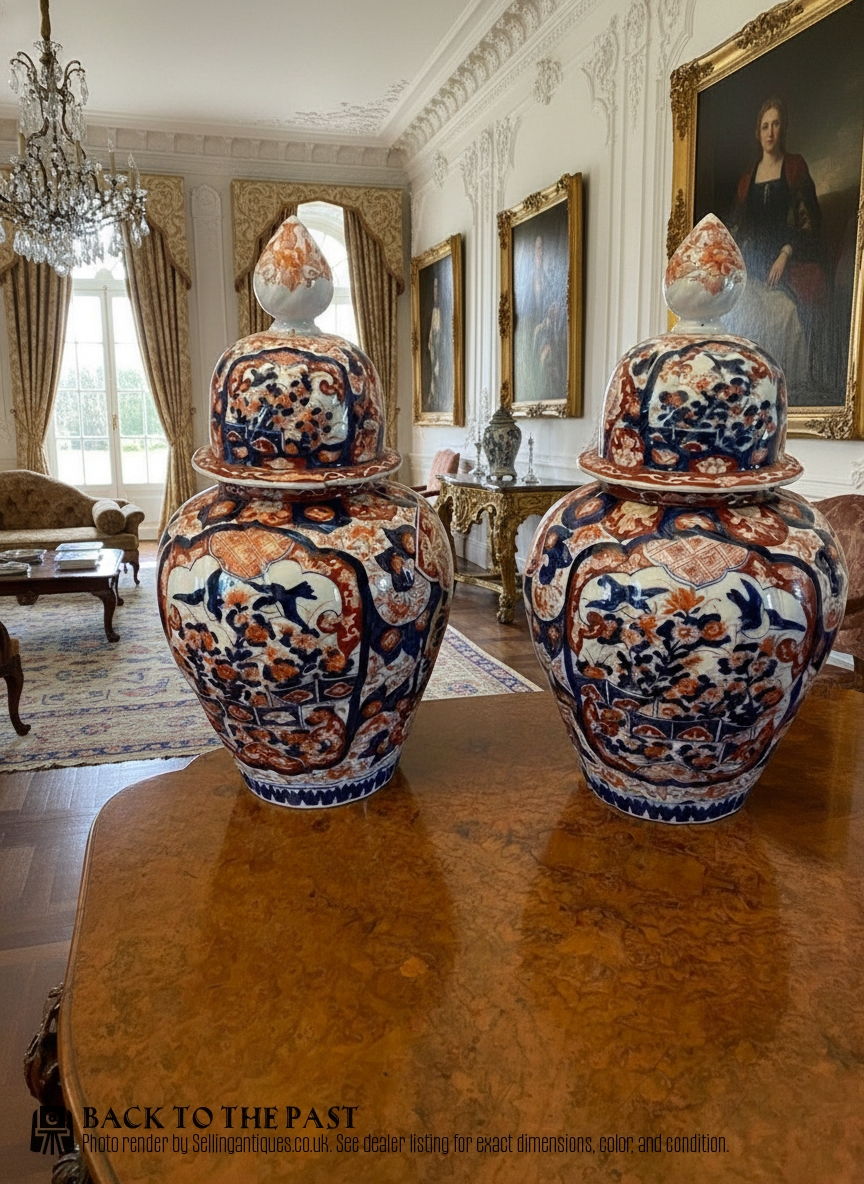
The foundation of these vessels is white porcelain, shaped into large jars, vases and covers before firing. Artisans applied cobalt blue enamel beneath the glaze, followed by iron red enamel and gilding or gold leaf in subsequent decorative stages.
Certain interpretations incorporate additional ornamentation such as ormolu mounts, adding metal elements to the ceramic body. Surface decoration relies on pigment application and glaze manipulation to achieve the dense patterns typical of the palette.
Imari Temple Jars Retail Price Guide 2026
Typical asking prices for imari temple jars among the pieces listed under this phrase on Sellingantiques today, from the lower quarter to the upper quarter. They describe what is for sale here now, not the wider market.
Current listings feature porcelain material spanning the seventeenth century to the Edwardian era, including pieces decorated in the Japanese Meiji style and French workshops.
Judging Quality and Execution
Quality rests in the crispness of the underglaze cobalt and the precision of the overglaze enamel and gilding. Superior examples display careful hand-painting with well-defined motifs, whereas simpler pieces show broader, less intricate brushwork.
The weight, symmetry of the porcelain body and the harmonious integration of the cover also distinguish finer items. European imitations and later productions are judged by how closely they capture the decorative depth of the original Asian pieces.
Samson
The Imari Temple Jars Glossary
- Imari palette
- A decorative scheme employing cobalt blue, iron red and gold on a white porcelain background. This combination originated in Japan and was widely copied in Europe.
- Arita
- The Japanese town where porcelain production for Imari wares centres. Kilns in this region produced the original export pieces.
- Baluster
- A vase shape with a rounded lower body that tapers towards the neck. This form provides a stable base for large lidded jars.
- Garniture
- A set of matching vases or jars intended to be displayed together on a mantelpiece or shelf. These sets typically include three or five pieces.
- Edo period
- A division of Japanese history spanning from the seventeenth to the late nineteenth century. Pieces from this era often feature traditional motifs and hand-mixed enamels.
Imari Temple Jars: Frequently Asked Questions
What are imari temple jars?
Imari temple jars are large porcelain vessels featuring lidded designs decorated in cobalt blue, iron red and gold.
These pieces served primarily as ornamental items in grand interiors rather than functional storage containers.
How were they used?
Owners placed these jars on mantelpieces, tables or pedestals to display wealth and taste.
Large examples often stood alone, while smaller ones formed matching sets known as garnitures.
How do I date a jar?
Dating relies on stylistic clues, porcelain body characteristics and the specific hues of the enamels used.
Seventeenth-century pieces differ in form and brushwork from nineteenth-century productions or later European interpretations.
Are all pieces Japanese?
While the style originates from Japan and the town of Arita, European factories also produced similar wares.
French workshops created pieces in the Imari style during later periods to satisfy Western demand.