


Pair Imari Jars
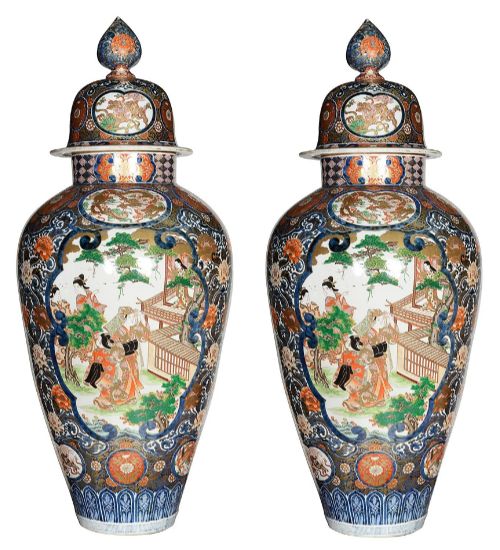
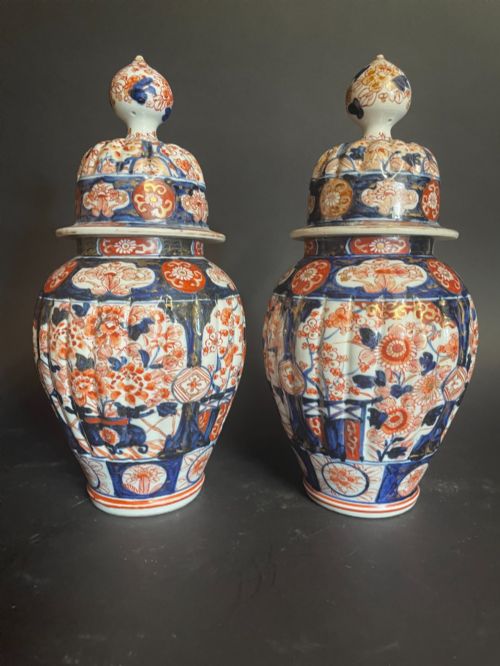
These pair imari jars bring bold cobalt blue and rich enamel to a room, offering striking symmetry and decorative presence.

Pair Imari Jars
When you search for pair imari jars, you encounter matching sets of decorated ceramic vessels spanning several centuries. The selection includes double gourd shapes, lidded ginger jars, and large decorative vases originating from Japan and European makers.
Nineteenth century examples dominate the selection, often bearing traditional Meiji period or Victorian interpretations of earlier designs. Earlier pieces from the seventeenth and eighteenth centuries also appear, showing deep roots in Arita traditions.
How they were made
Potters shaped these vessels from fine porcelain and ironstone, applying cobalt blue underglaze for the primary patterns. Artisans then added enamel colours and gold leaf highlights to create the dense, layered designs characteristic of the style.
Many of these jars were fitted with matching covers, whilst some later European productions utilised ormolu mounts and gilt accents to enhance the display.
The listings span multiple centuries, ranging from seventeenth-century Arita pieces to nineteenth-century Victorian and Meiji period examples.
What varies in quality
The sophistication of the hand painting determines the standing of a piece, distinguishing sharp, detailed brushwork from simpler execution. The richness of the enamel palette and the precise application of gold leaf also elevate certain vessels above others.
Proportion and scale play a role, with large, well-balanced double gourd forms and intact original covers commanding particular attention among collectors.
Samson·Mason s Ironstone China
The Pair Imari Jars Glossary
- Arita
- The Japanese town and surrounding region where porcelain production flourished, giving rise to the characteristic wares exported through Imari port. It represents the historical heartland of these ceramics.
- Double Gourd
- A vessel shape resembling two stacked bulbous spheres, offering a curvaceous silhouette that became popular in Japanese pottery. This form provides a distinct vertical presence.
- Cobalt Blue Underglaze
- A pigment applied to the raw clay body before firing and glazing, ensuring the deep blue designs remain permanent and protected beneath the surface. It forms the structural base of the decoration.
- Meiji Period
- The era in Japanese history spanning from 1868 to 1912, known for significant craft production and export expansion. Pieces from this time often show intricate decorative detailing.
- Ironstone
- A heavy, durable type of ceramic developed in Europe as a robust alternative to true porcelain. It allowed makers to produce sturdy jars with similar decorative aspirations.
Pair Imari Jars: Frequently Asked Questions
Are these jars waterproof?
These antique ceramic vessels were primarily created for display and decorative storage rather than holding water. Using them for fresh flowers risks moisture damage to centuries-old bodies and interior glazes.
For practical floral arrangements, place a separate watertight liner inside the jar rather than filling the vessel directly.
How do I spot an earlier piece?
Earlier pieces from the seventeenth and eighteenth centuries often display heavier potting, subtle iron impurities in the porcelain, and softer cobalt blue tones under the glaze. Arita origins and Genroku period connections point towards these earlier dates.
Nineteenth-century items tend to feature brighter enamels, crisper gilding, and more standardised forms influenced by Victorian and Meiji production methods.
Where should I display a pair?
Symmetrical pairs of lidded jars look best when given adequate space on a mantelpiece, sideboard, or dedicated console table. Their height and colourful palettes draw the eye, making them natural focal points in a room.
Keep them away from direct sunlight to protect the surface enamels and gold leaf highlights from fading over time.
Did European potteries make these too?
European factories produced imari style pieces alongside traditional Japanese imports to satisfy high continental demand. Makers such as Samson created lidded vases in the Japanese manner during the nineteenth century.
These European interpretations adopt the familiar cobalt blue and iron red palette while utilising local ceramic bodies and manufacturing techniques.