
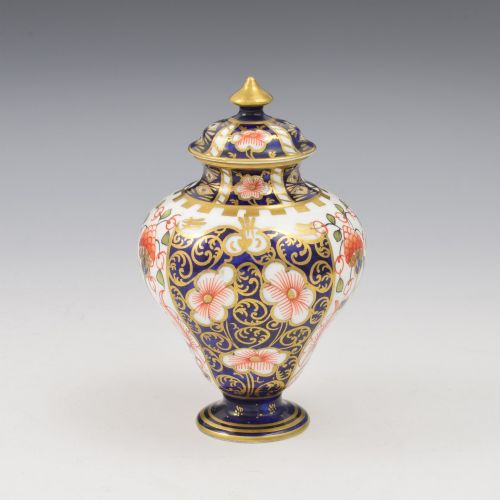
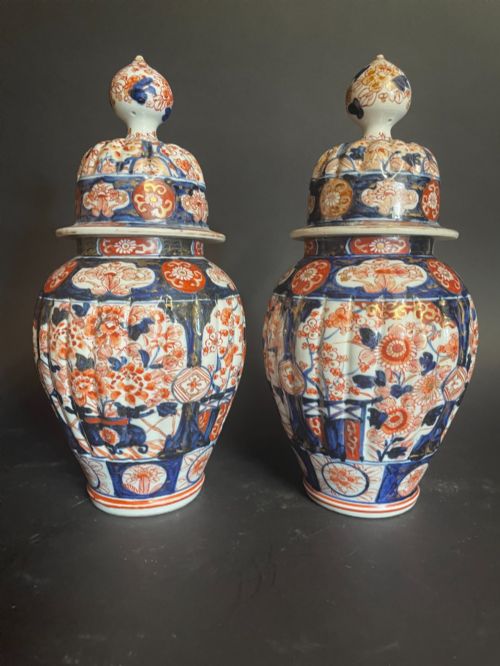
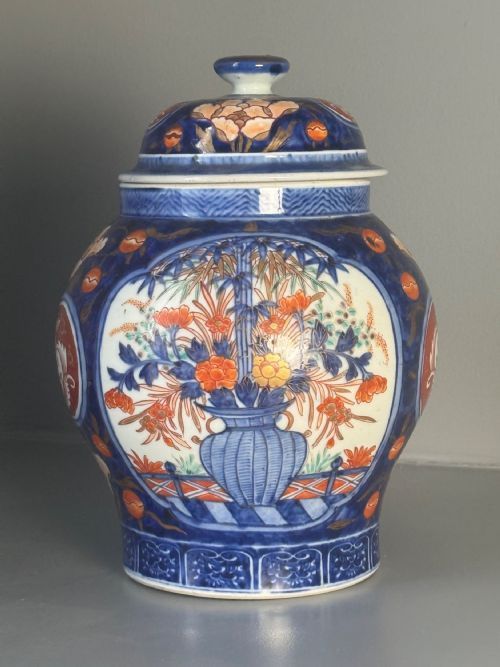


Imari Lidded Urn
These imari lidded urn pieces bring heavy palettes and striking shapes to a room, offering rich visual weight that collectors prize.
Imari Lidded Urn
When you search for an imari lidded urn, you encounter substantial ceramic vessels designed with removable covers and finished in the distinct palette associated with Japanese porcelain traditions. The pieces appearing here span centuries of production, originating from Japanese kilns in the Edo and Meiji periods as well as European workshops producing imari style wares.
The forms vary across ginger jars, baluster shapes, and pot pourri vessels, with many surviving in pairs or matching groups. You meet examples from the nineteenth century most frequently, alongside Georgian ironstone interpretations and twentieth century decorative objects.
How they were made
Potters shaped these bodies from ceramic and porcelain pastes, later adding ironstone to certain English iterations. Artisans applied glaze and enamel pigments by hand, incorporating gold leaf and gilding to highlight specific surface details.
Firing techniques determined the vitrification of the clay bodies, while skilled painters executed the characteristic cobalt blue and iron red motifs across the porcelain surfaces.
Listings feature porcelain, ironstone, and ceramic materials spanning the eighteenth, nineteenth, and twentieth centuries.
What varies in quality
The standard of an imari lidded urn rests upon the crispness of the painted decoration and the precision of the enamel work. Superior examples display balanced compositions and carefully preserved gilding that remains bright against the glaze.
The harmony between the vessel and its original cover dictates the desirability of the piece. Well potted bodies with intact lids demonstrate a higher level of historical integrity than assembled or mismatched pairs.
Royal Crown Derby·Mason
The Imari Lidded Urn Glossary
- Imari
- A style of ceramic decoration originating from Japanese porcelain exports, traditionally utilising cobalt blue, iron red, and gilt highlights. The aesthetic spread to European potteries during the eighteenth and nineteenth centuries.
- Baluster
- A vase shape characterised by a rounded body that tapers toward the base and swells above. This form provides a stable silhouette suited for prominent display on mantelpieces or tables.
- Ironstone
- A heavy durable type of earthenware developed in England as a robust alternative to oriental porcelain. It accepts imari palette decoration readily while offering increased strength.
- Pot Pourri
- A vessel designed with a pierced cover to allow scented dried materials to fragrance a room. These lidded containers combine utility with decorative ceramic form.
- Meiji Period
- A historical era in Japan spanning from eighteen sixty-eight to nineteen twelve, noted for significant export pottery production. Pieces from this time often exhibit detailed enamel work and large scales.
Imari Lidded Urn: Frequently Asked Questions
How were these vessels used historically?
Historically, these vessels served as decorative accents in prominent rooms or as containers for dried aromatic materials such as pot pourri. Their striking appearance made them centrepieces for mantelpieces and display cabinets.
Exported widely from Japan and later imitated in Europe, they signified refined taste and global trade connections.
How do I live with an imari lidded urn?
Living with these pieces involves placing them in stable locations away from heavy traffic where their painted surfaces and lids remain secure. Their strong colour palette pairs well with both traditional and eclectic interiors.
Dust them gently with a dry cloth to protect the enamel and gilding from abrasion over time.
How can I tell the periods apart?
Distinguishing periods relies on examining the weight of the ceramic body, the formulation of the glaze, and the specific brushwork style. Eighteenth-century Japanese pieces often display softer cobalt tones, whereas late nineteenth-century Meiji examples utilise denser enamels and crisper gilding.
English ironstone interpretations from the Georgian era reveal heavier, opaque ceramic bodies beneath the glaze.